All posts by Tom

I'm the guy who writes the blog...

The Weekly Plan

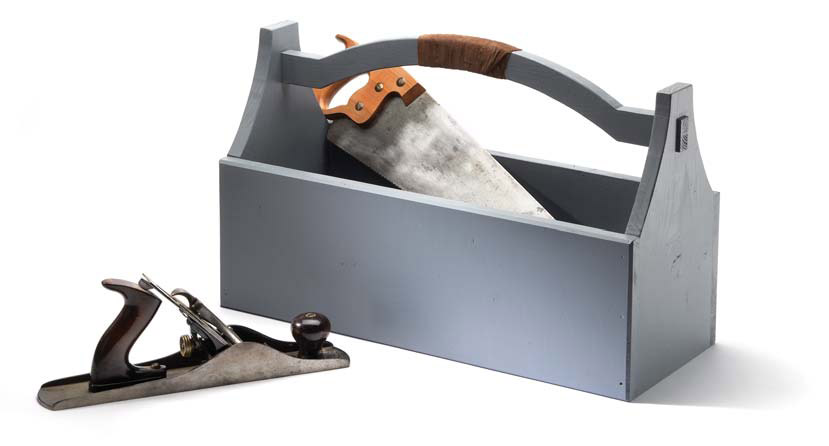
Popular Woodworking’s I Can Do That tool tote

The one thing about tools is that – well – you typically need more than one to do a particular task. And, it’s not easy to juggle a bunch of tools as you walk from place to place to do your work. There has to be an easier way.

The Tool Tote plan


Sure, there may be a million different easier ways. But, not all can be as stylish as this tool tote brought to you by our friends at Popular Woodworking. This free plan from their I Can Do That series was designed by Megan Fitzpatrick, and features some pretty snazzy looking joinery that can be mastered by even the newest woodworker.

Non-Link of the week

Woodworker’s Safety Day

It is a tradition started by Marc Spagnuolo over at the Wood Whisperer, and it is now being continued by the Modern Woodworkers Association. It’s Woodworkers Safety Day, and it’s a time for us to take some time out from our normal routines, and to think about staying safe in the shop.

MWA SAFETY DAY

How do we plan on celebrating this day on May 17? It’s easy…

If you are a blogger, take a little time out of your posting schedule and write a post about some aspect of woodworking safety. Maybe a jig you built that keeps your hands away from a spinning bit or blade. Maybe a piece of safety equipment that you can’t do without. Maybe even a story about a hard-learned lesson.

Be sure to send that link to me at tom@tomsworkbench.com, and we can post it for others to find.

Thanks for your help!

Measure once, cut twice

Oh, I love my friends at work. They are really a talented bunch of folks who make my time at the office a whole bunch of fun. But, there’s this one guy. The guy who asked me to build that new shelf for his kitchen pantry. Guess what I’m doing again? Rebuilding his shelf. Oy... You see, when he wrote down the dimensions of his shelf, he didn’t quite get it right. He wanted the shelf to be 33 5/8″ long, which is what I dutifully cut the shelf length down to after getting it all edged. I then went on to sand and finish the piece to make it all work out. Well, it turns out that my man Shan needed a shelf 36 5/8″ long, and when he went back to his house to put the shelf in place, it of course, didn’t fit. Taped up So, tonight, I am getting another lesson on how to cut an edge band for a plywood shelf. This time, I will get it roughly sanded  and give him the entire shelf at its current way-too-long measurement and ask him to remove one of the existing shelves from his pantry and take a direct measurement from its neighbor. After that, I can take it back and cut it to the final size before finishing it once and for all.

I guess I can’t laugh too much… if only he knew about all of the mess ups I made on my projects!

Had to see The Boss

Boy, was I a mess late last week. It had nothing to do with the Modern Woodworkers Association podcast, which did end a little later than normal. And, it had nothing to do with work, which has become crazy this time of the year.

Bruce Springsteen can really rock

No, it had to do with a little concert I went to see on Thursday night. There was this show by this guy you might have heard of – Bruce Springsteen – that I went to see on Thursday night. Now, it’s been a few years since I last saw him (Born in the USA tour, 1985, on the floor of Giant’s Stadium in East Rutherford, New Jersey), and I can distinctly remember that his show went on for a long time.

This show was no exception…

Big Screen Springsteen

THREE hours after Bruce and the E Street Band hit the stage, they started their encores. Without taking a break. The musicians are machines, still able to crank out the tunes nearly 30 years later.

Which, of course, led me to make some woodworking observations based on what I had learned from The Boss.

  • Don’t be afraid to change your tune. Bruce turned out rockers for years, but took a risk by recording folk tunes in his Seeger Sessions album. While a totally different genre of music, those songs blended flawlessly into the show, adding a ton to what was already a great show. How many times do we build the same kind of projects because we don’t want to get out of our comfort zone? Reach out. Try those projects you have always wanted to. You just might be surprised with what you can do.
  • Keep your circle of friends wide. Ever since his original album – Greetings from Asbury Park in 1972 – Bruce has performed with a group of musicians know as the E Street Band. Through the years, the numbers and members of this band have changed, and has evolved into a full-on stage production including a full horn section. By keeping your woodworking circles wide open, you can meet other woodworkers who can bring their special talents to your woodworking repertoire. Perhaps someone had a lathe and can turn a component for a project for you, or a big bandsaw that can resaw a special board for you.
  • The Boss and Tom MorelloKeep doing what you enjoy. It was 29 years since I last saw him, and I know it has been 41 years since his first album hit the scene. Still, you can tell that Bruce brings the energy to the show and enjoys himself tremendously. He makes it seem as if it’s not even work. As long as I can get out into the shop and enjoy what I am doing, I can picture myself doing this for years to come.

Fortunately, I had a weekend to catch up on my sleep so I can go to work this week. But, when I do, I will be listening to The Boss on my little office radio.


The weekly plan

Toy Storey by Danny Proulx

Even though he passed away nine years ago, I still miss woodworking author Danny Proulx. He was a great woodworker and an awesome teacher of the craft, and he was the first real woodworking celebrity I had ever made contact with.

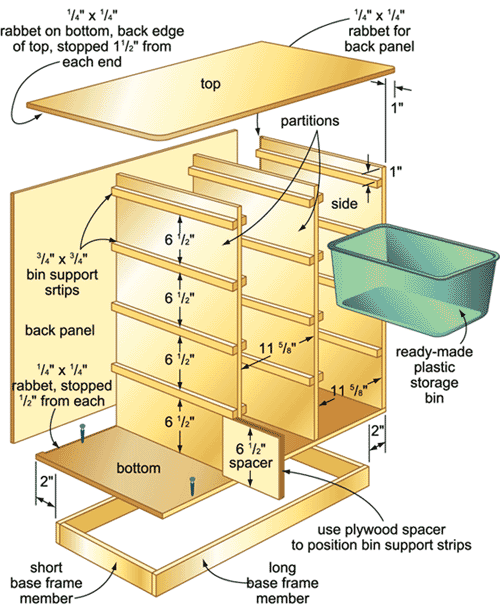
Danny's toy storage plan

While he is no longer with us, his website still lives on with the help of Danny’s protégé Luc Rousseau. Many of Danny’s free plans are also still on the site, and this one is a real gem. Using common lumber and standard plastic bins, woodworkers can build a simple toy storage solution to beat the clutter that comes with kid’s toys.

Having stepped on my share of Lego blocks in my day, I can tell you that something like this would have been VERY handy in my house!

A splendid combination

Back over the holidays, I was the proud recipient of a genuine Leatherman multi tool, and I have got to tell you it has been worth its weight in gold. Not just because it is a handy set of pliers, a very sharp knife or a quick way to open a beer at the end of a hard day. It’s worth it’s weight in gold because it does all of that in one tool. A real multitasker.

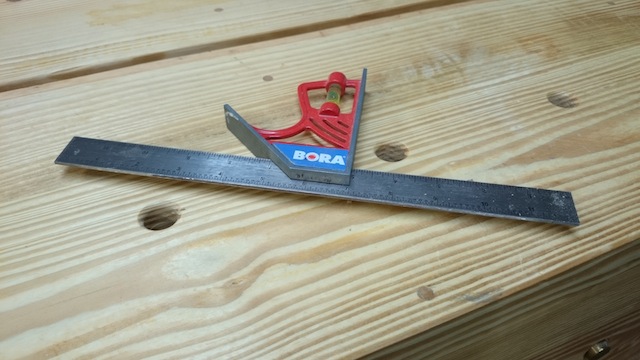
My combination square from Bora

That’s why I am falling in love again with my combination square from Bora Tools. Oh, that baby is handy. It gives you a whole bunch of different operations all in one tool that’s easy to keep close by while out in the shop.

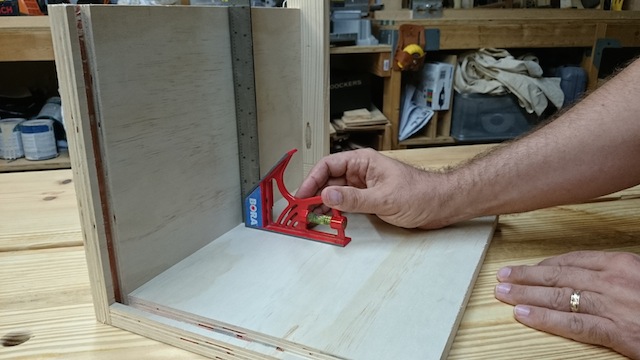
First, it’s a square. Yes, I know that sounds obvious, but that gives you something to check your project for square during assembly…

Squaring an assembly

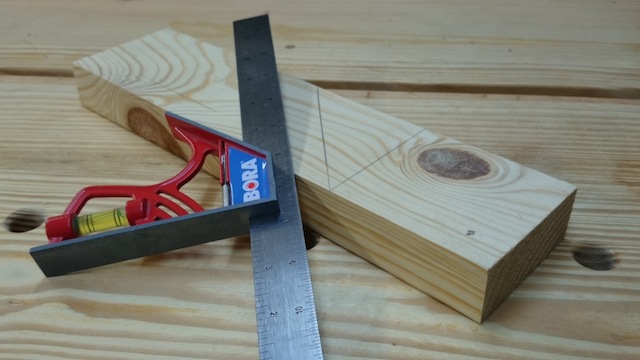
Plus, a great guide for marking out joinery or cut lines. Unlike a regular square, combination squares let you draw both 45 and 90 degree lines on your workpiece right out of the box.

45 - 90 - HIKE!

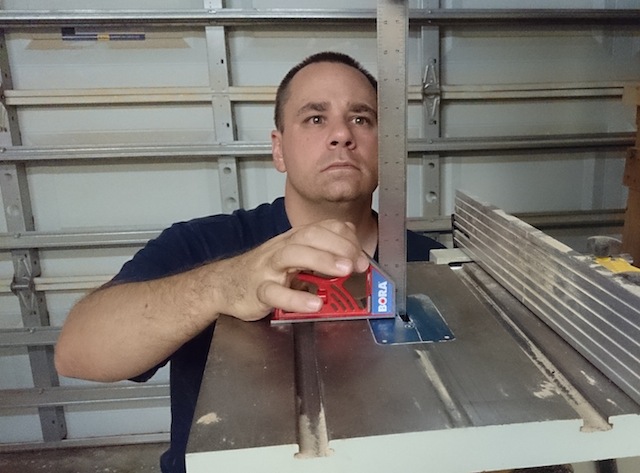
Let’s go a little farther with this. Power tool setup is made a ton easier with a combination square. Say you need to ensure your band saw blade is square to the table. That’s an easy one to set up with this tool.

square that blade

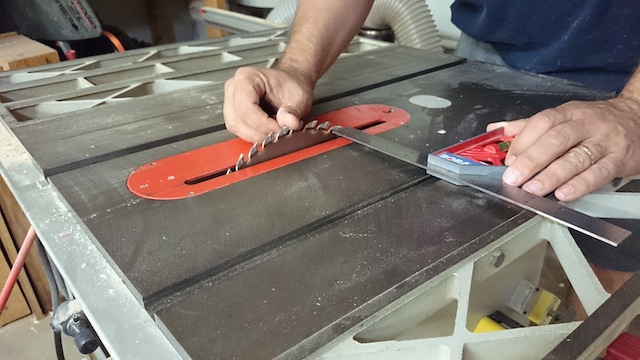
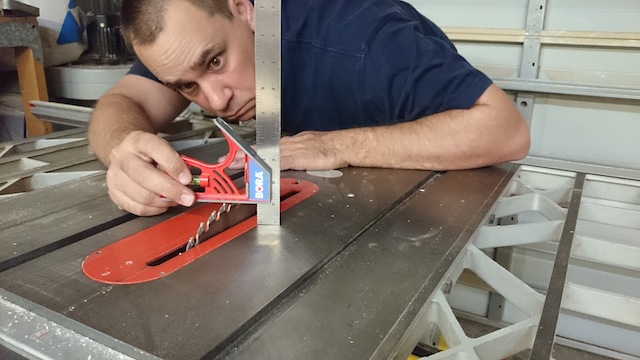
But, what about checking to see if your table saw blade is aligned with the miter slots and not out of whack. How can you do that?  Easy. Just place the measuring head in the slot, extend the blade until it contacts a tooth at the front of the blade. Using the same set up, push the combination square to the back, rotate the blade so the same tooth is touching, and you will see immediately if your blade is off kilter.Check the alignment

Need a precise way to check the blade or bit height of a cutting set up? It’s in there!

Hey, that's just what I wanted!

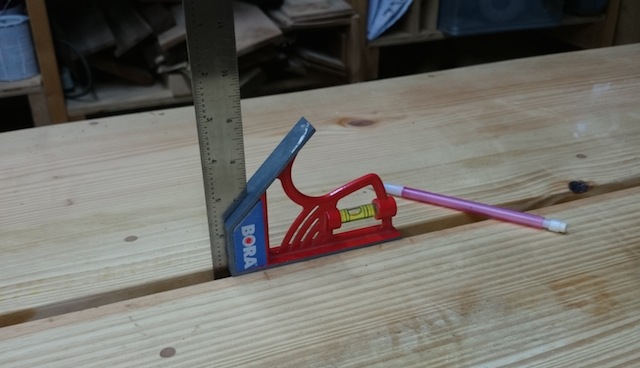
My favorite thing about my combination square is that it is very handy, and works well with my split top Nicholson bench. Hey, when you need to keep the square right at hand, it’s easy to just slip it into the split and it’s good to go.

My square is handy

Just think, I haven’t even begun to scratch the surface with this tool. You can take the blade out and use it as a steel rule. You can use it to find the center of a round item. Gosh, there’s almost enough stuff for a second post!

The tale of the tape

So, I have this coworker back at the office who had a little ‘issue’ with a shelf in his pantry. It seems that some kind of wood-eating insect had gotten into the plywood shelf and did what it does so well, eating through the plies of the shelf.

He cut off a piece and brought it to me in my office, and asked if I could take it back to my shop, cut a new shelf for him and bring it back. I told him no thanks, I really wasn’t looking for something to get into my prized wood stash and turn it into sawdust.  But, I told him, if he microwaved the piece for – say – four minutes, I think whatever was living inside would be an ex-wood-eating insect, and I would be able to tackle the job.
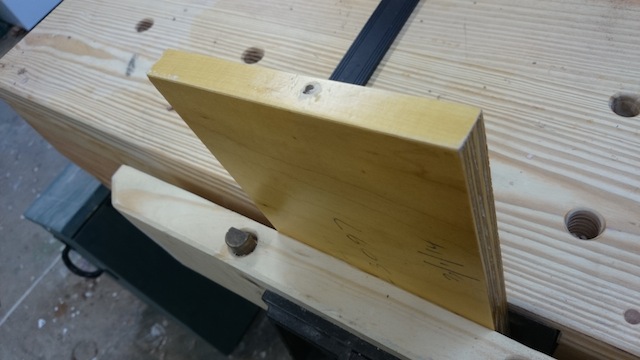
a chunk of the shelf

So, he gave me the chunk of wood. It was a very simple piece, just a strip of 3/4″ plywood with the edge taped and some type of ‘golden’ stain applied to it. Oh, and my friend had drilled the hole in the front edge, it wasn’t the work of that bug.

It was an easy job to cut the plywood to size for the body of the shelf, but how was I going to match the edge banding? I could go buy a roll of edge tape, but where is the sport in that?
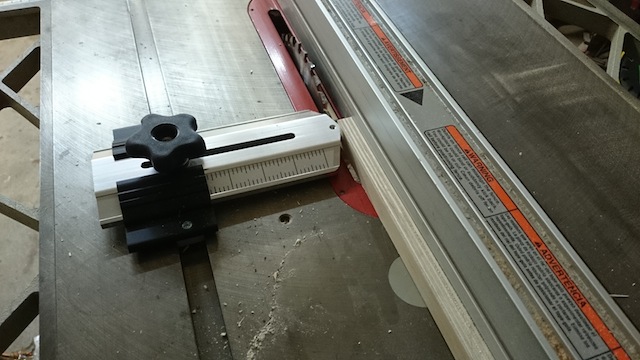
The set upI set up my table saw to do something I had never tried before. I cut an extra strip of plywood about one inch wide, turned it on edge then used my Infinity thin strip ripping jig to set up a cut that would just skim off the face veneer of the ply.
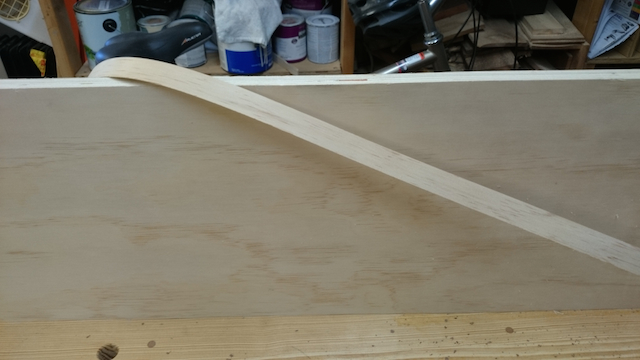
Look, Ma!  It's edging tape!

Using a push stick to keep my hands out of the way, I guided the piece past the blade, and ended up with a strip of face veneer that was – obviously – a perfect match of the plywood I was working with.
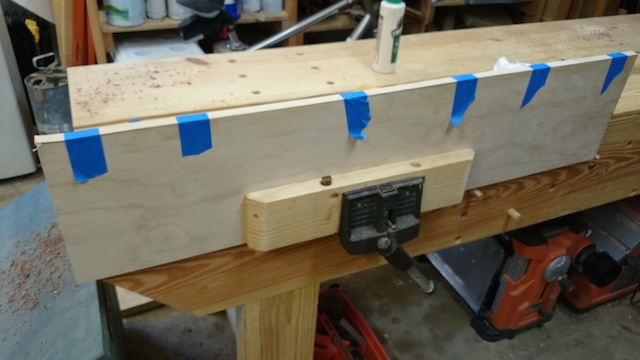
taped in place

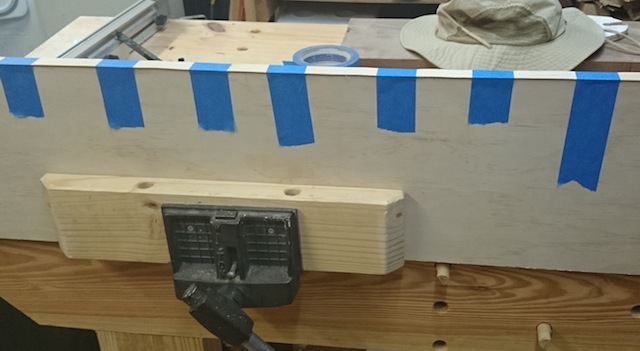
From there, it was an easy job to apply a thin, even film of glue and the edge tape, holding it in place with some blue painter’s tape. I made sure that the edge banding extended past both sides of the plywood, so there would be some to sand down to perfect the coverage.
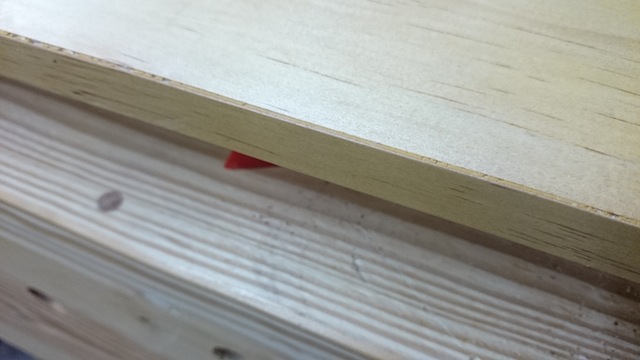
Toit like a toiger

Once the glue was dry, I used some 180 grit sandpaper to gently remove the excess edge banding. I do have to perfect my technique a little bit, but I think it looked pretty darned good. Plus, I mean, it was going to be inside a pantry, right?Ready for finishing
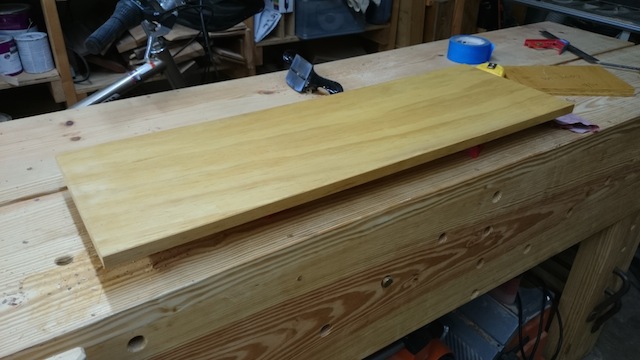
Once I got it sanded and scraped to my satisfaction, I wiped on a coat of that golden oak Danish oil I had used to tint it as closely as possible to the original, then brought it outside and applied six coats of lacquer from a spray can – which is a really quick and easy way to put on a nice finish. I finally sanded the piece with some 320 grit paper, and waxed it so the surface was nice and smooth.

My guess is that this will be the nicest looking shelf in the pantry.