All posts by Tom

I'm the guy who writes the blog...

Sanding senses

Today, I begin sanding my dresser top valet. Yay…

You tell 'em, Brad

Oh, sanding is such a joy. I mean, who doesn’t enjoy rubbing rough paper over their project for hours until it is good enough for finish? I mean, what else could you be doing with your time? Watching grass grow? Checking in on drying paint?

Yeah, even though it’s an essential step in the process, I don’t think anyone really wants to sand. Ever. If someone could invent a device where you put your assembled project in one end, and it came out smooth, blemish free and touchably rounded over, we’d cough up huge bucks for it. But, until then, we have to do it the old fashioned way with sand paper, hand planes, scrapers and elbow grease.

Fortunately, I also like to employ one of the most sophisticated devices known to humankind to determine when I have sanded enough…
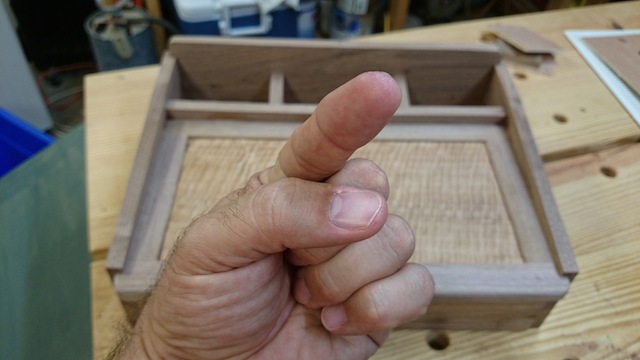
The fickle finger

Yup, I’m a touchy-feely kind of guy. I like to feel how I progress while I sand, and that starts with the edges of the boards. Now, when I cut those suckers, I was looking for a sweet 90 degree angle, straight, square and true as the boards came off the table saw. Now, not so much.
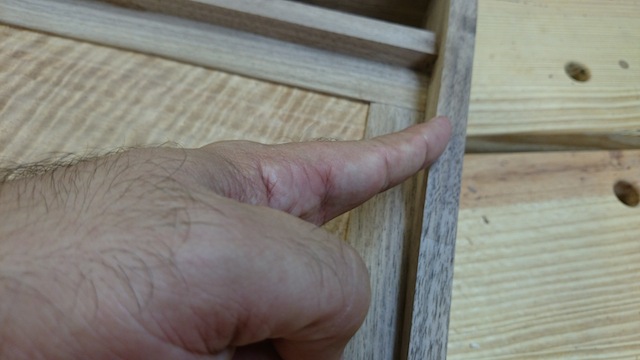
Potential ouch zone

Those sharp edges can be very uncomfortable to bump against, and can easily cause a splinter if I rubbed my hand against them. So, a little bit of 120 grit sandpaper, some work on the corners, and bingo, I’ve put myself into a much more comfortable situation.
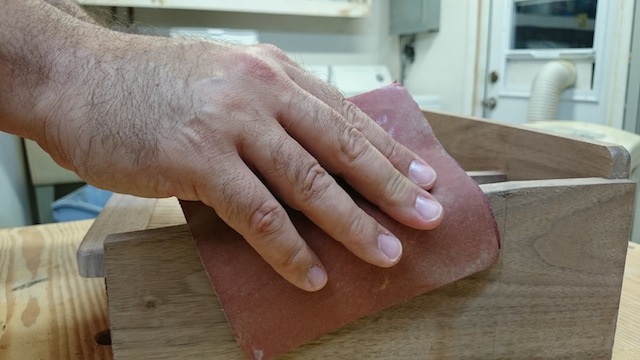
Sandy SandyOnce I have the edges broken, that’s when I turn to the random orbit sander to do the majority of the bulk work. Some joints need a little leveling, and some mill marks need to need to disappear. That’s when I start to look for a way to gauge that I am sanding evenly.
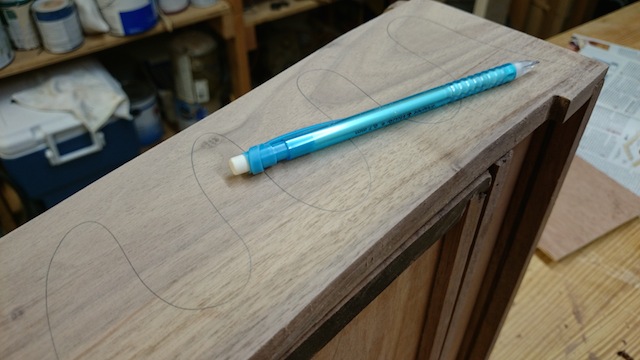
Ooooh!  Pretty pencil

My dad taught me this trick, and I still do it today. I take a pencil and run a squiggly line down the face of the piece I want to sand. Once I have this on the board, I take up the random orbit sander with a 120 grit pad, and get to it. With the sander hooked to my dust collector – and on a project this small – it’s a pretty easy task to get an even sanding on the piece in very short time.
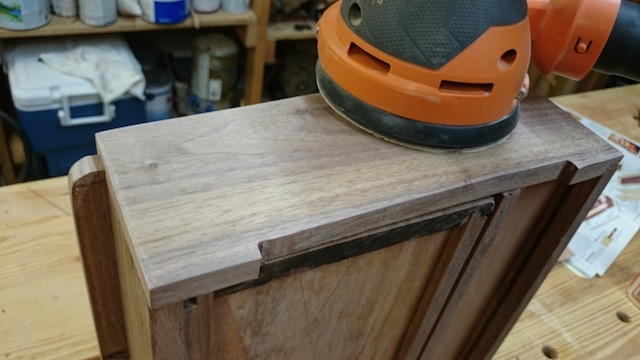
Line be gone!

Once that line is all gone, I know I have done a decent job getting a good sanding on the piece, I will also look at the project face with a raking light to see if I have gotten rid of all the milling marks and other imperfections. When I don’t see any more, I switch to a 150 grit pad, and give everything a once-over to refine the piece a little more. Of course, anything that’s tough to get to with the pad needs some more hand work, but that’s not too bad.

Next step, a little finish, attach the handle, then start cleaning off my dresser top.

Drawn in…

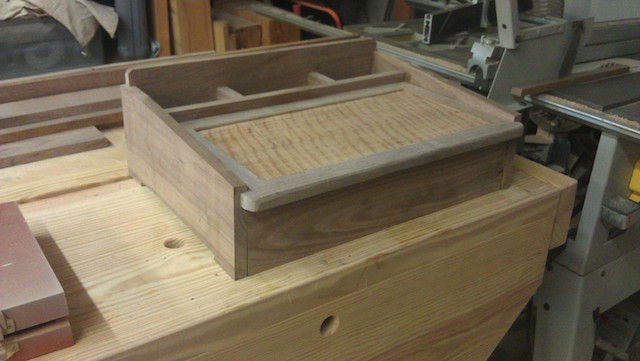
I have come to an important realization in the process of building this prototype dresser top valet. It’s really just a project in three steps.  The body, the top and the drawer.

Had I thought this out a while back, I might have completed this job – I dunno – four months ago. Instead, it all seemed so amorphous back then, but, now it’s so simple, even a trained shop monkey could do it.

Iggy doing his research

Sorry, Iggy. I didn’t intend to disparage you.

Where were we … ah, yes, the drawer. The plan in Wood Magazine called for a very simple drawer design with all of the joinery done on the router table. First, I cut the two sides, front and back to size. That was easy on the table saw.

Some routing on the sides

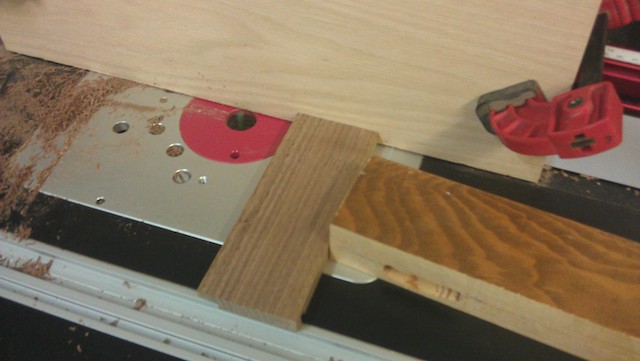
Using a large board as a backer, I cross dadoed the ends of the drawer sides to accept some stub tennons cut on the ends of the front and back.

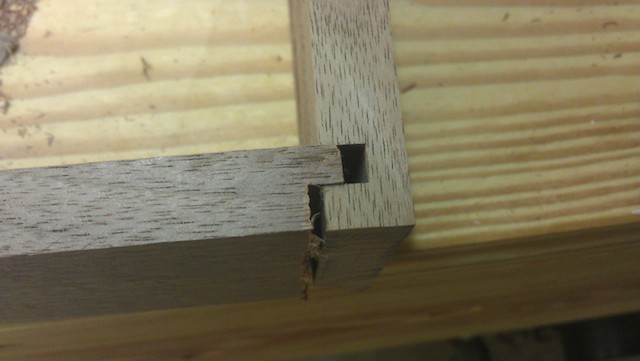
Corner joinery

As you can see, the joinery is insanely simple and took only a few minutes to set up on the router table.  Easy peasey.

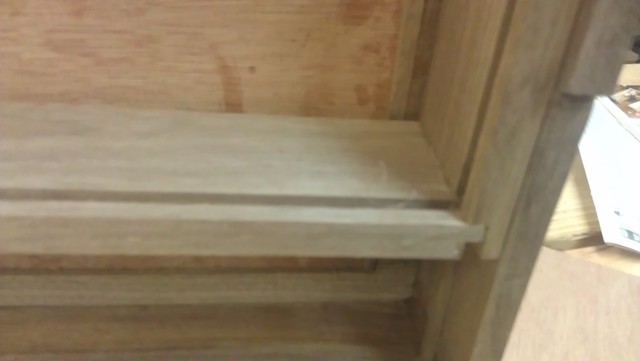
Drawer on the runner

I also used the same setup to cut a groove to capture the drawer bottom and some grooves on the outside of the drawer, which would allow the drawer to ride on a set of runners I had glued to the side of the case. This photo doesn’t do it justice, but you can see the drawer runner peeking out at the bottom right of the photo. The drawer grooves ride on that.

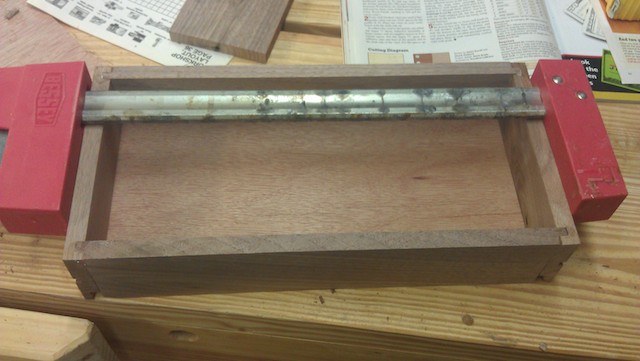
Glue it up

With a little bit of glue in the grooves and a plywood panel cut to size, I clamped the drawer assembly together, ensuring that the assembly stayed square through the process. This took all of maybe half an hour worth of work, and most of that was ensuring that the set ups were spot on.

Nearly there

The next step was to attach a false front to the drawer to hide the grooves that peeked out from the sides. That was an easy task with a little glue and some clamps once I had everything centered. I have also drilled the 3″ centered holes for the drawer pull, and now I have to start sanding the piece to get it ready for finishing.

I’m hoping that once this is done, I will be able to make a few templates to speed up the building process, and when the temperature drops a bit, to get out into the shop and batch a few of these babies out …

The weekly plan

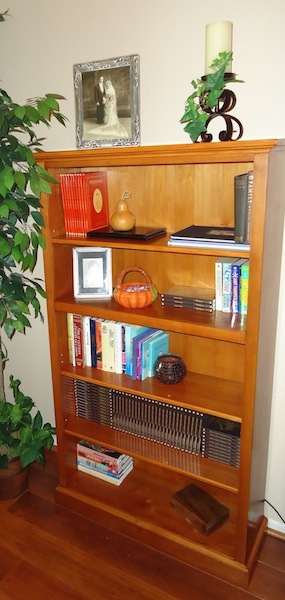
The one and two sheet plywood bookcases

The students are back – or will be getting back – to school, and they need someplace to put their reference books, text books, yearbooks and other various assorted items. Sure, you could build an impressive solid wood bookcase, or – heavens forbid – buy one for your star pupil, but why not consider building an easy, simple version using only one or two sheets of plywood?

two-sheet-bookcase

The Wood Whisperer’s guild has a sweet looking plan to build a bookshelf in either a one or two sheet configuration. While they are simple to build, they look awesome, and you may very well want to keep them around long after the kids graduate and move out.

The cost for these plans is $30, but you not only get eight detailed videos that walk you through the process step by step as well as measured drawings.

Link of the week

Woodooz.com

While we hear a lot about woodworking in Europe, North America, China and Japan, we don’t normally hear a lot about the woodworking tradition in the world’s second most populous country.

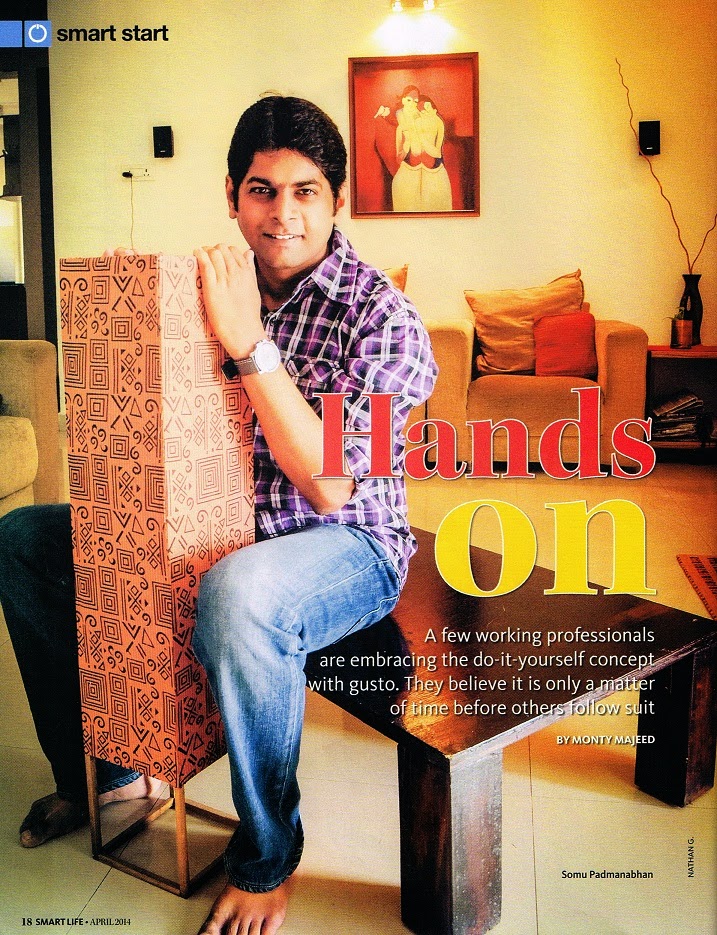
Concept of Do it yourself - Somu Padmanabhan

Surprisingly, there is a vibrant hobby woodworking scene in India. Today’s link is to a site that caters to the Indian hobby woodworking community, and provides an interesting insight into what is being built on the subcontinent.

Spiraling in – and out

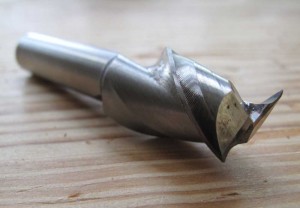
When it comes to most carbide router bits, you typically have a body and a pair of cutters that mimic the shape of the body of the bit. From a basic straight cutting bit to the most elaborate molding bit, it’s easy to see what I mean. The cutter does the cutting, while the body backs up the cut and prevents the board from overfeeding. For some bits, you can throw in a bearing guide and you are in business.

Spiral router bit

But, there is a class of bits that break this mold, and they have a ton of different uses. These bits look a lot like drill bits, but, believe me, they are entirely different animals that you won’t want to use in your drill press!

Spiral bits, as the name says, are indeed shaped like stubby drill bits. Unlike drill bits, which do their cutting at the tip, the leading edges of the flutes do the cutting, which means that the router bit will cut as you move it along the workpiece side to side.

These bits basically cut the same type of profile that a straight bit can make, but that’s like saying that a tricked out Ducati motorcycle is the same as a rusty, single speed beach cruising bike… Sure, they do, but the spirals can do so much more – with so much more style.

Up vs. Down Spiral Bits

For instance, spiral bits can direct the cutting action and the resulting chips exactly where you want them to go. Think about cutting a mortise with a straight cutting bit. Sure, when you plunge the bit into the hole, it will bore in. But, the shavings that the bit makes can get packed into the hole, creating friction that can break down that carbide edge. An up-spiral bit, on the other hand, not only plows the hole, but it directs the chips out of the hole, clearing a path and preventing that packed-in feel.

The jig becomes the base

Now, if you wanted trim the edge of a board with a straight cutter, you might get some splintering and tearout on the top of the board, but with a down-spiral bit, it pushes the fibers down toward the surface of the board, preventing that fraying on top.

Flush Trim Router Bit in action

So, you say you need BOTH faces to be clean? No problem, there are even combination up/down-spiral bits that can make both faces look their best. These are awesome when paired with a bearing guide for pattern routing… Perfect edges every time.

And, how about those edges? While straight bits can do a great job routing along edges, they can leave small scallops, similar to the milling marks you would see on the face of a board after it goes through a planer. Because the spiral bits cut with a shearing action, the surface is super smooth.

Hey, I love my straight cutting bits as much as the next guy, but when the situation is right, my head totally spins for a spiral bit!

Revived from suspended animation

It’s definitely summer in Florida. Try as I might, the shop is always just too darned hot to get into to do a lot of woodworking. So, projects like the dresser top valet – remember when I started that project? – tend to sit in suspended animation. I was, however, able to get some time and energy this weekend to revive that project from its slumber and get it back on its feet. Kinda like the crew of the Nostromo mining ship in that movie Alien.

suspended-animation-alien

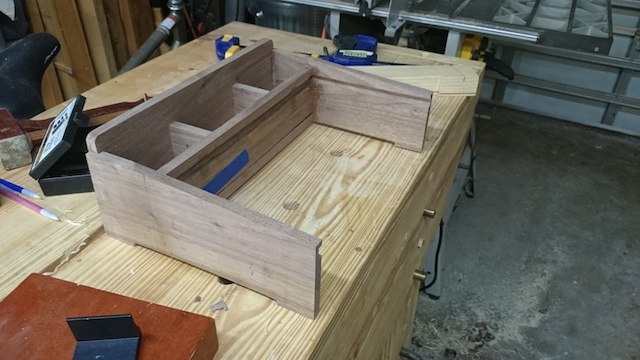
When last I left the project, I had pretty much gotten it to the phase where the frame was set up, ready for the top to be crafted.

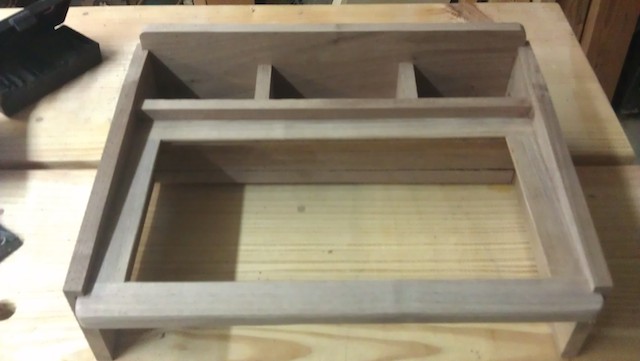
The next step was to create a frame that would fit into the dados in the sides and back. This would be the outer edge of the top shelf where I could put my keys, wallet, multi tool… the works. Cut from four pieces of stock milled to one half inch thick, the frame was joined with stub tenons and grooves I had cut on the table saw.

After gluing and clamping those suckers together, I rabbeted out the bottom tongue of the groove out to capture a middle panel.  With some sanding to round over the edges, I glued it into the middle area to serve as the base of the lid.

The frame glued in

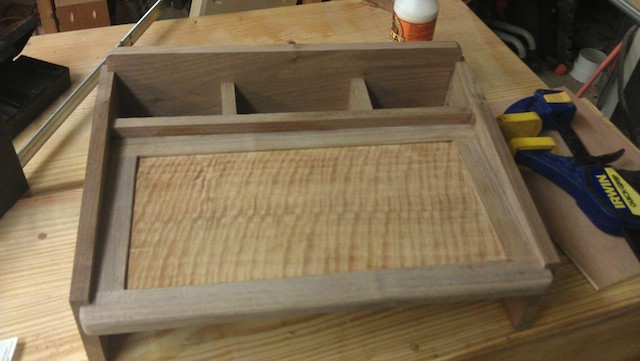
The original plan had that panel covered with some padded vinyl, but I opted instead to go with some anigre veneer. I thought that would be a cool contrast with the walnut. I stuck the veneer to the plywood substrate with hide glue and let it dry, then mounted it into the frame.

With the shelf

I dunno, but this is really starting to take shape. Now, I need to get the time out in the shop to build the drawer. Once that is done, it will be sanding and finishing… then I can declare this project done, and start thinking about batching out some of these for the nephews.

Once the weather cools down … or I am eaten by an alien. Whichever comes first.

The weekly plan

Canadian Woodworker Designing a Segmented Bowl

Wood turning is such an awesome skill to develop. Besides that, it’s very fast… you can go from a chunk of wood to a bowl, platter, goblet or some other finished item in no time flat.

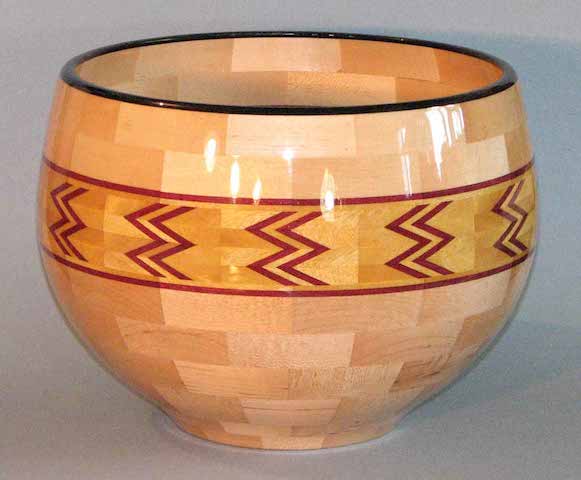
A segmented turned bowl

But, if you really want to step up your game, you need to try segmented turning. The folks over at Canadian Woodworking have created this landing page that will help you design a segmented bowl with little trouble!