All posts by Tom

I'm the guy who writes the blog...

Link of the Week

The Sharpening Blog

After much internal debate and hand-wringing, plane iron craftsman Ron Hock has launched his very own blog called the Sharpening Blog.

The blog’s unveiling is a prelude to the publication of his first book – The Perfect Edge:  The Ultimate Guide to Sharpening for Woodworkers, scheduled to be released later this fall.

While the name of the blog may sound more appropriate for a company that makes sharpening media, Ron assures me that the content will address many different aspects of woodworking.

Be sure to check back from time to time to see what’s going on over at Ron’s shop!

The Secret Manuals

The router.  The band saw.  The table saw.

These three tools are some of the most versatile tools in the shop… but you would never know it from reading the owners manuals.  Sure, they give information on how to change blades and bits,  use all of the adjustment controls and build essential safety items, but that’s about it.

To really crack the code on how to get the most out of  your tools, I’d strongly recommend that you get your hands on a few of the books that give you the tips and tricks that go way beyond what’s included in your owner’s manual.

For me, I picked up copies of the Cutting Edge books.  Kenneth Burton wrote Cutting Edge Band Saw Tips and Tricks and Cutting Edge Table Saw Tips and Tricks.  Jim Stack went rotary in Cutting Edge Router Tips and Tricks.

Each of these three books takes a much deeper look at these tools they address and provide a much more detailed picture of what is possible.  First, you can’t do good work without an accurately tuned tool.  While every manufacturer builds its tools with unique controls and adjustments, the books advise readers what the most critical areas of concern are to ensure accurate work. Getting the blade aligned properly. Ensuring the router bit is securely tightened and won’t fly out of the collet. Discovering the proper way to align the rip fence.  Stuff like that.

If you are looking to buy new blades or bits for your tools, readers can find sound advice on what to look for before they plunk down their hard-earned cash.  How to evaluate the quality.  Which ones are most essential And, since each blade or bit represents an investment, care and storage tips advise the best way to care for these to get the most from each. Proper cleaning instructions.  Careful storage techniques. How best to organize them so they are ready to go when you need them.

Jigs, jigs and more jigs.  From the most basic push stick to the far more elaborate and exotic, these books offer detailed construction plans and how-to instructions.  For example, did you ever want to cut dovetails, but never wanted to lay out the cash for a router jig or take the time to cut them by hand?  I discovered that a well-tuned band saw can do the deed admirably.  Want to make curved pieces for a project? How about using your straight-shooting table saw.? What about carving details in the face of a board?  You could invest in a set of carving tools and lessons, or you can build a simple face-routing jig and let your router do the work.

Finally, what good are all of these skills if you don’t have a project to use them on?  The books offer step-by-step plans to build such items as  a glorious showcase cabinet, intricate band sawn boxes or gracefully curved demilune tables.  Each of these projects uses the skills and jigs taught in the books, giving woodworkers the opportunity to try out their newly-discovered skills.

Let’s face it – money is tight these days.  Woodworking can potentially be a very expensive hobby to pursue.  Anything as inexpensive as a quality ‘how to’ book that helps me get the most out of my tools is certainly a welcome addition to my shop. I’d almost like to see some tool manufacturers partner with these publishing houses to bundle these books with the tools they sell.  It would certainly help out the budding woodworker with his or her new shop tools.  They are – in effect – the secret manuals you wish came with your purchase.

I chose to go with the Cutting Edge series of books, and they have served me well.  But, there are also many others out there well written by talented instructors.  My advice would be to check them out and pick up the ones that work for you.  You may never know just how much money you can save by learning all that your tools are capable of.

A Honing Beacon

My dad was fond of telling me to never discuss politics or religion with others.  I thought this odd advice, but, once I tried it at college, I knew exactly why he told me.  People tend to get very defensive if they feel their beliefs are attacked, and they will push like mad to have you think their way.
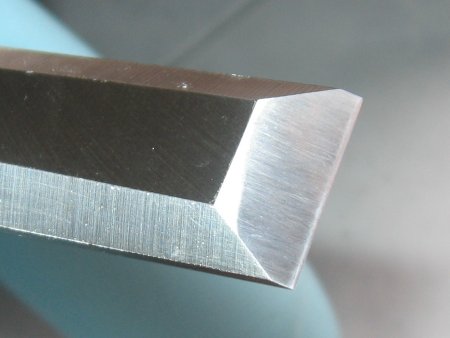
I guess my dad could have also added talking to people about their methods of sharpening.  Woodworkers tend to find a way to do something – especially as important as their techniques for putting a keen edge on their chisels and plane irons – and stick with it.

Now, let me make myself clear before I start to ramble on here.  Sharpening is a very broad term when it comes to edged tools.  There are actually two distinct steps in the sharpening process.  The first is grinding.  That involves the rapid removal of material to shape a bevel and remove any damage to a cutting edge.  There are many ways to do this, and you’ll see woodworkers rely on grinding wheels, very coarse abrasives and flat platen grinders to accomplish this task.  While getting the edge ready to be honed is important, it’s not what I am going to cover.

No, I’m talking about the act of honing… progressively removing small amounts of metal in order to achieve a fine cutting edge.  This act is typically performed by hand using careful amounts of pressure with very fine abrasive agents.  Here’s where the interesting discussions get started… and where you will see lots of folks start to take sides.

There are basically five different  kinds of media on which people will hone their edges – oil stones, water stones, sandpaper, diamond stones or ceramic stones.  Each has its boosters and each has its detractors.  Some people will make authoritative claims that one method is far superior over the others – even if they have never used the other methods in question before.  I’ve decided to at least give you a bit of a primer on the different methods and what I hear are the pros and cons of each.

Oil Stones: These stones are typically natural stones quarried from the Earth.  They typically bear the name of the region from which they were harvested – for instance, a hard Arkansas stone is found in a mining area that falls near the Arkansas and Oklahoma border.  There’s not a ‘grit measurement’ given for oil stones – their level of abrasive fineness is inferred from their descriptive name (Hard India, Translucent White Arkansas).  Exceptionally hard, most oil stones do not need to be flattened with another stone for years of use.  They use an oil-based lubricant to make sharpening easier and to clear the swarf – the metal shavings.

The agent that does the cutting for oil stones is novaculite, a silica based impurity that is found in these sedimentary rocks.

  • Pros: The stone stays true longer, giving the best sharpening job.  They have been used for thousands of years with great success.  The oil helps prevent rust on the blades being sharpened.  Lower cost compared to other methods.
  • Cons: The stones can glaze with metal cuttings, making sharpening difficult.  The hard stones sharpen slowly.  Oil makes a mess.

Water Stones: Japanese woodworkers have been using these stones for hundreds of years with great success, and now the stones are now in western shops. Naturally quarried water stones are becoming more rare, so many of today’s are manufactured. The water stones are softer, which means they abrade more quickly, exposing fresh cutting media as the sharpening progresses.  The water creates less of a mess to clean up and leaves no residue.  The stones – especially the manufactured ones – are advertised by their grit size – a 1,000 grit medium stone.  Because they do wear quickly, these stones do need to be flattened, or dressed, frequently to ensure blades and plane irons are sharpened squarely.

  • Pros: Fast cutting.  Only water is used with the stones. Easier to pick up the proper grit size. Most popular sharpening option, meaning more choices for buyers.
  • Cons: Creates a mess.  Water on steel – if not properly tended to – can lead to rust. The stones need extra care to ensure they remain flat. The price can get high for high-quality stones.
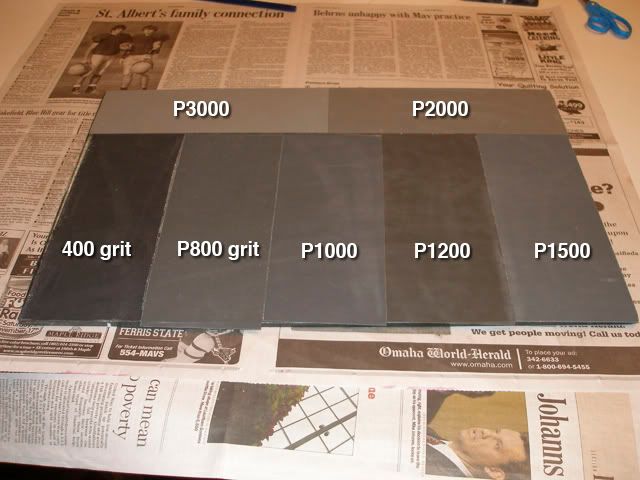
Scary Sharp (Sandpaper): At first, you may think this is some kind of joke.  Sandpaper as a medium to sharpen?  You bet… Different grits of sandpaper (400, 600, 800, 1,000) can take an abused edge from butt ugly to razor sharp.  The paper, which does the cutting, is typically adhered to a dead flat substrate, which means you you will always be working on a flat base.  You can use a few squirts of something like WD-40 to help the blade glide over the surface, but it’s totally optional.  Remember, you are sharpening on the sandpaper on top of the hard substrate… so there is the chance that your paper may move during sharpening, dubbing your edges.

  • Pros: Cost – it’s dirt cheap to get stared on. The sandpaper grits can be found at a home center or auto parts store. The paper cuts aggressively, even at higher grits.
  • Cons: Cost – you will be buying packages of sandpaper forever to keep sharpening, and the durability of the sandpaper is limited. You could dub your edges if not careful, meaning that you won’t have sharp edges.

Diamond Stones: Diamonds are a girl’s – and a woodworker’s – best friend. As the hardest substance known to science, industrial grade monocrystalline  (on premium stones) or polycrystalline diamonds (on cheaper stones) can abrade away metal very quickly.  The tiny diamonds are embedded on a flat metal plate with a nickle-based metallic binder, and many have ‘holes’ in the metal plate to allow the swarf a place to go.  Diamond stones are used with a squirt of water to allow for lubrication and swarf removal. These are some of the most expensive stones out there.

  • Pros: Diamond stones cut quickly.  They need no care other than an cleaning and drying after use. They come in a variety of grits to accomplish a number of tasks.  They are the only medium can can be used on carbide.
  • Cons: Price.  Conventional wisdom holds that the swarf generated by sharpening steel on a diamond stone will break the bond with the substrate. Cost.

Ceramic stones: The new kid on the block, ceramic stones are always manufactured.  Basically, a ceramic mixture is carefully mixed with sharp cutting agent embedded within before it is fired.  These stones can be used dry on blades, but they do need to be cleaned with a household abrasive cleaner.  These stones can be quite pricey, but their quality is quite high and they can become lifetime stones for your tools.  They are typically found only in finer grits, so if you do want to work an edge over, it could take some time to remove enough material.

  • Pros: Insanely flat. Can be worked without water or oil. Very hard, durable surface that can’t dish.
  • Cons: Cost.  Can become glazed and needs maintenance to keep cutting medium clear.

What does this mean for the average woodworker?  Well, each of these methods does provide outstanding results and can sharpen just about every tool in the woodworker’s arsenal. If you are using a method that gives you outstanding results, I say stick with it. In fact, if you are using several methods – say a diamond stone for coarser work and an oil stone for finer honing… there’s nothing wrong with that either.

However, I’m sure several readers will weigh in with their preferred method of sharpening. They will tell me that I am way off base and that their method is the only one that works – the others are just trash.

That’s what you get for talking politics, religion or honing!

Quick Poll

Planing.  Cutting.  Sanding.  Routing.

While many woodworking tasks will leave you with usable pieces of wood as your ‘waste’, many others will leave you with nothing more than mountains of sawdust and fine planer shavings.  Some collect as piles on the shop floor,while others fill dust collector bags to the brim.

Cleaning and collecting sawdust in your shop is a top priority, but what do you do with all of that material when it’s time to get rid of it?  This week, tell us what you do to get rid of all that sawdust in your shop.

[poll id=”94″]

Link of the Week

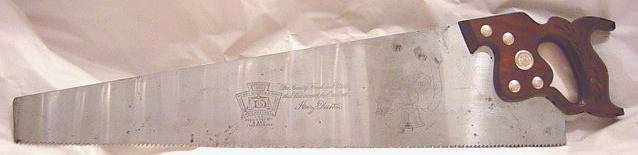
The Disstonian Institute

The Henry Disston and Sons Saw Works based out of Philadelphia, Penn. is to hand saws what the Stanley Tool Works is to hand planes.

During their heyday before the advent of the circular saw, the Disston works cranked out millions of rip, crosscut and different specialty saws for craftsman across the country – and the world. A peek inside the toolboxes of hundreds of thousands of woodworkers would reveal a gleaming saw with a sensually curved applewood or beech handle and Disston’s distinctive logo etched into the blade.

The Disstonian Institute is a website featuring a great deal of information on the company, the different saw models offered and scans of old catalog pages complete with drawings and the original advertising copy.  Truly a must-see site for old hand tool collectors.

What I learned from Toshio Odate

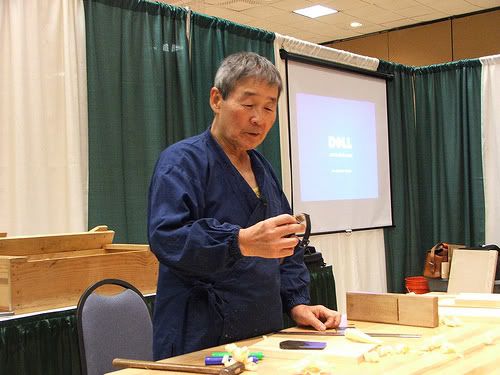
This past weekend at the Woodworking in America conference in Valley Forge, PA, I had the pleasure of sitting in on three very informative and entertaining seminars held by master craftsman Toshio Odate.  His insights helped me get a better understanding of how and why Japanese tools work they way they do.

Some of the valuable lessons I was able to learn from Master Odate include:

* He came up through the very demanding apprentice program common for Japanese woodworkers of his era.  His master was tough.  Odate told us about his early days learning how to joint a long board using a traditional planing beam.  The complicated process involves taking a step back with one leg and shifting the weight from the front leg to the back in order to create a long shaving with no hesitation. When he didn’t move his leg properly… whack.  A crack from his master in the offending leg.  Needless to say, it  didn’t take long for him to learn the craft – or learn that master knew best.  These skills are still deeply ingrained in his hands, his eyes and his muscle memory even at 79 years old.

* The Japanese plane has only four working parts (The block, blade, chipbreaker and pin) compared to the 60 plus seen in western style metal planes.  However, the simplicity of the tool doesn’t necessarily make it an easier tool to understand.  In fact, Odate told us several times that there are only four parts you can see… there are 996 more parts that can’t be seen but must work together to get the plane to perform at its best.  These include the woodworker’s senses, the material the block is made from, how the edges of the plane are shaped… it went on and on.  This is why it’s not easy to find a comprehensive ‘’how-to’’ guide that addresses every aspect of Japanese plane craft – ultimately, the woodworker must interact with the tool to make it work properly.

* Japanese plane irons are forged of two different types of steel – a very thin base of very hard steel that is too brittle to stand on its own without cracking and a thick layer of softer, more malleable steel that  couldn’t hold an edge even if it wanted to.  Why mix these dissimilar materials?  Because, the softer steel serves as a shock absorber for the harder steel… and the harder steel is capable of holding an exquisitely sharp edge. The same holds true for Japanese chisels as well…

* But, what about those hollows on the back?  I remember when I was given a set of Japanese chisels and I tried sharpening them for the first time. I wondered what I could have done so wrong to have such a dramatic uneven area on the back side.  It turns out this hollow is there for a very important reason – when you hone, you only have to remove some of the steel behind the bevel and along the sides instead of having to grind away an entire flat area of Rockwell 64 hard steel.

* But, what happens to the hollow after you sharpen the chisels or plane irons several times?  Eventually, the back side of the bevel will fall into the hollow, making the edge useless.  Here’s where the two cutters vary wildly.  The chisel’s hollow gets deeper the further away you get from the bevel.  This way, you can grind the material away to keep the area flat behind the bevel.  On plane irons, however, the hollow is a very shallow and consistent depth.  When enough material is removed to see the bevel’s back fall into the hollow, the woodworker must hold the back side of the bevel against the end grain of a wooden block and tap the beveled face with a plane hammer to push the bevel’s back side forms the new flat. After that, the bevel is resharpened to remove the ever-so-slightly deformed bevel back into shape.  Is this nerve wracking? You bet.  Has Toshio ever cracked the brittle steel while doing this?  You bet.  Twice.  His master was quick to let him know what he had done wrong…

* Why oak for the block?  The Japanese oak used for plane bodies has very elastic properties which allow the chipbreaker and iron to be seated deeply if needed, yet tapped out gently.  Hundreds of times.  Softer woods would just collapse under the pressure of the wedge being driven in, and harder, inflexible woods such as ebony would simply split.  He repeatedly inserted and removed the iron with slight hammer taps, and the plane body willingly took and released pressure.

* Oh, and that oak block should never be finished.  Master Odate told us about a plane maker who would seal the mouth of the plane with tape and pour linseed oil into the blade well. This would soak in for a week and saturate the block. Sounds like a good idea, right?  Well, what happened was that the planes would always be wicking oil out, and they would pick up every single bit of dust, grit and grime. The blocks would become pretty nasty looking, and the company folded a year later.  Just the sweat and oils from the artisan’s hands are enough to impart a rich patina.

* Even the corners and edges of the plane block were important. Most plane makers will chamfer the top and bottom edges of the sides as well as the top of the ‘front’ of the plane.  The top rear edge is always chamfered to allow a relieved surface to tap with the plane hammer in order to exert force in the right direction.  The bottom front and rear edges, however, are always left sharp, especially on smoothing and trying planes.  This sharp edge sweeps sawdust and other grunge off the board so the body can get solid contact with the surface of the board both on the cutting pull stroke and the pushing return stroke. The only exception to this rule is when a plane is being used to ‘touch up’ a cabinet, when an unintentional bump with a sharp corner could damage a previously assembled joint.

* Finally, a plane iron is expected to require five carefully prepared oak blocks during its lifetime.  As the iron wears away, the sole of the plane is carefully scraped – or conditioned – to be absolutely tuned to the needs of the iron.

While the Japanese tools do exactly the same job as their western counterparts, their simplicity gives no clue to the intricacies in the ways they are forged, built, cared for or used.  I  went to Valley Forge hoping to learn more about hand tools, and I wasn’t disappointed. With the passing of Maloof and Krenov this past year, learning directly from a master craftsman from a previous generation is something I will treasure as I keep discovering new things about woodworking.

Special thanks to Lord LQQK for the awesome photos!

Bench Lust… I mean List!

I just got back from the Woodworking in America hand tool conference, and wow, was that impressive.  The companies making tools, the talented presenters and – most encouraging – the numbers of young woodworkers attending made this past weekend something special.

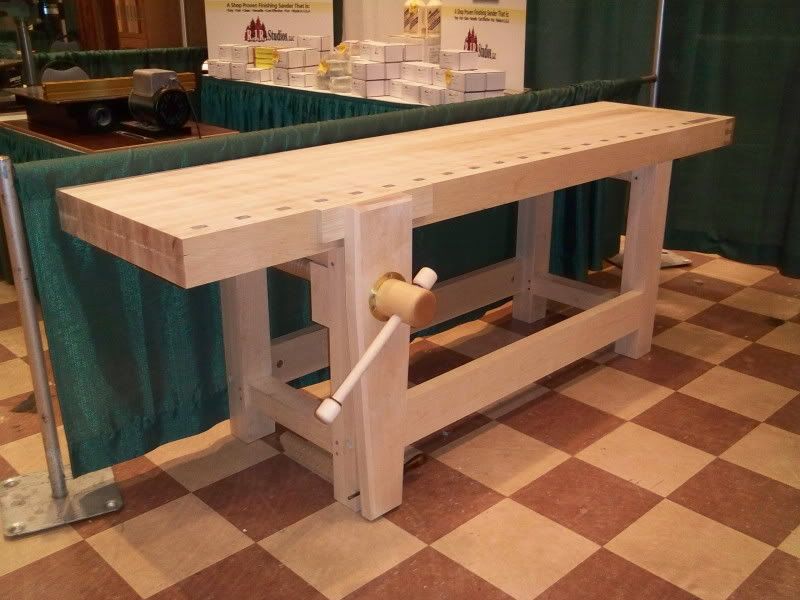
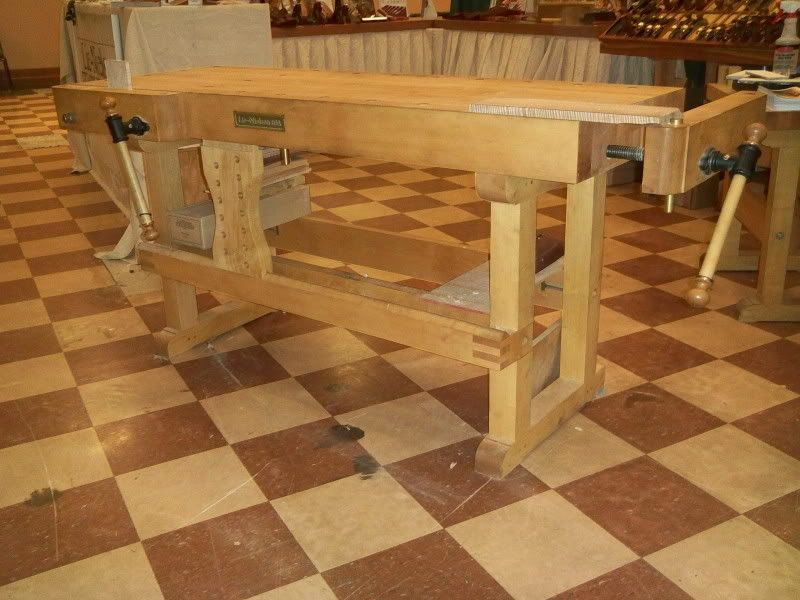
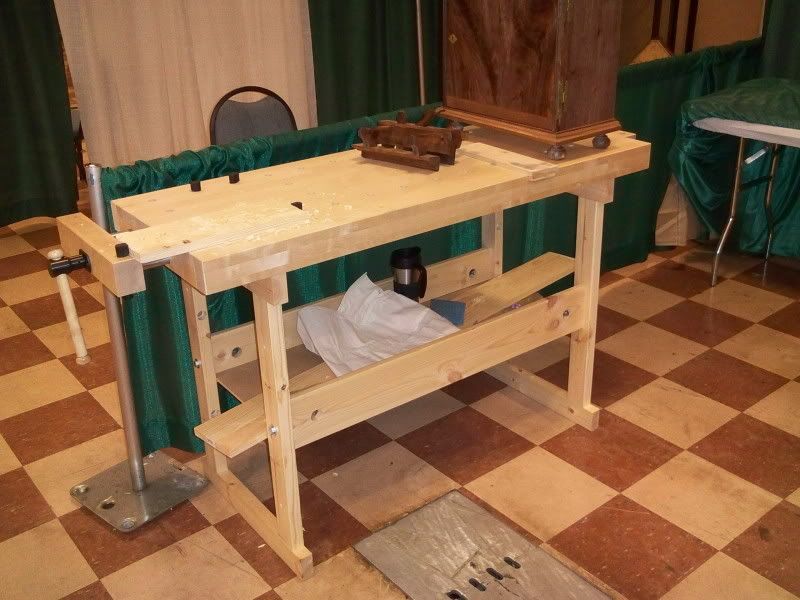
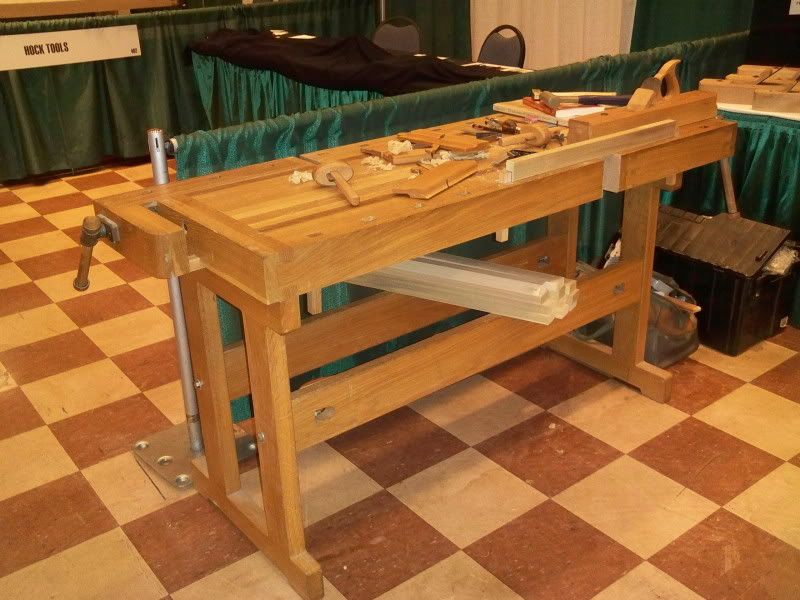
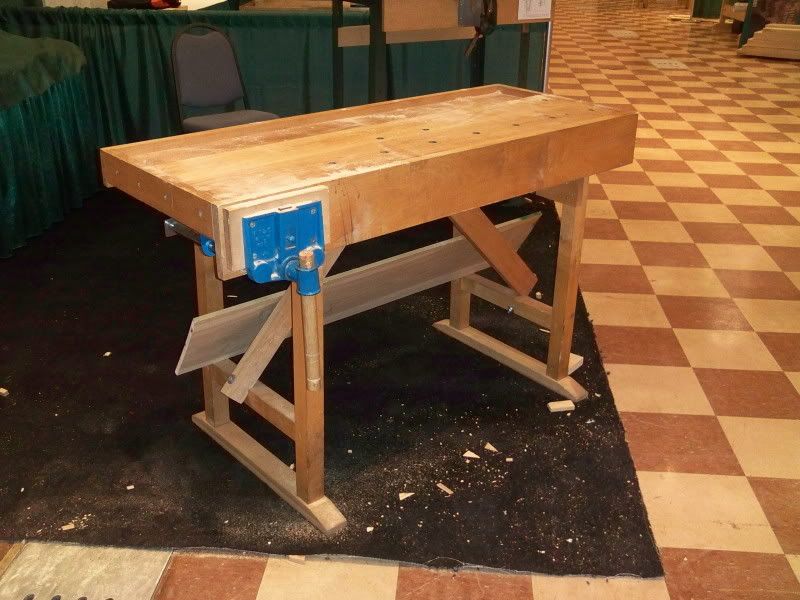
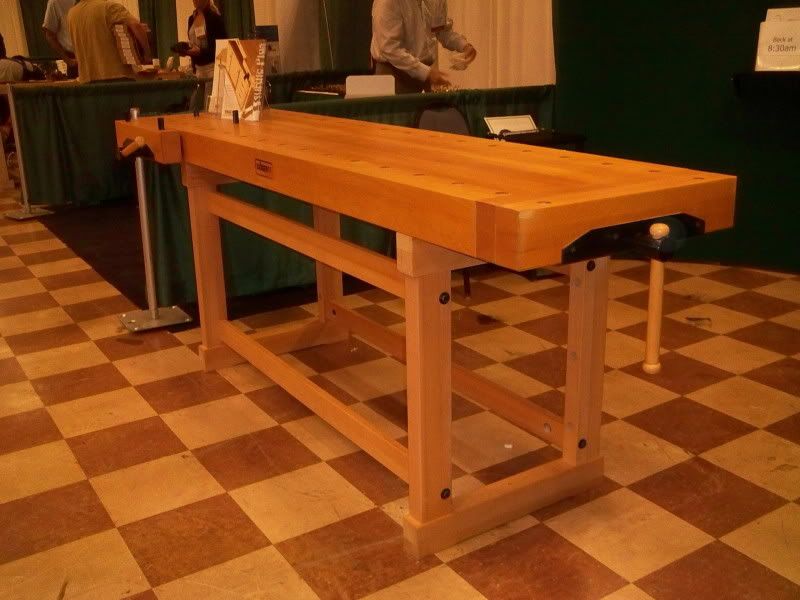
But, what really got me going was a visit to the vendor’s area very early on Saturday morning.  There, I saw an impressive collection of workbenches tool manufacturers were using to display and demonstrate their wares.

If you don’t have a bench, or are looking to replace one… well, I have some inspiration for you.

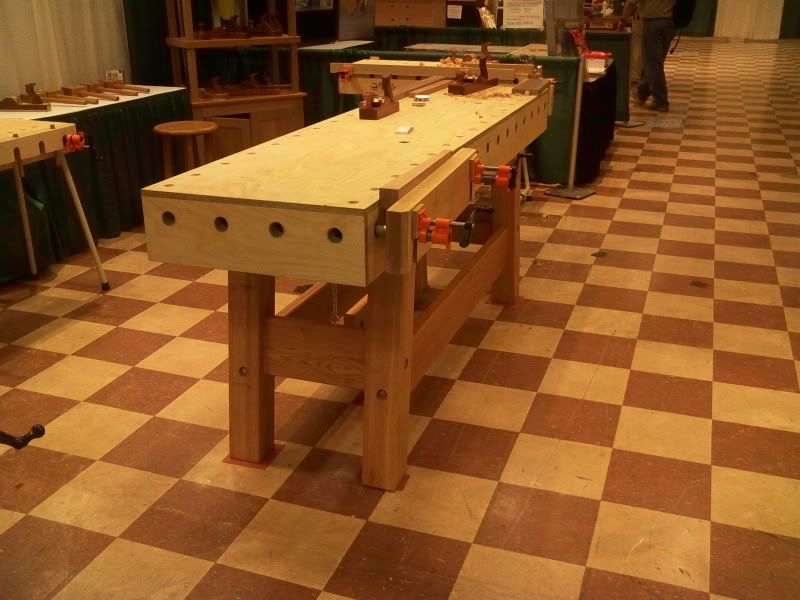
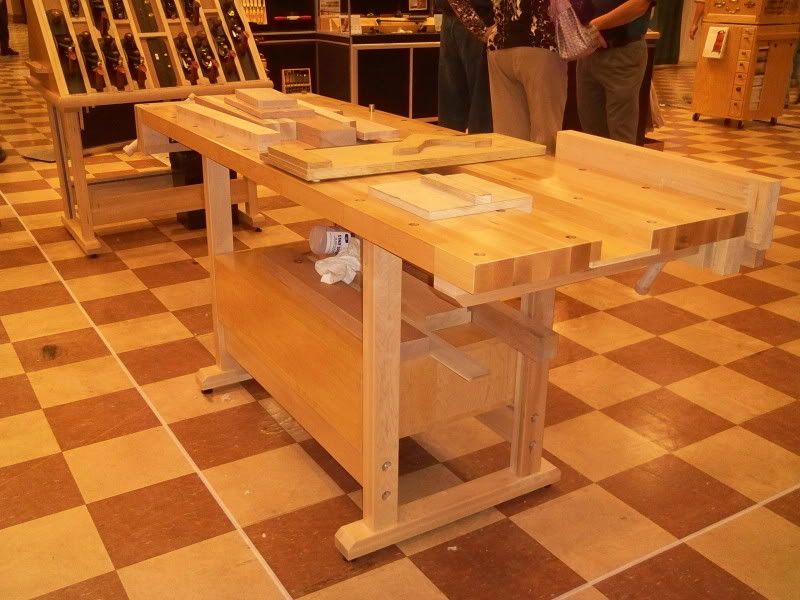
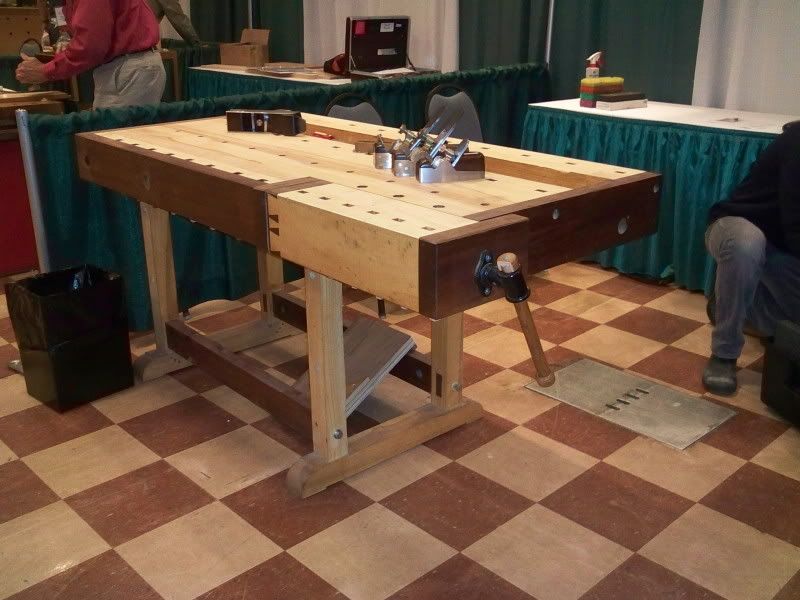
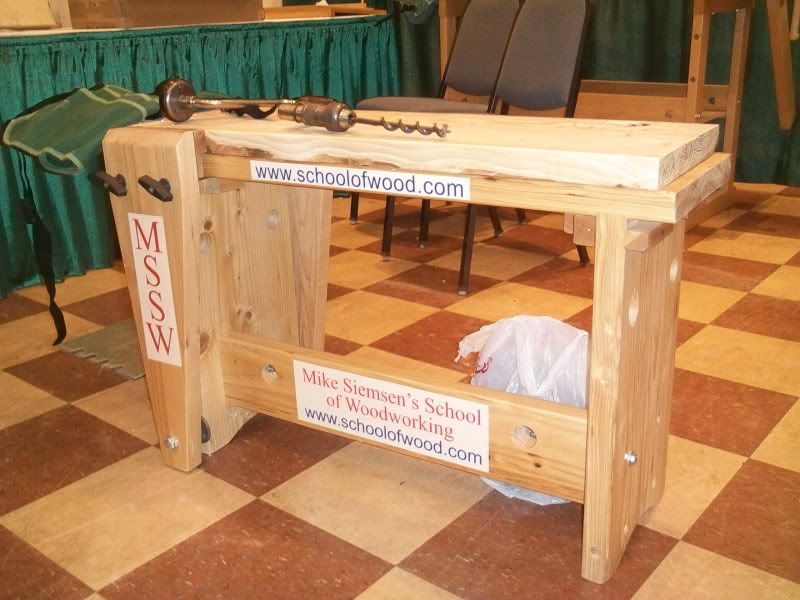
Here are a sampling of the benches out in front… some sweet specimens:

Lake Erie Toolworks' bench
The Lie-Nielsen Workbench
Blue Spruce Tools Bench
Blue Spruce Toolworks Bench
Clark and Williams Plane Bench
Clark and Williams Bench
The portable demo bench from Tools for Working Wood
A commerically available Sjoberg bench
An interesting plywood topped bench from Blum Tools
A demo bench from Lee Valley Tools
The Sauer and Steiner bench
A short saw bench
A short saw bench
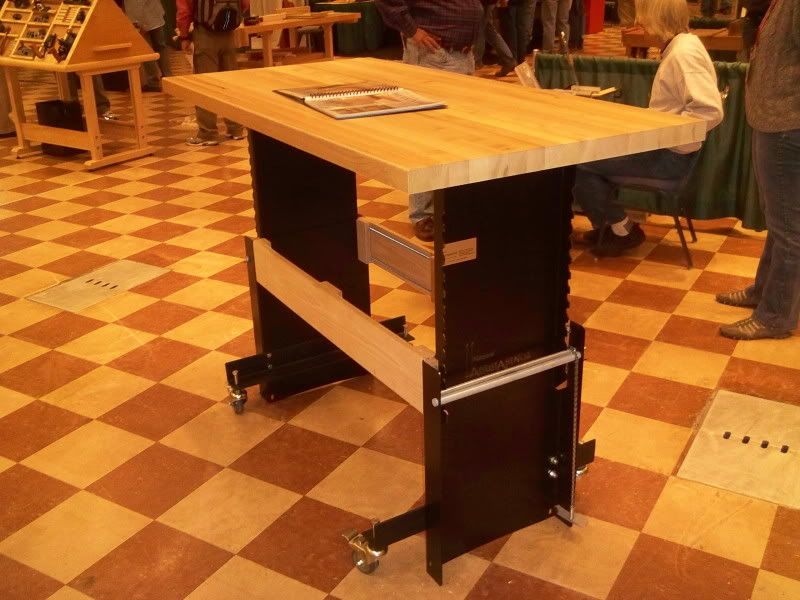
An offering from Adjust-A-Bench
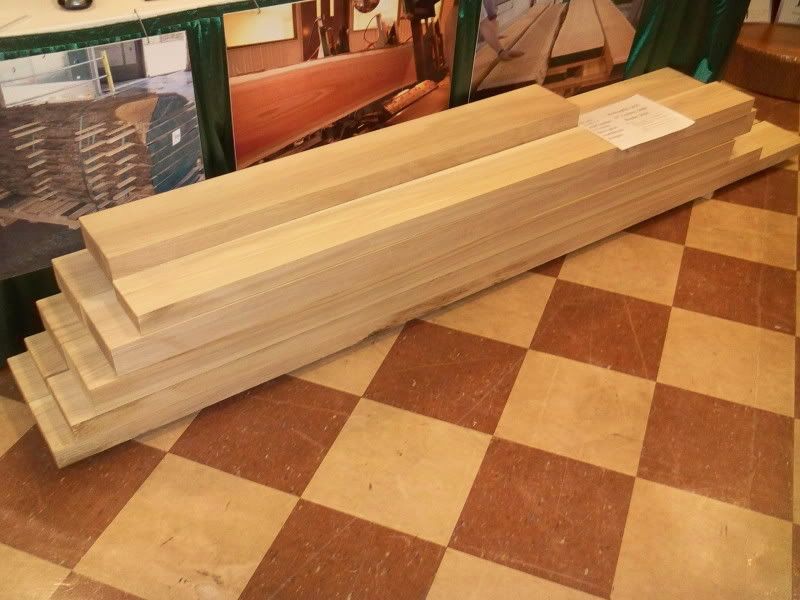
A bench in potentia
A bench in potentia by Horizon Wood
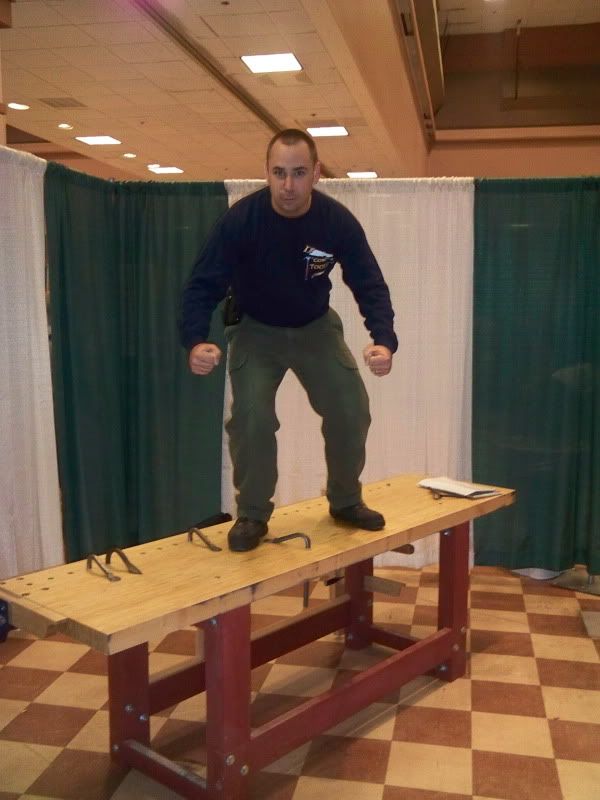
And, one very strong bench built my Megan Fitzpatrick!
And, one very strong bench built my Megan Fitzpatrick of Popular Woodworking