All posts by Tom

I'm the guy who writes the blog...

Quick Poll

It’s happened to all of us.  You are working from commercial plans or a cut list of your own devising.  You follow the plans closely and make all of the cuts.

But, when you move on to the assembly process, you accidentally glue a piece in the wrong place.  For me, I usually discover this accident when I get farther down the road on the assembly process and have to break the pieces apart or cut new ones.  Drats!

Fortunately, most woodworkers make this mistake once, then turn to a method of carefully marking the pieces to ensure it never happens again.

This week, let us know how you keep track of the pieces in a complex project.  Do you use the tried and true cabinetmaker’s triangle or something else?

[poll id=”130″]

Link of the Week

Swingplans.com

If you live in the northern hemisphere, you know it’s summertime.  Besides retreating indoors into the air conditioning or taking a dip in a lake or pool, one of the best ways to beat the heat is to recline a comfortable shady seat, grab yourself a cold beverage and relax on an old style porch swing.

Yes, there are plenty of porch swings out there to buy, but we’re woodworkers!  Swingplans.com offers a number of sweet looking plans and patterns for a wide variety of handsome looking models. The site also offers plans for stands and links to hardware to make building your swing as enjoyable as sitting in one.

A place for everything…

Organization is not my strong suit.

Navigating my desk at work is an adventure.  I’m getting better, but I routinely  find some important note from a few months ago  – say – about a task I had to do back in March.  Not a good thing, especially when my boss was really counting on that task being accomplished by – say – the second week of July.

The shop?  It’s not much better.  I am really having trouble finding a good home for everything I have amassed over the past dozen years.

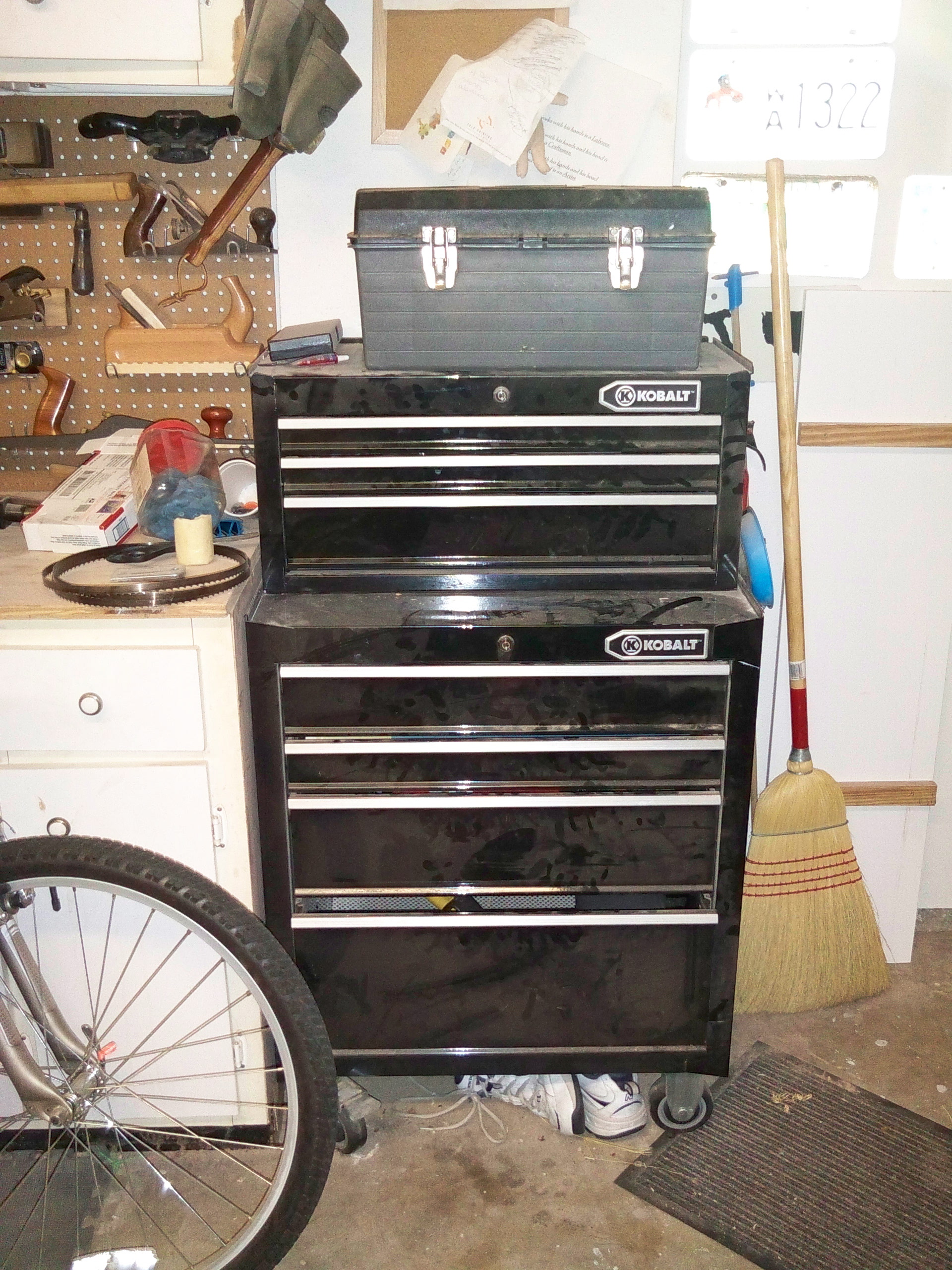
At least in my shop I have one area that stays pretty well organized – my rolling tool chest.  I picked it up during a sweet holiday deal at Lowe’s and call it black beauty. Actually, it’s two stackable units – a four drawer base and a three drawer mid section – topped by my old tool box.
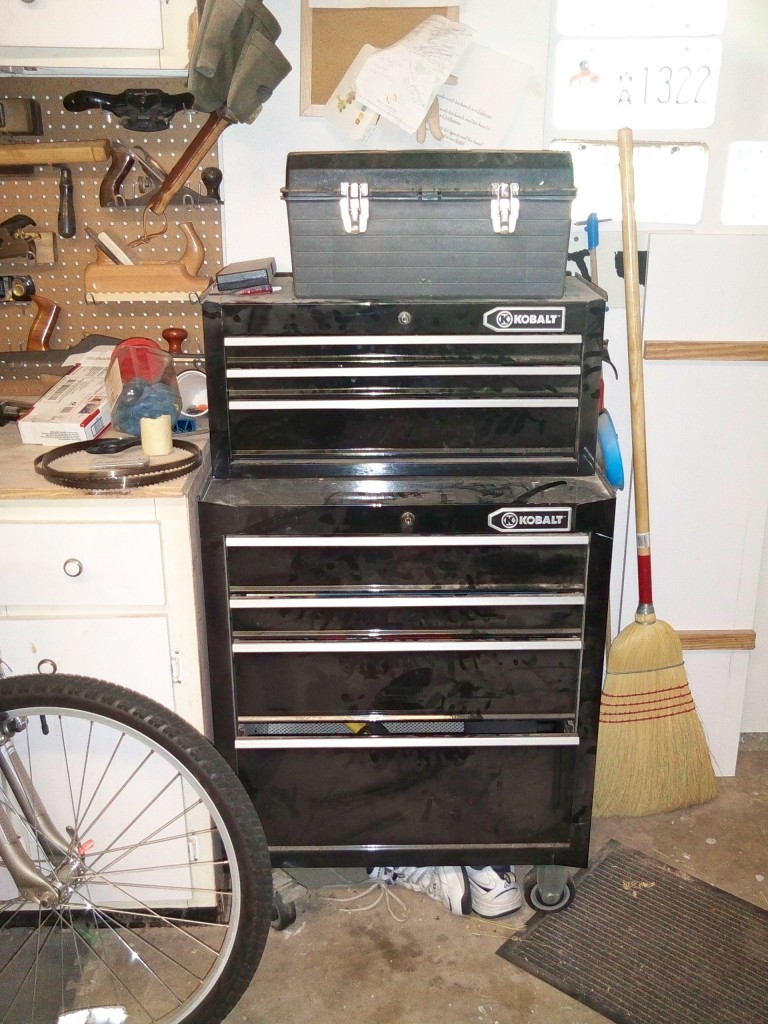
I know what you are thinking… and, yes, you are right.  A glossy black surface in a wood shop?  You betcha. My wife and I used to wipe it down every so often when the dust would accumulate, but now, we just let it get covered and clean it when the layer of sawdust is thick enough to support agriculture.
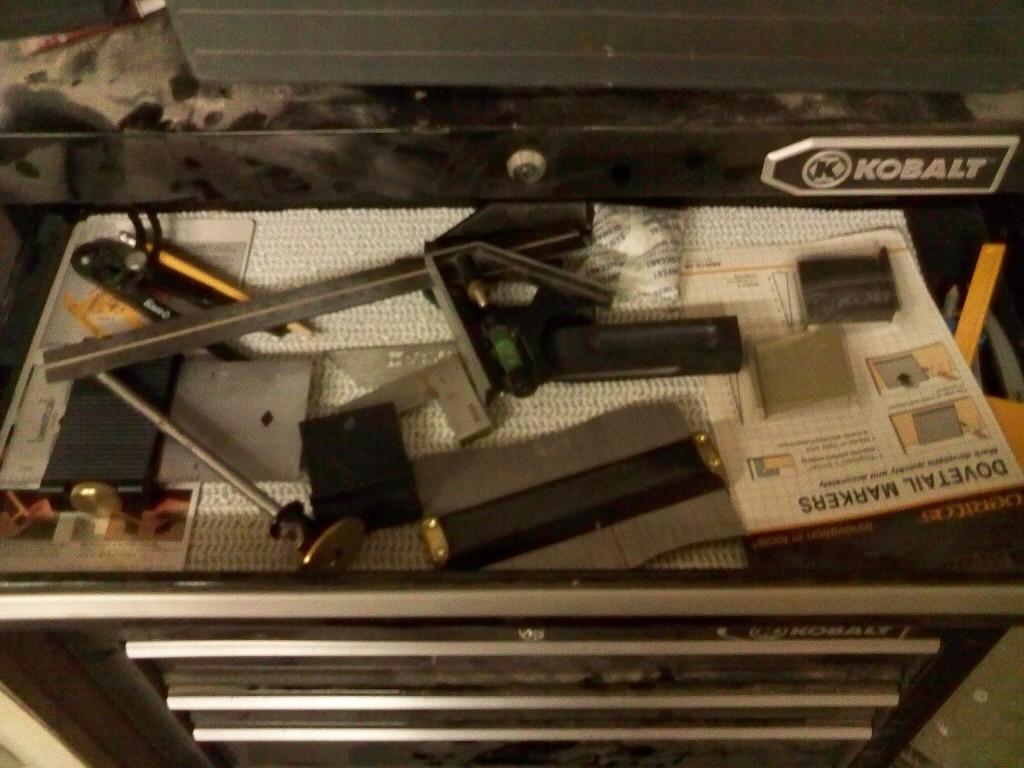
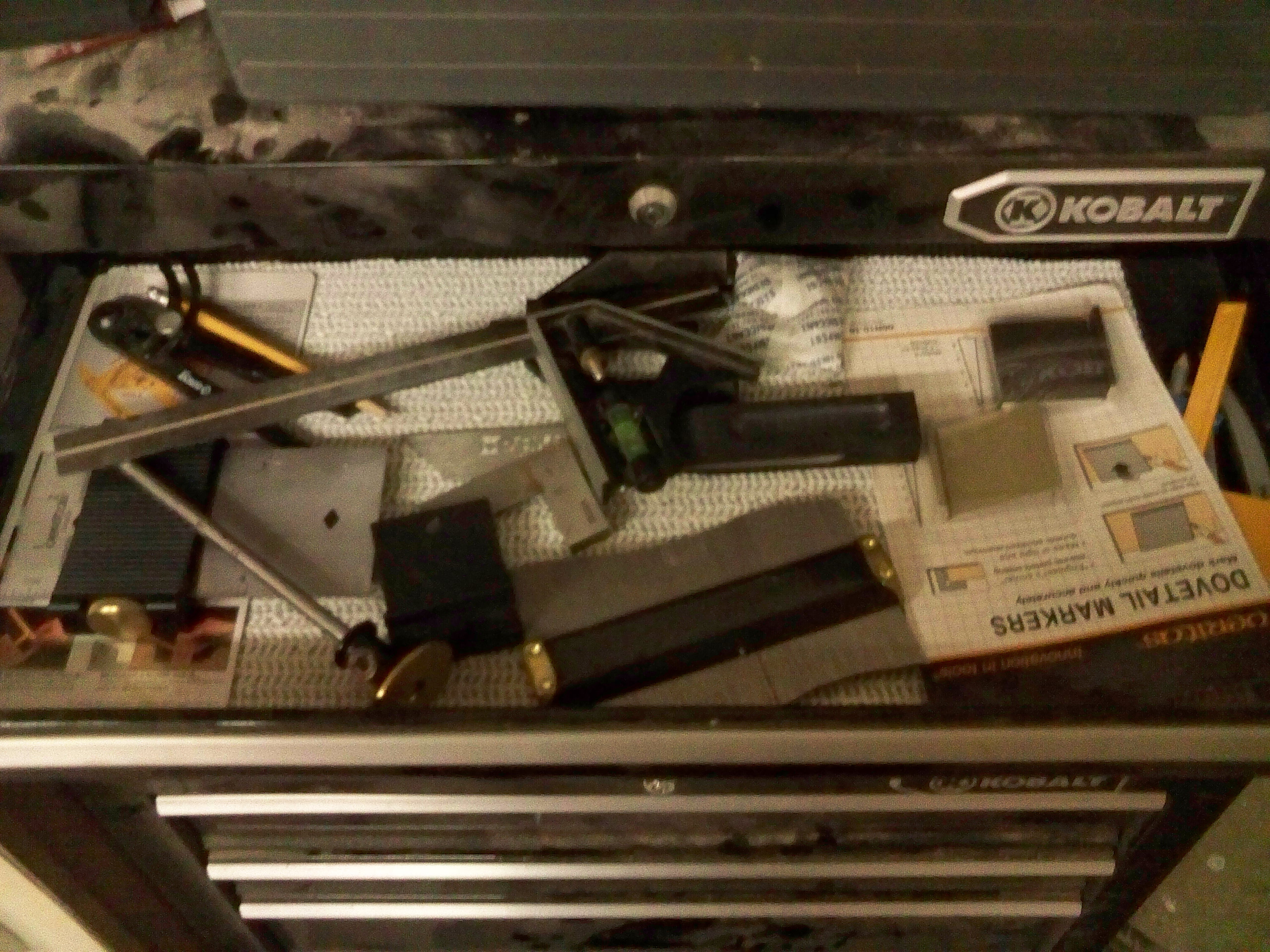
This rolling chest has been a godsend when it comes to holding on to easy to misplace items.  The top two drawers hold all of my fine measuring tools.  Squares, striking knives, calipers… the works.  It’s nice to know that when I have to measure something precisely, I just have to look into two drawers instead of through boxes of other items to find what I need.
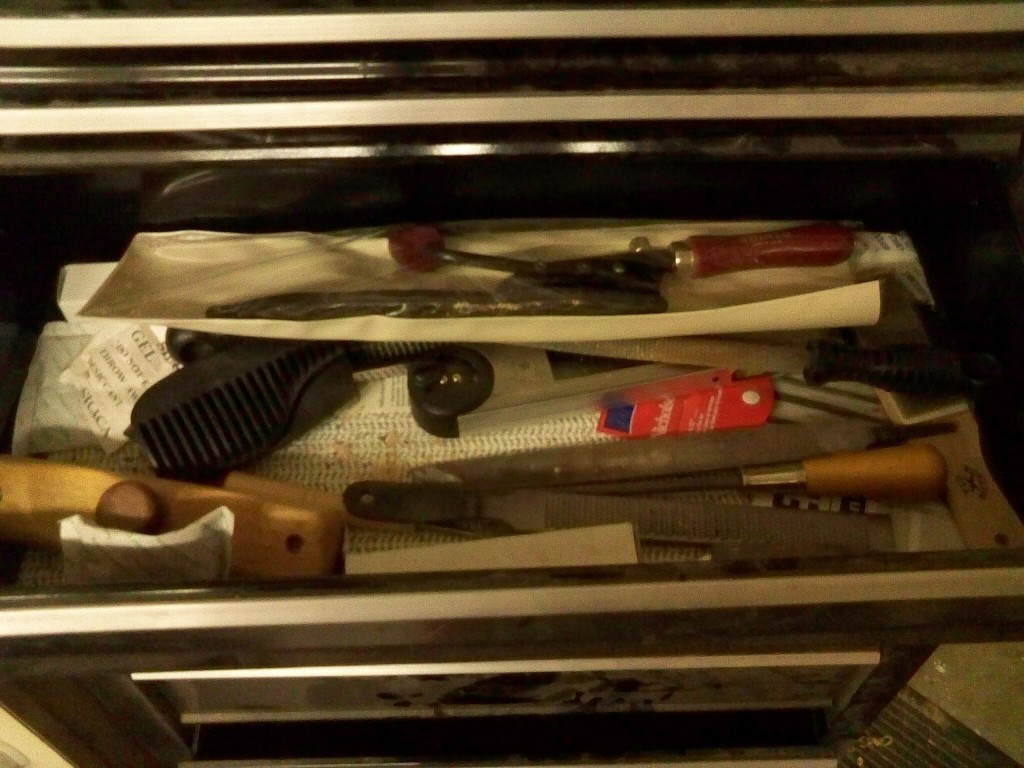
The bottom drawer of the mid section holds my scraping and shaping supplies.  Rasps, files, scrapers and all of the items that go along with them are stored here in one place.  So, when my scrapers no longer do what they are supposed to do, all of the items I need to sharpen are in one place.
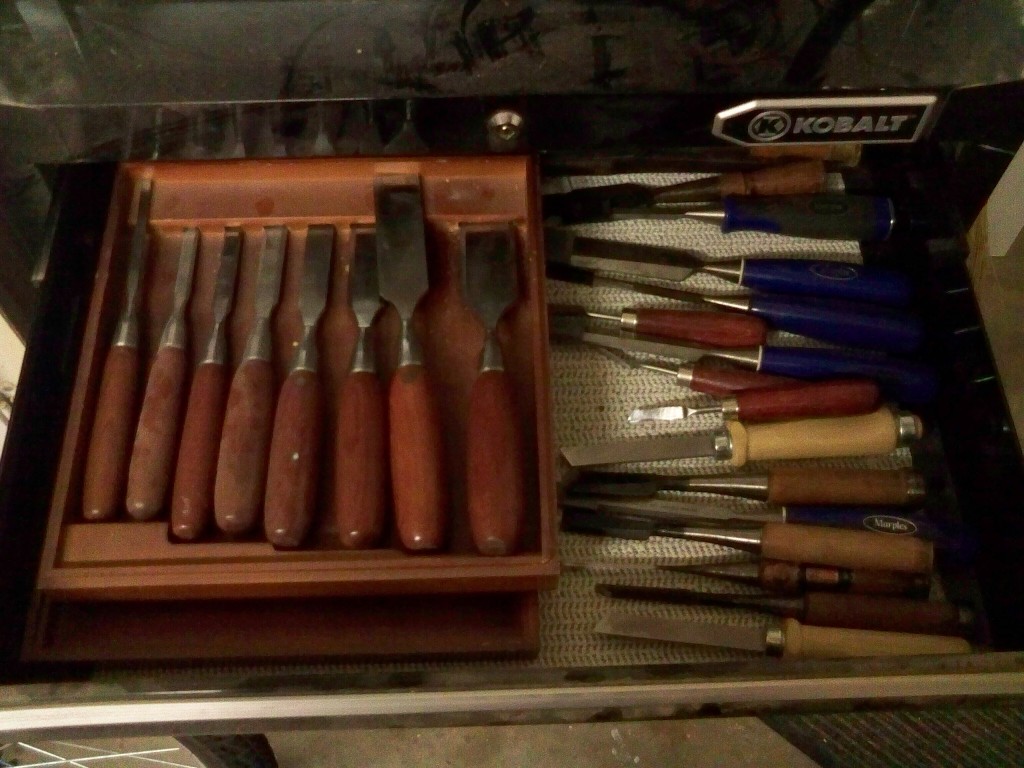
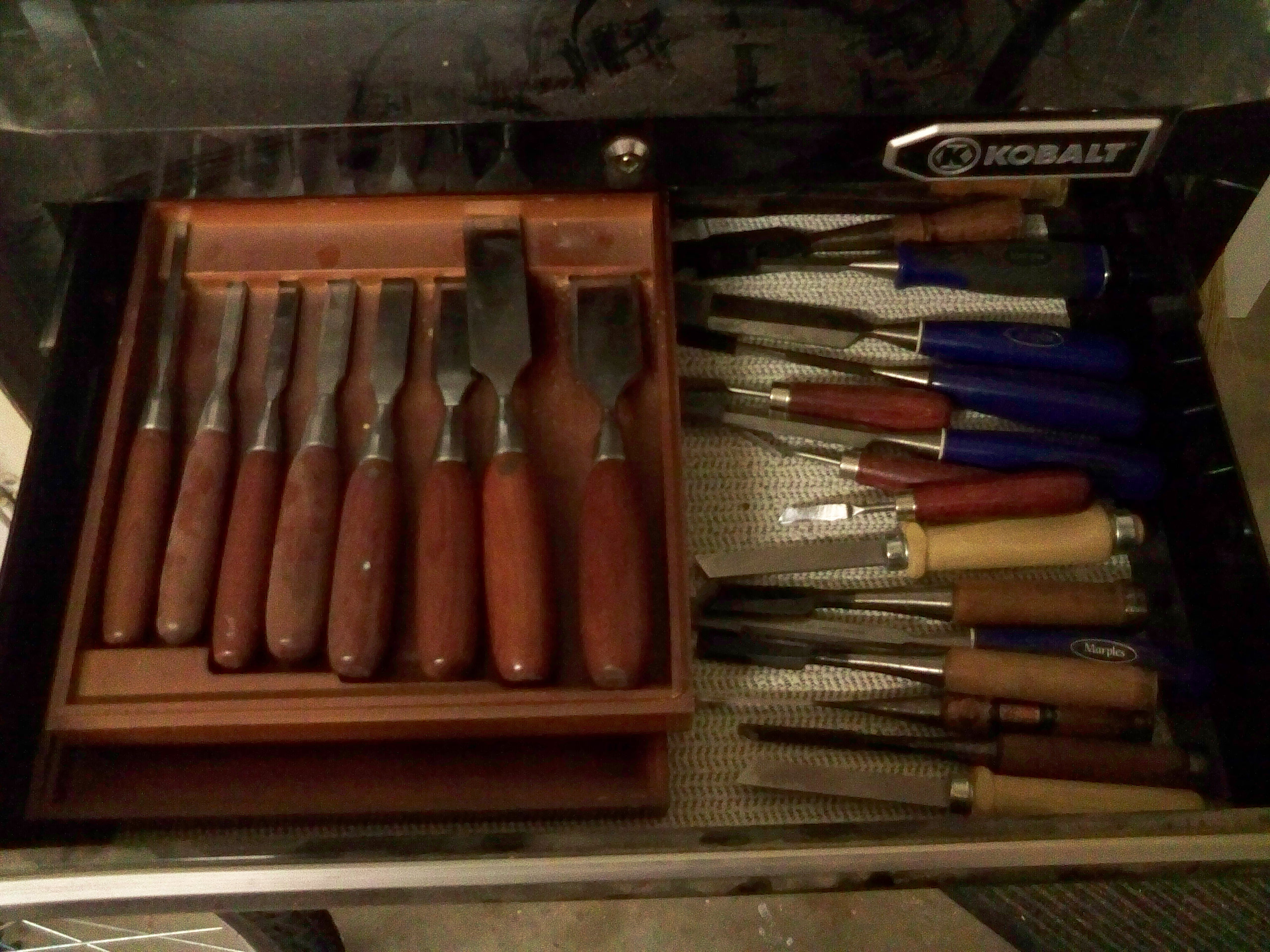
Below that in the top of the base cabinet are my chisels.  Yes, I have recently become a collector of chisels.  I have to admit it as part of my 12-step program.  From the Marples Blue Chips I started with to the set of WoodRiver beauties I traded a drill press mortiser for to the ultra sweet Japanese chisels used by my neighbor’s father, they’re in there.  Keeping them in the drawer protects the tips and makes a handy place to find them.
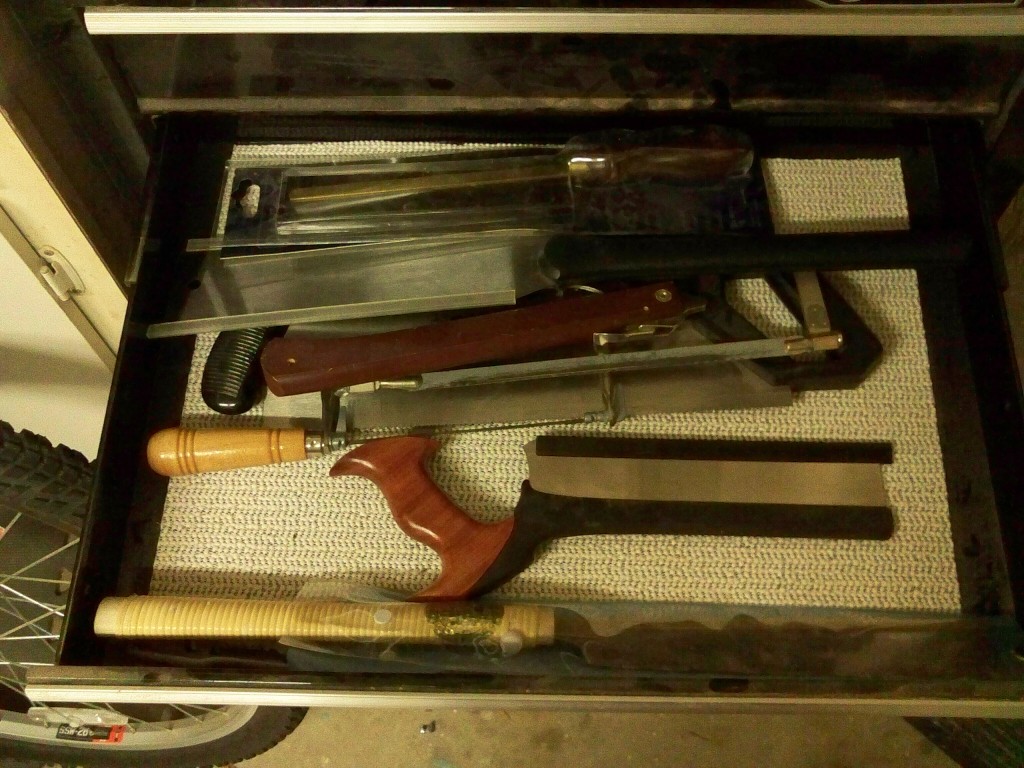
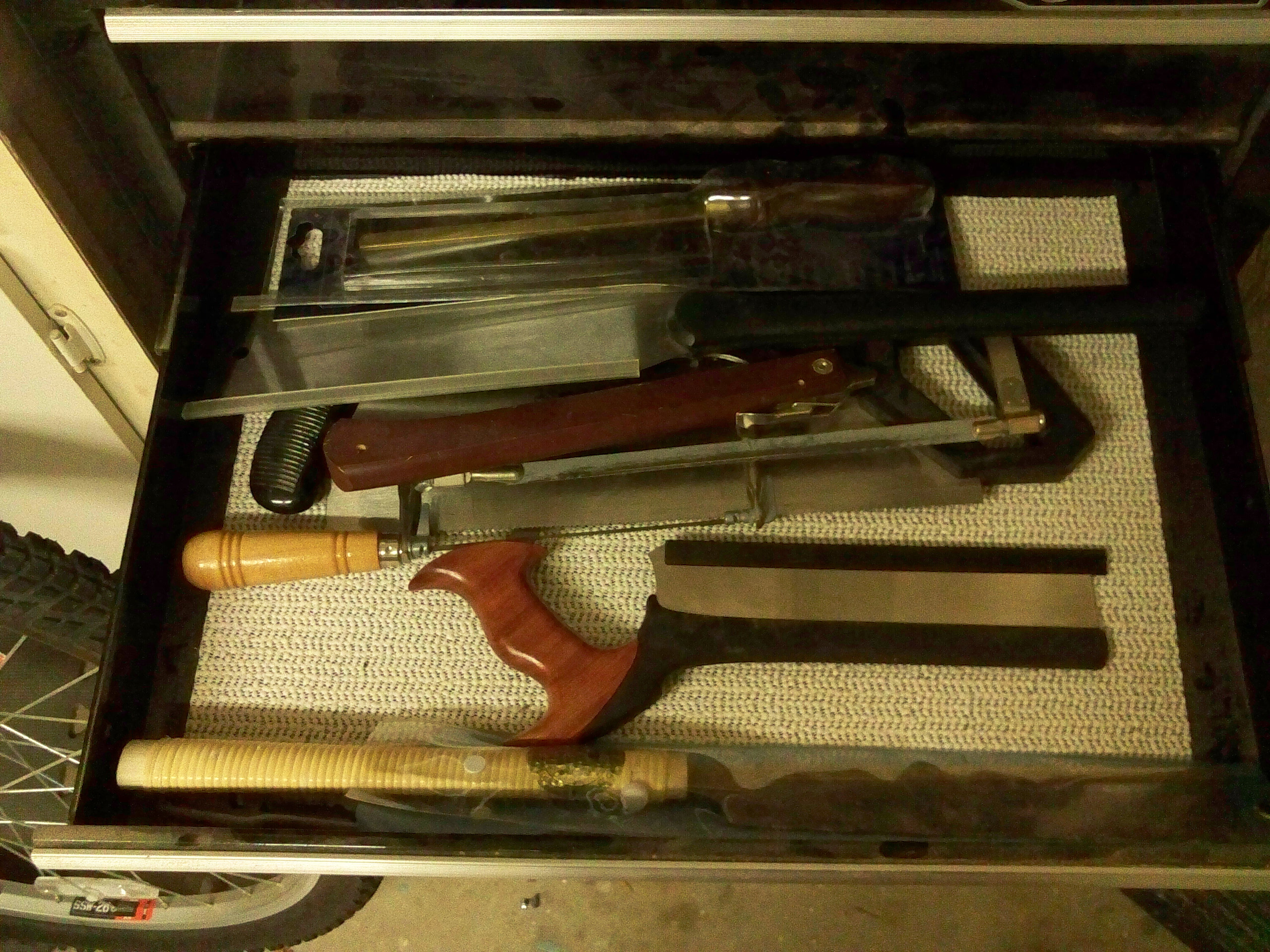
Below that is where I store my fine cutting saws.  One day, I’ll build a proper saw till to display these babies and keep them closer to the bench, but, for now, they are protected from bumps and broken teeth in this drawer.  It does take a little digging around here to find them when I do need them, but I’m good with that.  For now.
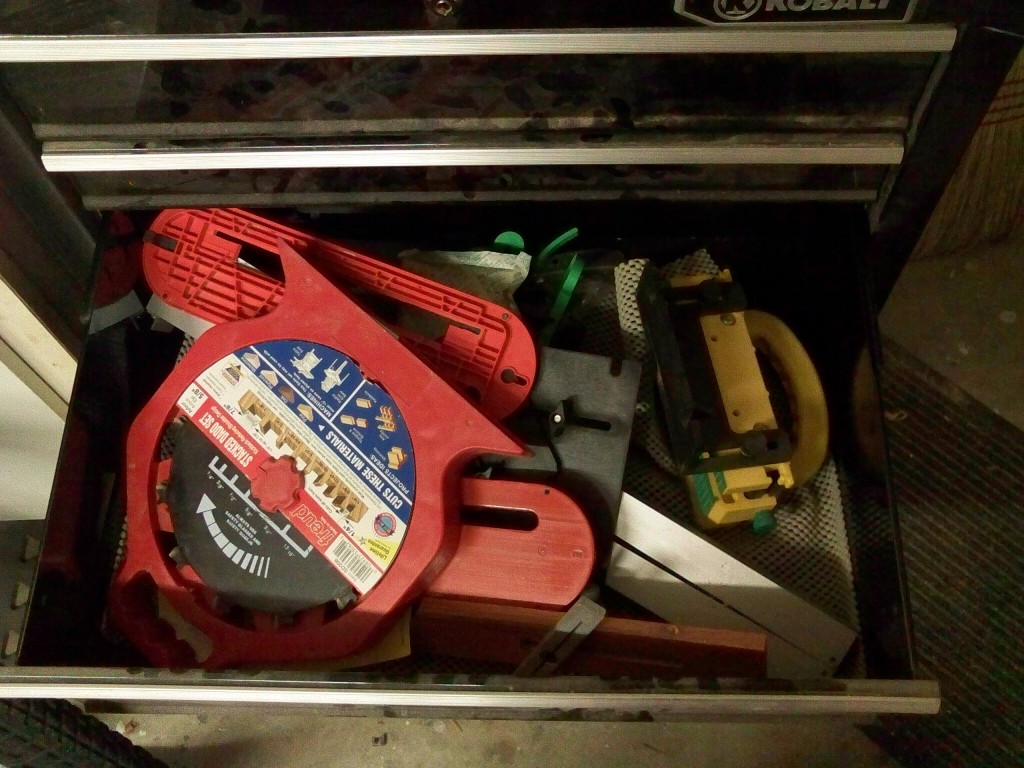
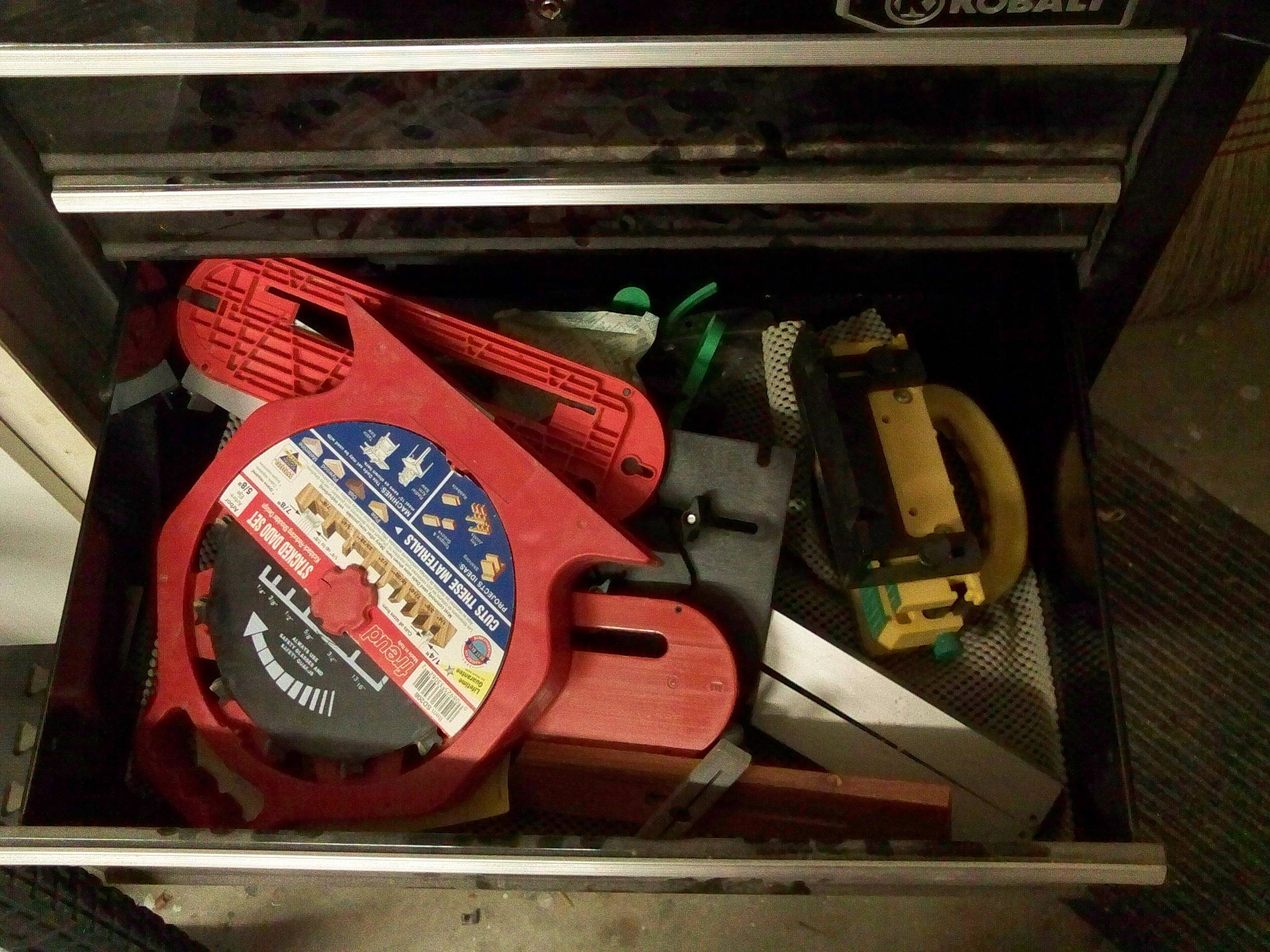
One level down, and we’re in the realm of the table saw.  No, this storage drawer is nowhere near the saw itself, but I have discovered that table saws require more accessories than my children did when they were very young and it took us half an hour to collect everything for a trip to the supermarket.  Dado blades, push sticks, featherboards … again, this is a great place to stash the stuff when I don’t need it.
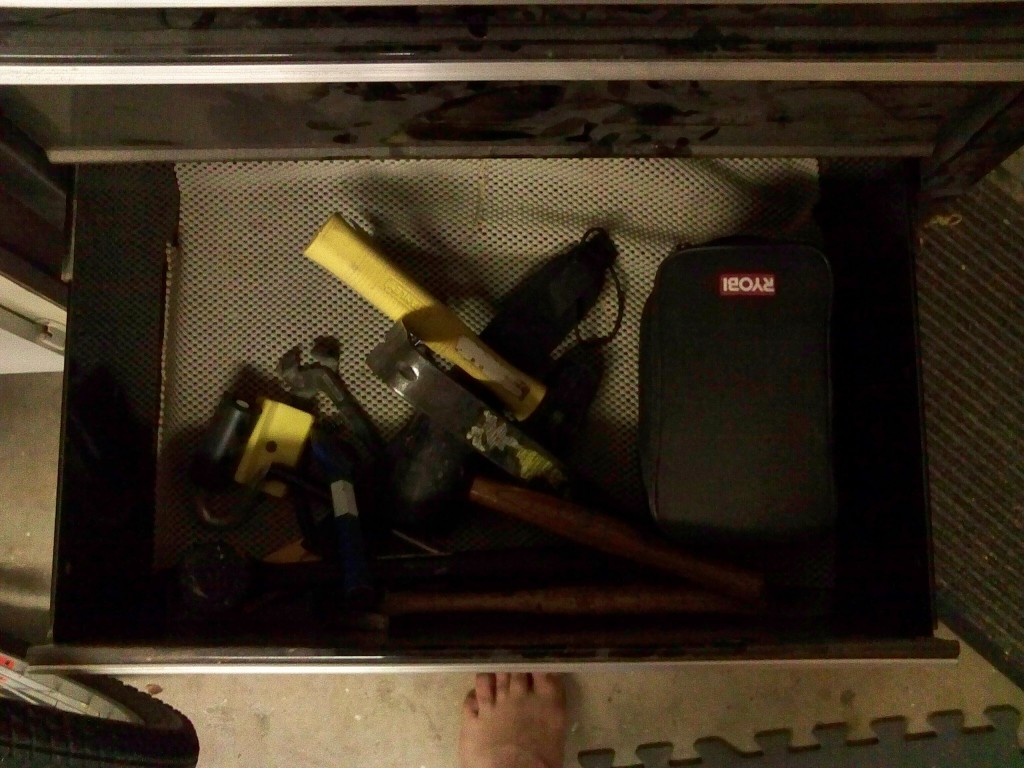
And, finally, there’s the – uhhh – miscellaneous drawer.  My hammers and mallets are there along with my laser level, cold chisel, pry bar… well, everything I chuck in there.  OK, it’s not so organized.  There, I can’t give up all of my bad habits.

Some folks have told me that by storing my tools in enclosed drawers is a waste of time.  That perhaps I would be better off keeping them out where I can see them and find them easier would be a better idea.

Uhhh, no.  This way, at least, I keep my searching down to a minimum – for me.  That allows me more time to do what I really enjoy… building.

Tools I use: My sanders

I live about ten minutes away from the beach.  My wife and two sons are off for summer vacation. The beach is one of their  favorite destinations to spend some time on a hot, lazy summer day. This means that both of our cars are filled with sand.  Sand on the floor of the cars.  Sand in the trunks.  Sand on the seats.  Sand in the living room.

It’s a constant effort to keep on top of the sand situation.  Sweeping. Vacuuming. Shaking rugs out.

But, hey, I keep my sanding contained to one part of the house!

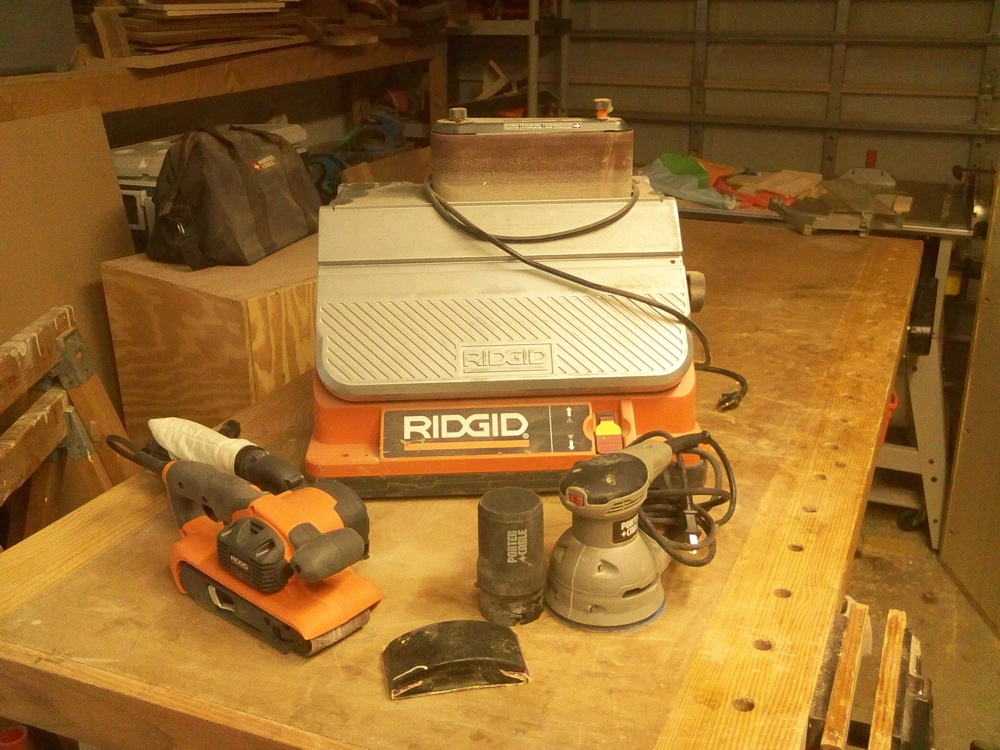
I’d like to introduce you to the sanding team:

Starting in the back is one of the most frequently seen sanders in home shops – the Ridgid spindle/belt sander.  This is one sweet little unit, easily converting from a belt to a spindle sander.  It has plenty of muscle to sand all kinds of wood – maple, hickory, oaks… the works.  I’ve been able to get inside some tight curves and do some long tapers with it.  If you are looking for a small bench type sander, it’s hard to go wrong here.

My new (refurbished) Ridgid belt sander that I recently picked up.  This has the potential to be a very blunt instrument, stripping away wood and digging divots.  However, with a careful hand, this can carefully refine a curve or even out the top of an end grain cutting board.  I never thought I’d get much use out of it, but boy, was a I wrong.

My Porter Cable random orbit sander.  I’m torn when it comes to this sander. The rotating pad does give a very nice finish that typically just needs a little scraping to perfect, and it can work around corners.  The only problem I have with this model is the dust collection cup.  It is held with two plastic clips onto two lugs on the dust outlet port.  For the first six months, I would twist it on and hear a satisfying snap.  That meant that the cup would stay on regardless.  Unfortunately, since those first six months, the plastic clip hasn’t held on worth a darn.  I keep trying to bend things back into place, but it’s a lost cause, and I usually have to end up sanding with a fan on and my garage door open to vent the dust.

Finally, up front I have a sanding block I picked up at a local home improvement store.  Even thought I have the power sanders, I know that for many situations, nothing beats the versatility and control of hand sanding.

For me, I always wear a dust mask, eye protection and hearing protection.  Even though it’s just sanding, I’d much rather not inhale the dust, get it in my eyes or kill my hearing.

Yes, one day I would love to give up on power sanders and be able to finish all of my projects with planes and scrapers, but as long as wood has its peculiar workability properties, there are just some times when power is better.

Link of the Week

Scroll Saw Woodworking and Crafts Declaration of Independence

When in the Course of human events, it becomes necessary for one people to dissolve the political bands which have connected them with another, and to assume among the powers of the earth, the separate and equal station to which the Laws of Nature and of Nature’s God entitle them, a decent respect to the opinions of mankind requires that they should declare the causes which impel them to the separation.

With these words, the colonial leaders in the British colonies on the east coast of North America told King George III to go take a hike, thank you very much, and declared that they were going to make their own country.

That happened way back on July 4, 1776 in a hot assembly hall in Philadelphia, Pennsylvania and took a great deal of courage to draft and sign.

Then, there’s this version, which took skill and patience – and some courage – to build.  Woodworker Bill Thurlow took 580 hours spread over eight years to create this scrollsawn replica of the Declaration of Independence from 1/2″ thick maple.

This link goes into great detail of the construction of this incredible project.

Stuff I’ve built: Lou’s CD/DVD rack

I work with this guy named Lou.  Lou is a pretty darned worldly guy.  He’s the kind of cat you would expect to find trekking the Andes by himself.  He’s the dude you wouldn’t think twice about if he was called up on stage to jam with a fusion jazz band.  He creates beautiful stained glass pieces in his living room.

In many ways, he reminds me of the character in the Dos Equis beer commercial – the guy known as the Most Interesting Man in the World.

Now, you’d figure a guy like Lou would have a plush home with zebra-skin covered sofas, but, no, Lou is a very practical guy.  He spends more time kayaking the mangrove estuaries looking for rare birds than worrying about his home furnishings.

I discovered this about Lou when he asked if I could build him a rack to store a portion of his large CD and DVD collection.  “I want something plain … nothing fancy.  Don’t  put any of that fancy cabinetmaking mumbo-jumbo on this piece, OK.”

So, I had to come up with something that would have that certain kind of ‘industrial’ quality but be well designed.

This is what I came up with.

It’s a pretty large piece.  Made of nearly two sheets of plywood, it has a number of shelves for storage of CD/DVD cases. I used pocket screws and glue to hold it together. My plan was to face the edges of the shelves, but Lou was clear… “Don’t you do anything fancy on that.  Unfinished plywood edges are fine with me.”

Oh, no… that meant I couldn’t use a face frame to help support the shelves.  So, I added the central supports between each shelf to keep the long, narrow shelves from bowing.  I sanded those edges as cleanly as possible and broke the edges so they would be smooth to the touch and wouldn’t splinter.

Right now, it’s still in my garage.  But, Lou has seen a photo of it and said he likes it.

And, when he’s done with his latest safari-at-home adventure, he said he’s going to come to my house to strap the piece to the roof of his car to take his trophy home.