All posts by Tom

I'm the guy who writes the blog...

The Cat’s Out of the Bag

Did you ever hear the expression never buy a pig in a poke?


That  was a very strange one for me – a kid growing up in New Jersey where a poke is what the Three Stooges did to each others’ eyes.  I had heard people use the expression, but, in an age before Google, I never understood what the heck it meant.

It turns out that the expression was first used in the middle ages by less-than-reputable merchants. Basically, the scam artist would be holding a poke – a colloquial term for a sack – and tell his potential victim that it contained a suckling pig that would make a very tasty dinner. If the customer was an idiot, he would say ‘sure’, fork over his hard-earned money and get the sack with the ‘wriggling piggy’ inside.

After the merchant beat a hasty retreat, the dupe would open the sack and, to his surprise, see that it contained a cat. Not exactly the best eating. This also led to the creation of two other well known idioms, to let the cat out of the bag (something the scam artist never wanted to happen) and to be left holding the bag (to get nothing for your hard work).

Now that I have impressed the heck out of you with my Bachelor of Arts degree in English Literature and Language, what does this have to do with woodworking?

Glad you asked. Woodworkers are very sensory-driven people. We need to see the wood we are going to use in our projects in order to match the grain and colors. We need to feel the wood to see if it is soaking wet or ready to work. We need to smell the boards because hey, that’s what we do.

And, I’d be willing to bet that’s what’s holding some folks back from buying their wood online.

“It’s something we do see in woodworkers,” said Eric Poirier of Bell Forest Products. “For first time buyers, we notice a lot of anxiety when they believe they aren’t going to have control over the board selection process.”
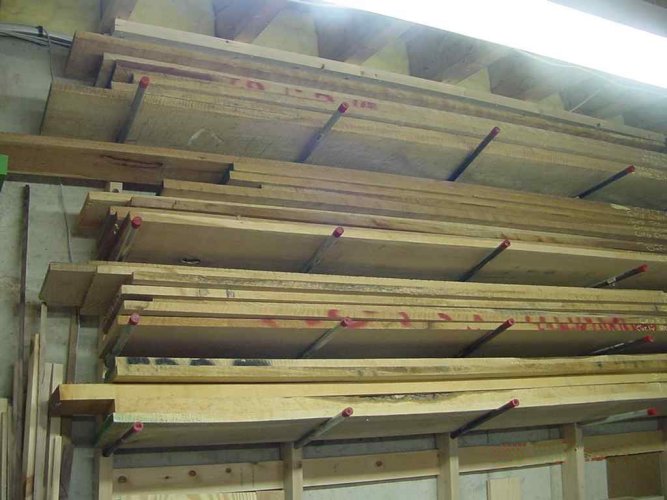
To help put wood shoppers at ease, reputable online wood dealers take great care when selecting boards they sell to customers. “No, we’re not going to select the worst of the lot and ship them off to our customers. That would be about the worst business practice ever. We have built our reputation on providing quality wood for woodworkers to build their treasures, and any shenanigans would ruin us.”

For those who may want additional control over the process or who may want to find a board with particular characteristics for a project, Bell Forest Products also offers a program where customers can hand pick their boards. “OK, I’ll admit that customers will handle their mouse to select their board, but what a selection they will have to pick from.”
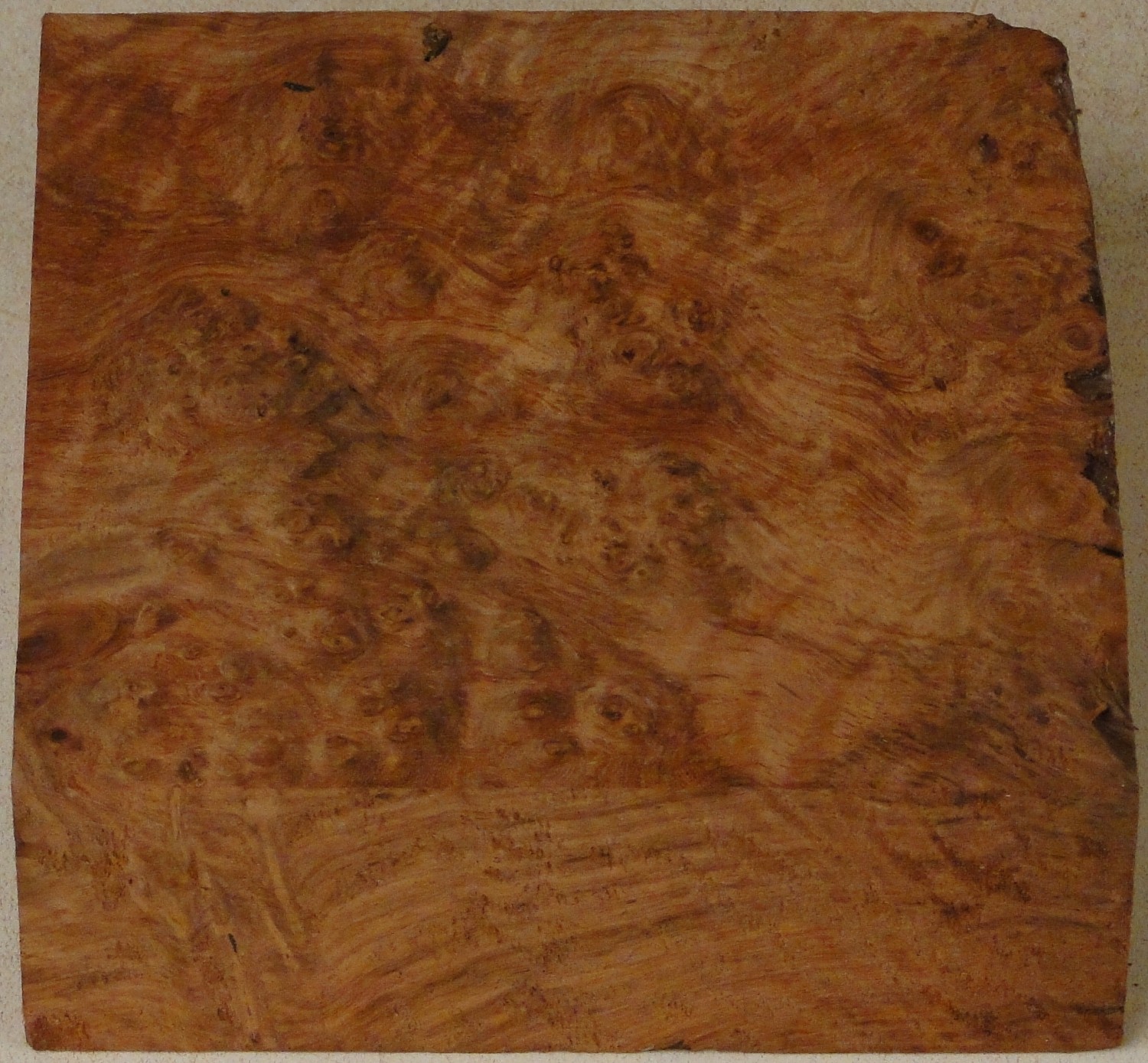
Yes, customers can actually look board by board from some choice pieces for their projects. “We feature burls, boards with unique figure and boards with live-edges. Exotics and domestics. If you are looking for something special to feature in a project, it’s not a bad place to start.” Selecting the hand-picked board link provides photos and descriptions of nearly 500 different spectacular boards to choose from.

And, if you can’t find something that tickles your fancy? “Just give us an idea of what you are looking for. We’ll keep an eye out for you. Who knows? That dream piece of wood may be coming out of the kiln right now.”

Quick Poll

Luddite.  Normite.  Knuckle-dragger. Power hog.

There are lots of terms used to describe those who tend toward power tools and those who rely on hand tools as the primary method of cutting and shaping wood in their shops.

For some, woodworking means the whir of motors on routers, band saws, table saws and many other kinds of tools to quickly and efficiently build projects.  For others, woodworking is a nod to the ways of our crafty ancestors through the use of hand saws, planes and other classic hand tools.

This week, how do you classify your shop?  Are you exclusively one kind of woodworker, or do you blend the use of your tools to get to your final project?

[poll id=”134″]

Link of the Week

Woody Bicycles

It’s not often that a blog post just reaches up and slaps me in the face, but that’s exactly what happened on the seawall in Cape May last week. On my way back from the candy store to lay in a supply of famous saltwater taffy, I saw this chained to a fence:

Yes, it’s exactly what you think it is… it’s a bicycle with a wooden frame. Local carpenter Max Samuelson, owner of Woody Bicycles, had a vision of a bike made out of wood.  Between jobs in his shop one day, he took some choice wood scraps and put together his first prototype bike frame.

Customers can choose from oak, mahogany, ash, birch, walnut, bubinga, purple heart and others upon request, and each frame is built to order.

It’s a very unique design and an interesting story. Definitely worth a look.

Monkeying Around

He’s short. He’s furry.  And, he’s a fairly decent writer.

For all of you Wood Magazine subscribers (and those who may like to get the occasional copy at  the news stand), the Shop Monkey returns!

Be sure to check out page 22 of the November 2010 edition.  There, I have written an article about practicing your skills in the workshop. No, you may not be building a project while you practice, but you will be building something more important – your woodworking abilities.

If you want to read even more Shop Monkey input, why not check out my blog over at the Wood Magazine forum website?  Navigate the content and read the input from your favorite bloggers.

Yes, you can even read my content if you have nothing better to do …

Now, no more monkey business… back into the shop!

Pair-a-vise(s) Under Workshop Lights

For the first few years of my woodworking hobby, I struggled along without one of the most important shop tools. I would make do, use work-arounds and sometimes even do dangerous things because I had not yet gotten one of these important devices. I even got hurt once because I didn’t have one attached to my bench and was working dangerously.

Without a doubt, my bench vises are two of the most important tools in the shop.  They are both very different models that ended up in my shop in non-traditional ways (like going to a woodworking store and dropping a small fortune). I like both of them and if I recall correctly, both ended up in my shop for a grand total of about $25.

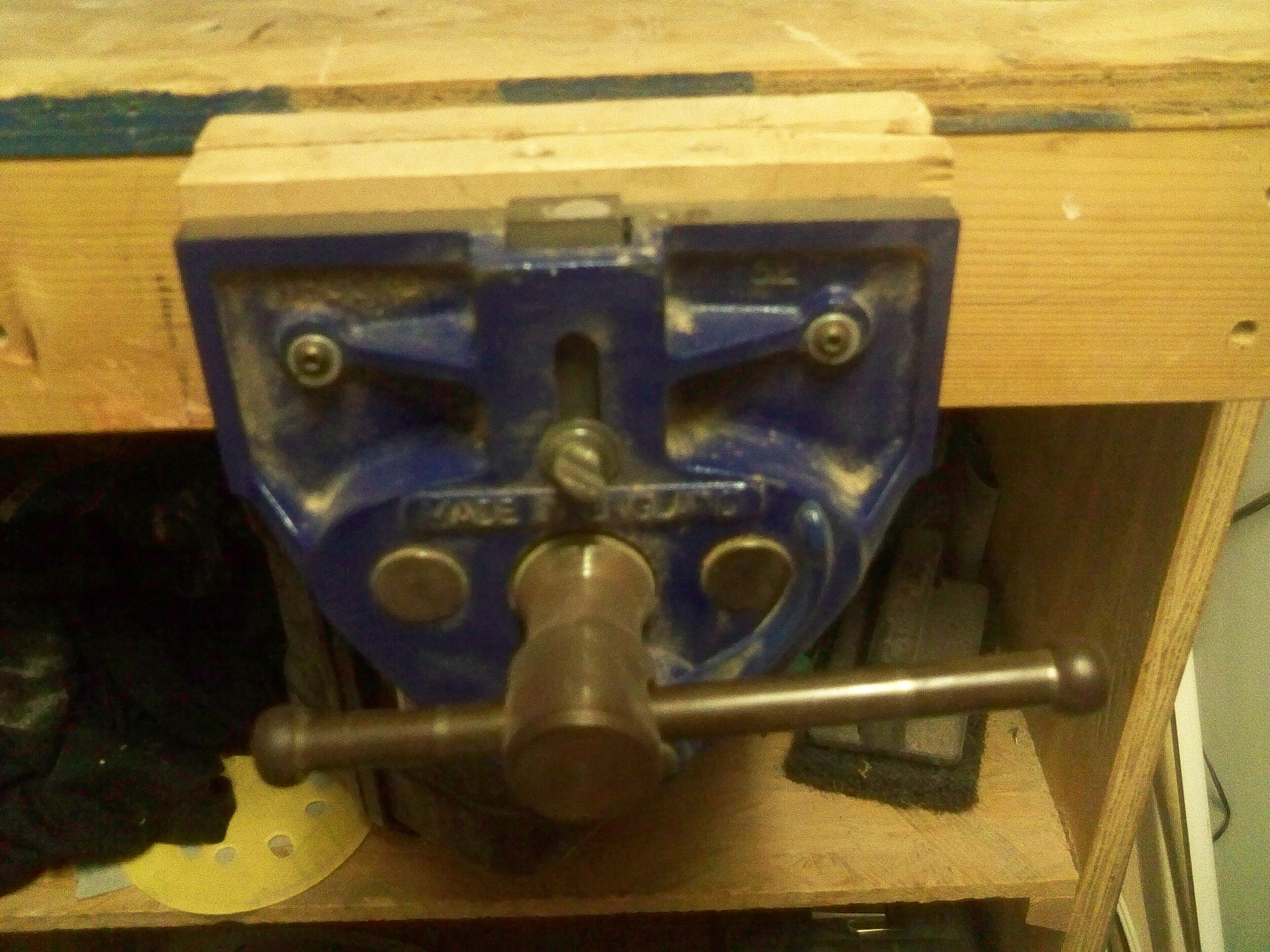
The first one is on my front affixed bench. This is a Record quick-action vise that I picked up at a Big Lots store.  Yes, that’s right – a super cheap discount store that normally sells very poorly-built tools at an enormous discount. I had to go to the store to pick up some inexpensive holiday wrapping paper and moseyed over to the tool aisle to see what was being offered that day. I almost didn’t see the vise at first – the box was scuffed up and buried under a pile of nylon shop aprons. Most of the internal packing was missing, so the heavy iron vise slid around in the box when I picked it up, threatening to fall out onto the floor. When I saw that it was a woodworking vise and how inexpensive it was, I had to get it on the spot.

It took some time to fit onto my front workbench, and I’m sure that I did a ham-fisted job of getting it into place, but it works like a champ for me. In fact, I used to do all of my planing at this front bench.  Unfortunately, the location of the fixed bench was so awkward, it became impractical to work at that location.

It was about then that I got the idea of building my first bench – a discarded entry door from a neighbor attached to a 2 x 4 stand. I was reluctant to move the vise from the front bench to the new one, because I had notched out the framing on the fixed front bench and didn’t want to look at rough opening.

What I needed was a way to get my hands on a second vise.  Inexpensively.

I had been lamenting my workshop situation with my friend Chris down the street. Chris works in the maintenance department of a local educational institution and was struck by an idea. That’s when the fates heard my call and I had the opportunity to get this.

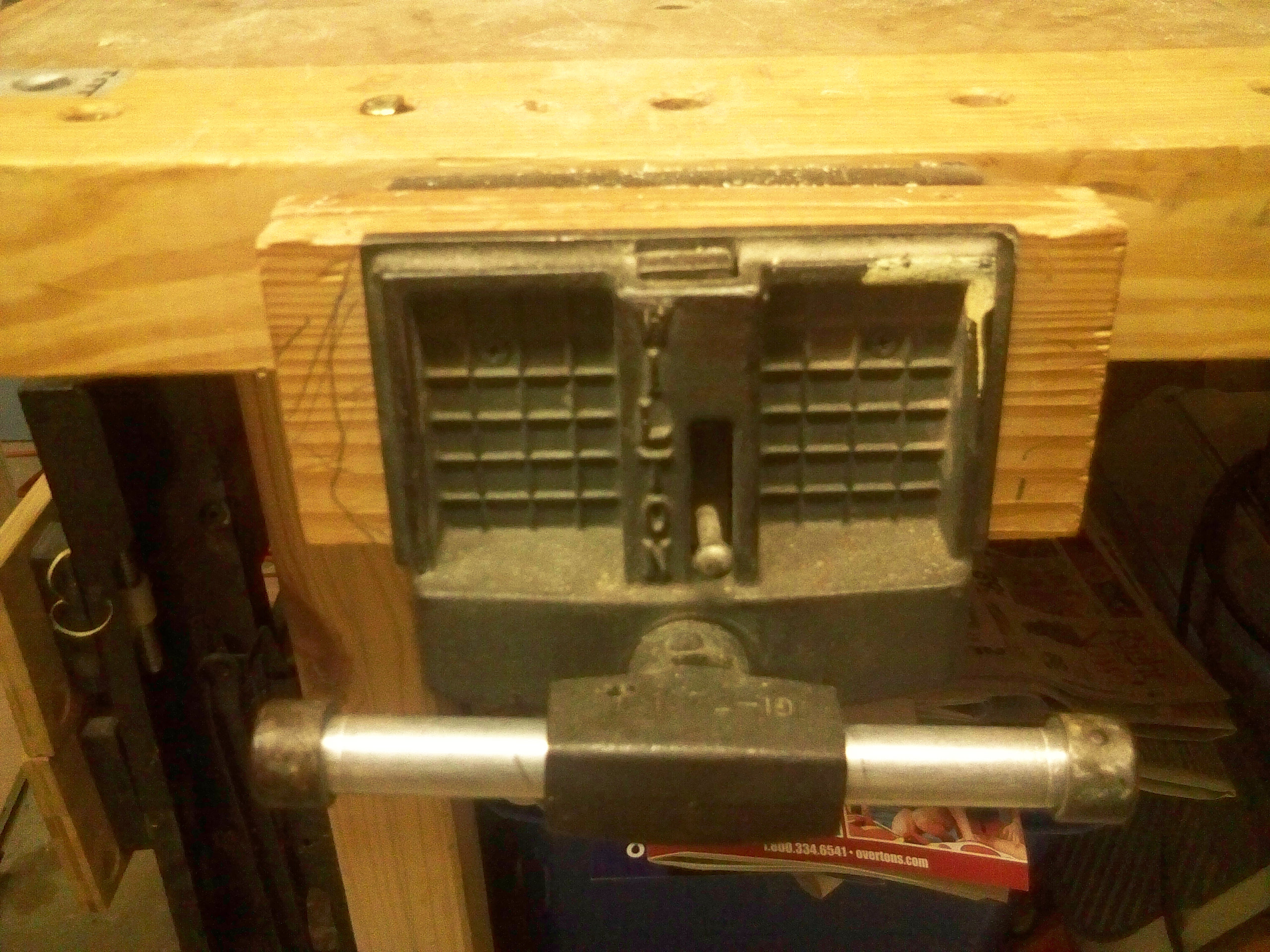
This is an old-school 1970’s era Wilton vise. Chris was able to pluck it lovingly from a dumpster – something that was ready to be shipped out to be busted up and recycled for its metal content. At first sight, I could understand why it was headed to the dumpster.  It was covered in rust and paint splatters. The original handle was missing, replaced by a length of electrical conduit. And, it stank, having sat next to some rather gross items in the trash.  But, my buddy had dived into the dumpster for me, and I was going to have to give it a chance to work.

I disassembled the vise down to its component pieces and cleaned and scrubbed the vise with WD-40 and an old toothbrush, removing decades of grime and other nastiness. When I reassembled it, it functioned beautifully.  No, it’s not a quick release model, so it does take some time to twist the handle to make it fit the board I am working on, but that hasn’t been a hassle for me. I mounted it to my old bench, then moved it over to the new one I built around the holidays in 2008. It still works beautifully, and it’s position on the bench makes it easy for me to get work done with both power and hand tools.

No, these are not hand-crafted leg or shoulder vises, nor are they high-end fancy models from an elite manufacturer.  But, I couldn’t see working without them in my shop.

Just remember to keep your eyes open for deals out there.  Let your friends know. You might be surprised at what you can find on the cheap.

Quick Poll

Unless you have been living under a rock – or avoiding Tom’s Workbench altogether – for the past week or so, you have probably guessed that we were on a family vacation.  We visited Boston, Massachusetts and then spent a few leisurely days in Cape May, NJ.

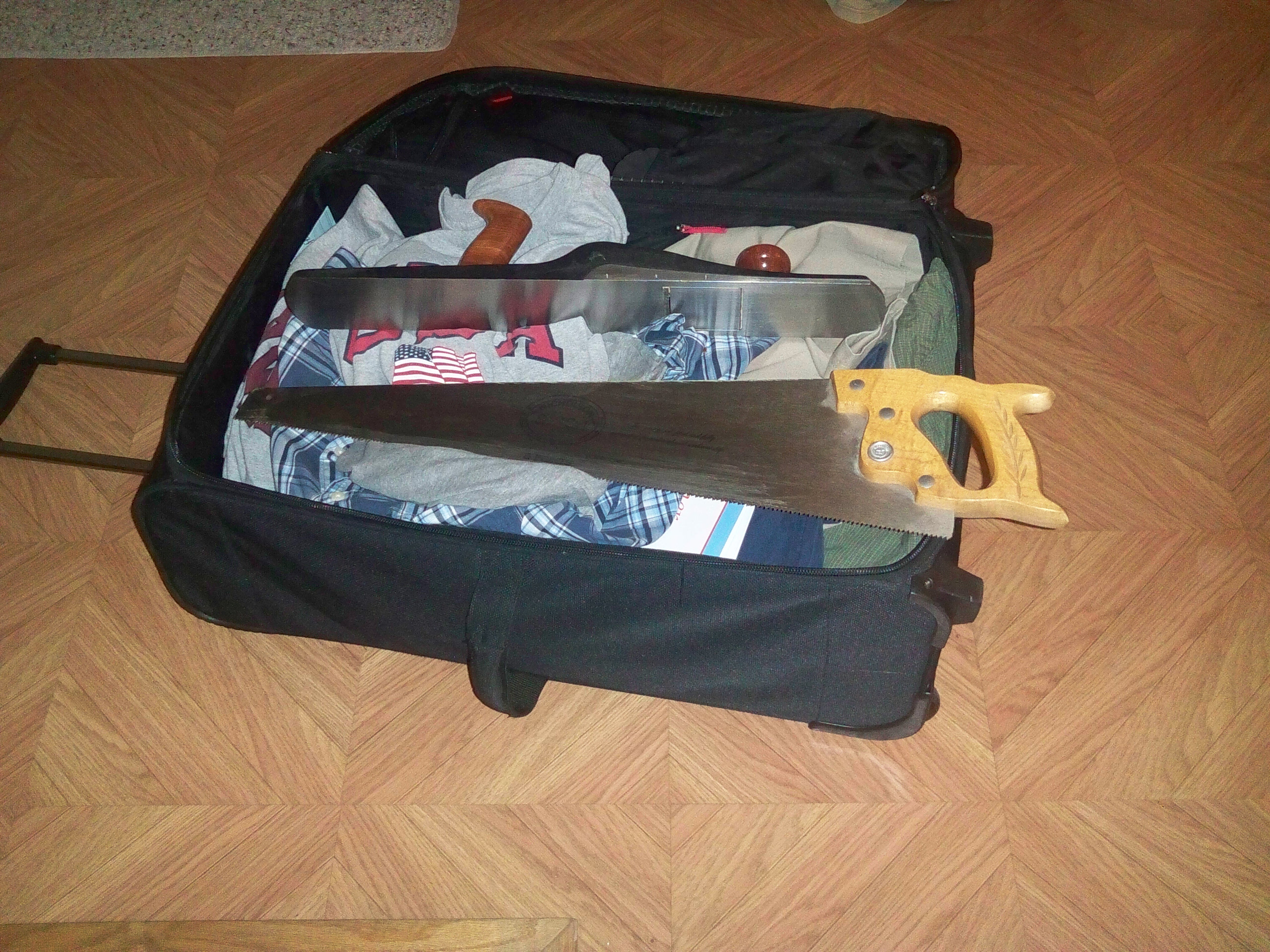
While driving back, I got to thinking… when my wife and I were planning this vacation, I started jotting down a few ideas of what I wanted to do while up there in the northeast. Several of the ideas involved woodworking.

So, this week’s question has to do with your vacation planning.  When thinking about your get away, do you make woodworking an essential part of the planning, or do you lean toward avoiding it altogether?

[poll id=”133″]

Link of the Week

Historic Cold Spring Village

If you are looking to immerse yourself in the history of the craft of woodworking, there are few alternatives better than visiting a historical recreated village. Sure, some of the big ones such as Plimoth Plantation and Colonial Williamsburg are world-renowned, don’t be too hasty to pass on a look in your backyard.

In Cape May County, New Jersey, you can find Cold Spring Village. This 30 acre site houses 24 buildings from the late 18th century, each staffed with interpreters who give visitors an insight into the ways of life in that time. You can find potters, blacksmiths, carpet weavers and – most interestingly – a cart wright working at the Douglass Carriage House.

Remember to keep your eyes open for treasures such as this one… you never know when you will have an opportunity to see history come alive.