All posts by Tom

I'm the guy who writes the blog...

Don’t box me in

There are some woodworkers out there who know exactly what their next project is. That new workbench. The dining room table. The book shelves in the den.

And, if you do know exactly what your next project is – go forth and build.

However, if you are like me now, you may be finding yourself between projects. I have a few ones on the horizon I need to start on, and after a busy December and January, I’m still sharpening, cleaning and doing other general tidying up. If you are in this situation, you should be building a decorative box.
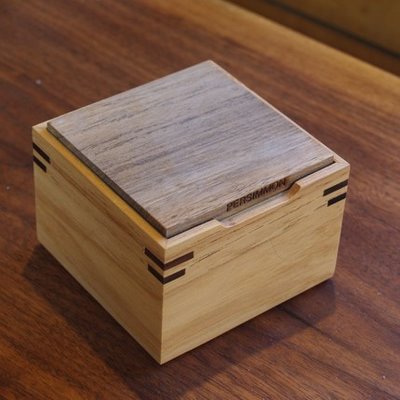
“But, Tom, I don’t NEED a box.” I hear you out there. What the heck are you going to do with a small decorative box?  You don’t need more knick-knacks to dust, and your desk at work can’t possibly hold another thing.

However, decorative boxes are some of the coolest projects out there, and they can help you hone your woodworking skills like nothing else. Here are some of the reasons why I like them so:
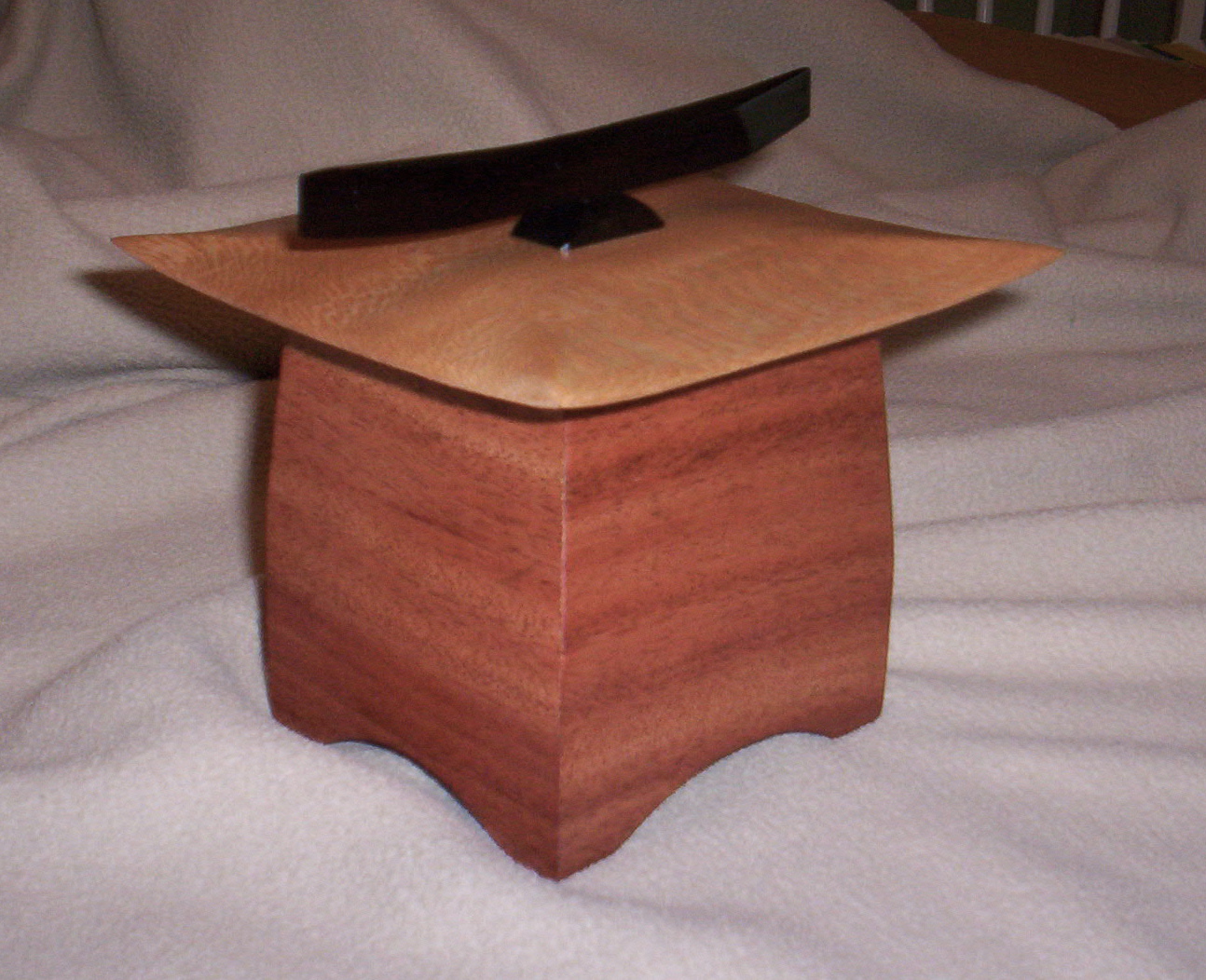
* Reach for new designs. Do you build mostly Shaker style furniture? Just Arts and Crafts? Go out on a limb and stretch your sense of design. Find inspiration in nature, classic pieces of furniture, architecture… wherever. Go with the flow.

* They don’t require a great deal of material. If you have some treasured scrap offcuts cluttering your shop, they are perfect for a decorative box. Besides, if you really get fouled up, you can trim off the bad parts and build a smaller box (been there, done that, got the t-shirt).

* They are easy to move around. Last summer, I spent a lot of time hauling big cabinet boxes around for my friend Paul’s home office. Small boxes can be moved around the shop with little effort, and can be milled, joined, assembled and finished on a corner of your bench. You can also easily put them aside if you get involved in a larger project.
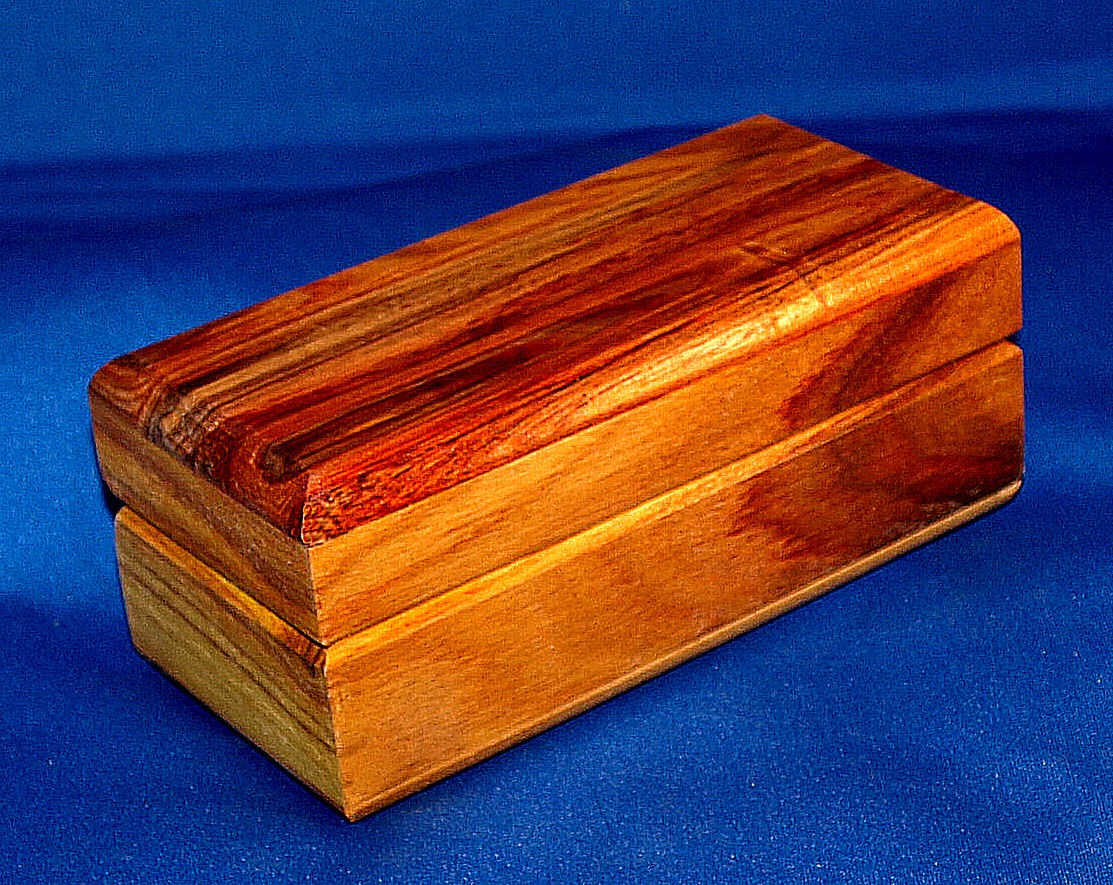
* Embrace your options. Want to try a new form of joinery? Hand cut dovetails. Build a box joint jig for your table saw. Perfect your splined miters. How about a new technique? Veneer. Frame and panel. All hand-tool construction. Thinking outside of the proverbial ‘box,’ you can develop new woodworking skills that can work on all different kinds of projects.

* They challenge you to do your best. Very few people will climb under the dining room table you build to check your joinery. Even fewer will attempt to pull down a wall-mounted cabinet to see how you attached the back. But, people will pick up boxes.  Hold them. Turn them in their hands. Examine them from all angles. Smaller projects with fewer pieces give you the opportunity to really take your time, but still finish before you grow tired of the project.
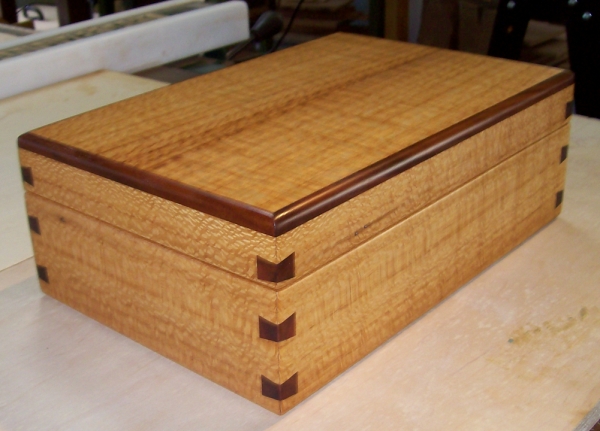
* They make awesome gifts. Sure, it’s only March, and it seems as if we just came out of a major gift-giving season. But, graduations are coming soon, as is the traditional wedding season in spring and early summer. It’s never too soon to start thinking about building something if you have a big event ahead. Small boxes are perfect for holding jewelry, photos and other small, precious items. Plus, they are insanely easy – and inexpensive –  to ship.

While you may not be a big fan of decorative boxes, there are some very good reasons to give them a go. You might just be surprised how much fun you have building them – and how much you will learn in the process.



It’s about time!

Building things for yourself – and gifts for others – is one of the greatest pleasures in the shop. And, when it comes to these projects, the ones that get used the most are nearly always the most appreciated.

A picture frame to hold a treasured photo for a friend’s desk is a useful gift. A cutting board that’s used for meal prep – useful. A bookshelf that holds a child’s collection of picture books – useful.

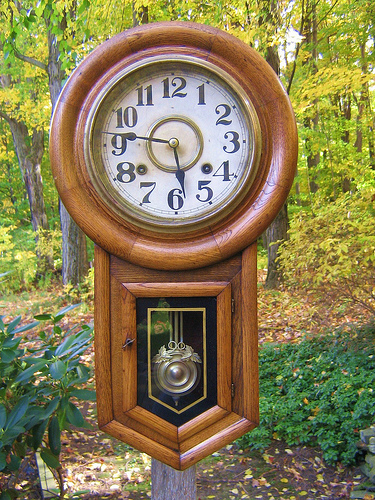
A wooden project with a clock in it – wow. Impressively useful. Looked at several times a day to keep track of appointments, meal times and bed times. “Clocks are exceptionally useful,” said Tim Walter of Eagle America, “But, they are so much more… they become a focal point in the room and help make a statement.”

Tim pointed out that clocks can be built in all shapes, sizes and styles. They can hold pens and pencils, be part of the lid of a box, or something even more imaginative. “If you want to start small, small desk clocks can be built with dynamic designs and wild glue ups, or with more traditional forms. For these clocks, try going with a small clock insert. With just a forstner bit, you can turn your project into something timeless.”

Going larger, you can go into mantle clocks or hanging wall clocks. “Now we start getting into larger statement making clocks. Mantle clocks offer a great deal of flexibility in design and material choice. Inlays, moldings, different face options – these larger clocks are easier for all to see.” Tim also told me that many woodworkers love the challenge of building schoolhouse or regulator style clock – a clock with a hanging pendulum. Eagle America sells plans for those who would like to build their own clocks from scratch and seek out their own works, or kits which include the mechanical works.

“Then, there are the big ones.. the grandfather clocks. For those really looking to showcase their talents in a big way, a full sized case clock is definitely the way to go.” Eagle’s ultimate clock plan is a mission style, full height grandfather. While the plans call for the traditional white oak, remember, the woodworker is the boss. “You want to go out on a limb and make yours out of figured maple? Cherry? Something exotic? Go for it. After all, it’s your piece.”


Link of the week

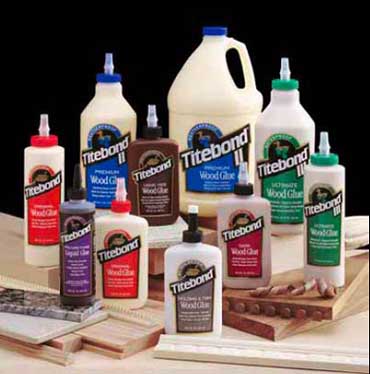
Titebond’s Woodworking Glue page

So, wood glue is wood glue, right?

Not so fast. Do you need the glue to tack quickly? Withstand the weather? Emit no noxious fumes? Dry with a rigid bond?

There are many different varieties of wood glues out there. That’s why Titebond, one of the largest glue manufacturers, put this page together. From the basics of working with wood glue to the unique properties of the different varieties out there, this page is an excellent starting point to learn about the glues you use – and discover varieties you may have never heard of before.

Besides offering the lowdown on the different glue varieties, you can also find useful tips for achieving the best glue up and even read the material data safety sheets to learn what’s in them.

This site may help you out of more than a few sticky situations!


Tools I use: My spokeshave

Planes are cool. So are chisels. But,they aren’t always the ideal tools for certain situations.

For instance, when you are trying to plane a curve to make it fair and smooth, bench and block planes are tough to maneuver around the turns.

And, when I try to smooth things out with my chisels, they are tough to control, wanting to follow the grain and slice deeply into the piece.

What I need is a tool that bridges the chasm between the two tools – the maneuverability of chisels with the smooth and refined cutting action of my planes.

That, my friends, is what a spokeshave does for you. These tiny tools have big potential in your shop and deserve their place at the workbench.

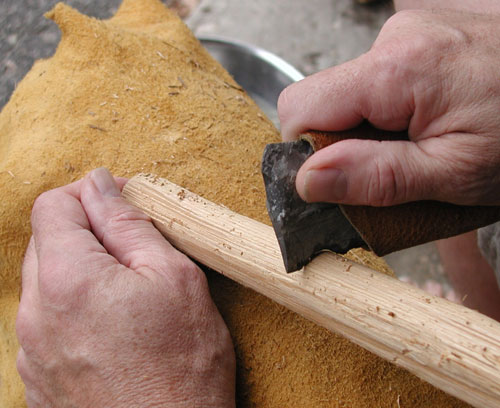
The first spokeshaves were used in prehistoric times. Closely resembling the knapped flint knives, the sharp rounded or lunate edge was kept to the center of the tool with the back edge rounded to ease pulling. Their purposed was simple – to shape arrow shafts so they would fly farther and straighter when launched from a bow.

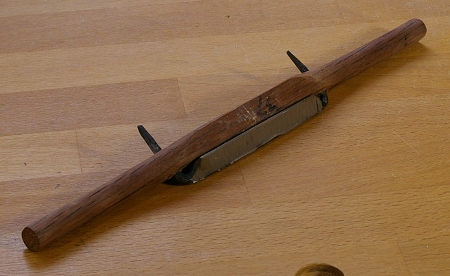
As technology improved, spokeshave blades were cast or forged from metal and were held in a wooden body. The blade was held in place by two tangs that were pushed through holes in the body. While this gives a good hold on the blade, it’s challenging to adjust. That’s why modern wooden body spokeshave irons have threaded tangs that go through the body but adjust with thumbscrews to hold the blade fast.

Metal bodied spokeshaves appeared later, and were popular because of their adjustment mechanisms and that they were easier to sharpen since they didn’t require the tangs in wooden bodied models. Of course, metal spokeshave blades are much smaller than plane irons and present their own challenges when being sharpened…  More on this later.

The one spokeshave I own is an old Stanley 151 with twin adjustment wheels, a blade that looks like a plane iron and an iron body.  I picked it up for about $10 on eBay, and it’s done me very well.  I replaced the iron with a Lee Valley spokeshave O1 model, which takes a keen edge and slices wood beautifully.

The woodworkers who used these more modern versions to shape the wooden spokes on wheels as well as gracefully curved furniture parts – think cabriole legs. Since the spokeshave itself is kind of small,  it doesn’t do too well handling roughing work. For the heavy lifting, tools such as the band saw, bow saw and drawknife do an admirable job. Once I get the shape roughed out for what I’m working on, I often turn to the spokeshave to refine the shape and get the surface ready for finishing. Yes, unlike progressing through the grits on a spindle sander, wood that has been shaped by a spokeshave looks like it has been surfaced by a plane – it’s ready to go.

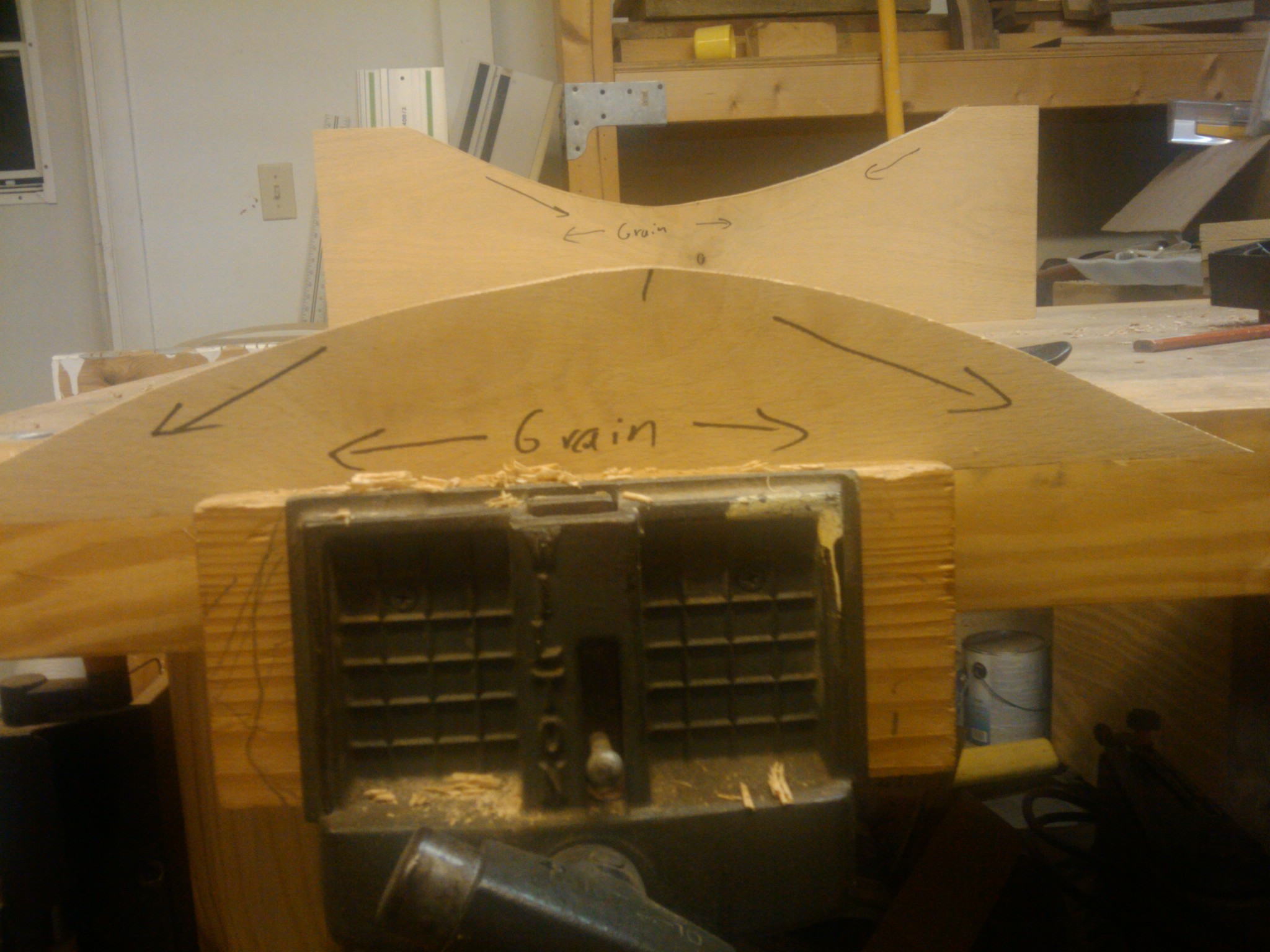
I have noticed that just as with a plane, grain direction is an important consideration. When working a curve, the grain changes direction relative to the blade after you hit the peak of a convex curve or the bottom of a concave curve. You go from slicing smoothly along to chattering and tear out. Blech. The rule of thumb I have found is that you spokeshave downhill on convex curves:

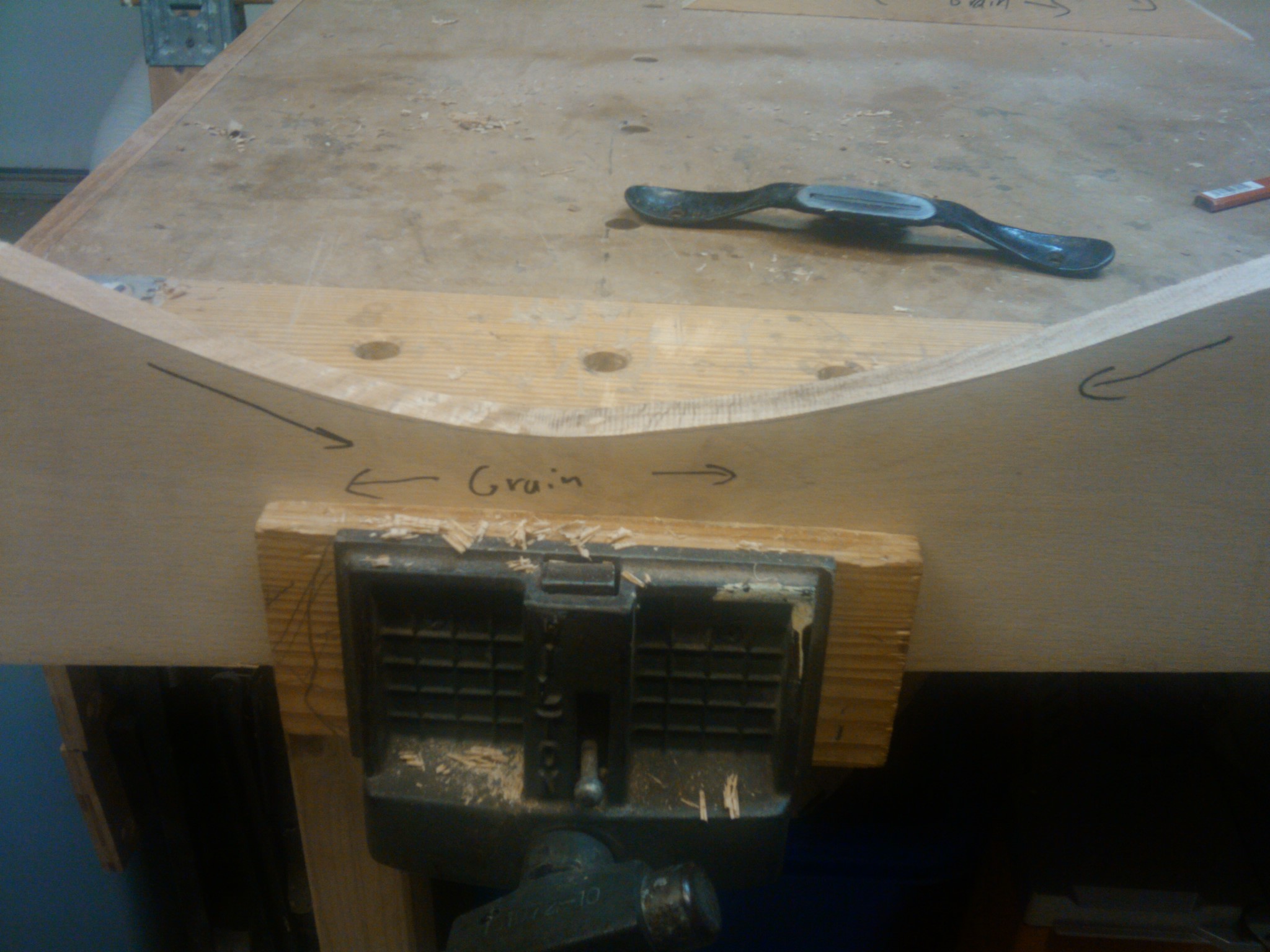
And, downhill again when cutting concave curves:

With just a little practice you’ll quickly go from planing curves fair to using it to shape three dimensional pieces with compound curves… it’s an  excellent sculpting tool. Of course, I also hear there are special rounded sole spokeshaves to get into tighter concave shapes, low-angle spokeshaves that do a better job on different kinds of woods… oh, the wish list grows longer with each passing day…

Now, if the spokeshave’s going to do its magic, it has to have a sharp iron. This is where I hear a lot of folks wonder how to make that happen. The iron is just so short, it doesn’t fit into a jig you might use for chisels or plane irons… hmmm…

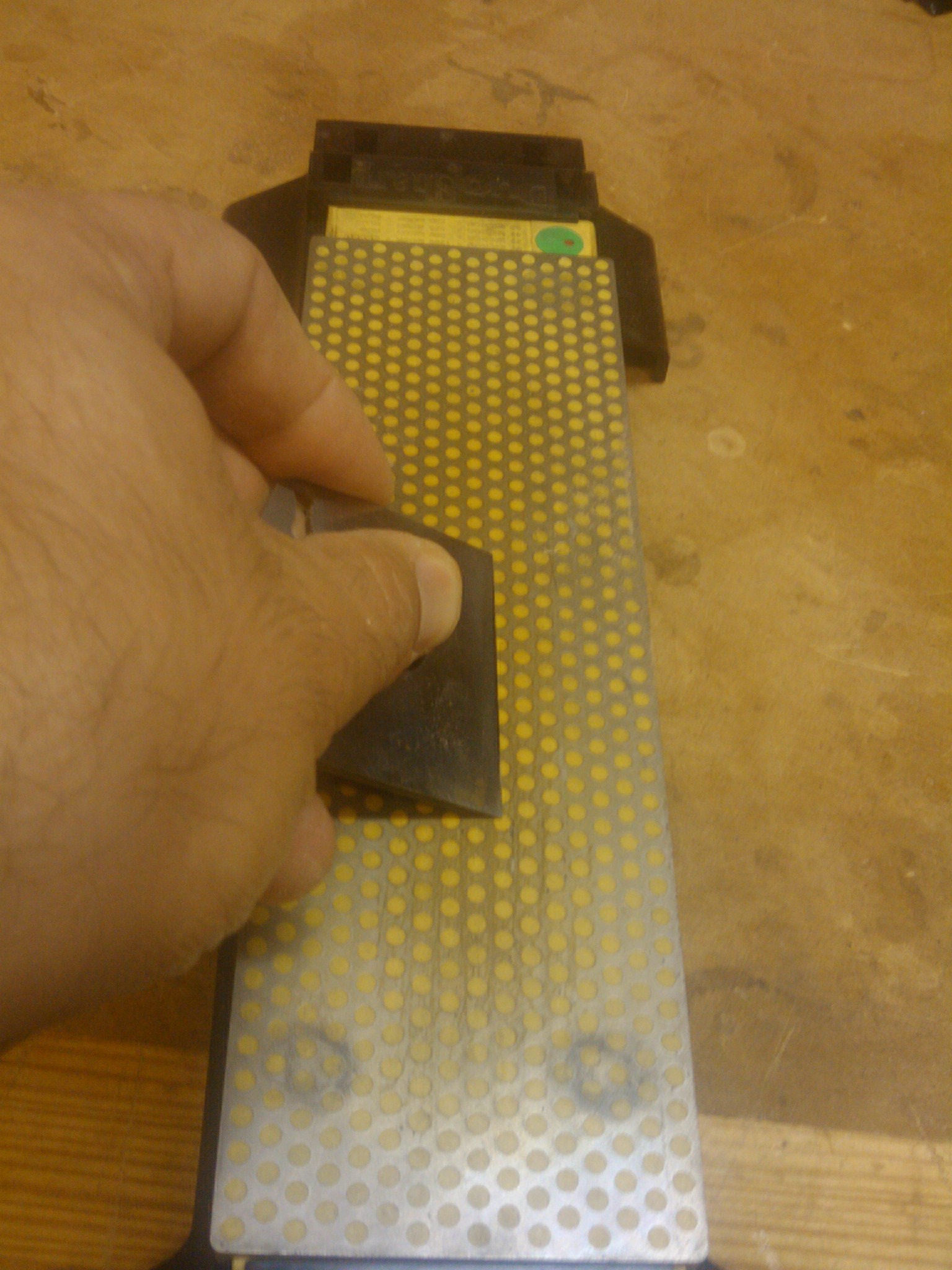
What I’ve found is that by holding the iron in my hand on its bevel and pushing it parallel with the length of your stone, you can keep a consistent bevel angle and consistent pressure against the stone instead of pushing the bevel in a more traditional perpendicular motion. Is it a perfect solution?  I’m sure there are probably jigs out there that tackle this issue elegantly, but I’m becoming more and more comfortable with this method.

While the spokeshave doesn’t come out for every project, the times I have used it have been a blast. I’m going to have to work more curves into my projects… and look at the offerings in catalogs to see if I can’t add some more versatility to my collection!


Species Spotlight: Basswood

What makes something strong?  It’s character? It’s bulk? A certain Je ne sais quois?

In the case of basswood, its true strength can be found in its weakness.

“Basswood, also known as linden or lime wood, is some pretty plain looking stuff,” said Eric Poirier of Bell Forest Products. “No real showy grain or figure, a very light color and – well – it’s just beautiful in its simplicity.”

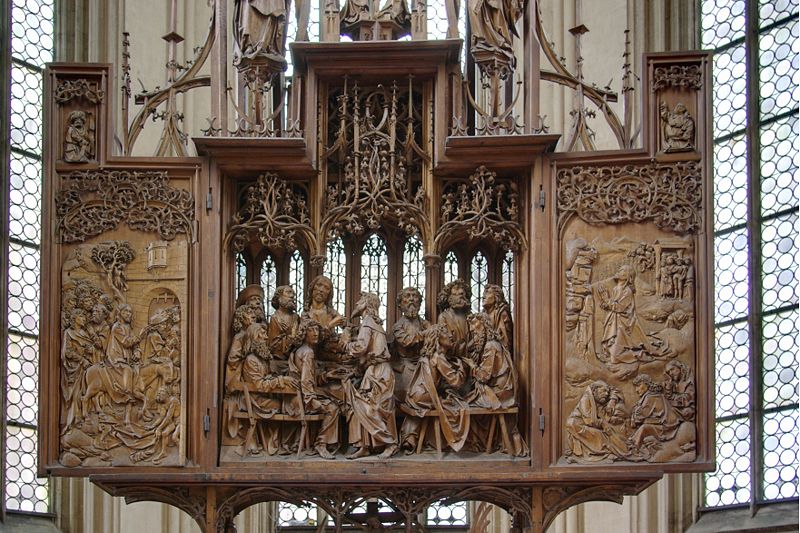
Now, how would such a plain looking board be considered beautiful? “If you are looking for an excellent wood to carve, there are few as good as this one.” For centuries, woodcarvers have been slicing into basswood, creating absolutely crisp detail with minimal tear out. How intricate? Well, this picture is from part of an altar carving made by German artist Tilman Reimenschneider back in the early 1500’s…  Wow…

These and other artistic treasures can still be found all across Europe at cathedrals and palaces. The wood is highly stable, making it less prone to movement and cracking over time.  “Along with its ease of carving, the neutral color of basswood doesn’t detract from what’s being carved into it. It becomes – in effect – a blank canvas for a woodcarver to work on.”

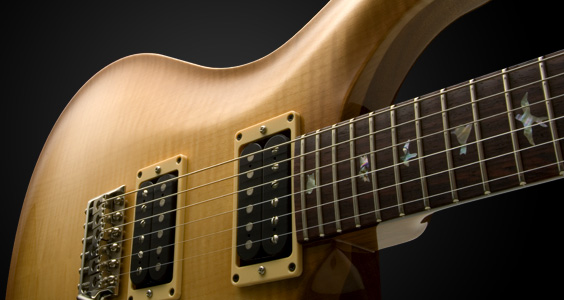
What else is basswood good for beyond carving?  Plenty. Its light weight and tonal properties make it an excellent material for electric guitar bodies and wooden instruments such as recorders and is also used when creating drum shells.

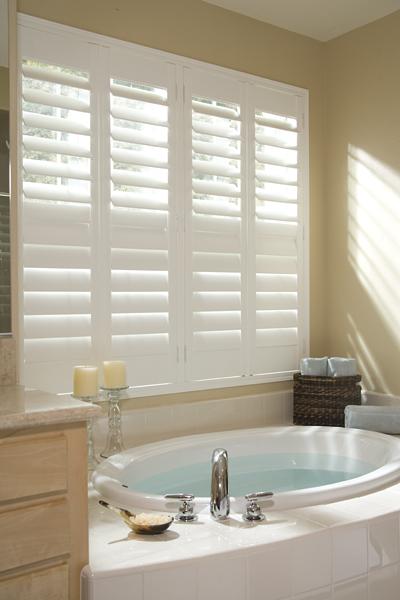
Basswood’s light weight also makes it a natural for wooden blinds and shutters. “Imagine the weight that can be kept off a set of hinges using basswood over other common species. That means less stress on the hinges, significantly improving their lifespan. If you are looking to build a set of plantation shutters for your home, basswood is an excellent option.”

So, while its reputation is as a lightweight, give basswood a chance. You might be surprised just how strongly you will rely on it in your woodworking.

Woodworking Spotlight: Basswood

What makes something strong? It’s character? It’s bulk? A certain Je ne sais quois?

In the case of basswood, its true strength can be found in its weakness.

“Basswood, also known as linden or lime wood, is some pretty plain looking stuff,” said Eric Poirier of Bell Forest Products. “No real showy grain or figure, a very light color and – well – it’s just beautiful in its simplicity.”

Now, how would such a plain looking board be considered beautiful? “If you are looking for an excellent wood to carve, there are few as good as this one.” For centuries, woodcarvers have been slicing into basswood, creating absolutely crisp detail with minimal tear out. How intricate? Well, this picture is from part of an altar carving made by German artist Tilman Reimenschneider back in the early 1500’s… Wow…

These and other artistic treasures can still be found all across Europe at cathedrals and palaces. The wood is highly stable, making it less prone to movement and cracking over time. “Along with its ease of carving, the neutral color of basswood doesn’t detract from what’s being carved into it. It becomes – in effect – a blank canvas for a woodcarver to work on.”

What else is basswood good for beyond carving? Plenty. Its light weight and tonal properties make it an excellent material for electric guitar bodies and wooden instruments such as recorders and is sometimes used when creating drum shells.

Basswood’s light weight also makes it a natural for wooden blinds and shutters. “Imagine the weight that can be kept off a set of hinges using basswood over other common species. That means less stress on the hinges, significantly improving their lifespan. If you are looking to build a set of plantation shutters for your home, basswood is an excellent option.”

So, while its reputation is as a lightweight, give basswood a chance. You might be surprised just how strongly you will rely on it in your woodworking.

Quick poll

Last week, my wife and I were watching the DIY Network, when the builder during one of those ‘renovations gone wrong’ type shows came in to help the homeowner.

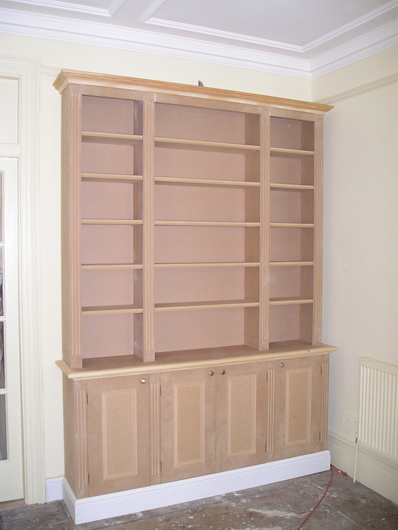
She helped patch the crumbling brick walls in the 120 year old townhouse, laid down a wooden floor – and built a bookshelf system entirely of MDF. Sides, shelves, top, bottom.. the works.

Knowing the properties of MDF, would you ever build an entire bookshelf system for a home solely out of the material?

[poll id=”160″]