All posts by Tom

I'm the guy who writes the blog...

Come one… come all!

Hello, everyone, it’s me, Iggy the Trained Shop Monkey again. While Tom has been out bragging about his successes, I’ve been the guy in the background, rapping his knuckles with a wooden dowel Mr. Miyagi style when he fouls up. I have also been practicing my hand cut dovetails using nothing but a common frozen household herring.  I’m just about there…

But the real reason why I’m writing today is to let you know that I’ll be making an appearance at the upcoming Woodworking Show to be held this weekend at the Florida State Fairgrounds in Tampa.

If you have never been to a Woodworking Show, it’s definitely worth the trip. You get a chance to meet with vendors who have some incredible woodworking products for sale. You get to see some awesome projects in the show-off area. You get a chance to sit in on boffo woodworking classes on everything from slabbing timber to applying a lustrous finish. And, you get a chance to meet some exceptionally talented woodworkers…

Well, talented woodworkers other that Tom.

We’ll be working near Andy Chidwick’s booth on the expo hall.  Look for Tom and I all day Saturday – we plan on being there the entire day.  Well, if we aren’t at the table, either we’re eating, using the ‘facilities’ or drooling over tools.

While we’ll be doing the meet and greet thing, the one subject we are getting good with is blogging in the online woodworking community.  Swing on by, and we can talk about things… well, I’ll speak intelligently, and Tom will be doing his typical antics.

Remember, this will be the only stop for the Woodworking show in Florida… so, when they pull up stakes at on Sunday, that’s all, folks.  Don’t miss your chance to come out to the show!


Quick Poll

First of all, you’ll notice that this week’s quick poll looks different.  No, I’m not just test driving new polling software (although test drives can be fun). Starting this week, the quick poll is being shared with Marc Spagnuolo at the Wood Talk Online community.

The idea is that we’ll be able to reach out to more woodworkers and get a better idea of what you are thinking.

Which leads to this week’s question – what do you think about collaboration between online woodworkers?  Do you think the  online woodworking community would be stronger with more collaboration among woodworking bloggers, or do you think it would lead toward more similar – and boring – posts?

Remember, all votes cast here at Tom’s Workbench and the Wood Talk Online community will be show on the vote total.

(polls)


Link of the week

How to build a Viking ship

So, you have some neighbors across the sea you feel like raiding and plundering.  Gosh, it would be swell to sail – or row – your way over there and take care of business, but you need a ship…

If you have some time and the inclination, following these plans can help you build your own Viking longship.  Clear illustrations and step-by-step directions show you which parts go where and how they were made back in the good old dark ages.

While this page is in English, other parts of the site are written in Norwegian.  In either language, the work is exquisite.

Lykke bygge skipet ditt!


My window on the world

Basement woodworkers typically don’t have one of these. People who work in dedicated shops tend to have those structures behind their homes, separate from the goings-on of the neighborhood. I’m not even going to get into the folks who have their shops in attics, unused bedrooms or other tucked-out-of-the-way places.

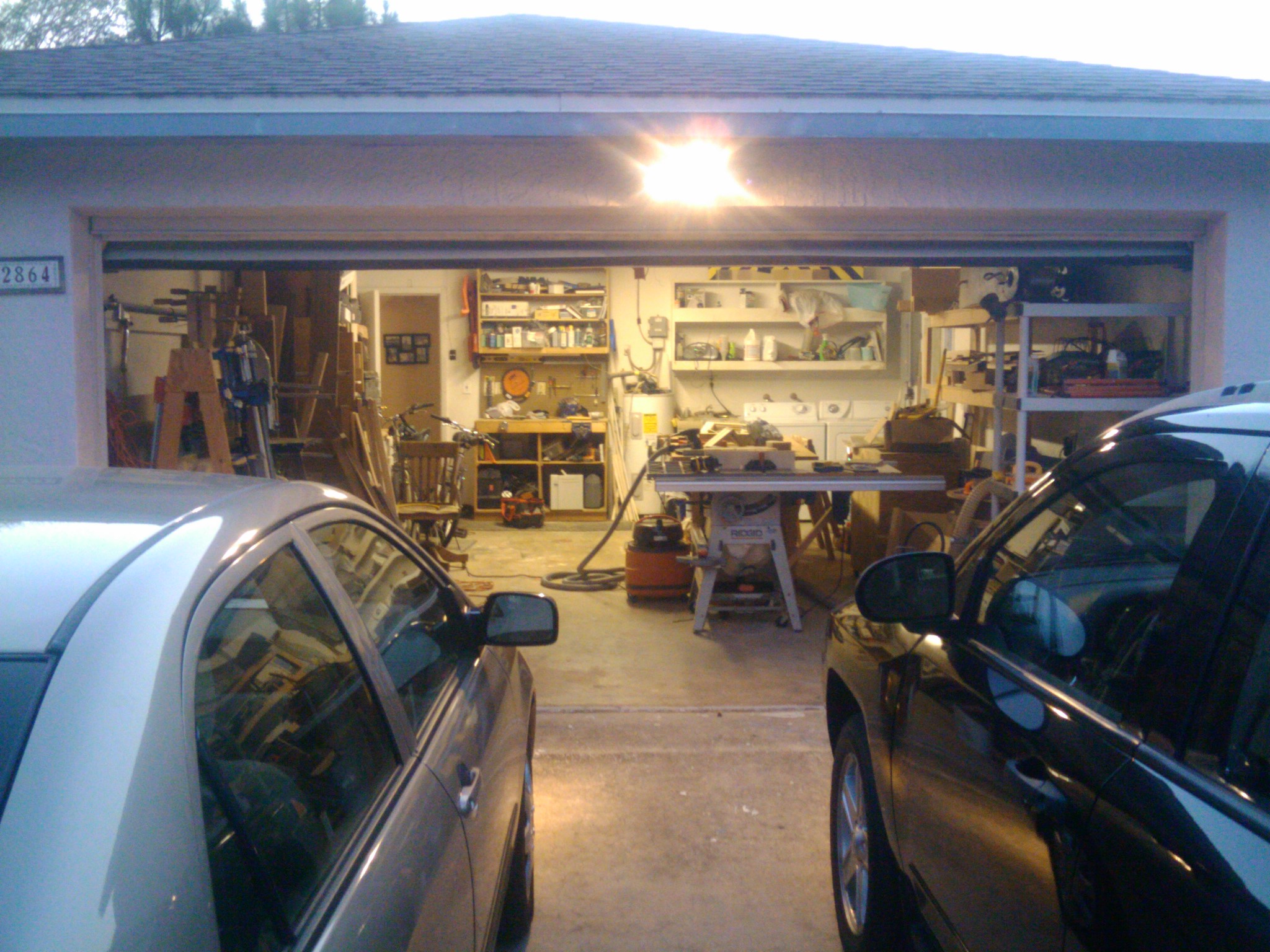
No, we garage woodworkers have a chance to look out upon the world and see it pass by right from the comfort of our own benches. My shop’s front door is a two-wide segmented garage door that I can open up to get a full-blown 8 foot by 17 foot vista on the neighborhood. After the chilly winter weather but before the oppressive heat and humidity kick in, I get to enjoy beach weather while playing in the sand-paper box.

The advantages of working with such a huge opening are pretty obvious. Insanely easy access to bring materials in and finished projects out. I can move all of the tools and the bench out of the shop to give the entire place a thorough cleaning. There are no issues with fumes from finishes. Tons of natural raking light – making sanding and planing so much easier.

I can also attract a crowd when I’m in the middle of a project. I’ve had neighbors see me struggle to move thing on to or off of the bench, and they’ve stepped in to lend a hand. I’ve had neighbors come in to oooh and ahhh over the latest project on the bench. I’ve seen little kids being pulled in wagons by their parents become much larger bike-riding kids who still say ‘Hi, Mr. Tom,” as they ride past. One of my neighbors is a retired World War II era veteran, and he’s offered his services sanding projects for me.  Good thing he takes his payments in the form of a beer and some good conversation.  He’s so good, I could never afford his services!

Of course, with all of these advantages, having a garage shop has its problems as well. I’m reluctant to place tools near the garage door, so I lose a wall’s worth of space. My wife keeps asking just how much saw dust will blow onto the cars while they are parked in the driveway.

And, some of the passers-by tend to want to talk politics, personal relationships or want to know if I’m interested in buying some leftover steaks from an order they recently completed. I’ve also had my fill of people selling vacuum cleaners, magazine subscriptions or tree trimming service. And, when it’s election season, I just prefer to keep the garage door closed rather than deal with the folks swinging by to talk about the candidate they are stumping for.

With us getting ready to spring forward this weekend, I’m definitely looking forward to slipping out to the shop after dinner to enjoy a little more daylight.


Great Jigs: the box or finger joint jig

So, you want to build some sweet looking interlocking joints, but you aren’t sure about your saw and chisel work? Maybe you are too cheap to lay out bucks for a dovetail jig? Perhaps you don’t want to go the whole dovetail route?

Fortunately for you, it’s easy as pie to make sweet fitting box or finger joints right on your table saw. And, the best part, is that you don’t need a fancy jig to make it happen. In fact, with a piece of plywood, a scrap piece of hardwood and a few pan head screws, you can be on your way.
The first thing you need to do is to decide how wide you want your fingers to be. For most applications, 1/4 or 3/8 inch will be great… of course, you can go to any measurement you want.  For this one, I’m going 3/8″.  So, I set my rip fence to 3/8″ rip width (verified by my 1/8 and 1/4 inch spacer bars) and my zero clearance insert to prevent the thin piece from falling into the saw’s body.
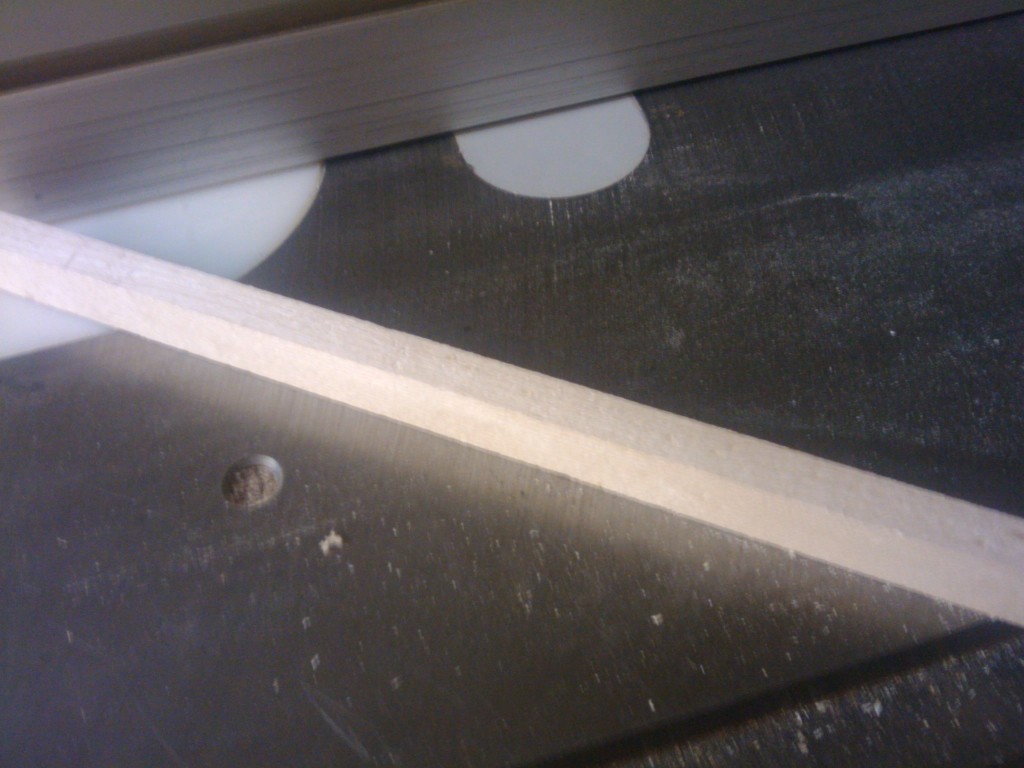
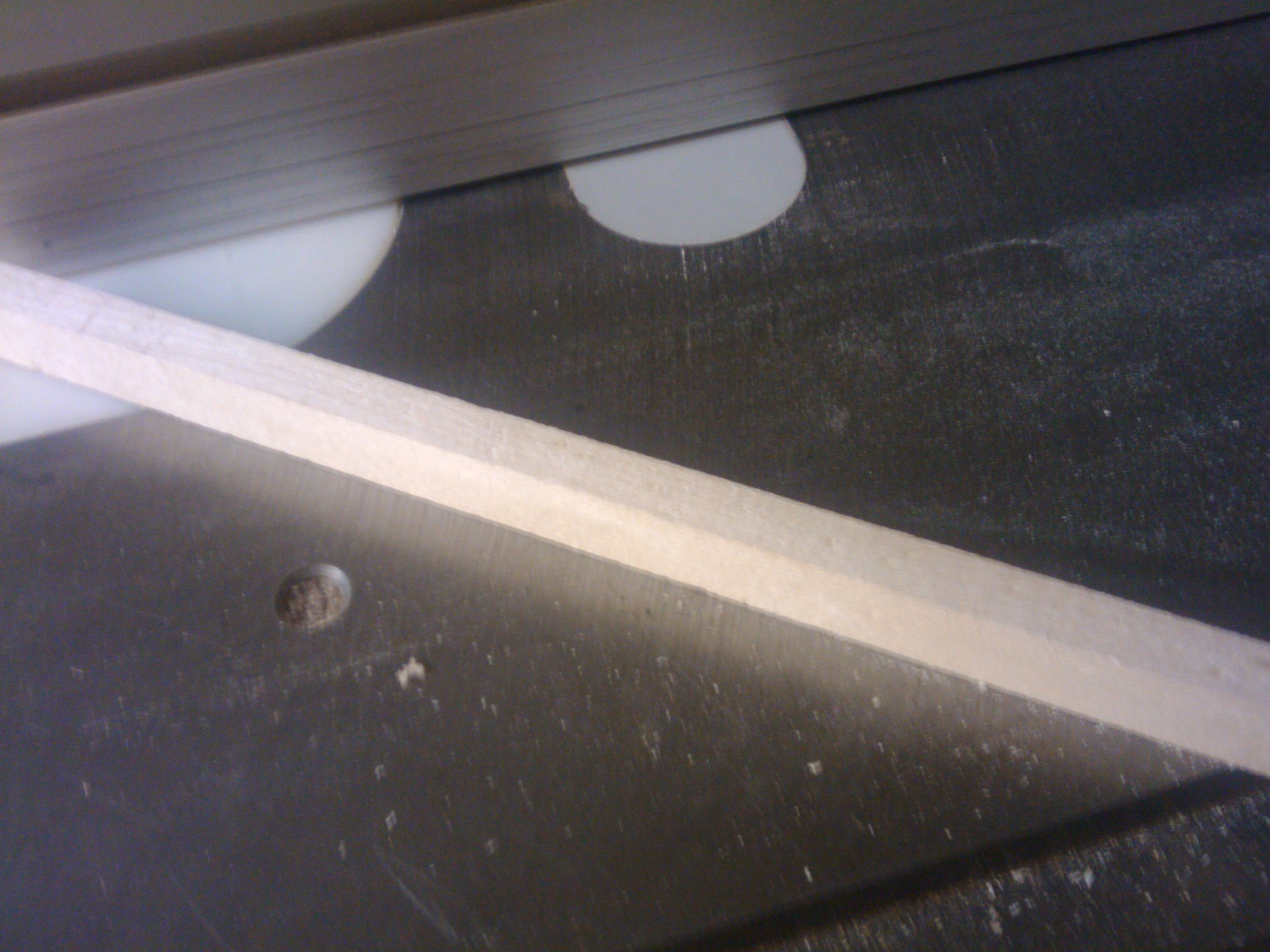
I found a piece of maple in my scrap bucket and ripped a piece 3/8″ wide about 12″ long. I also noted how thick it was – just shy of 1/2″.  This way, as long as my project boards are thicker than 1/2″, this jig’s gonna work. I cut this length into 3 inch long pieces to serve as inserts.

Next, I found a piece of 3/4″ plywood (STILL from the home office project) and cut it to a strip 4 inches tall by 14 inches wide. This is going to be the main body of the jig, and I had to make sure it was going to be wide enough to span across the blade while giving a good bearing surface for the project board.
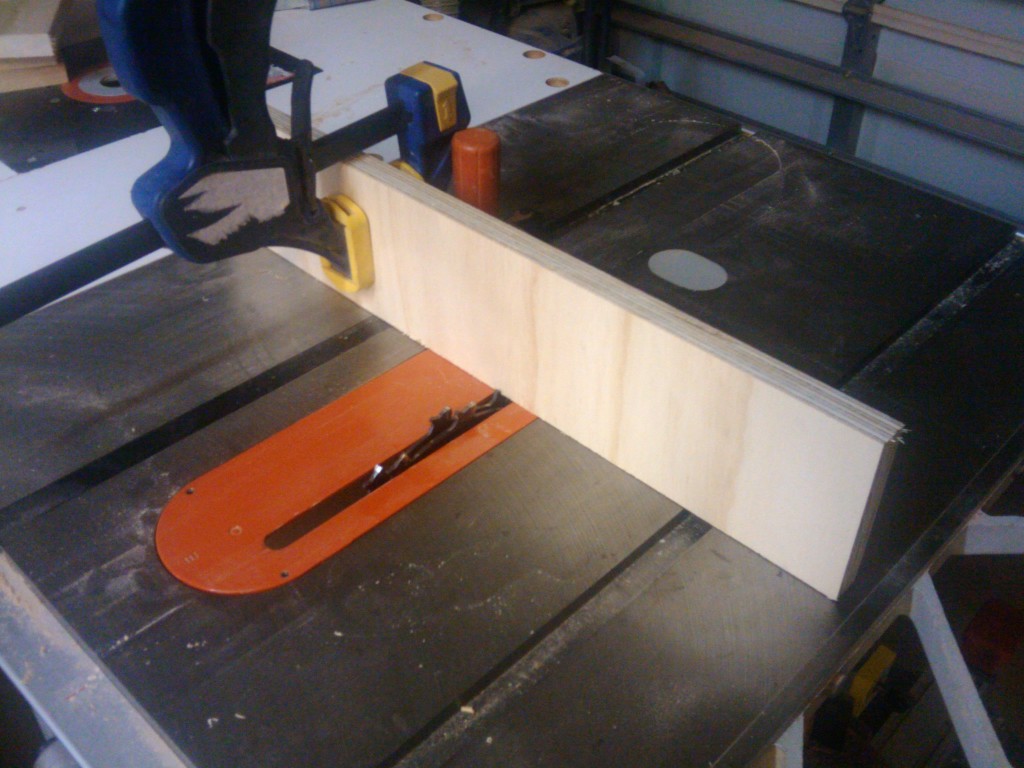
I switched the regular combination blade off of my saw and replaced it with my dado stack set for 3/8″ width. Now, I know there are those dedicated box joint cutting blades… and, maybe I might go for one of those setups. But, for now, the dado works well. I set it as high as the thickness of the insert.

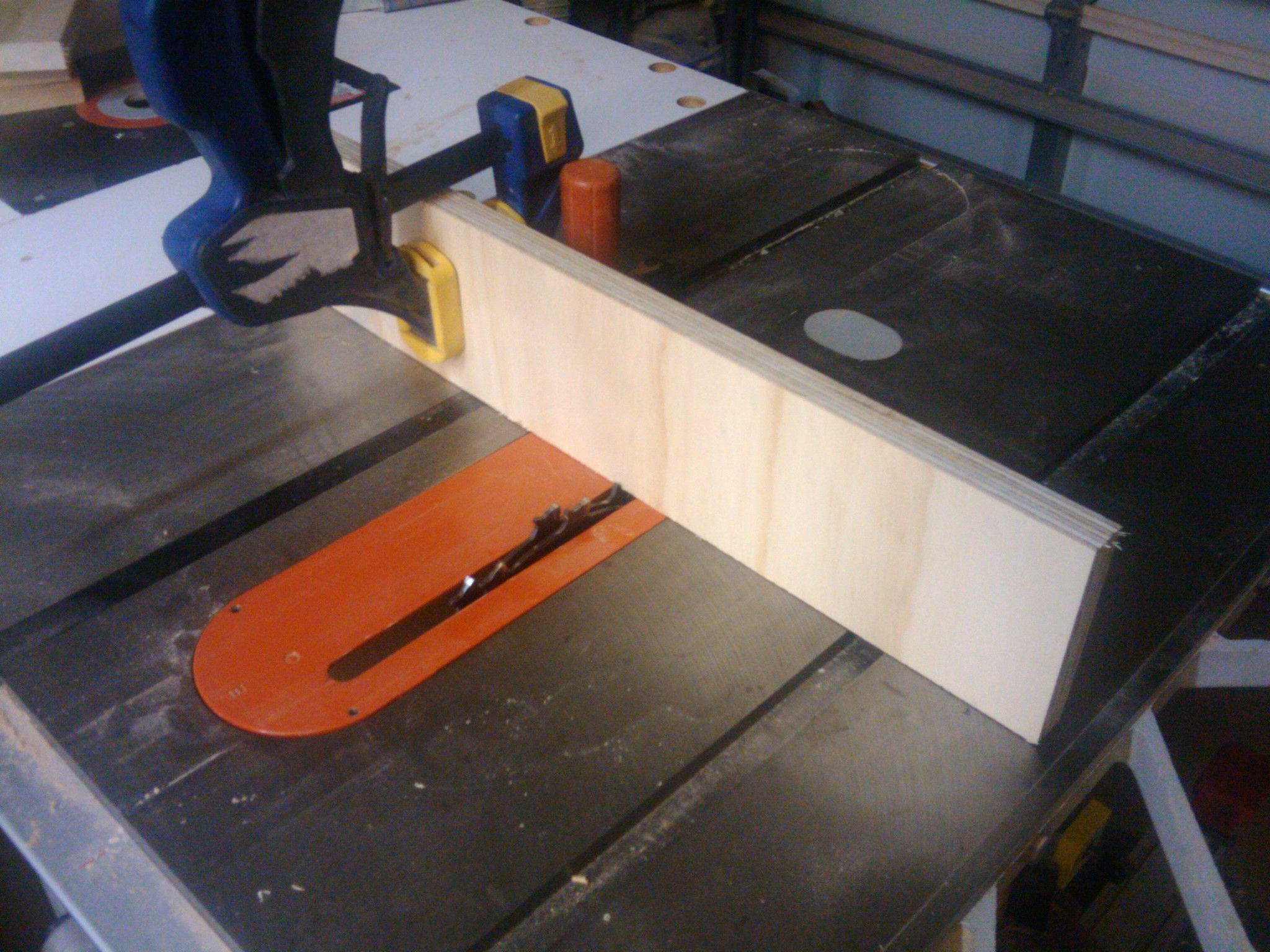
Once that was set up, the next step was to clamp the plywood to the miter gauge so it straddled the dado head. The clamp has to hold the board perfectly still. There can’t be any shifting. I turned the saw on and pushed the plywood through the dado stack. Now, I had a plywood board with a notch that measured exactly 3/8″ wide. I unclamped the plywood, stuck one insert stub into the notch and tacked it into place with my brad nailer.

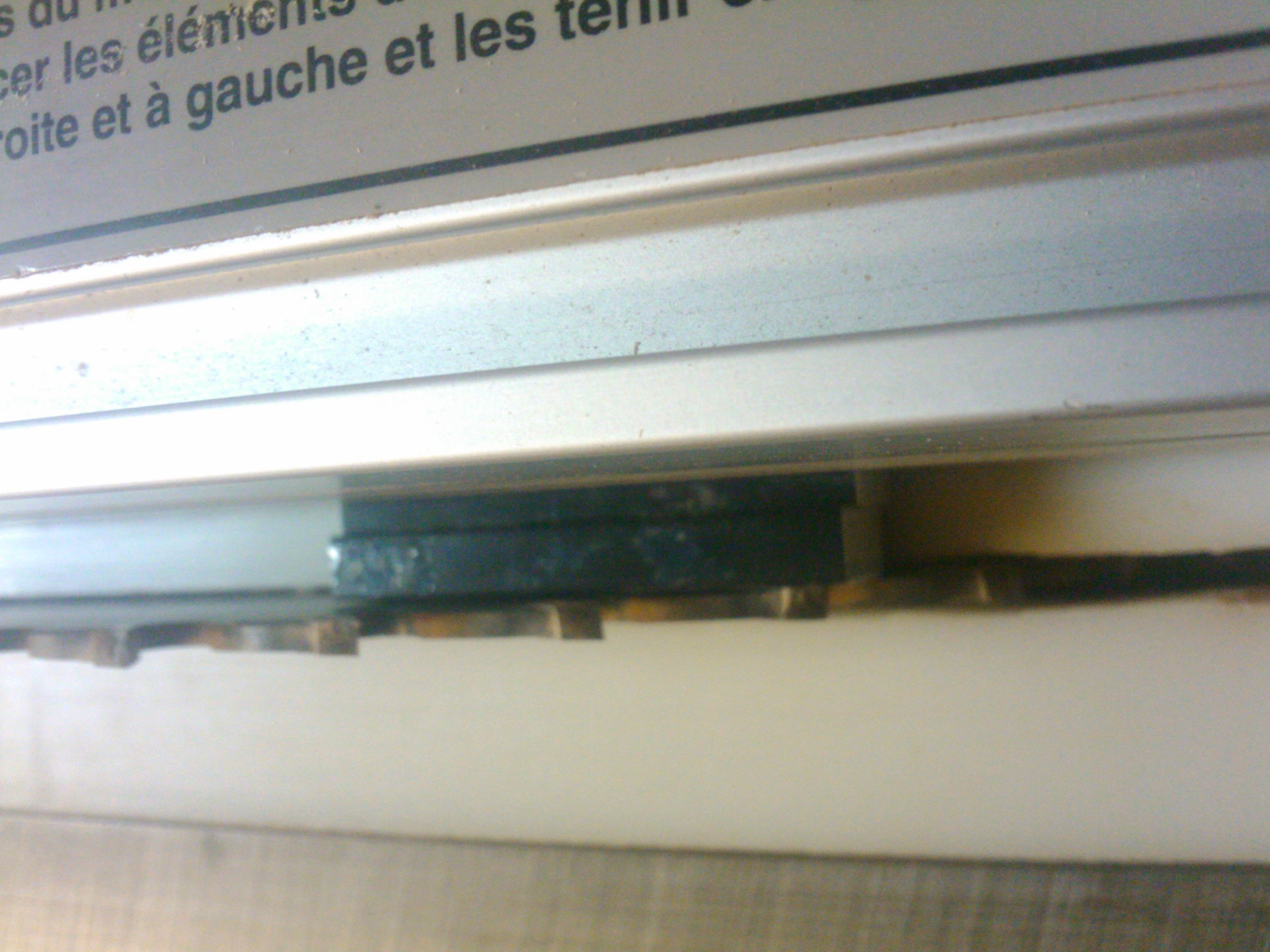
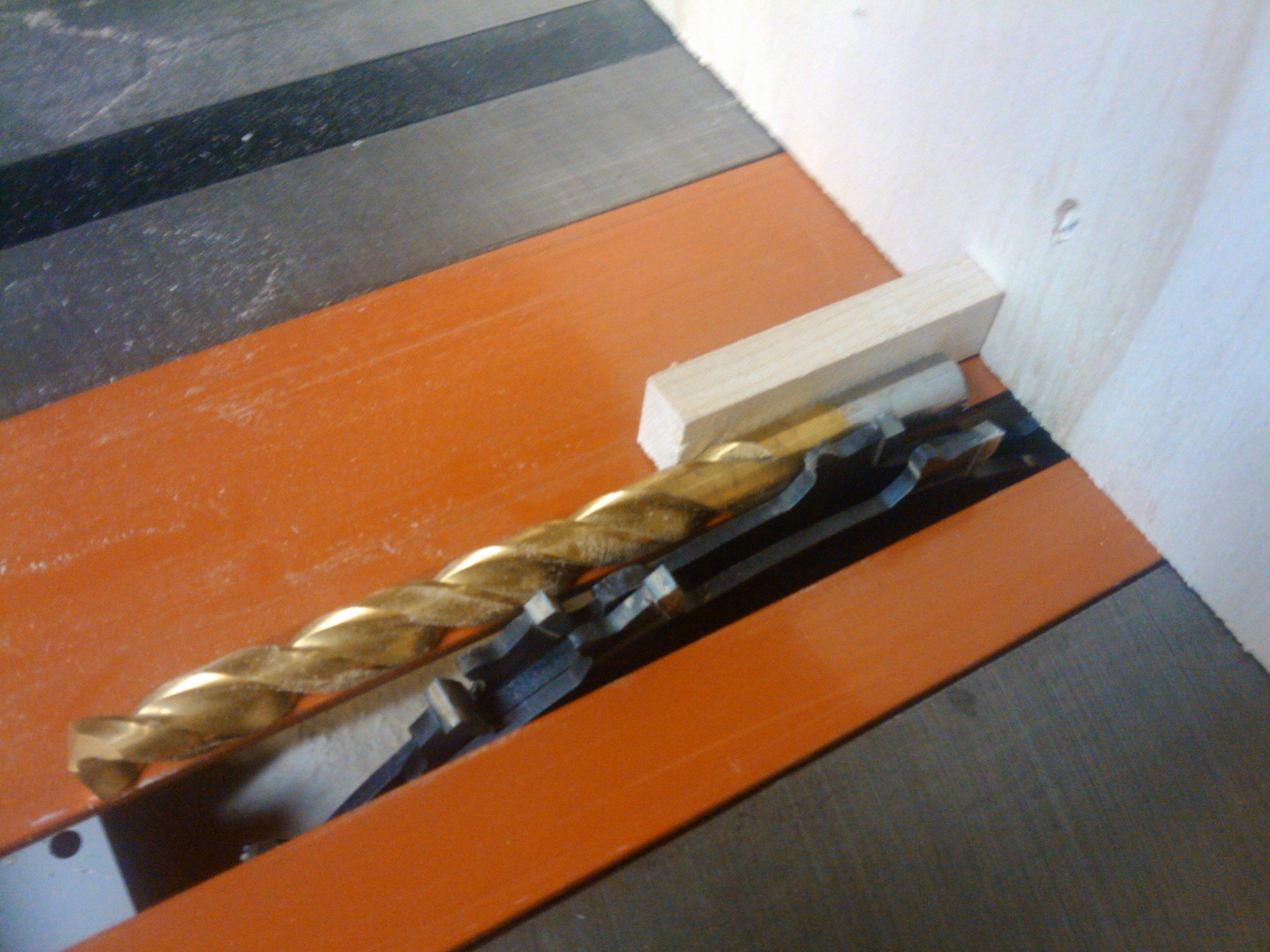
The next step is critical. I put the jig back in front of the miter gauge and shifted it over to my left (as I faced the saw). This shift has to be exactly the width of the dado blade thickness. If you don’t get this right, the jig’s not gonna work. To help ensure I get this right, I reached for a 3/8″ drill bit. The diameter of the bit comes out to the exact measurement. I wedged the bit between the insert and the teeth of the dado stack. Be careful doing this – the hardened steel bit can do a number on the blade’s carbide tips.
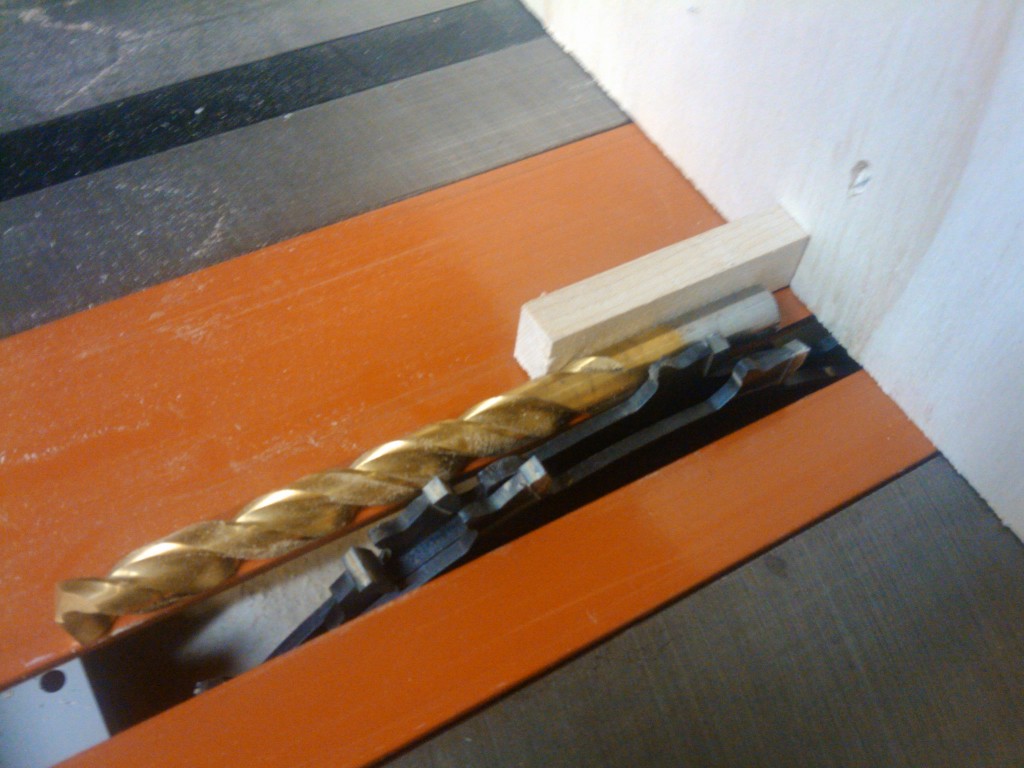
I firmly clamped the jig to the miter gauge and drove two screws through the gauge into the jig’s body. This fixed the jig into place at the right distance from the blade.  Then, a quick push through the dado, and bingo, it’s notched and ready to cut.

Now, when you go to cut your workpieces, just like you would do with a dovetail, you want to mark which edge is top and which face is out on your boards. Start by pushing your first board’s top edge against the key and make your first pass. This gives you a full finger at the top.Then, move the last notch over the insert and cut again. Repeat until you are all the way down the board.
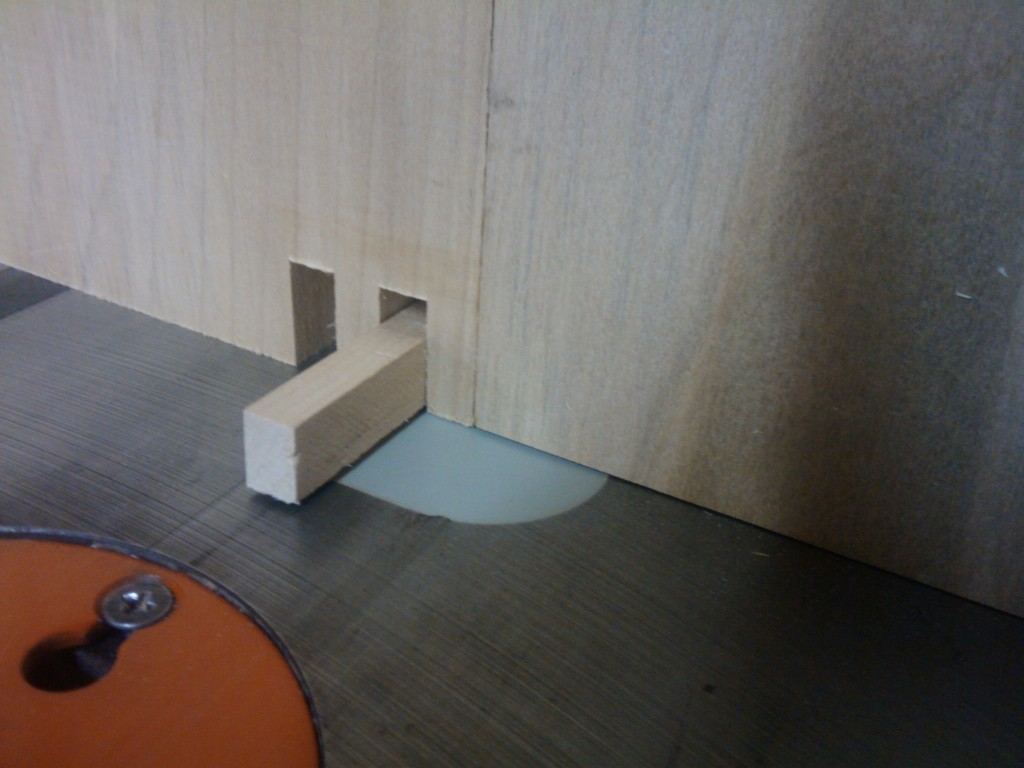
To cut the mating board, take the first board you cut and put the top notch over the key. This offset provides the perfect spacing for the mating cut with its staggered fingers. Push through to notch the top of the board, then move the first piece and repeat the cuts on the mating board as you did with the first.

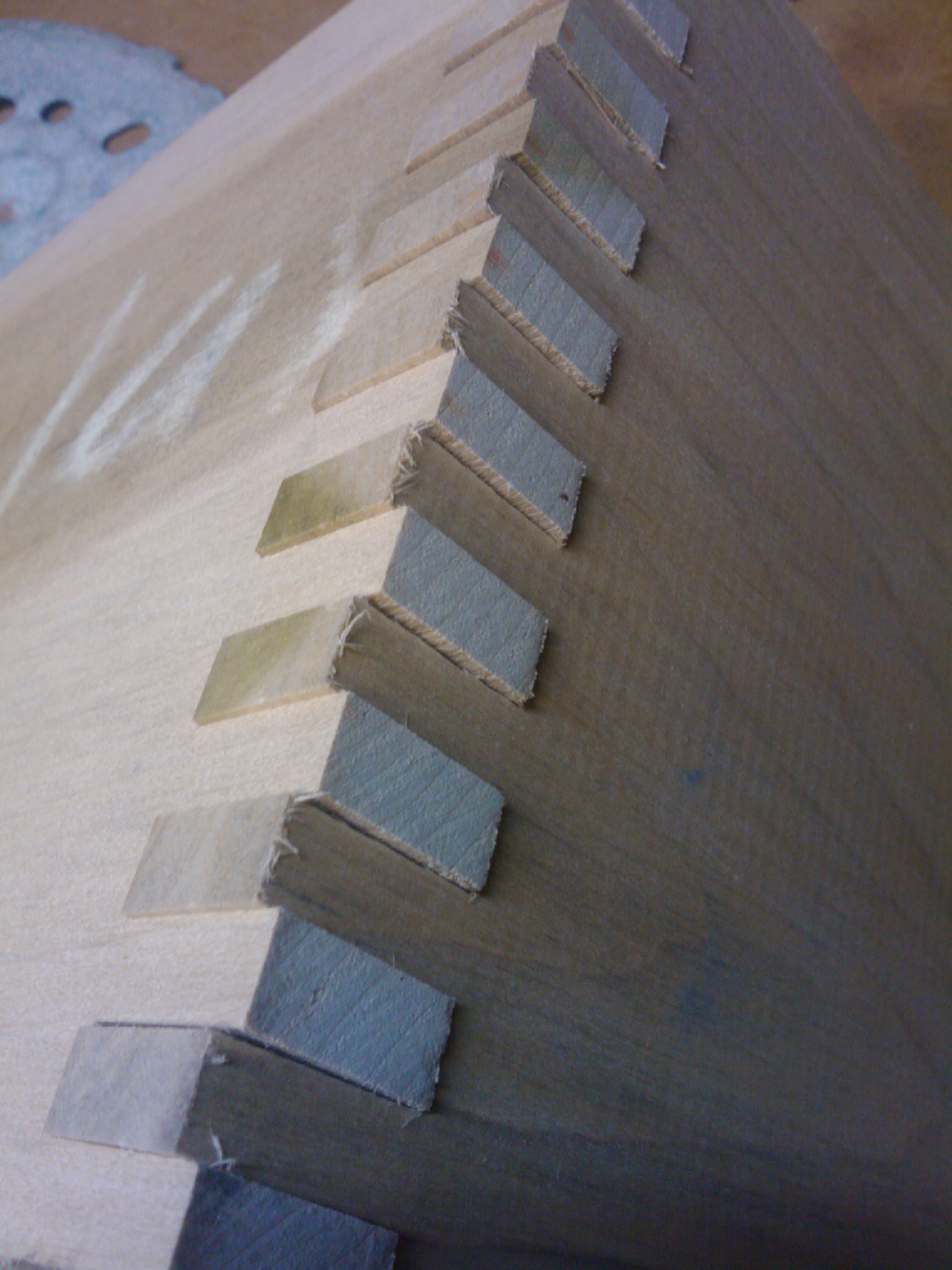
The moment of truth comes when you snug the pieces together. My sample joints cut in this 7 inch wide piece of poplar needed just the lightest of mallet taps to get it to seat perfectly. I had cut the notched a little deeper than the board was thick, so some work with a sander or plane is in order to get them flush. I would recommend a sander over a plane for the initial work. Just rub a little fresh glue over the joints, sand and that slurry will fill any imperfections in the joints.
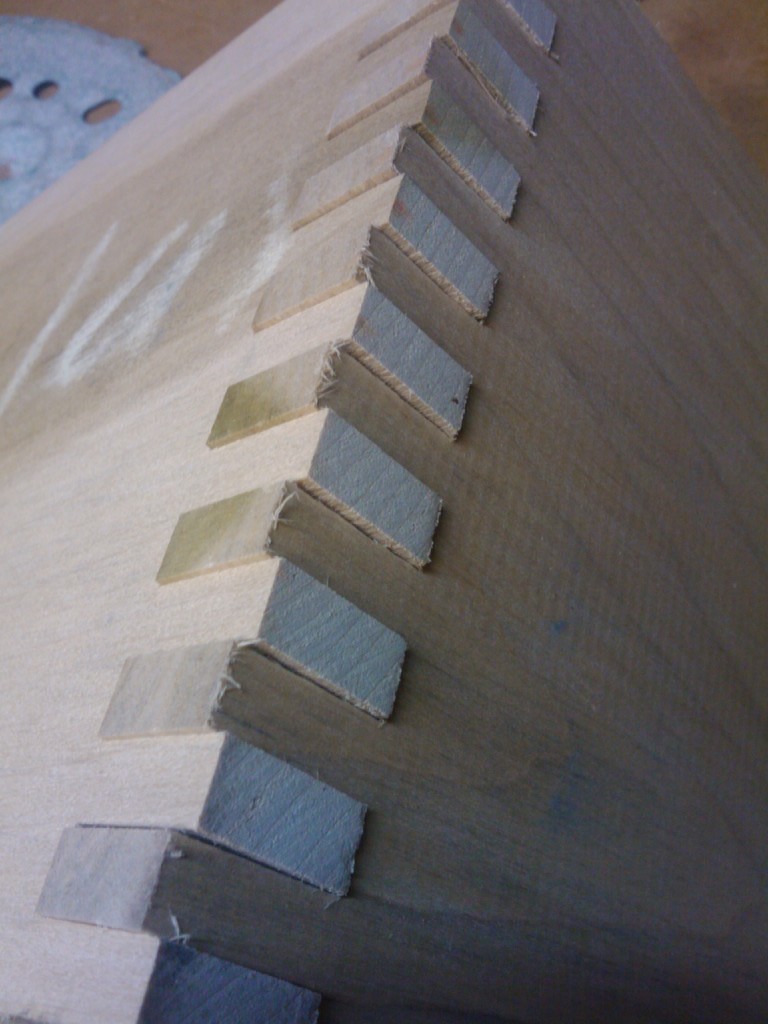
Another note – when I pick my project pieces, I always mill them a little wider than I need them. This way, I can trim the final joined pieces to width to eliminate any partial fingers on the box. This way, you will always have a full finger at the top and bottom every time.

Now, this was a pretty simple version of the box or finger joint jig. There are designs that adjust side to side to tighten or loosen the fit, plus other jigs offer more safety features and other adjustments. A quick search for box or finger joint jigs will give you plenty to work from, and you’ll also discover a number of commercial jigs for sale that give you great results.

Give this jig a try – you might be surprised how frequently you find yourself going for box or finger joints in your projects.



Quick Poll

When it comes to keeping your shop – and sinuses and lungs – clean, there’s nothing like a good dust collection system.

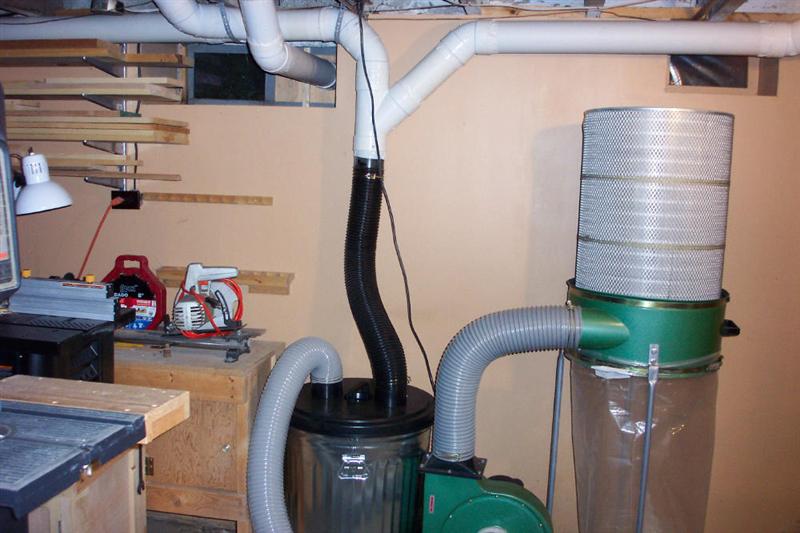
Capturing dust at its source is the most effective way to keep the mess at bay. This week, let us know what your basic dust collection set up looks like. Sure, there are many ways to collect dust, and in many shops, there are several methods at work. Just tell us about the main one in your shop – the one that gets the most work.

[poll id=”162″]


Link of the week

The Backyard Armory

So, you have a dragon problem near your castle, do ya? Before you call ye olde exterminator, you may want to consider slaying the best yourself. Never handled a sword before? Why not start with a wooden one – to practice with?

Known as wasters (or bokken in Japan), wooden swords have been used for centuries by warriors to practice their moves without damaging their fine – and very expensive –  steel blades. Used primarily for costume or play today, these babies are carefully built and finished to resemble the real article. Roman, Japanese and medieval designs are all available.

There’s even link describing the step-by-step process of building your own wooden sword. This way, you can be ready the next time that dragon decides to cause trouble in the neighboring village.