All posts by Tom

I'm the guy who writes the blog...

Some interesting things coming up

I know we are all well into holiday plans, holiday parties and holiday gift shopping. That’s going to be on the radar for the next crazy few weeks as we approach the end of December.

And, while I can repeat what I have done for the past three holiday seasons and harp on the gift-building/gift-giving process, what I want to do is use today’s column as a sort of a to-do list. Besides giving you a little break from the holiday hubbub, it will give you a little something to look forward to once the presents are unwrapped and we’re back to normal.

On January 28, Heritage Village, my county’s historical park, is hosting its annual Folk Festival. This event has always proven to be one of the most popular on the calendar. They have music, food and craft demonstrations featuring weavers, blacksmiths and other skilled trades from back in the county’s pioneer past. The only craft I really have yet to see at the event is – surprisingly – woodworking.

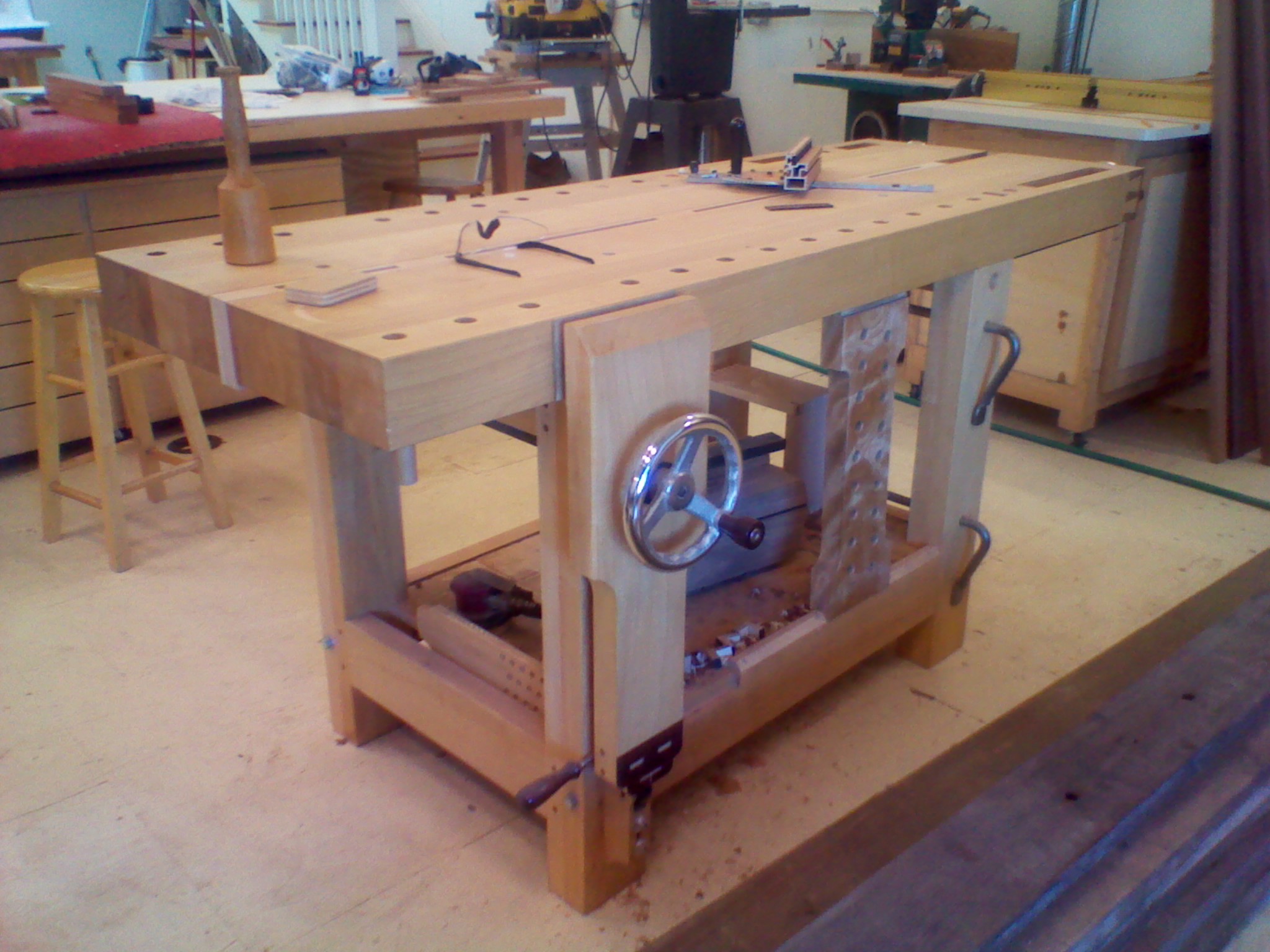
That’s why I have asked the St. Petersburg Woodcrafter’s Guild to help me remedy this situation. We’re working on a plan to bring a number of guild members up to Heritage Village that day to build a workbench. Well, maybe ‘build’ is too ambitious of a term. We may need to mill all of the components to size in advance and then bring them to the site to cut the final joinery and assemble it. I’m working now to get some southern yellow pine donated to the effort, and I hope to get over to the park soon to check out any antique fixtures (vises, holdfasts, etc.) that we can use for the project.

Oh… and I guess I’m going to need a plan for a workbench appropriate for – say the 1920s in the deep south…  🙂

The week of February 5 – 11, I’m hoping to get some other woodworkers involved in the first ever Get Woodworking Week. Modeled after Marc Spagnuolo’s successful Woodworker Safety Week, this event is an opportunity for woodworking bloggers – and hopefully, more people, companies and publications out in the woodworking community – to encourage others to give the craft a try. I want this to be an open-ended effort with everyone participating having free reign to publicize whatever they want. Some of the ideas would be:

  • Teach a youngster (or group of youngsters) about the craft
  • Share the story of how you got started in woodworking
  • Discuss what a budding woodworker should have in his or her tool kit
  • Design and build some projects a novice could handle with a minimum amount of tools
  • Challenge yourself to build something with basic tools

Basically, anything that can create a buzz about our craft, with an emphasis on sharing your story with others. Offer encouragement for the wannabe woodworker to get off the couch and explore the world of woodworking on their own.

I also have the big art contest coming up in January. Since I’m planning on taking a week off between Christmas and New Years, I’m going to have to get on the stick and start building something to enter. Maybe my first chair? Who knows!
 

The unheralded sharpening tool

Sharp tools are important in any shop. They cut better, are much safer to use and provide hours of satisfaction.

And, just as there are many different woodworking personalities, there are many different ways to sharpen those tools. High-speed dry grinders. Water stones. Diamond stones. Slow wet grinders. Sandpaper… The list goes on and on.

The only essentials that are truly needed are a sharpening medium that is harder than the steel it is grinding and a way to put a consistent bevel on the tool.

Oh, that’s the tough part for any novice – and many experienced – tool sharpeners. Getting that bevel correct and consistent can mean the difference between a tool that cuts flawlessly and one that won’t work nearly as well. And, steeper angles make the edge stronger – so a 30 degree bevel on a mortising chisel will allow the edge to cut, but a 20 degree angle will chip like nobody’s business.

While you can often regrind a tool to change its bevel for a different task, most times you simply want to keep the bevel where it is and simply hone the blade to get a sharper cutting edge. And, there are plenty of gadgets and gizmos out there you can use to hold a tool at a certain angle, how sure are you that you have that angle perfect? A degree or two off can mean the difference between an edge touch up and the complete regrinding of the edge.

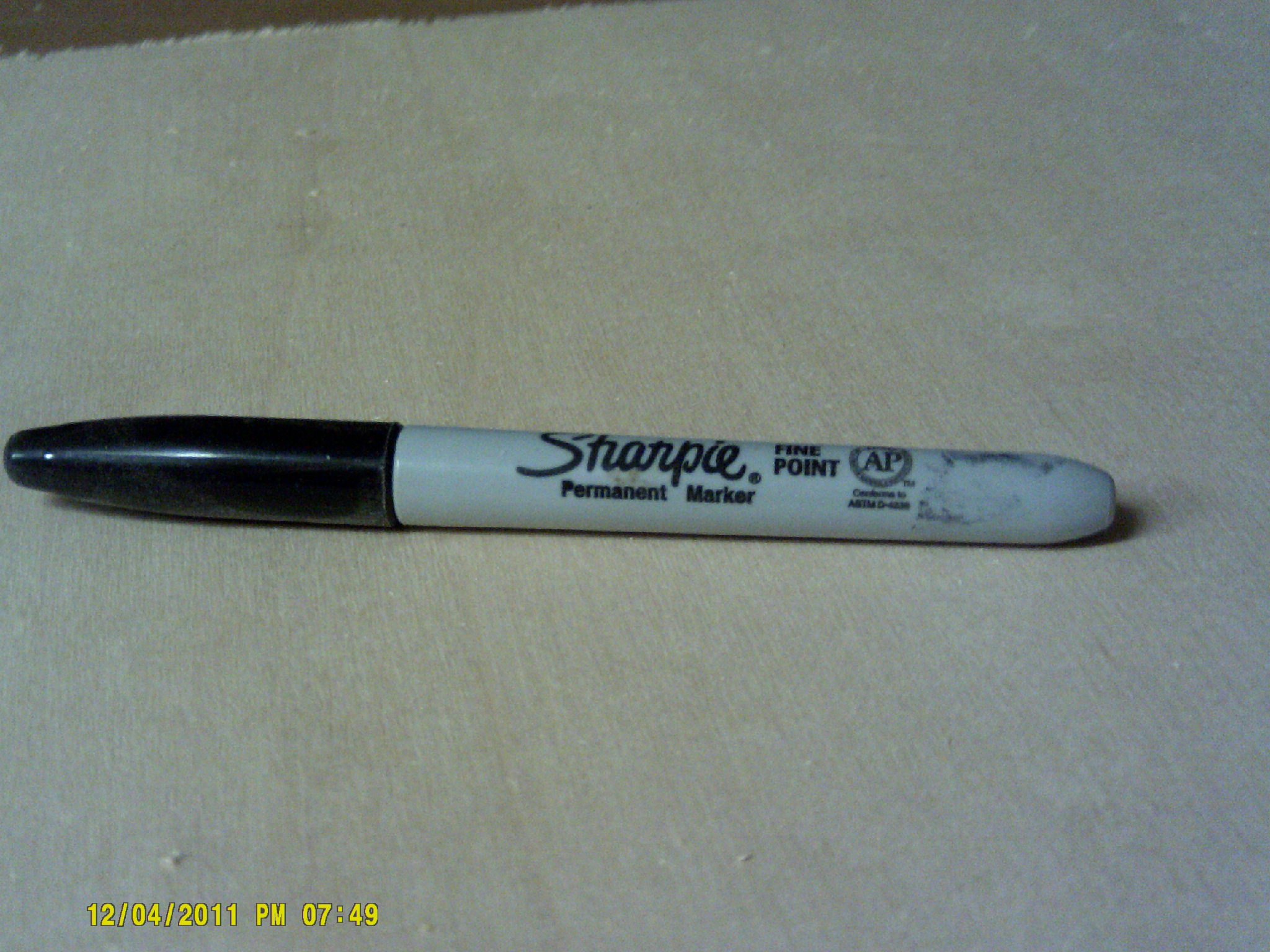
To help make things easier, you need to go a little more low-tech. In fact, you probably want to avoid the home centers and specialized woodworking stores altogether and head to the office supply places to pick up a permanent marker.

Yes, the tool your mom used to write your name on your underwear before sending you off to summer camp is a very handy accessory to have around when sharpening your tools. The ink is very durable stuff, and it writes beautifully on steel. While this may be nice if you are trying to mark which chisels are yours if you decide to go off to woodworking summer camp (does that stuff even happen?), it is a great characteristic for sharpening.

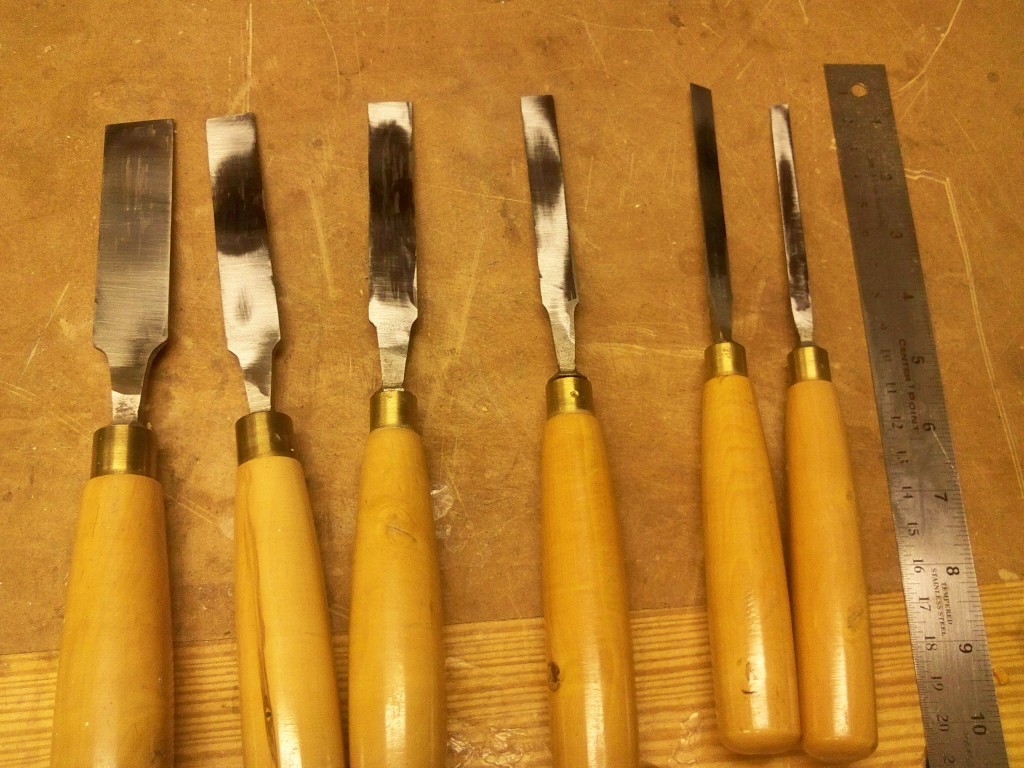
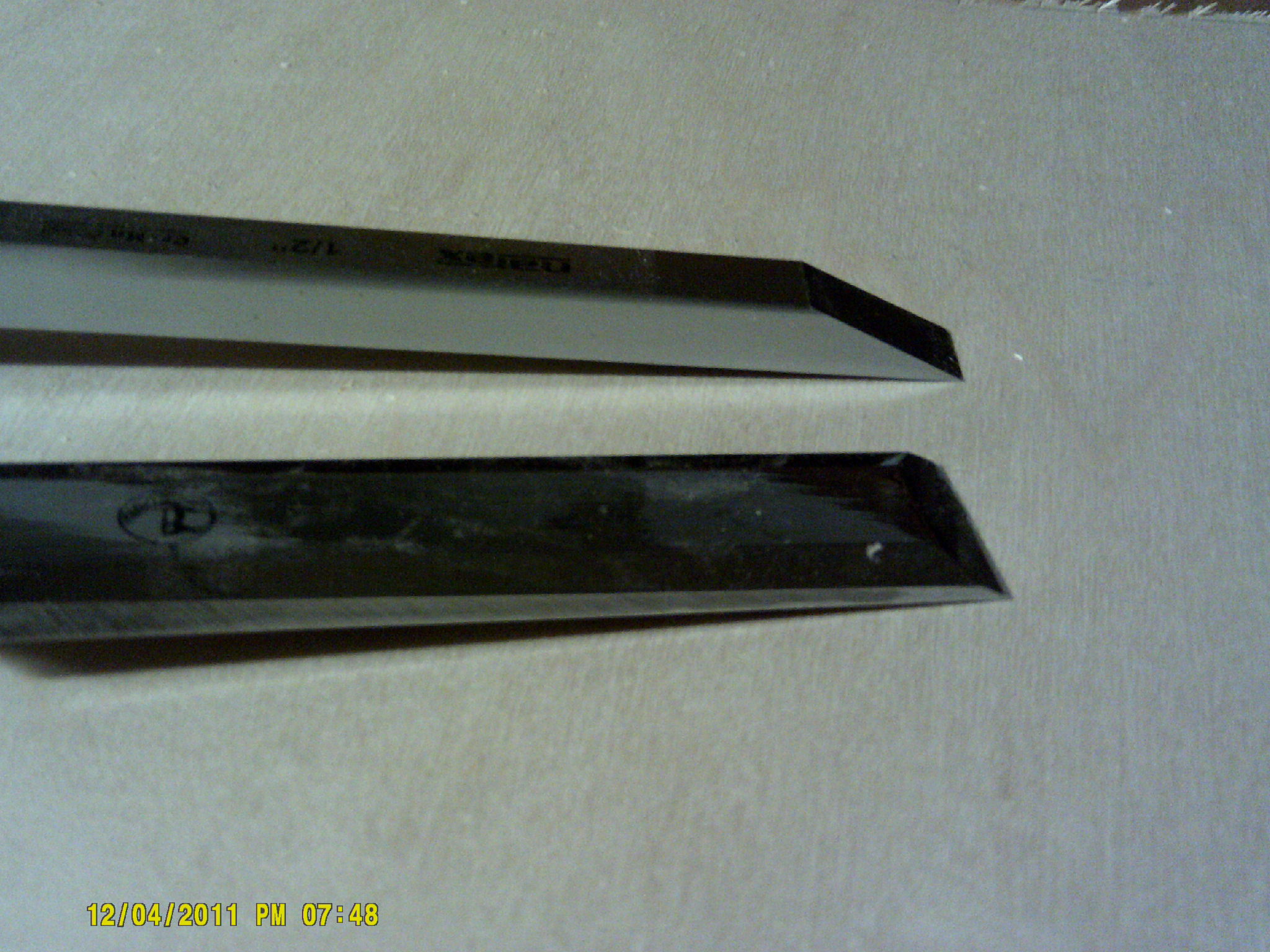
For a single bevel tool, think about how you sharpen it. First, you have to flatten the back of the tool, right? If you don’t it’s going to be mighty tough to get a nice, crisp edge on the bevel. If, before you attempt to sharpen your chisel, you color the entire back of the tool with marker and allow it to dry for a while, when you start to grind, the sharpening medium will wear away the ink in the high spots, showing how far out of whack your blade is. When I was sharpening a set of antique chisels I had purchased, it showed me that the tools were a little bit too far out of whack for my tastes.

Once you get the backs in shape, you will want to make sure you are duplicating the bevel angle already on the tool (unless you are trying to change the angle altogether). So, you simply flip the tool over and color the bevel with the marker. Once you allow it to dry, it’s easy to check at what angle you are grinding.

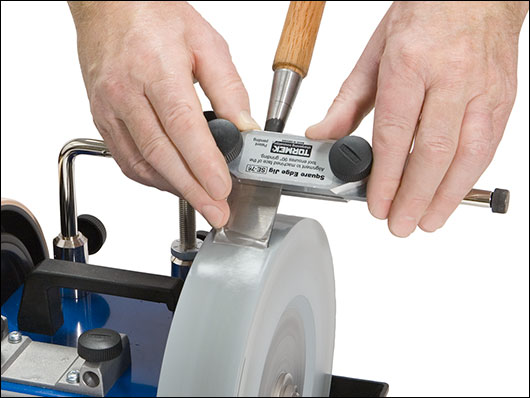
Even on my Tormek, with its fancy tool holders and angle setting guide, the instructions advise you to use the marker method to color the bevel. From there, I mount the tool into the guide and press the bevel to the stone. Using my hand, I spin the stone maybe one turn. That simple turn will show me exactly where the bevel is making contact with the stone, and whether I need to make any adjustments to get the bevel lined up correctly. This method works very well for freehand honing as well. In fact, by using the marker as technique feedback, you can train yourself to set the proper angle without any guides. It’s that simple.

When you are done with the grinding, the edge should be nice and shiny, with all of the marker worn off. By that point, you will be ready to add your microbevel – if you use one – and get back to the bench.

Not bad for an inexpensive sharpening aid!


Quick Poll

OK, it’s 1 p.m. here on a great Sunday in Florida…

I have gorgeous weather. I have a list of things I need to get done…

And, I’m still inside, puttering around the house.

This week, tell us if you ever have trouble getting a shop session started.  Are you always full of energy, ready to pop out into the shop for a great session, or do you have issues getting started?

Link of the week

Andy Brownell’s Glue Creep Study

There are many things in woodworking that are taken as dogma. You can never use another  finish over shellac with any wax in it.  Dovetails are the only joint allowed on fine furniture casework. And, if you want to get a solid bond on joints under stress, you can never use yellow PVA ‘carpenter’ glues. After all, they all ‘creep’ under pressure, right?

While these are good general rules of thumb, isn’t it great that there are people out there testing to see if they are 100% incontrovertible fact, or just general ‘known facts’ that can be broken.  Andy Brownell is a man on a mission to see if yellow glues truly make unacceptable joints.

To get to the bottom of this, he has set up quite the experiment. Using glues of different formulations from different manufacturers, he’s gluing up a variety of wood species to see how each performs.

This will be an ongoing experiment, so be sure to stop by to check out how things are progressing!

How big do you want it?

I still remember when my brother-in-law purchased his first table saw. A Skil benchtop model that he used the heck out of. I was in awe of his saw, coveting it jealously, because I didn’t have one of my own at the time.

While he was showing me all of the neat features (Height adjustment? Blade angle adjustment? Rip fence? Someone pinch me!), he lamented one important thing – he couldn’t find a ten inch diameter dado blade to go with his ten inch saw. This really seemed to bother him.

It got me wondering… why the heck doesn’t anyone offer a ten-inch dado blade for hobby woodworkers? Come on, I want to use all the saw I bought, right?

“Well, it’s not quite like that,” said David Venditto of Infinity Cutting Tools. “Your saw can handle up to a ten inch blade, but dado blades are a completely different animal. Yes, they both do cut, but it’s all about the weight.”

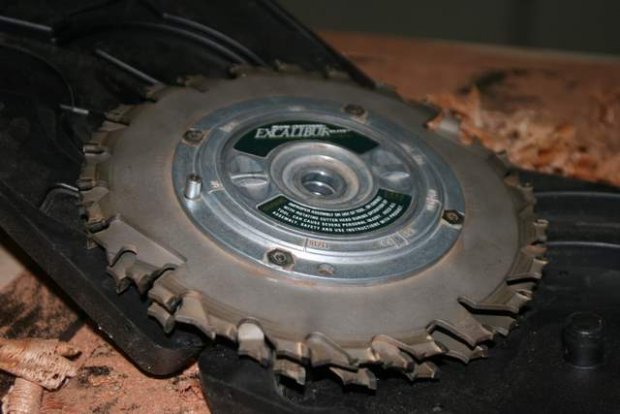
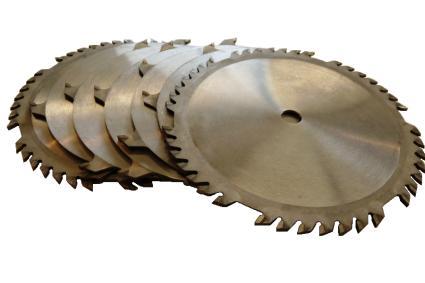
David explained to me that a regular crosscut, rip or combination blade for a saw is a single circular plate with teeth cut in it, carbide pieces added to those teeth and a hole precisely bored in the center to ride on the saw’s shaft. That one blade has a limited amount of heft to it, and that’s what the saw manufacturer designs the tool to use. “The weight differential between a single ten-inch blade between models isn’t that great. So if you are using one of our blades or one that came with the saw originally, the saw won’t really care.”

This all changes when you move to a dado blade. In order to cut the larger groove, you have to expand the cutting area of the blade. In order to accomplish this, there are two approaches. Wobble dado blades use an eccentric hub which can be dialed to size. The blade flutters as it cuts the material, doing the dado in one pass. “Sure, you can go this way to cut dadoes. It’s a technology that has been used for years, and it works fairly well, if you don’t mind rounded bottoms of your grooves.”

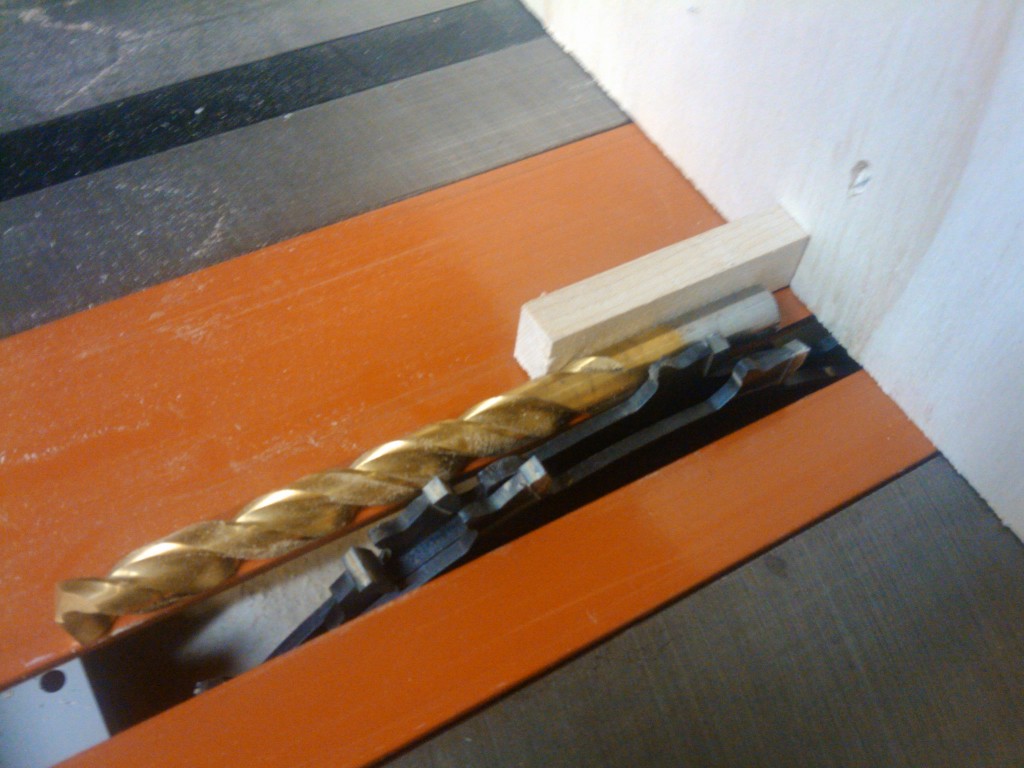
The other technology which is used is to stack a number of blades together on the saw’s arbor to achieve the desired width of cut. “Stacked dadoes give better results than wobble units, but it comes with a significant increase in weight. That’s where we as blade manufacturers have to downsize the blades to help the saw compensate.”

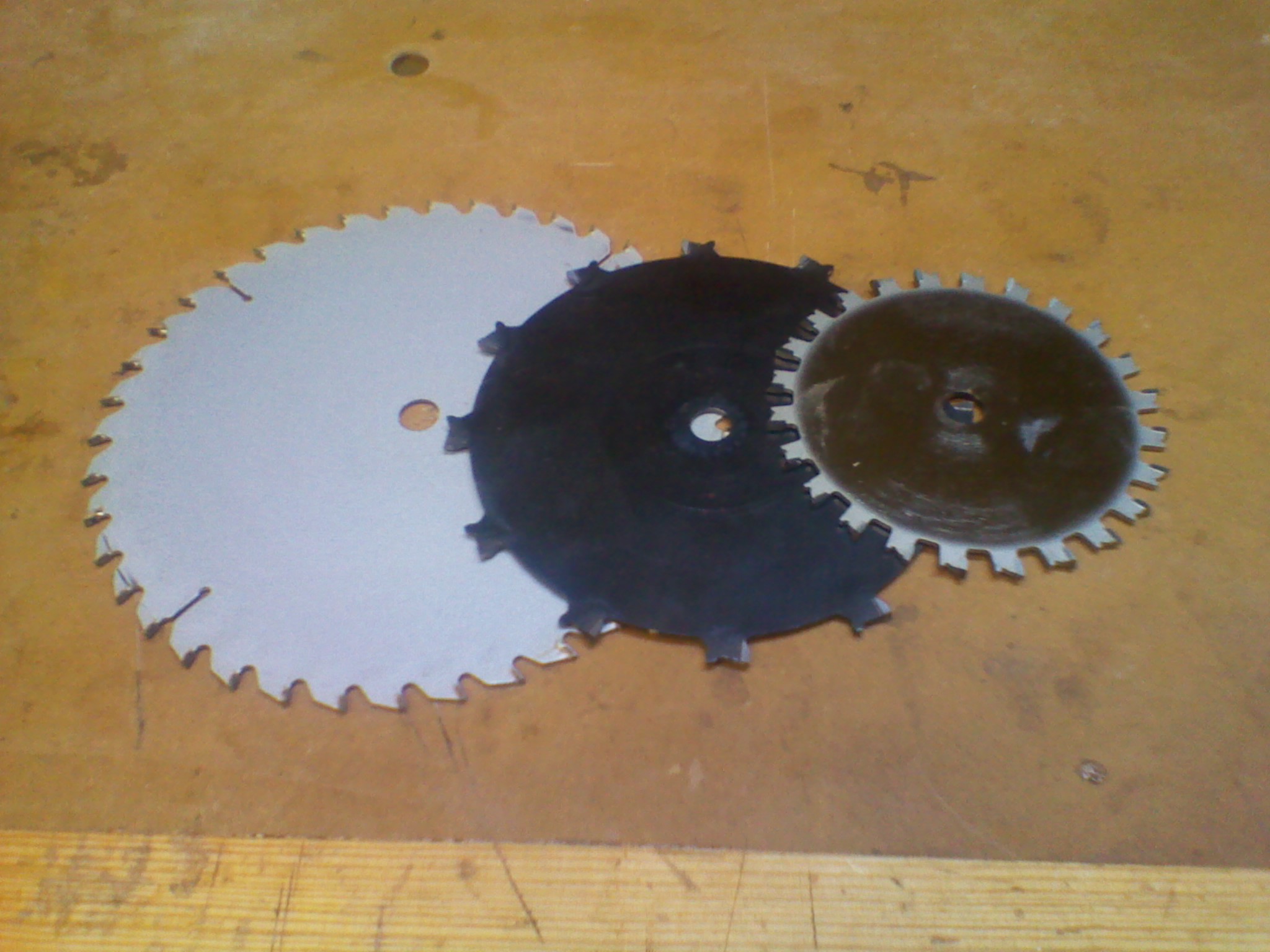
A ten, eight and six inch blade for comparison

That’s why most manufacturers offer eight inch dado stack sets. The two extra inches of reduced diameter makes the stack considerably lighter than it would be with a ten inch diameter. “To give you an idea of weight differences, our 8” Dadonator stacked set (with 24 tooth outside blades and full-body 6-tooth chippers) weighs in at 10 lbs, the 6” Dadonator Jr. set (with the same blade and chipper design) weighs a full 4 lbs. less. The Jr. is clearly the best choice for anyone using less than a 5 H.P. cabinet style table saw. In all of the years I’ve been making saw blades, I’ve never heard one person complain about not being able to cut a three and a half inch deep groove in a board. But, they all seem to love the flat bottom cut they get.”

Stacked dado blades have the two outside blades which – when used alone – can cut a ¼” groove with no problem. To further widen the cut, chippers with a reduced number of teeth are stacked between the two outer blades until the desired width is reached. “With our Infinity Dadonator line, we make the only blade sets with six teeth on the chippers – where many other manufacturers may use as few as two. The 6” Dadonator Jr. is the only dado set on the market to feature outside blades with 24 teeth and chipper blades with 6 teeth. Those extra teeth help ensure your cut is crisp in solid wood or plywood. That does mean that our sets are going to be heavier than other dado sets you can buy.”

David’s answer for those who want to use his dado sets on a smaller saw? “There’s nothing wrong with looking at our six inch dado set. With that, you can still cut grooves as deep as one and a quarter inches, which is more than adequate for most joinery tasks while not straining your saw’s motor to keep up with the demands placed on it.” David was also quick to point out that the 6” dado set also costs less than its bigger cousin. “If you are in the market for a new dado stack and you don’t have a beefy cabinet saw, the six inch blade represents a heck of a value without sacrificing performance.”


Woodworking Spotlight: Franklin Street Fine Woodwork School

Renaissance. Just the sound of the word conjures up images of people like da Vinci, Michelangelo and Galileo driving the inspiration of the day to expand the arts, science and other pursuits.

In much the same way, areas of cities undergoing an urban renaissance often rely on forward-thinking people to spark the rebirth of a particular neighborhood and create a new and vibrant future.


That’s just what’s happening on Franklin Street in Tampa. Located across the street from two colleges and less than a three minute drive from the city’s bustling downtown, the area was once a set of dilapidated auto dealerships and parts stores. But, no longer.  There you will find the large yet comfortable shop of Franklin Street Fine Woodwork School. I recently had the opportunity to pay the shop a visit and meet a woodworker genuinely excited about the craft.

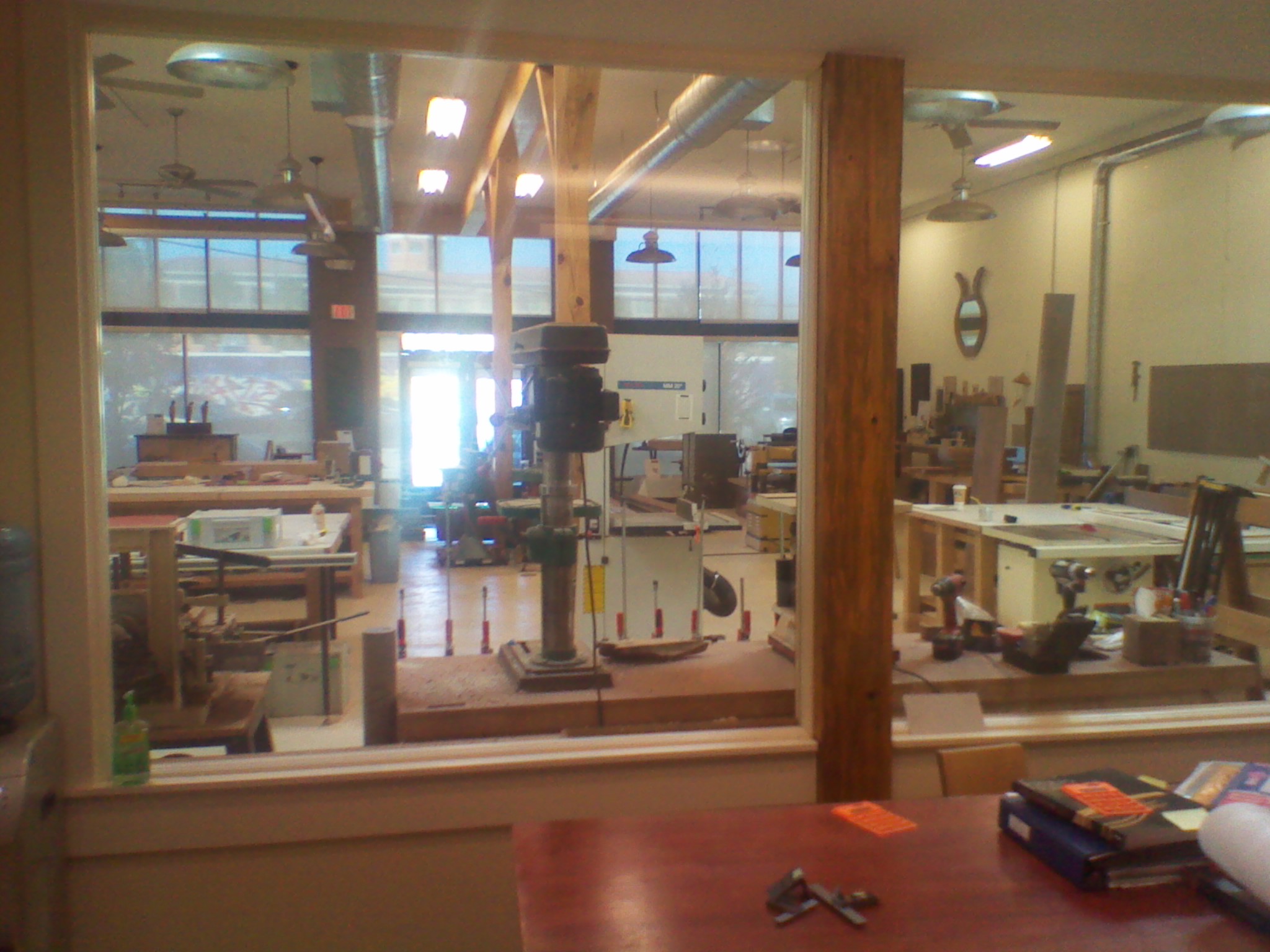
Co-owner Carl Johnson let me into the shop and gave me the nickel tout of the facility. Large windows restored to the yellow brick facade let the natural daylight flood in to the 2000 square foot shop. We walked up a slight ramp to the shop’s floor. Carl explained that’s because they laid down wooden sleepers and built a double-thickness 3/4 inch plywood floor to make it easier on their feet while standing during a long day, and to provide a raceway for the shop’s dust collection and power supplies.  Work benches, large stationary power tools, stacks of beautiful lumber and complete works of art share space on the shop floor.


Carl and his business partner Alison Swann-Ingram have been working together since 2004. In 2009, they merged their two separate businesses – Swann Woodwork and the Artisan’s Workshop – and relocated to their new facility. “It took nearly a year’s worth of renovation to bring the building to where it is today,” said Carl. “We wanted to preserve the old character of the building while making it function for what we needed. That involved some careful planning and working closely with the city.”


Part of that was preserving parts of the old architecture and building fittings (Carl proudly pointed the shop’s original cast iron wall mounted sink as an item saved during the demolition) while creating new ones that fit the spirit of the building’s timeframe. Carl drew my attention to the fact that he built all of the interior doors for the building out of poplar. “It was funny. I told the painter how I wanted them done, when the painter told me he couldn’t paint over the beautiful wood. Looking back, those simple poplar doors really do make a statement.” A comfortable classroom, glassed off from the shop, gives Alison and Carl the opportunity to hold a class in a less-dusty environment.


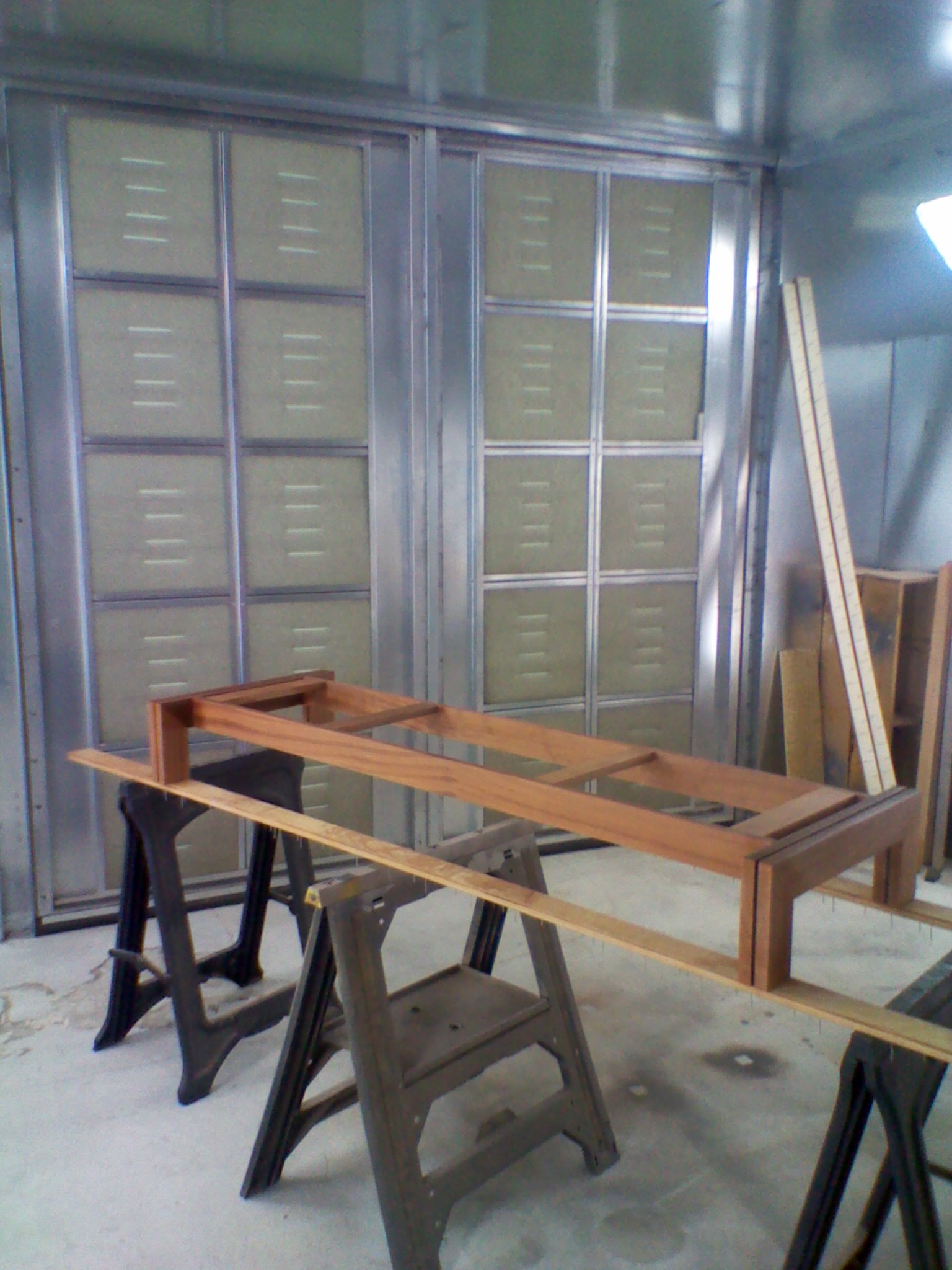
Back in the building’s loading dock area, Carl and Alison have kept the original slide-siding loading door and the building’s original brick facade. But, they have also installed a modern, stand-alone spray booth for their finishing work. “We love to spray lacquer. This booth is a semi-custom structure where we can shoot the pieces in the right environment and ensure we get the best possible finish.” The sci-fi looking booth comes complete with two huge filtering stations and a ring of waist-high fluorescent fixtures to give the operator raking light across the project to check their progress.


Since the shop functions as both a custom furniture shop and classroom, it provides students a unique opportunity to both learn and observe during their time at Franklin Street. “Alison is the one who loves to teach. And, she’ll have a class of students going throughout their paces while I’m working in the other half of the shop. During their breaks, the students will always come by and watch or ask questions. In many ways, I’m providing the bonus coursework, and they always walk away learning even more than the bargained for!”

As I left the shop and shook hands with Carl, I noticed some other things going on in the neighborhood. Next door, a computer company was setting up shop, finishing the renovations on their unit in the building. Nearby, the employees of several law offices were moving about.  The pulse is coming back to Franklin Street in Tampa. And, if you are ever in the Tampa Bay area, you owe it to yourself to pay the Franklin Street Fine Woodwork shop a visit and say hi to Carl and Alison.


Quick Poll

Did you guys miss me?  Huh?

After a Wednesday night of prep work for Turkey day, and a big day of cooking and entertaining, AND a big few days of working in the shop and shopping… I decided – quite unexpectedly – to take a few days off from the blog.

I think I deserved it.

But, now I’m back. And, it’s time for another annual tradition on the blog. Are you building holiday projects this season?