Quick Poll

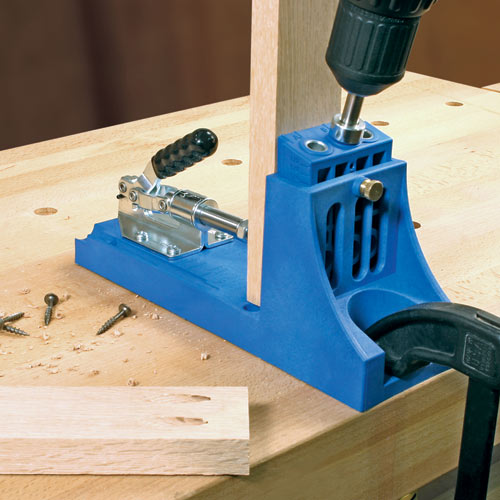
Ever since Craig Sommerfield brought the first practical pocket hole drilling jig to market back in 1990, woodworkers have been turning to these fast and convenient joints for projects. And, if you listen to the marketing folks at Kreg Tools and other jig manufacturers, it would appear that you could build an entire set of kitchen cabinets in mere hours.

While the joints are easy to make and quick to assemble, many woodworkers question just how effective they truly are.  This week, what do you think about pocket screw joints?

Link of the week

Gleman & Sons Fine Woodworking

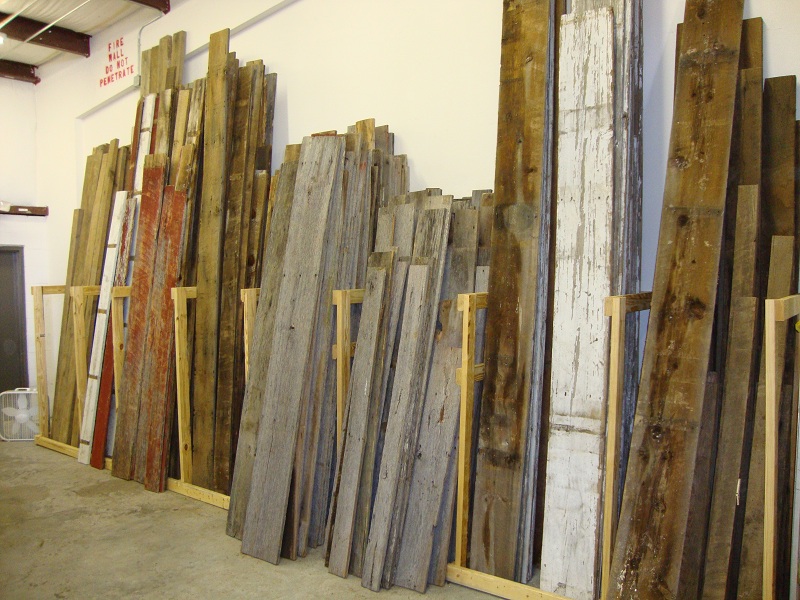
Sure, when you visit this week’s link of the week, it appears to be taking you to a custom furniture shop. But, that’s only seeing the tip of the iceberg. You see, this central Florida operation deals extensively in reclaimed lumber… and, boy, do some of those boards have a story to tell!

Whether harvested from the bottom of lakes and rivers where it sank many years ago, or culled from barns and other old outbuildings located throughout the south, these old growth or second cut boards exhibit tight growth rings and characteristics difficult to find in today’s lumber. Besides, if you ever wanted to try a special project made of difficult to find American chestnut, reclaimed is the only way to go.

A sharp idea

If you saw my link of the week this past Friday, you may have noticed that I am starting to express an interest in carving.

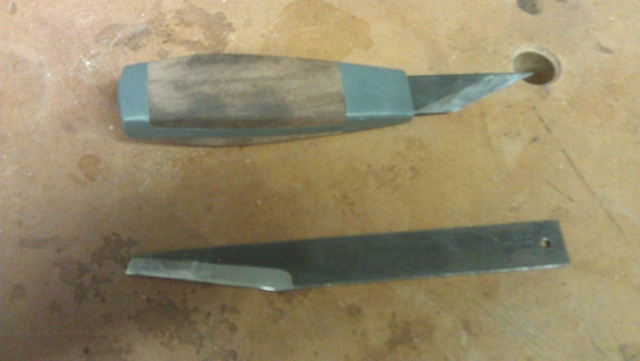
It’s not the first time the thought has crossed my mind. In fact, I have a few tools I bought but never actually used. This mill knife set is the prime offender.  I got interested in it when I saw Norm Abram carve a set of wooden signs on one of his shows. Using just a mill knife, he was able to carve the Serenity sign. Since the knife set didn’t cost too much, I figured, “what the heck?” and ordered it.

When it came in the mail, I took the knife out of its package and tried to carve a basic shape into an old scrap of 2 x 4.    It didn’t work. That’s when I discovered that no matter what kind of carving you would like to do, there’s one thing that you must have – sharp tools! I grabbed the mill knife set, tucked it into my tool chest and swore I would take it out again when I was ready to work with it again.

I think that was in 2007.

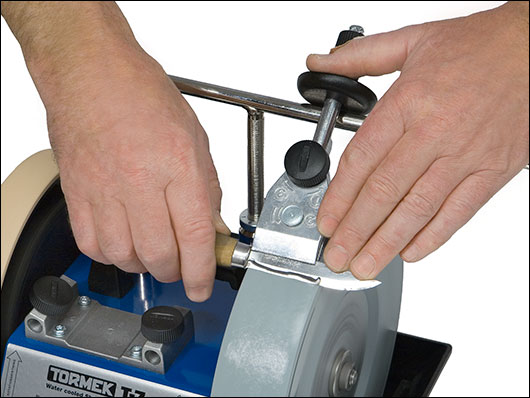
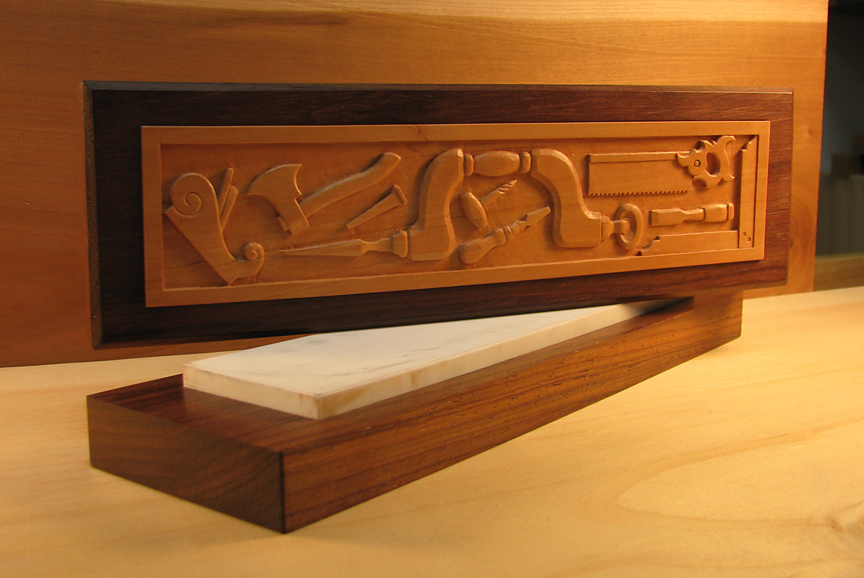
That’s it… time to move. The first thing, of course, is trying to get things nice and sharp. This was a natural for breaking out the Tormek and putting it up on the grinding wheel. The tool itself is rough and tumble, and it has a very tough blade with some coarse grinding marks, so they had to go first on the coarse setting. Once I got the angle down, I did the rough sharpening, then regraded the stone to the fine setting. This put a nice polish on the blade and made it sharp.

But, that’s not where I stopped. I need these suckers to be sharp enough to slice wood with minimal effort. If I have to force the knife, there’s a great chance I’m going to tear the wood fibers.  That’s why I charged the leather strop with some honing compound and ran the blade over that on both sides.

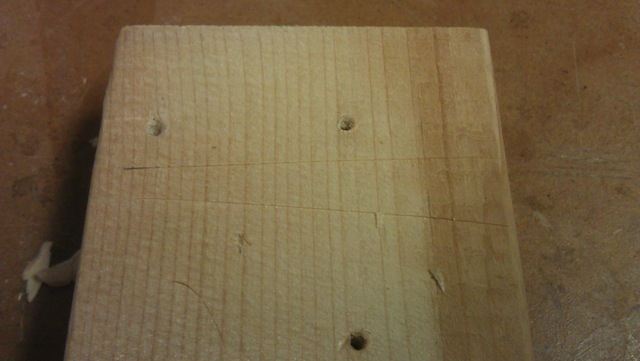
As you can see, the cuts across the grain are as clean as can be … sharp is the only way to go.

Taking a hint from Kari Hultman, rather than use this knife until it was dull as dirt, I kept my honing wheel charged and at the ready for regular stropping during the carving process. After all, it’s easier to maintain the edge rather than redo it from scratch.

The only thing I need now? Skill. But, that will come with time, right?


In memory … and appreciation

Today in the United States, it’s Memorial Day … the day we set aside to remember all of those who have fallen in war since the establishment of our country.

While many see it as the official kick off to the summer season or an excuse to hold a sale at a business, it means much more for the families who have lost loved ones on the battle fields around the world.

In years past, I have linked to plans for flag boxes and other commemorative items to help honor the sacrifice made by these brave service men and women, but this year, I discovered probably one of the most touching woodworking projects I have ever seen.

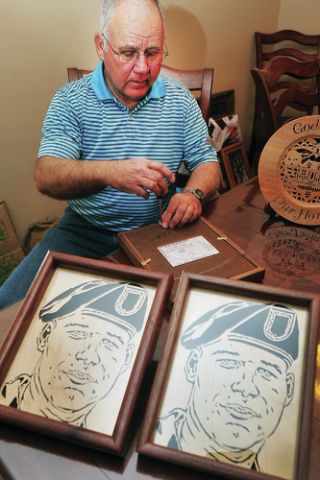
Portrait Freedom is an initiative of more than 400 scroll saw artists to honor every fallen serviceman and women who has fallen during Operation Enduring Freedom – the global war on terror. These scrollers have one goal in mind – to cut a portrait of the fallen to present – free of charge – to the families as a symbol of their support during these difficult times. So far, they have cut more than 1,000 portraits.

Photo: Becky Burch/Bartlesfield Examiner-Enterprise

Families of those who have lost loved ones are encouraged to submit a photo to the website. From there, one of the scroll saw artists who has signed on to the board will take that photo and design a portrait pattern.  Once approved by the board moderators, a volunteer artist will take the pattern and cut it from 1/4″ or 1/8″ oak or birch plywood. Once completed, the portrait is gently sanded and finished with a clear coat. It is then mounted with a black background, framed and shipped to the family.

To ensure that the work is of the highest quality, multiple photos must be taken of the plans and the project and submitted for review.  While the vast majority of attempts are approved, some are rejected, and the artist is asked to submit a newly designed or cut portrait if they wish.

The final step the scrollers take before they ship their work to the family is to download and customize a presentation letter that goes along with the portrait introducing themselves, explaining about the project and expressing their most sincere sorrow for their family’s loss and the appreciation of the sacrifice they have made.

The response from the families who have received these portraits has been overwhelming – not just in appreciation of the artist’s work, but how that image of their loved one means in their own personal healing process.

Thank you so much for the wooden portrait of our son.  We sincerely appreciate the time and talent of Mr. Harry Savage & Mr. James Obenstine.  Please be assured that these portraits will remain treasured memories of our beloved son.  The kindness of so many people has given us strength.  Thank you again for remembering Greg.  
Sincerely,
Maureen and Thomas Pagano, proud parents of CPT Gregory T. Dalessio

Today, take some time out of your backyard cookout and remember what Memorial Day is all about … and, be sure to thank a veteran who may have lost a good friend on a distant battlefield many years ago – or more recently.

Quick Poll

Earlier this month, Marc Spagnuolo over at the Wood Whisperer site led the annual Woodworkers Safety Week effort, where woodworking bloggers around the web write up articles on shop safety. From the simple tips such as cleaning up your workbench all the way through the gruesome stories (and photos) of shop sessions gone wrong.

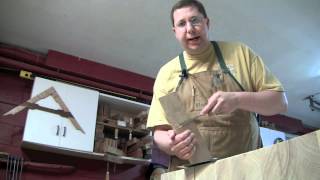
Click for Shannon Rogers' Shop Safety video

But, reader Jay Cox had an interesting question – just how long do these messages stay with you?  Do you keep them top-of-mind throughout the year as you work, or are they forgotten shortly after you read them?


Link of the week

Chipping Away’s How to get started with wood carving

Since I joined the St. Petersburg Woodcrafters Guild, I have seen some incredible carvings up close and personal. Add to that seeing the impressive work of Kari Hultman and others and – boy – all I want to do now is carve. But, where on Earth to begin?

That’s why I’m happy this how-to page was created by the folks at Chipping Away. It gives a great primer on different types of carving styles (from delicate chip carving to carving in the round), an interesting perspective on how old someone should be before taking up the craft and links to tools to accomplish the different styles of carving.

It’s an interesting place to begin if you are interested in doing some carving on your own.

Carbide 101

I can remember my dad’s old table saw blades.  Those suckers were all high speed steel, with the teeth alternately set to clear a kerf in the wood. And, I can also recall my dad complaining that they were dull and had to be sharpened all the time.  What would have fixed this problem was maybe something that could stay harder and sharper between sharpenings …

Enter carbide. These little bits of material are braised on to the teeth of these saws or the cutting edges of router bits help blades cut more cleanly while holding their cutting edge for a longer time. But, what the heck is carbide, and how can you tell what you are getting?

That’s the question I posed to David Venditto of Infinity Cutting Tools, and, boy, were my eyes about to be opened!

Carbide – more specifically tungsten carbide – is a combination of tungsten and carbon, arranged in  an elemental structure that resembles common grains of salt. The substance starts out as a powder, but then is cast in a process known as sintering with a metallic binder to form the individual teeth or cutting edges. Under a microscope, these carbide cutters resemble concrete with the carbide serving as the aggregate and the metallic binder serving as the cement holding everything together.

Carbide cutting edges are exceptionally hard, and can only be sharpened with diamonds or other similar abrasives. So hard, in fact, that the United States Army uses tungsten carbide in certain circumstances as a tank armor penetrator instead of depleted uranium in their anti-tank rounds.  That’s why you can’t simply use a water or oil stone to touch up your carbide cutting edges. The carbide would wear a track right through your stone. Diamond stones can be used to touch up an edge, but do so slowly… and just a few passes. For complex profiles  on router bits or for teeth on a table saw blade, you might want to look at sending the blade off for some professional sharpening.

While all carbide is made of the same stuff, there are many different grades of carbides out there, and grade selection can make or break how well your tools perform.  For instance, the C number of the carbide tells you just how hard the carbide matrix is.  Something like C2 carbide isn’t quite as hard as C3 or C4 carbide.  The harder stuff gives you a much better finish, but it’s far more brittle. So, while C2 may survive contact with a nail, C4 would be more likely to shatter.
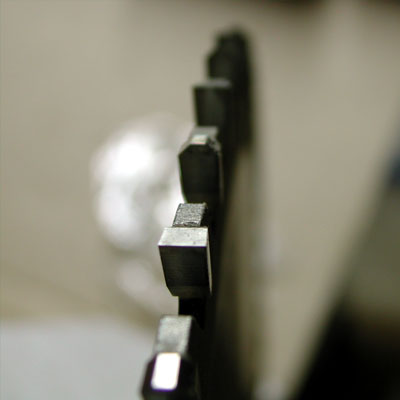
The other think to keep in mind is that the size of the grain of the carbide which is sintered into the carbide cutter. The finer bits of carbide embedded in the matrix, the more finely the edges can be ground, giving a smoother cut. Larger, chunkier bits of carbide embedded into the matrix makes them less prone to handle impact with wood, so you could see the edges become dull faster.

Another thing to keep in mind – while all carbide is made of the same stuff, poor quality carbides will be sintered with a lot of bubbles in it. The more porous the carbide tips produced by using less expensive manufacturing processes fail to hold their sharp edges. That’s why premium carbide blades cost significantly more, but produce far superior results.

Just as important as carbide manufacturing is how the tips are attached to the blade or cutters. The process is known as brazing, in which a  blend of metals are placed on the steel of the blade or bit body, heated and then the carbide is attached. David told me that the formula they use for their blades and bits not only hold the cutters to the blade or bit, it also serves as a form of a shock buffer, helping the teeth better withstand the impact of cutting into wood.

While carbide is very tough stuff, there are some simple things you can do to help prolong the life of your saw blades and bits:

  • First, be careful when handling your blades and bits.  Because the carbide is just so hard, you can chip the teeth or cutters if you put them down roughly on a hard surface like your table saw top.
  • Keep your blades and bits clean.  Pitch build up on the blades can block the sharp cutting edges of the carbides, forcing you to push the work harder and increasing the heat generated by friction, leading to more burning.  You can use a number of different cleaning products, but stay away from caustic oven cleaners, which can affect the braising used to hold the teeth on the blade or bit.
  • And, finally, remember that carbide does dull. If you notice more friction and rougher cuts, or the edges of the cutters look chipped, bring the blade or bit in for a little TLC.  Your effort will be rewarded.

While my dad’s old circular saw blades without the carbide inserts aren’t going to get a lot of time in my shop, they are awesome for the obligatory saw blade shop clock.  That’s a pretty good use for them!

 

part of the Wood Talk Online community