Link of the week

Wikipedia’s entry on crates

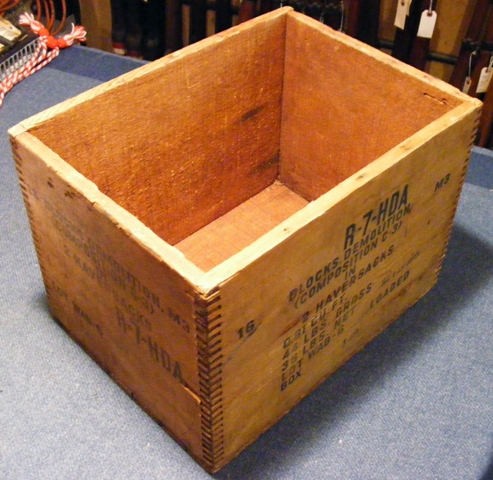
Wood has been an important building component for humankind for millennia. It has been burned to warm and cook, split into boards to build shelters and sculpted into shapes to express an artistic flair. But, little thought is given to wood as a packing and shipping material.

This page from Wikipedia covers – very briefly – the history of wooden packing crates. From carrying ammunition for wars to be waged to the medical supplies that have cured diseases, wooden packing crates have been there, done that. In fact, during the heyday of wooden packing crates, many hobby woodworkers got their start using delivered crates as their material of choice.

Today, most shipping crates are made of cardboard or plastic, but there is a brisk business in classic wooden crates on eBay and other auction sites.  They are definitely a piece of history.

And, there’s post No. 994.

Which Router?

One of the things I have noticed while writing the blog is that readers sometimes turn to me for advice.  Now, if it’s how NOT to cut dovetails (based on my personal experience, mind you), I’m your guy.  If it’s about how not to treat your band saw, guilty as charged.  Heck, I can even advise you to steer a wide berth around tiling!

But, it’s cool when someone new to woodworking seeks advice on the first tool of a certain type they should buy. Oh, I’ve made mistakes when buying tools, and have had to later correct the situation through the expeditious use of additional funds…  So, if I can help folks get off onto the right foot, hey, I’ve done my good deed for the day.
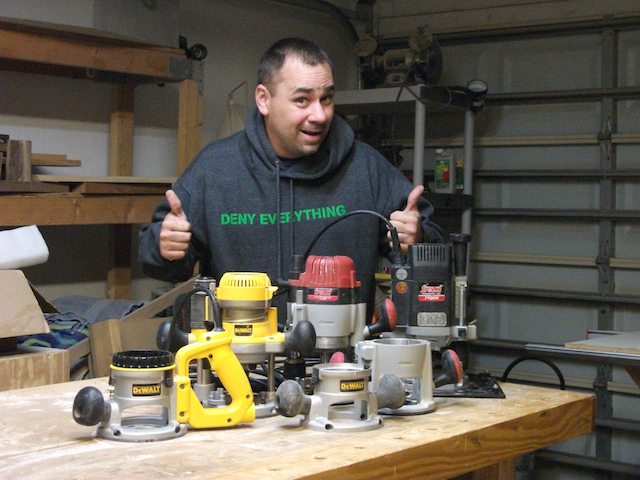
I recently got an e-mail from Randy (the name has been changed to protect the pseudo-innocent) who asked me:

I’m about to buy my first router and have no clue which to buy. My primary reason for the purchase is to do template cuts using 1.5″ to 2″ flush bits (although I am sure once I get the machine I’ll find many more uses for it).

I was wondering if you had any advise for me which machine to buy.

Oh, can you ever find uses for a router!  It’s one of those tools you wonder if you need when you first start out, but wonder how you got along without one after you get it.   Now, my first router was given to me by my mom, and it served me very well. It just had its limitations – a 1/4″ collet and a fixed base. Now, it got me through a lot of years of routing, but, when I had the chance to upgrade, it made too much sense to not go for it. Based on my experience, I replied to Randy thusly:

Welcome to the wonderful world of routing!

You will find as many suggestions are there are woodworkers. And, that’s cool, because everyone works differently.

For my money, you definitely want to go with a combo kit. Something that gives you the ability to use the router as a plunge router or a fixed-base model. This way, you slip the motor unit from base to base, and can do just about anything with it. Heck, if you found one, a three-base router would be optimal.. you could dedicate one base (probably the two-handed fixed base) to a router table, then keep the second fixed base (a D-handle model) and a plunge base for all of your hand-held work.  That would give you most flexibility, until you can get your hands on a larger, dedicated router table model (probably the second one you will buy.)
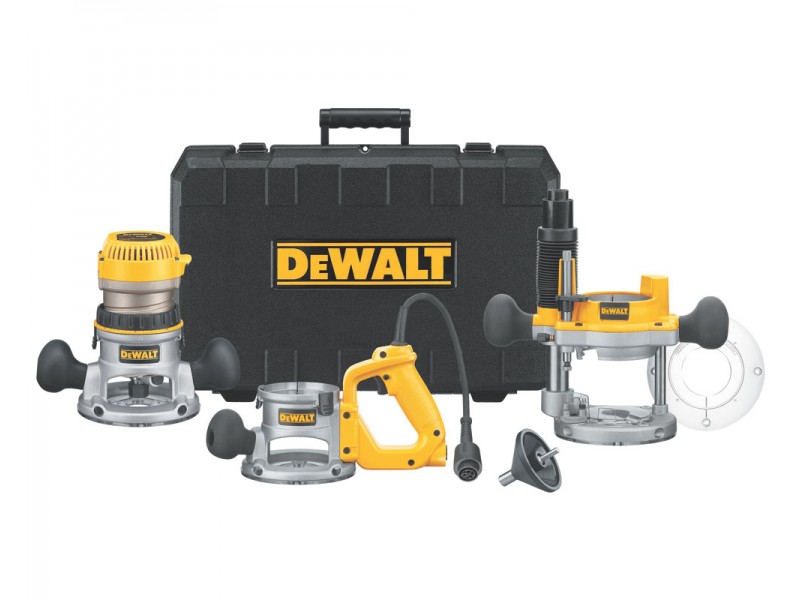
I have the DeWalt 618 3 base model:  http://www.amazon.com/DEWALT-DW618B3-Horsepower-Plunge-Fixed/dp/B0000CCXU3

I like it a lot. DeWalt is made to use all of the Porter Cable accessories, so everything you could want to use with it (edge guides, guide bushings, etc) will work. It has the guts to use big bits, and is pretty nimble.
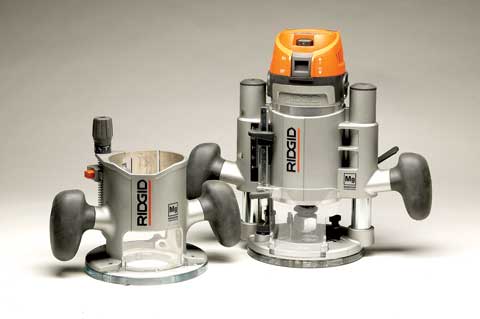
If I had to do it all over again, I might go with the Ridgid router kit: http://www.ridgid.com/Tools/Heavy-Duty-EVS-2-14-Peak-HP-Router-Combo/EN/index.htm

Sure, it only comes with two bases, but this one has an LED light mounted into the base, which really throws a lot of light onto what you are working on. That will make it much easier to see what you are doing, and the kit comes with a lifetime warranty – so, if seven years from now it acts up, they will fix it for you, or give you a new one.

Whatever you do, get one that has a 1/2″ collet. The DeWalt I have comes with both a 1/2″ and a 1/4″ collet. Sure, you can save some dough by going with a 1/4″ collet, but I can guarantee you that you will outgrow that router quickly. All of the cool bits come in 1/2″ shanks, and they aren’t that much more expensive. Plus, with a 1/4″ collet as well, you should be able to tackle just about anything.

I would also strongly recommend you buy a book about router basics and read it from cover to cover. There are tons of them out there, but they all offer some really good advice on how to get the most out of the tool. Look for books that feature a lot of jigs you can build… you will be surprised how much a good router can do for you.

As always, eye and ear protection are a must. The router is VERY loud, and you will appreciate a good set of ear protection. And, a dust mask is also a very good idea… there so far isn’t a perfect dust collection setup for routers – especially when used hand-held.

Remember, buy a good model, learn how to use it and get practice. Soon, you’ll be using it on just about every project. Seriously.  Heck, I use mine for mortises, tenons, dovetails, box joints, edge jointing, smoothing, profiles… it can do a lot!

Let me know how things go for you!

Will Randy take my advice?  I’m not sure, but he did seem intrigued by the idea of having the multiple bases. I asked him to stay in touch and let me know how things worked out for him.

That, my friends, is post number 993!

Important People: Jim Heavey

There have been a bunch of folks who have had a major influence on Tom’s Workbench over the past five years. I wanted to take the time to recognize a few of the folks with which the blog would have never happened.

Today, I send a shout-out to Jim Heavey, Contributing Craftsman at Wood Magazine. 

If there was an all-around nice guy award for woodworkers, I would nominate Jim. I first had the opportunity to meet him at the Woodworking Show here in Tampa a few years back. He was demonstrating some very classy-looking and labor-saving ways of embellishing projects – real rocket science stuff for me. I must have annoyed the crap out of everyone at the booth that day, asking about a thousand questions about the process, but Jim took the time to answer each of them clearly and with a great sense of humor.

After his presentation, we had a chance to catch up, and I offered to do a woodworking spotlight on him. During the e-mails back and forth, I made the causal offer for him to come over the house the next year for some home cooking on the road. He accepted, and the following year, he had his first taste of my jambalaya. I think he’s hooked!

Jim still takes the time to answer all of my inane questions. When I was looking to design a push stick to hold pieces vertically against my router table, Jim was full of intelligent, useful suggestions that made the design safer and easier to use.

Even today, we still ask about each other and our families, and I look forward to his return every spring to the Florida State Fairgrounds to catch up with my good friend.

BTW – today is post number 992


Important People: Eric Poirier

There have been a bunch of folks who have had a major influence on Tom’s Workbench over the past five years. I wanted to take the time to recognize a few of the folks with which the blog would have never happened.

Today, I send a shout-out to Eric Poirier of Bell Forest Products, who has been keeping me in the know when it comes to wood!

Our business relationship began when I was looking for some help with an article about how to buy wood online. Eric couldn’t go out of his way enough for me, describing the harvesting, ordering and shipping process for something that I found totally intriguing. I mean, buying wood, sight unseen….

A few months later, I got a package addressed to me from Bell Forest Products. My wife eyed me suspiciously as I unwrapped the bundle, and it turned out to be a box of sample woods that Bell offered for sale. It was at that point that I approached Eric to see if he would be interested in coming on board as a sponsor.

That turned out to be the beginning of a great relationship that still goes on today. Eric and the folks at Bell are really great people. About every month, Eric recommends some exotic wood for me to spotlight on the blog. Flame birch. Snakewood. Mayan Walnut. This process has opened my eyes to the world of wood that goes far beyond what’s available at the local home center.

The other thing I have noticed about Eric is that when I find myself in a particular situation, he’s more than eager to do a little searching in the kiln for me. When I built my Nakashima-Inspired bench, I was looking for a piece of wood – two live edges, striking figure.. something to really stand out. “Give me a week or so, I think we have something in the kiln that might catch your interest.”

What he sent was something that epic songs are written about – a piece of live-edge, curly and bird’s-eye maple that just jumped to life once it was sanded and finished.

Thank you, Eric, and the folks over at Bell Forest Products for standing by me – and the rest of the woodworking community – for so long.

BTW – today is post number 991

Quick Poll

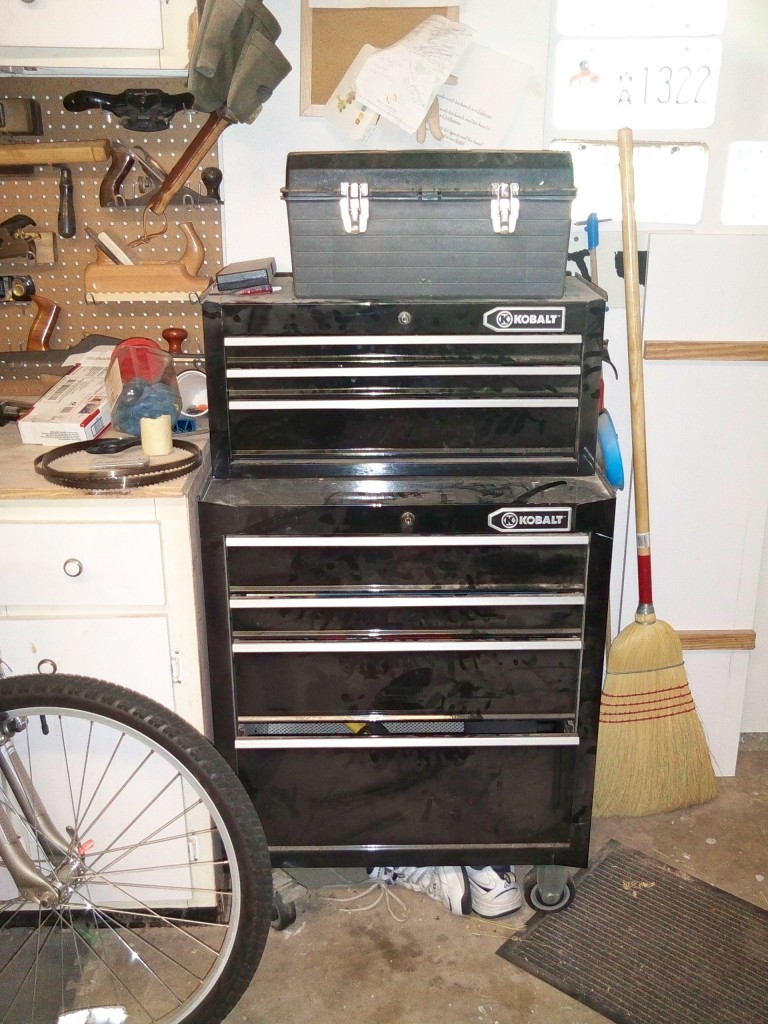
I can remember is clearly. The day I bought my rolling tool chest to store my woodworking tools, this one guy came over to me in the store. He told me, “there is no way I would ever put woodworking tools into something like that. I would spend more time looking for the darned things instead of using them.  I keep them out on shelves so I know what I have.”

Free advice from a stranger in a home improvement store is often worth the price you pay for it. But, this guy’s rant did come back to me recently as I was putting my tools away in my tool chest.  For me, I would much rather have my tools stored away out of sight. The reason? When I am done with a certain part of a project (say, using a caliper to measure the thickness of wood as it comes off the planer), I want to put that tool away and not see it. Too much visual clutter if things are out and messy. Puts me off my game.

So, this week’s poll – how do you like to store your tools?  Do you keep them where you can see them easily, or do you store them in enclosed storage to keep them out of the line of sight? Does it even matter?

BTW – today is post number 990!  I’ll keep the countdown clock running as we close in on post 1,000.

Link of the week

This Old House’s Composting bin plans

Tomorrow is September 1. And, in many places (not quite in Florida), the green summer leaves will turn to the fiery reds, oranges and yellows, and then fall out of the trees, ready to be raked.

While most folks will put them out with the trash or burn them, leaves will break down in a compost bin, creating a nutrition-packed soil amendment for your plants. But, those commercial composting bins are butt ugly, and bins built from stacked concrete blocks and chicken wire just look too darned trashy. What you need is a high quality, good looking bin that compliments your yard, looks sweet and shows off your handiwork.

This week’s link, brought to you by the folks at This Old House, shows how to build an attractive bin out of cypress, thermally-treated wood or some other rot-resistant species. Using simple screwed joints, the unit goes together quickly and provides a way to corral all of those pesky leaves.

Better get to it.. those leaves aren’t going to throw themselves out!

Monkey see…

Hey, everyone. It’s me, Iggy again.

Since Tom is busy looking at those swirly storm things, chasing after elephants and STILL working on tile in that bathroom (I’m afraid poor Rhonda is earning her sainthood these days), I’m going to have to write today’s post. At least it features some of my best work.

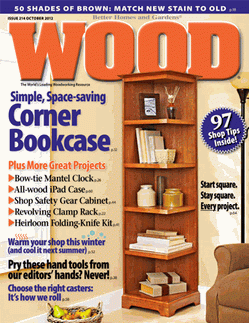
If you pick up a copy of the October edition of Wood Magazine, you can read my latest words of wisdom.  It’s an article that Tom might find useful – how to get back into your shop if you feel you have lost your zest for the craft.  Sure, a little time away from the bench is a good thing, but when it seems excessive, maybe some simple tips like visiting a hardwood store or painlessly cleaning up your shop can help you beat the doldrums and get you re-energized.

Heaven knows Tom can use some of that encouragement!

part of the Wood Talk Online community