Link of the week

Texas Heritage Woodworking

I’m not sure what Jason Thigpen is doing down in Cedar Park, Texas, but I’m starting to like it more and more.

Jason showing off a saw vise prototype

Not only does he build furniture by hand, he also makes shop aprons, nail aprons, Moxon vise hardware and these totally awesome hand-stitched leather coffee mugs. Oh, you’ve never heard of a leather coffee mug? You are just going to have to check it out for yourself. Jason is the real deal!

Species Spotlight: Butternut

Cousins are great. They are often our first friends, share the kid’s table during big family events and stand by you when times get tough. I was blessed to have a large number of cousins growing up in our large Italian-American family, and my two sons have a blast whenever they are around their cousins.

The boys and their cousins
The boys and their cousins – a long time ago!

Come to think of it, I have a lot of fun around them too. What a good looking group of rascals.

A close look at butternut

So, when it comes time to throw a few bouquets to the cousin of a famous hardwood, you bet I’m gonna take the opportunity. And, that cousin is Butternut.

Also known as white walnut, Butternut grows primarily in the northeastern quarter of the United States, from the Mississippi River to the Atlantic, from Tennessee and North Carolina up to southern Canada.

The trees don’t grow that large – to about 60 feet tall, with trunks of two to two and a half feet in diameter. They can be found on well-drained sites and stream banks.

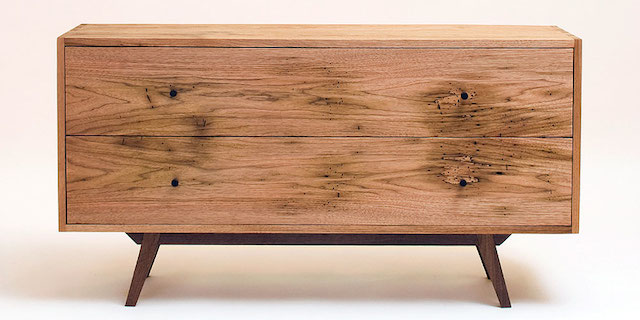
A gorgeous butternut cabinet by Michael Moran

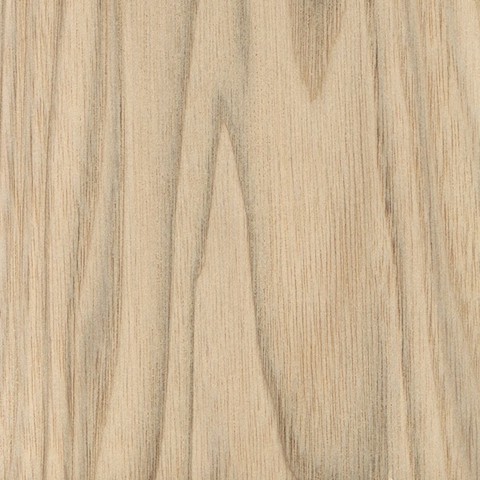
The wood closely resembles the grain and texture of walnut, but is considerably lighter. While not white, the wood features tans with a slightly reddish tint. It’s also much softer, with a Janka rating of 490. While that makes the wood more prone to dents, it also makes this wood ideal for carving and shaping, and a dream to work with hand tools.

Like its cousin walnut, butternut also finishes to a gorgeous sheen – and it takes that finish beautifully. That’s what makes butternut furniture positively glow under oils, varnishes, shellac and lacquer.

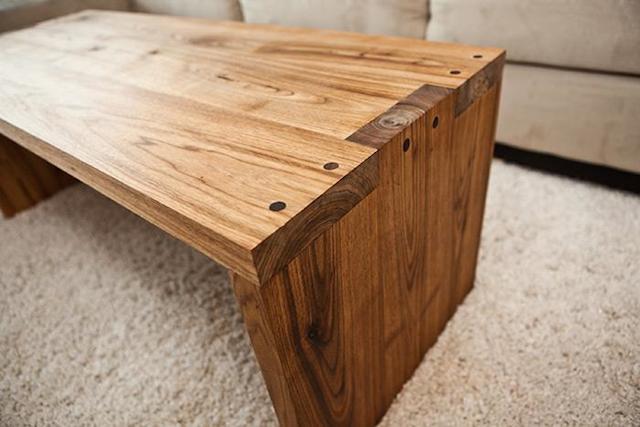
A massive salvaged butternut table by Na Coille studio
A massive salvaged butternut table by Na Coille Studio

While butternut is easily accessible and relatively inexpensive in its growth range, many trees are endangered by the butternut canker, a fungal disease that kills the trees off rapidly. The US Fish and Wildlife Service and Canadian authorities are expressing concern about the future of butternut trees, and universities are working on a prevention or cure for the illness to protect these important trees.

So, if you love working with walnut, but want to try something new, why not give butternut a try? You might find it to be a friendly wood to work with.

Safety and accuracy

I live in Florida, which means I’m close to the Central Florida mountain range… the Florida Alps. You heard that right. The three tallest peaks? Space Mountain, Thunder Mountain and Splash Mountain.

Space Mountain

While I have been to the land of the Mouse, I have one other tourist destination that I like a whole lot more… the Kennedy Space Center Visitor’s Complex. Did you really expect anything different from me? There is where real history was made. Whether it was Alan Shepherd’s first Mercury flight, the Apollo 11 mission to land on the Moon or the Space Shuttle boosting into orbit to build the International Space Station, many of our country’s crowning achievements started right here in the Sunshine State.

Saturn V/Apollo Rocket at KSC

What impressed me the most – whether it’s standing under the massive Saturn V rocket or next to the miniature Mercury capsule – is how much safety played a part in the missions. Yes, you are basically putting people on top of a controlled explosion. The weight of the Saturn V rocket at launch time was nearly 92% fuel or explosives. So, to rate these launch systems for human use, NASA had to perform extensive tests to ensure that multiply-redundant systems were in place. And, when shortcuts were taken, we saw the tragedy that resulted.

Gemini 6 and 7

Accuracy is also a huge concern. Just getting Gemini 6 and 7 to rendezvous in orbit took incredible calculations (in a day with very underpowered computers) and linking up with the Hubble Space Telescope to service the delicate instrument took incredible skill and dexterity.

When it comes to woodworking, safety and accuracy are no less important. When you are investing a lot of your hard-earned money in high quality wood for great projects, you want to get the best cuts, and you want to ensure that your hobby won’t leave you injured.

MicroJig Header

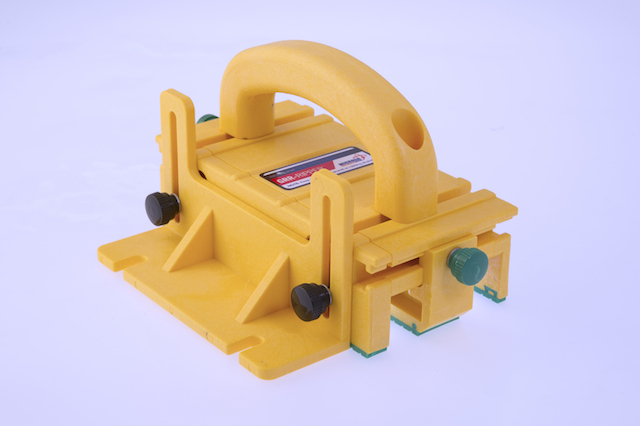
That’s why I am very happy to announce today that I am partnering with another Florida based company that believes strongly in accuracy and safety – MicroJig. This company is the brains behind such ubiquitous products as the GRR-Ripper push block system, the MJ Splitter system and MircoDial tapering jig.

After speaking with Bruce Wang from the company on several occasions, I have come away thoroughly impressed with the company’s laser-sharp focus on both safety and accuracy. I have been a loyal user of their products for years, and I have got to tell you that they have gotten great results. As with many woodworkers, I’m probably only scratching the surface of what’s possible with these guides. For instance, I know that I can use them to help me joint using my table saw – something I do on a regular basis without a powered jointer in my shop.

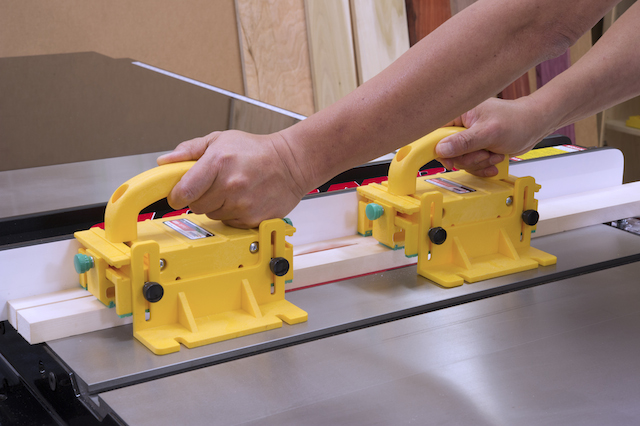
The GRR-RIppers in action

As I discover more about these tools, I will share what I learn with you. If it helps you get more safety and accuracy in your shop, that’s a win for all of us.

There are plenty of places you can find MicroJig products online, and now you can pick them up at your local Lowe’s home improvement centers, making it easy to get your hands on these suckers for your shop.

The GR-100

But, let’s start things off right – on this coming Monday – October 20 – I will be giving away a GRR-RIPPER 100 to three separate winners. Basically, here’s how you enter:

Tell me what safety and accuracy means to you in your shop. No, you don’t have to write War and Peace – just give me what those words mean to you. I will have my simian friend Iggy read the entries and choose the best ones. Just post them in the comments below the article.

Now, let’s get out there and make some sawdust!

The weekly plan

Wood Magazine’s five clamp organizers

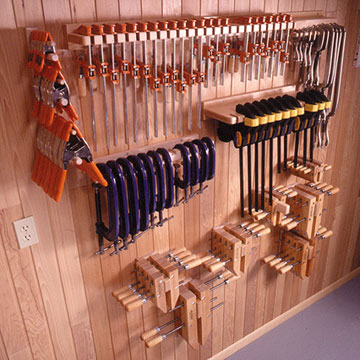
The old woodworker’s maxim that you can never have enough clamps is true enough. However, simply having clamps leads to the next inevitable question:  How do you store them so you can get to them easily?

Wood Magazine's Clamp plans

Our friends at Wood Magazine have a set of clever clamp organizers that you can build that will help with you clamp cleanup efforts. From the minuscule spring clamps to the hefty bar clamps, each of these plans is easy to build and very useful.

Link of the week

360 Woodworking

Have you ever been to a big unveiling event? You know, someplace where they make you wait outside until you can be let in to see something, or there’s some kind of object covered with a drape, ready to be shown on the count of three?

360 Woodworking

Well, you are invited to something like this with a new online woodworking project. Chuck Bender, Glen Huey and Bob Lang have teamed up and are preparing to roll out (in the very near future) a new woodworking experience.  We had them on the Modern Wodworkers Association podcast earlier this week to talk about the new endeavor, and it sounds exciting.

Right now, it’s just a construction page, but you can sign up for updates for when the site does go live and when content will be posted.

Book Review: Log Cabin Bird House Kit

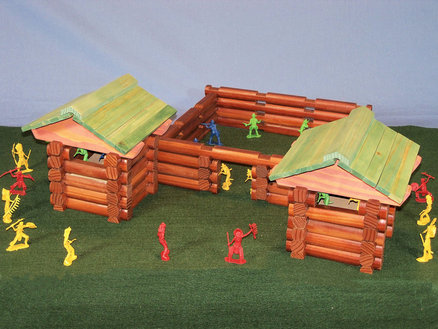
Ralph Bagnall of the Consulting Woodworker is at it again!  Back in 2011, he came out with a book teaching you how to make your own building log play kits. You know, just in case you wanted to hand craft your own fishing cabin or frontier fort – in very small scale.

Look at that wee fort!

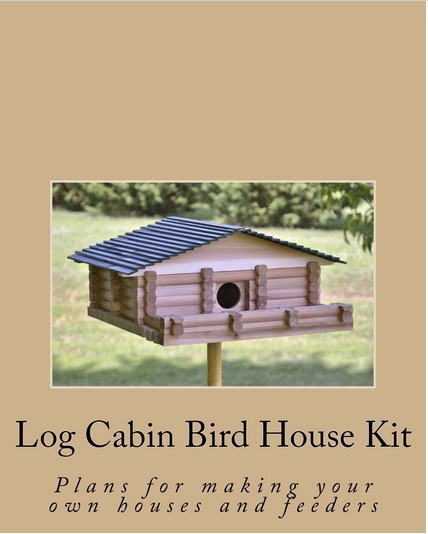
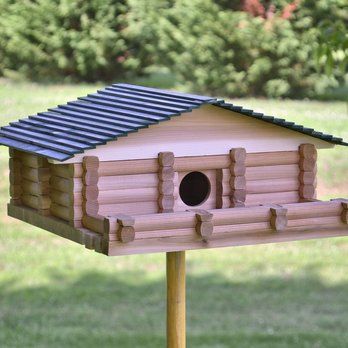
Well, the kids do grow up, and maybe the other grown-ups in your house want to have their own rustic looking structure to – I dunno – house and feed birds. What are you to do?

Ralph's bird house building kit

Good thing Ralph came out with his new book about Log Cabin Bird House building. Ralph let me know that the original book was conceived with the idea that the logs and kits could be glued together and painted to make a bird house. But, how well would the paint hold up to the elements, and would the birds somehow be affected by the paint itself?

Red Cedar Boards

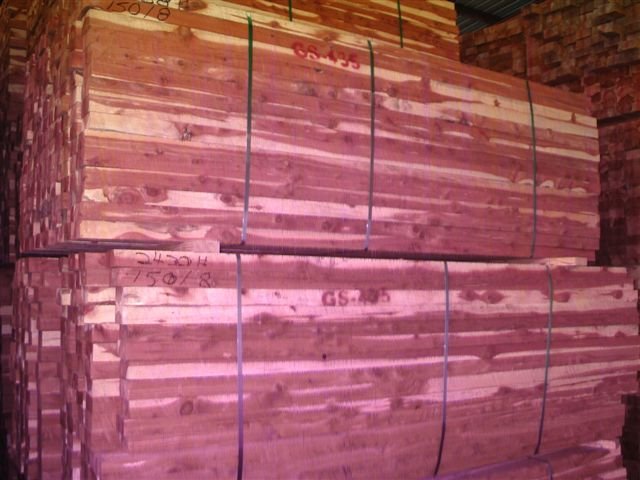
That’s when Ralph changed tack and opted for red cedar boards. Since red cedar shrugs off the elements and looks so darned good – plus, it’s dirt cheap and plentiful – it was a great option for the new plans.

The only problem? Red cedar comes rough one side and smooth the other. So, once you plane the rough side smooth, you end up with boards a mere 5/8″ thick, which changes the construction measurements considerably. Thus, the book has instructions on cutting for the new dimensions. Outside of that, the techniques are similar to the log cabin book, with interlocking notches cut in each of the boards to ensure a snug fit.

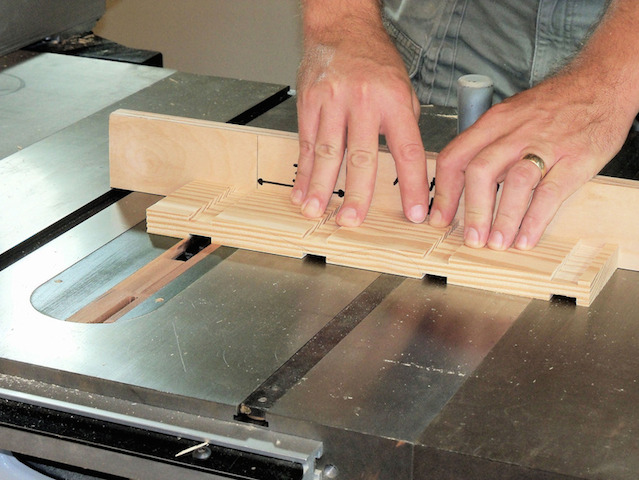
Notch notch notch your boards

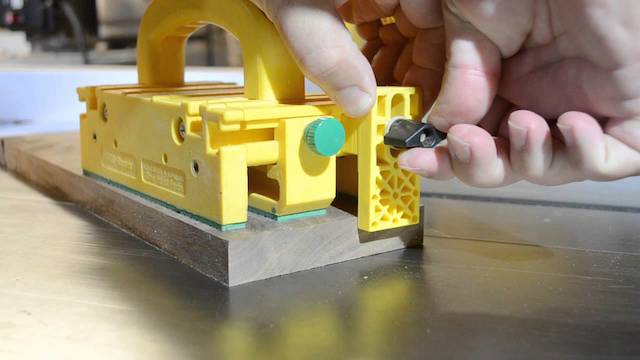
Because of the scale of the build, Ralph doesn’t understate the need for safety throughout the cutting process. Remember, those are mighty small pieces, so a reliance on jigs and push blocks helps to keep your hands far away from the blades while getting the utmost in accuracy.

Safety first

And, when it comes to those jigs, Ralph goes into great detail about how to build them to ensure the best cuts. He also links to where you can get the router bits he uses and even has a handy chart of how large the access holes need to be bored for each species of bird you hope to attract.

One of Ralph's feeders

While many people look down their noses at bird houses as ‘beginner’ projects, you just might be surprised how many budding woodworkers you can get started in the craft with these plans, or how many bird watchers you will please with a well-crafted model.

Oh, and the holidays are less than ten weeks away. Just in case you are counting.

Stuff I’ve built: My shoe rack

What has gotten into me? I spent most of the summer kind of lazing around, barely able to get out into the shop. Now, you can’t keep me out!  I’ve been bitten by the bug.
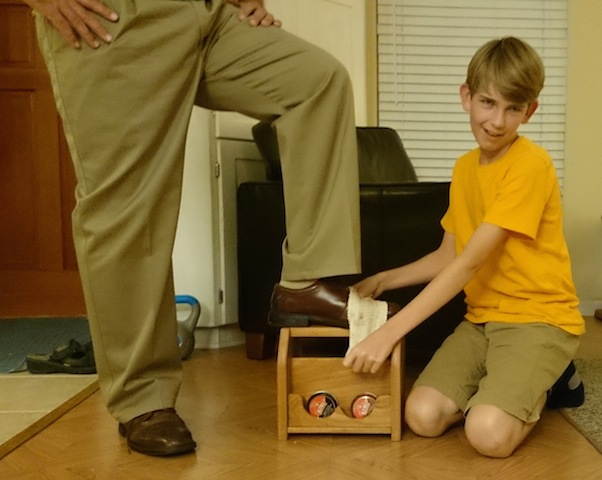
Nice shine, Steve

So, last week, I built a shoe shine box. And, on Friday, I came home from work to shine my shoes (actually, I had Steven shine them, but that’s a whole other story…) So, they were looking good, but the problem was that I was just throwing them onto the floor of my closet. Now, how the heck were they going to stay nice and shiny?  It was time for me to get off my behind and add to the organization… by building a shoe rack.
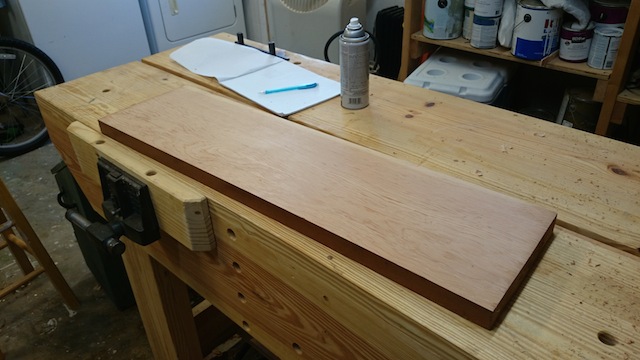
The former shelf

It was insanely easy to build, and while it didn’t involve a lot of fancy joinery, it is serving its purpose well. I started with a Douglas fir board that a friend gave to me when she was having work done at her house. It had been finished with some varnish, but that was easy for me to peel off using my thickness planer. Fortunately, the board had little twist in it, and it was beautifully clear. I planed it down until I had a nice uniform thickness – approximately 1 1/4 inches thick. I then straight line ripped both board edges until I had a piece that was four-square.
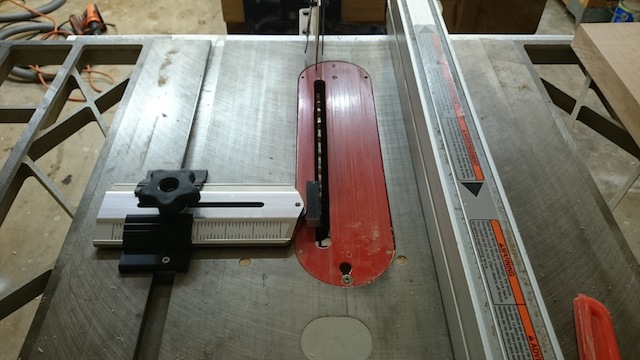
Thin strip ripping jig

Since the idea I had worked on separate slats, I set up my table saw using my Infinity thin strip ripping jig to ensure I was going to get consistent strips for the piece. I used a spacer to get 1/2″ thick strips for the cross slats, and set up for 3/4″ strips for the end pieces.
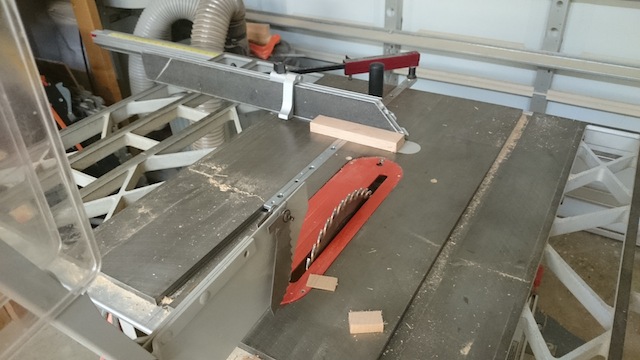
Crosscut

With the strips ripped, I turned to my Osborne EB-3 gauge to cut my strips for the end pieces to the right size – four 9 inches long, and three 7 inches long. That was a piece of cake.
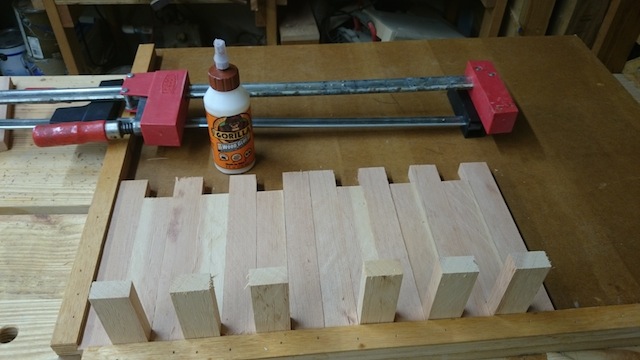
GlueupI turned next to my square assembly jig for the glue ups. I laid out the pieces, alternating the long and short ones. I used some 3/4″ spacers to set the short pieces at the right height. Once I had those suckers lined up, I turned to the glueup.
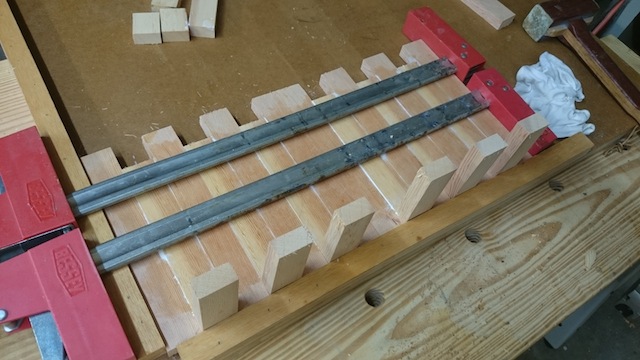
Feel the pressure

It took some juggling, but I was able to get all of the pieces lined up, glued up and clamped up. As you can see, I glued up both sides at once, making this run a little faster. Of course, I had to remember to not glue the two middle pieces together…

After I got these babies out of the clamps, I ran both assembled sides through my thickness planer again to clean them up. That went faster than sanding, and it gave me a very good look. Remember, you just want to skim them, not remove a ton of material.

Assembled.

After that I cut the cross pieces that were 1/2″ thick to 26 inches wide. They fit perfectly into the slots formed by the short pieces. It was a snug fit, and that was good. I dabbed some glue onto the upright pieces and used my brad nailer to tack one brad into every intersection. Were the brads overkill? Who cares… they worked!
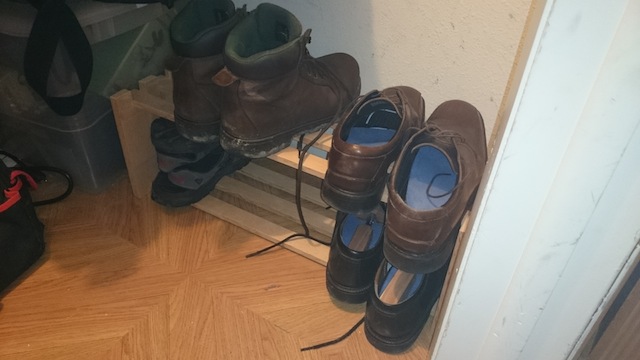
Now with shoes!

I sanded, paying special attention to round over the corners of all the boards. Douglas fir can be very splintery… Once I dusted the piece off, I could have finished it, but I just opted to set it on the floor of the closet and start stacking my shoes onto it. I might finish it later, but who knows, maybe there will be another project I want to start!

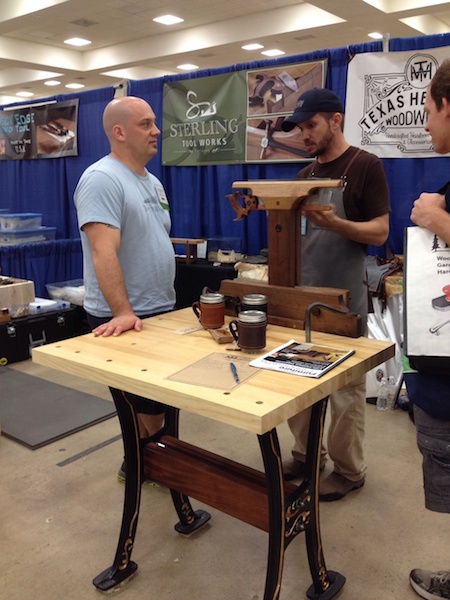
part of the Wood Talk Online community