 You know you have come to a new place in your life as a woodworker when the mention of a monumental baseball decision involving wood draws you away from your morning coffee.
That’s just what happened to me this morning while ESPN was on the back room TV. During one of the updates about the Major League Baseball (MLB) owner’s meetings in Las Vegas, a decision was made to allow players to continue using maple baseball bats.
What’s the big deal?
Well, it’s actually kind of important. But, first, let’s talk a little bit about bats.
In officially sanctioned MLB games, wood is the only material allowed for bats. In other leagues and age groups – from Little League games for kids through NCAA games, aluminum bats are the norm. In fact, you can tell what level of competition is being played by simply listening to the sound the bat makes when it strikes a ball – a ping for an aluminum bat, and a satisfying crack for wooden models.
 For MLB’s formative years, two different types of woods were used to make bats. Hickory, due to its very tough nature, and ash, due to its strength and lighter weight. Hickory became less popular through the years because it is a heavier wood. With pitchers throwing faster balls, bat speed (which is higher with a lighter bat) became a much more important trait than plain slugging power provided by a heavier bat.
Ash bats reigned supreme in the major leagues until 1997, when MLB sanctioned the use of maple bats. Maple, again, has several favorable characteristics when considered as a bat material. It has tremendous strength and durability. Maple is, however, a heavier wood than ash – so something had to be done to level the playing field between these two woods.
Enter the folks at Sam Bat, the first manufacturers of maple bats. What they discovered is that by cupping (hollowing) the barrel end of the bat, they could lighten the weight and shift the balance to fine tune the bat’s sweet spot – the area where the batter can get the most power out of his or her swing.
 The maple bats caught on like wildfire. Slugger Barry Bonds used a maple bat the year he broke the MLB home run record, which led many hitters to switch to maple. Today, approximately 60% of MLB players prefer maple bats.
So far so good, right? Well, not so fast. While the maple and ash bats both do a great job smashing line drives into left field, observers started to notice a disturbing trend in how the bats performed when pushed beyond their limits.
Broken wooden bats are a fact of life in the major leagues. Pitchers routinely throw in excess of 90 miles per hour, with some fireballers throwing at or near 100. Today’s hitters also do a tremendous amount of weight training to increase their power at the plate – something almost unheard of during baseball’s golden era. And, of course, that’s without even touching on the recent steroid controversies…
As you can imagine, the forces at work are incredible.
When these bats break, the two woods behave differently. Studies have shown that bats made of the more traditional ash wood tend to crack and splinter when they break, while maple bats tend to shatter violently and in large pieces. It has a lot to do with the different grain structures of the woods. Ash’s structure tends to be ‘longer’ while maple’s is a bit ‘stronger’.
 Two serious injuries occurred at Dodger Stadium in April this year. Pittsburgh Pirates coach Don Long suffered nerve damage after a piece of a shattered maple bat struck him on the side of his face as he stood in the visiting dugout, watching the flight of the ball. And Susan Rhodes, a fan seated four rows behind the visiting dugout, needed surgery to repair a broken jaw after a chunk of a broken maple bat sailed into the side of her face. Numerous near misses and minor injuries have also taken place at stadiums, leading to questions about the future of these bats.
While there is considerable documentation that the maple bats tend to be more prone to catastrophic failure, MLB’s safety committee has reviewed more than 1,000 broken bats from the past season and determined that they are still approved for use in games.
The smart thing might be to mandate that everyone use ash bats exclusively. However, North American ash production is being threatened by the spread of the emerald ash borer. Should the harvest be further threatened, other woods may need to be considered for bat production, or the major leagues could possibly have to adopt a different material, such as composite bats or aluminum bats.
Then, we’ll all have to look forward to the sound of the ping of the bat…
For more reading:

 When most people start woodworking, it’s to build one particular piece. Maybe a storage shelf for the garage or laundry room. Maybe a table to fit behind a sofa. Maybe a shoe holder for the closet.
 The router is probably the most versatile tool in the shop. It can surface wood, cut joinery, route interesting profiles… the list goes on and on.
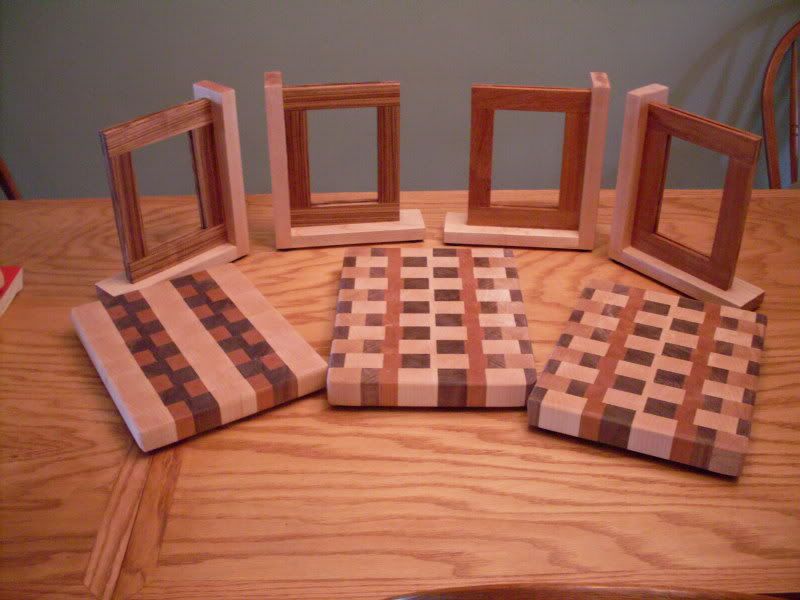 I FINALLY got them done!
 There are few more common refrains heard from woodworkers. OK, maybe measure twice, cut once sort of rolls off the tongue a little better, but the complaint that many woodworkers have is that they can’t get into the shop enough to do everything they want to accomplish.