
In my experience during the past decade, I’ve found that woodworkers are an exceptionally generous bunch. Most of the time, you can find them building gifts for friends and neighbors or volunteering their time to work on a project for their local school, scout troop or place of worship.
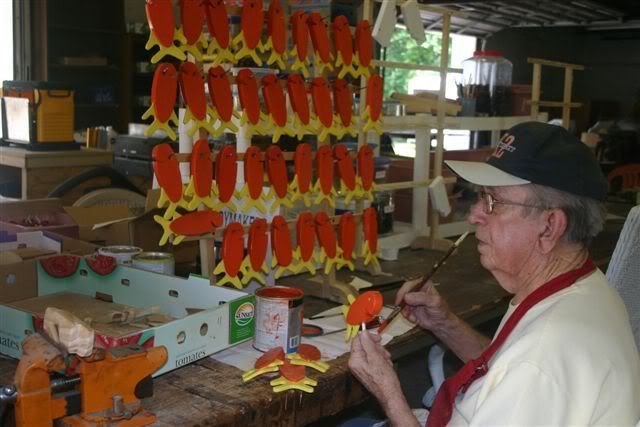 This past weekend, I met a group of woodworkers called the ToyMakers of East Lake at a community event, and their story was a heartwarming one.
Back in 1982, a woodworker named Jim McCullagh was alarmed to hear that his grandson had no toys to play with while staying at a children’s hospital. Knowing that play can at least help keep little minds occupied, he and several friends began making small colorful wooden toys. That was the beginning of the ToyMakers organization. As the years past, the effort gathered momentum, and today, there are 101 chapters across the United States and four in Canada.
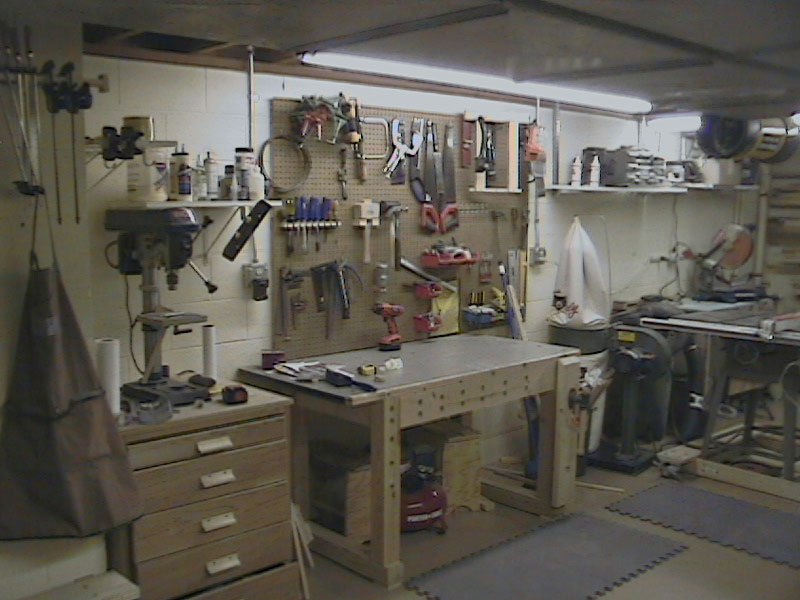
I met with Gene Watson, Mac Russell and John Little of the ToyMakers’ East Lake, Florida chapter, who graciously offered to take me on a tour of their spacious workshop. Situated in an abandoned garage on some land owned by a nearby Methodist church, the space allows the nearly 50 members and associated volunteers the space to work. Donated tools – band saws, table saws, sanders and drill presses – line the walls and occupy the shop floor.
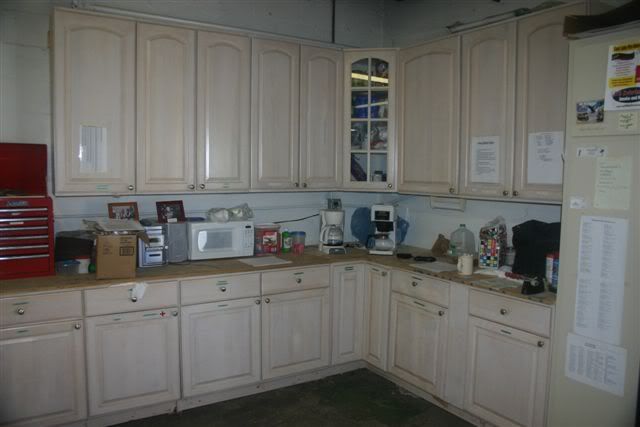 Even the shop cabinets were donated to the effort. In fact, they were actually custom high-end kitchen cabinets in a home until a chemical spill during a counter top installation went wrong, staining some of the cabinet doors.
I arrived during one of their Saturday work sessions (They also have Tuesday morning sessions). Stacks of donated wood from area hardwood suppliers were stacked in shelves. Even though some of the members were away exhibiting the toys at other community events, the reduced crew was very busy cranking out parts for wooden ambulances, fire trucks, helicopters and other pieces. While some of the workers were cutting, many other were sanding, painting and assembling the vehicles to prepare them to go to kids in the community.
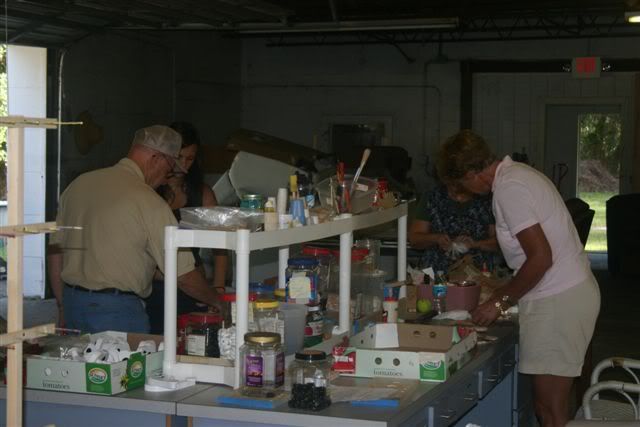 Because of the ToyMakers’ non-profit status, high school students who are required to do volunteer service to qualify for state scholarships often sign up for service with the group. Given that the fate of their scholarships rides on their volunteer hours, working with the ToyMakers is a pretty enviable assignment.
Some of the toys do go to kids in area hospitals, while others go to other critical contact points with the community – organizations that shelter families from domestic abuse, centers that help parents break drug addictions – wherever the need is most critical.
While building the toys is a satisfying way to spend a Saturday, the real reward comes when the toy deliveries take place. The group aims to have four toy deliveries a year. Three months’ work can result in nearly 1,000 completed toys for area kids. In fact, the group’s motto is that they, build smiles, one toy at a time.
As I left the shop after one of the group’s coffee breaks, the members were right back to work. After all, the holidays are coming quickly, and there are so many more toys to build.
…
P.S. – The members of the group asked if I could post the following: For other individuals or groups interested in starting their own group of ToyMakers, we would be most privileged to furnish patterns, methods and suggestions that we have found to be most appreciated by the children and the centers where we deliver.
 When you think about woodworking tradition, thoughts often turn toward the masters who worked years ago with hand tools and an eye for the craft. One very talented woodworker who comes from that lineage is Bob Smalser, a frequent contributor to
  The shops that Bob’s relatives worked in did have power tools – band saws, planers and jointers. But, the hand tools were – and still are – some of the most important tools in any boat builder’s arsenal. Bob has taken his years of working with these tools and can finely tune any chisel, plane or saw to do its best work. And, while premium tool makers such as Veritas have brought the quality of today’s tools to a new level, it’s the lack of basics that leave Bob puzzled. “I remain gobsmacked that sharpening tools the way their grandfathers did – without power tools or training wheels – is so difficult for so many to master. Don’t Cub Scouts learn to sharpen pen knives anymore? And looking at their work, it suffers for it. If you can’t look at the flat you made on the bevel with the stone and change your hold to move that flat where you want it on the blade, how do you ever expect to do the same thing with the cutting edge on wood? Sure, we can talk about coaches who can help guide us along, but in the end all of us are really self-taught by trial and error and practice. Do what’s necessary to acquire this most basic of skills, as it will positively effects every aspect of your woodworking.”
 Bob has worked very diligently through the years, and the variety of jobs he has held has helped to improve his woodworking skills. “I’ve restored antique furniture, reproduced it in various styles and restored antique firearms for museums. I can consult on forestry, land and habitat management, and I grow, harvest and mill my own wood. Custom sawyering alone could easily be a full-time job if I let it, and I often turn down work to maintain the variety of jobs I prefer.”
 For centuries, the venerable craft of carpentry and furniture making has been a rather secretive affair. After all, trade secrets needed to be guarded jealously by master craftsmen and passed down through a long and arduous process to the apprentice and journeymen workers who longed to learn the craft.
 From there, John’s development as a woodworker got a boost from a shop teacher who drilled him relentlessly in cutting joints.
 Not one to just sit idly, the accident provided the opportunity for John to review some of the new woodworking websites that were just making their debuts on the fledgling Internet. “The sites I saw didn’t really have the depth of content I was looking for. Rather than waiting for someone to come up with the right site, I started WoodshopDemos.com.”
 And, that he shares his shop with several helpers. The fact that many of those helpers are attractive young women has not escaped the notice of many of his visitors. “My flip answer is wouldn’t you rather see them than the old bald guy?” The tradition of these shop helpers actually has a very innocent – and accidental – beginning. “Where I first set up shop, I was renting the facility and had several very attractive neighbors. When one of them stopped by to say hello and see what I was making, I suggested that she get into the picture and liven up the site. She did and enjoyed having her pictures on the website. Later, she went on to become a lawyer in Los Angeles.” Since then, he has had a dozen assistants, ranging in experience from brand new to exceptionally talented, and John enjoys passing his woodworking knowledge on to these newer woodworkers.
 Starting out on any new undertaking can be a pretty intimidating – and exciting – experience. Think about your first day at a new job. The first time you go to meet your future in-laws. The first time you bring a new baby home from the hospital.
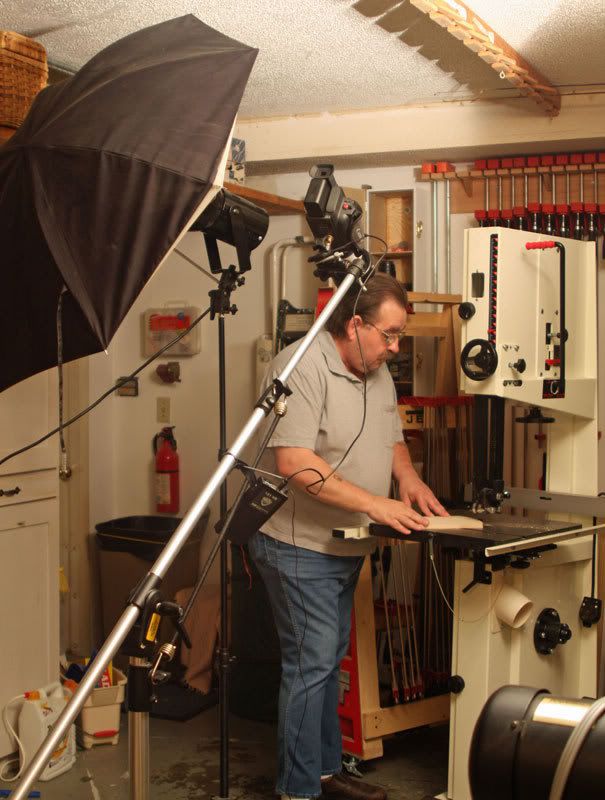 While NewWoodworker.com focuses on how-to and technique articles, his readers started asking for some more detail on just what tools he was using and what he thought about them. Soon, tool reviews became a staple on the site as well. The scope of the tools Tom has reviewed is very impressive – table saws, dovetail jigs, books and videos and woodworking machinery of all types.
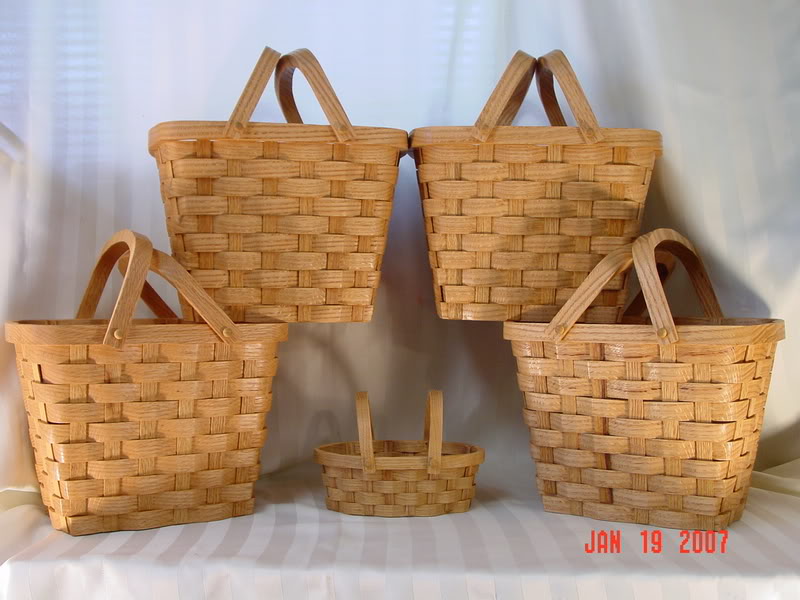


 Mention the world ‘veneer’ to some woodworkers, and they may turn their nose up at you. “That’s for cheap, mass produced furniture. I only use REAL wood!”
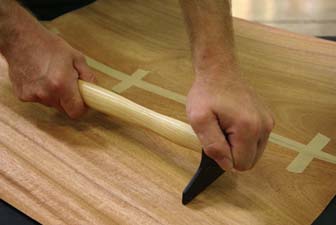 Joe’s beginnings in woodworking were pretty humble. “I had inherited a used jigsaw that was gathering dust in my parent’s basement. One evening, we were cleaning out the basement and I had to decide if I wanted to keep the jigsaw or toss it out. I saw this pine board lying on the floor, grabbed a pencil and drew a pig shape on the board. I cut it out with the jigsaw and I discovered that I loved it!” Within a few days, Joe had plunked down some of his hard-earned cash and bought some other essential tools. The woodworking bug had bit him hard, but the biggest discovery was yet to come.
 “Veneer is definitely cool. It has dramatically affected the way I look at wood. I used to spend hours at our local saw mill looking through hundreds of freshly dried boards to find anything unusual. The hard part was finding enough lumber with character to make a project. Now when I buy lumber, I look more often for perfectly un-figured boards so I can highlight any veneered portion of a project and keep the visual focus on these truly figured parts.”
 For his first projects, Joe cobbled together a vacuum pump from plans he found online and by talking with other woodworkers. Since he was learning on his own, sometimes these early projects worked, other times, they didn’t. “Sure, there was trial and error. But, some of the techniques I’ve picked up from our gracious customers who very frequently share their success stories with me. One of the greatest things about woodworking is the incredible amount of sharing that goes on between woodworkers.”
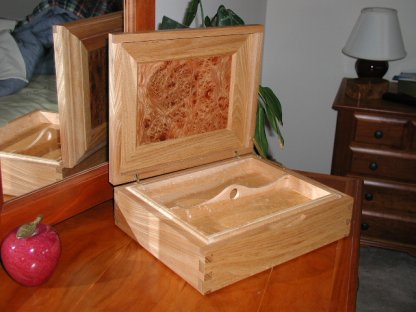 Veneering might sound intimidating – and expensive – at first. However, there are some affordable options that the hobby woodworker can look into. First is a glue called Heat Lock. By using this glue, veneer and a clothes iron, the average woodworker can get good results. The ancient art of hammer veneering is also an option. But, for woodworkers looking to really expand their veneer options, vacuum pumps are the easiest – and sometimes the best – option. Some build it yourself kits start at $150, and complete systems can run about $400.