Category Archives: Spotlight

Woodworking Spotlight: Michael Iovino

So, you are visiting Tom’s Workbench looking for this week’s quick poll…

But, you aren’t going to see one here today on Father’s Day. Sorry ’bout that… you can count on one for tomorrow.

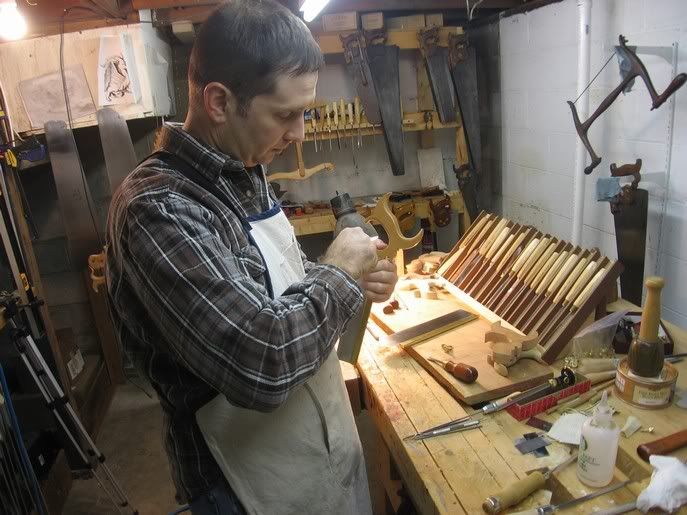
Instead, I want to focus on a very special woodworker who gave me the inspiration to get involved in woodworking in the first place – my dad.

He is the youngest son in a family of seven children and he grew up in an Italian American neighborhood in Fairview, New Jersey. Taught the value of hard work from a very young age, he worked to help support the family while in school.  And, as soon as he was old enough, he enlisted in the United States Marine Corps, serving during the presidency of John F. Kennedy and the Cuban Missile Crisis.
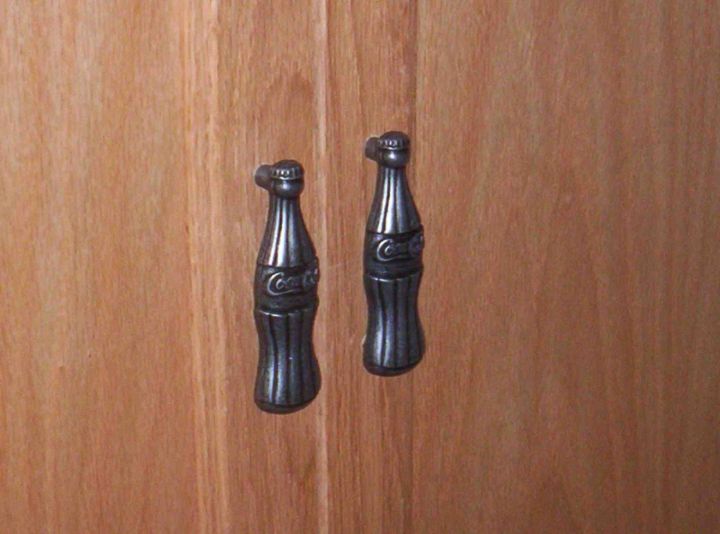
After his honorable discharge, he married my mom and started work delivering soda – first with Seven Up and later with Coca Cola. Talk about grueling work… dad would deliver hundreds of cases of soda in the rain, snow, heat and cold for more than 40 years.  I never liked helping him deliver soda… the times I did go out, it was back breaking work.  Hauling cases up and down stairs at small convenience stores and eateries.  But, my dad never stopped smiling or engaging folks in conversation.  Even on tough days. Just a genuinely nice guy.

Always industrious, he worked hard to make his home a nicer place to live.  After my parents bought an older home in Ridgefield Park, New Jersey, with the help of several relatives, he renovated the two family structure to get ready to start his family.  Demolition, studding, electric, plumbing, drywall… the guy knew how to do it, or learned quickly.  After the renovations, the house looked pretty darned good.

Years later, we moved further west into New Jersey to a town called Bloomingdale. It was a modestly-sized home that served our family well – when we were just little kids.   But, as my brothers and I got older – and bigger – we needed more room to spread out.  That’s when mom and dad came up with the idea of finishing our home’s basement.

I can still remember the planning phase… wondering why we didn’t just hire a professional to knock the job out and be done with it. That’s where dad’s wisdom and encouragement really shone.  As the materials started arriving at the house for the renovation, he called his sons together and we watched this new show on PBS.  It was called This Old House, and featured two bearded guys with New England accents finishing – of all things – a basement! We watched, while dad kept telling us, “We can do better than these two guys!”

That’s when we hit it.  Sure, the basement renovation took longer than six half-hour shows, but it was far more rewarding than anything else I had done to that point.  My dad likes to take the time to explain stuff to a very fine detail.  In fact, he’s the kind of a guy if you ask him what time it is, he will tell you all about the history of clocks and exactly how to build one.  During the basement build, he showed me how to accurately mark wood for cutting, how to lay out stud spacing, when to nail and when screws are better… all the way to how to properly trim out the paneling to make the final project look sweet.
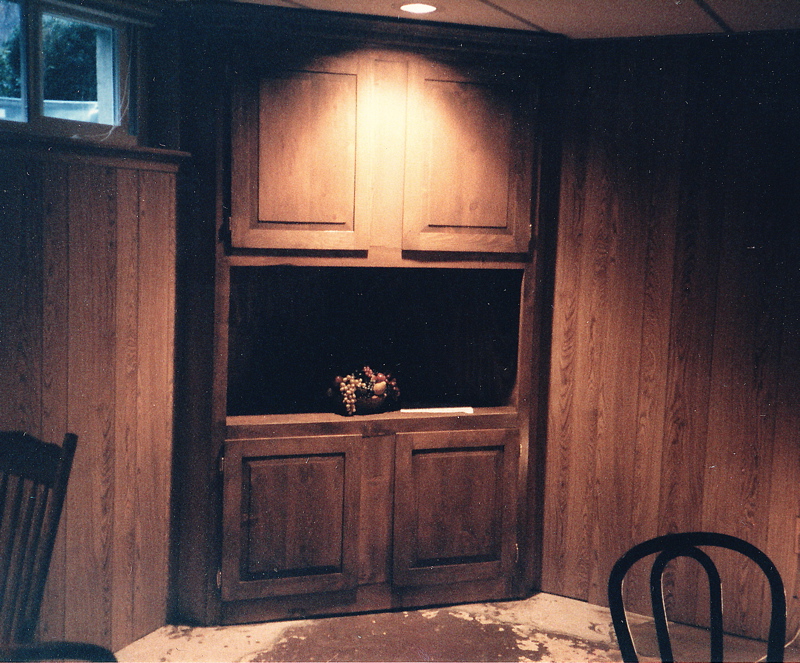

When faced with a challenging corner in the basement, he designed and built a corner entertainment center… much like the one I had built about eight years ago  in my house.  Just a clever idea to use a corner that would otherwise go to waste.

It’s funny how much what I learned during that basement renovation has helped me.  In college, I was asked to be the guy who built the room divider that allowed us to use the dining room in my apartment as a second bedroom. Other people have asked me to come in and help with other construction projects in their homes and yards.
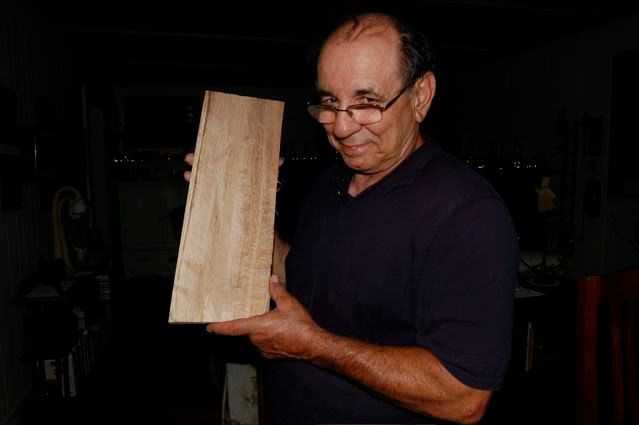
My dad has since retired from delivering Coca Cola.  But, he’s not the kind of guy who likes to sit around. Today, he works as the maintenance guy at Glen Wild Lake, the gorgeous lake that his new house overlooks.  This can involve negotiating with fish hatcheries to get the lake stocked with bass and trout all the way to coordinating the lowering of the lake level to get extensive dock work done.

The one thing that hasn’t changed is his interest in teaching.  He takes the time to teach my sons and my nephews about everything… history, sports … and woodworking.
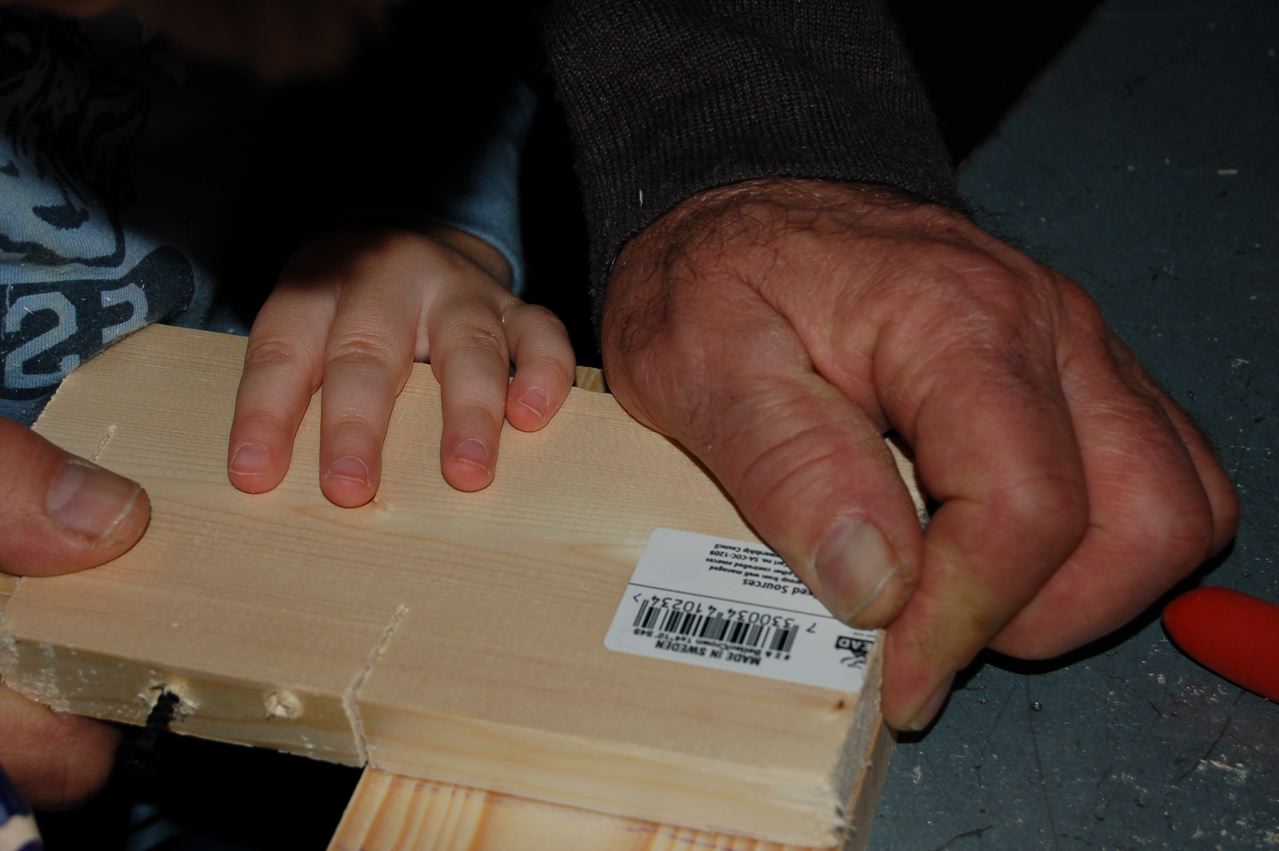
Thanks, dad.  I doubt I would have come this far in life without your teaching, inspiration and encouragement.

Happy Father’s Day to you and all of the other dads out there.
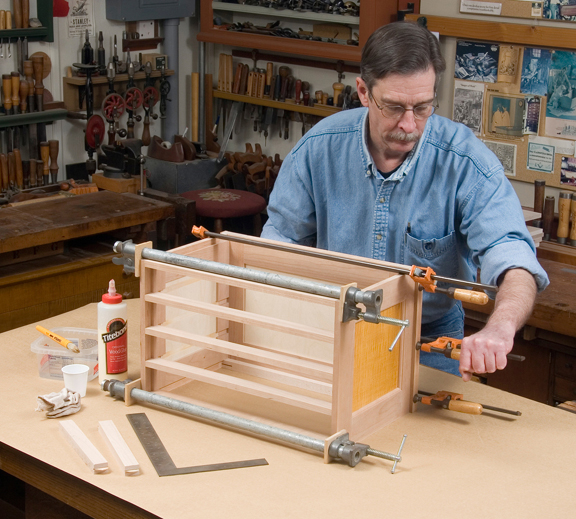
Woodworking Spotlight: Craig Bentzley

Many woodworkers today look back on the craftsmen of different ages with a reverence that approaches awe.

While those woodworkers from ages ago were certainly talented, they were simply using the commonly applied techniques appropriate for the tools of the day.

But, when a woodworker can masterfully blend modern and classic techniques, well, that’s another story altogether.

Meet Craig Bentzley. While this Pennsylvania-based woodworker is known for his 18th century reproductions, his start in the craft was very modest. “I can remember fooling around with my Dad’s hand tools when I was pretty young. He built a lot of houses for a few years after he came home from World War II, so he had a basic set of decent hand tools that he let me lose and destroy. In retrospect, I guess he was a pretty patient man. I was always building bird houses, rabbit hutches, tree forts, and the like. I was a typical 1950’s country kid.”

Craig later spend time in his grandfather’s upholstery shop, combed flea markets and auctions for tools and took shop and drafting classes in high school. After a short stint in a machinist’s shop, he landed a drafting job where he spent much of his time drawing parts for seating, primarily in the furniture and automobile industry. “When I got my first apartment, I didn’t have much money for furniture, so I started building my own.” Being the early 1970’s, Craig found himself enamored by the studio furniture of the period – especially the work of George Nakashima. By 1972, he knew he was addicted to woodworking.

By 1974, Craig’s interest in furniture design turned toward the historical. A friend at the drafting job was a nut for early American furniture. “Once I discovered the amazing capabilities of our ancestors to build all this magnificent furniture with nothing but hand tools, there was no turning back. I was totally hooked. I read everything I could get my hands on, went to every museum I could find, and became completely immersed.”

Today, Craig builds a great number of authentic reproductions of these pieces in his Bucks County (PA) workshop. Blanket chests, tables, small spice boxes… if it was made back in the day, Craig can build it.

While he uses the joints and techniques of the day, he turns to some modern tools to accomplish the task. “My power tools are my apprentices. I have some nice Disston D-8 saws and have ripped plenty of boards by hand, but I can’t make money that way. Rough work gets processed with the table saw and band saw. I have at least seven routers but I still dislike them. My power tools do the rough work but all surfaces are finished with hand planes and scrapers.” On reproduction work, Craig still does all joinery by hand. If he’s building a competitive piece or doing generic cabinet work, he’ll use anything to produce good quality work.

Another part of Craig’s work deals with repairs of existing antique pieces. It’s demanding work, but he learns much from the original builders. “Each piece takes you on a new journey and each piece has its own tales to tell. Just like now, every cabinetmaker had their own unique solutions to the task at hand. You learn something new with every piece you work on.”

When I asked Craig what his favorite aspect of woodworking was, he didn’t pull any punches. “Besides the actual processes and challenges, I’ve met some of the nicest, most generous people you can imagine. Woodworkers are a pretty good lot. Too bad the general population isn’t cut from the same cloth. There’s also an immense satisfaction when you have a happy customer. When you receive a thank you note from a person ten years after you delivered a piece of furniture, you know you’re doing something right. I doubt anyone does that with their auto mechanic.”

Species Spotlight: Bubinga

Some species of wood we use to build projects are very understated. Subdued. Reserved.

And then there is Bubinga.

This exceptionally beautiful, hard and dense wood from central Africa is a true standout when it comes to furniture making. Known occasionally as African Rosewood, bubinga is one of 16 different species of the genus Guibourtia. The evergreen trees can reach heights of 40 – 50 meters tall with a trunk diameter of 1 – 2 meters.

Bubinga is a very tough wood. “It’s right up there on the Janka scale of hardness – taking nearly 2000 pounds of force to drive a steel ball halfway into a piece,” said Eric Poirier of Bell Forest Products. “That makes it a very good choice for all sorts of applications – especially for making tool handles and hand planes.”

Eric had helped me select an outstanding piece of bubinga when I had built my Krenov-style plane. The wood cut, planed and worked beautifully while still being impervious to the fingernail test.

Bubinga’s color is very unique and runs from a striking deep rose color toward a shade of red mixed with purple. While working with it, I kept remembering the distinctive label color found on a Dr. Pepper bottle. “This dramatic color really makes bubinga pop when paired as an accent with lighter wood. A maple project with bubinga accents… wow… now you are talking!”

“It’s not just the color, but the figure of the bubinga that can really be dramatic,” said Eric. “You can see burl, quilted or even something that closely resembled tiger striping within the highly figured boards.”

The wood is very durable, and is often used in boatbuilding. Turners absolutely love the stuff because it takes very crisp detailing. “A bubinga bowl really makes a statement, and bubinga pens will attract a lot of attention from admirers.”

Bell Forest Products keeps a supply of milled bubinga lumber on hand for projects. They also get some very choice boards that can be custom picked from pictures on their website. “Right now, we have an unbelievable kiln-dried slab of bubinga in stock. It’s 1 5/8” thick, 48” wide and a whopping 182” long. It’s got sweet live edges on both sides, and would allow a talented woodworker to make an outstanding project. Heck,” Eric continued, “we’re even throwing in the shipping for free!”

Woodworking Spotlight: David Keller

Oh, what the heck.  This is the other article I have had in the hopper for more than a year.  David Keller is a legend in woodworking, and even though I don’t have a photo of him, his story is just too good to sit on my hard drive anymore!

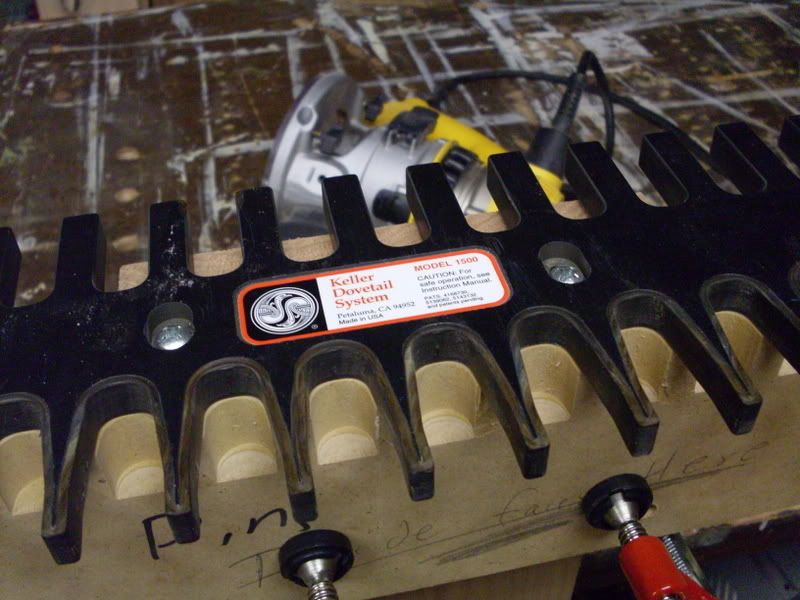
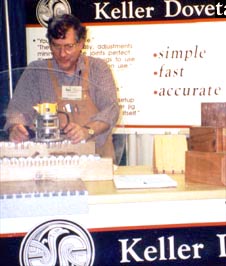
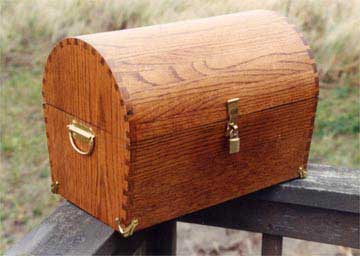
If you can go to your shop and cut through dovetails without having to reach for a hand saw and chisels, you may want to stop and offer some thanks to David Keller. After all, David was one of the brain trust who invented the router-driven through dovetail jig way back in the mid 1970’s. While the owner of Keller Dovetail Jigs is well known in woodworking circles, his path to the level of accomplishment he has achieved didn’t really start with woodworking at all.

David actually graduated with a degree in social psychology and worked at a state hospital in Michigan before he realized that it just wasn’t for him. “I knew I was in trouble when I discovered that there were just too many insane people that I had to work with.”

After looking for a big career switch, he moved west to try his hand at furniture making. He bounced around working odd jobs – such as taking an apprenticeship at a reupholstry shop (he didn’t like it one bit ) while looking for the dream furniture. His search, however, wasn’t very successful. “You have to remember that during that time period, custom furniture making wasn’t really done. People were buying machine-made pieces, and the whole idea of craft building hadn’t yet caught on.” But, David was soon to discover that he was in the right place at the right time.

In a move to the San Francisco Bay area, he met up with noted woodworker Art Carpenter. “It was a very interesting time. We met after lunch on a cold day back in ’71. He liked my enthusiasm and brought me on board. I started out sweeping the floor and sanding for Art for a whopping two dollars an hour. But I learned so much there.

Carpenter was well known for his California Roundover school of furniture design, which dictated a very smooth, tactile approach to building furniture. Another thing Art demanded was that all casework be dovetailed. But, all those dovetail joints took time to cut by hand. Surely, there had to be an easier way…

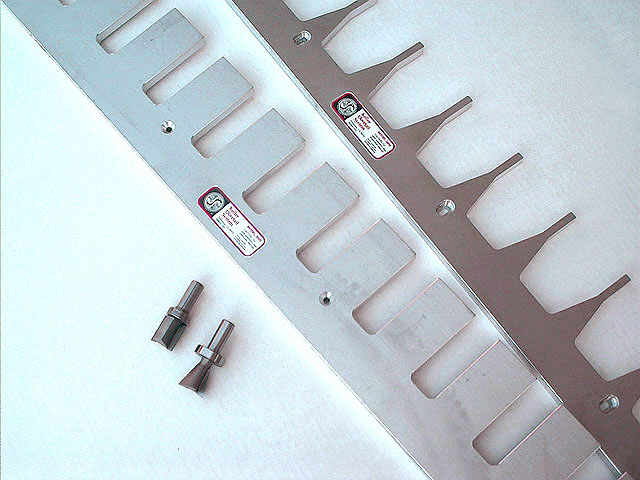
Carpenter first cut some plexiglass jigs to work as a template for through dovetail work. They worked OK, but David realized that if the work was going to be tight and consistent, it was going to require some precision machining. So, drawing upon his extensive knowledge of drafting – that he remembered from a high school drafting class – and prepared plans for a machine shop in San Jose to cut out. That modest jig he designed is still sold today as the model 3600.

David’s recommendation to improve the router bits even led to the invention of a very commonly used router bit. “By doing away with a guide collar and going to a ball-bearing guide, we effectively designed the first flush-trim bit.”

The rest, as they say, is history.

When you succeed, there are critics. After all, hand cut dovetails are a signature joint for woodworkers the world over. Some woodworkers who rely on the hand-cut methods have remarked that a jig that allows the average woodworkers to make this venerable joint ‘cheapens’ the craft. “For those who like to cut your dovetails by hand, more power to you. That’s a skill that is very enjoyable and very centering. But, if you want to get a project done with properly fitted dovetails in a reasonable amount of time, using a jig and router provides excellent results and allows you more time to design, assemble and finish.”

In fact, a common criticism of router-cut dovetails is a ‘generic’ feel they have, with pins and tails at precise intervals. Some jigs can overcome this during their setup, but that can be tedious. “We’ve found that users of the Keller jig have been very creative in their suggestions and recommendations. The simplicity of the jig gives the user a flexibility to variably space the tails and pins, or even dovetail around curves.”

While many other companies have released through dovetail jigs since Keller first released his in 1976, the product’s longevity is a strong indicator of its worthiness. “Yes, even after all these years, the jig’s design is still durable, useful, easy to set up and the damned thing still works well!” In fact, one of the original jigs Keller built back in 1976 is still in operation at a Salt Lake City high school wood shop.

Of course, I had to ask if Keller ever had the opportunity to do any woodworking on his own nowadays. “Heck no! You should see what passes for my shop. Every horizontal surface is covered with jigs to mail, manuals, magazines – the works,” Keller laughed. “In fact, we had to shoot the instructional video in someone else’s shop – mine was just too crowded.”

It sounds like Keller might be a victim of his own success.

You can find reviews, customer testimonials and even order a jig online at www.kellerdovetail.com, or by calling 1-800-995-2456.

Woodworking Spotlight: David Sochar

With the New Year, it’s time to look into the article closet to check on some gems that haven’t seen the light of day.  This one has been almost two years in the making.  It turns out that David is slightly camera shy, but the work he and his crew does is unbelievable.

Woodworking can be a very personal endeavor. We get into it for our own reasons. Maybe it’s because a parent or relative did it. Others of us find the path on our own.

That’s what happened with David Sochar, owner of Acorn Woodworks of Westfield, Indiana. You see, David has always had the ambition to get into woodworking, but didn’t have the right encouragement. “When I was a kid, everything was geared toward higher education. I went to prep school, then to college. During all this education, all I just wanted to do was make things using my hands. My counselors were highly entertained by this novelty.”

When the peace movement hit full stride in 1971, David was caught up in the effort. He wandered around the country for a few years, earning a living doing manual crafts and labor to provide a decent living. “After a few years, I settled on working with wood as what I wanted to do. It’s forgiving, plentiful and a perfect natural material.”

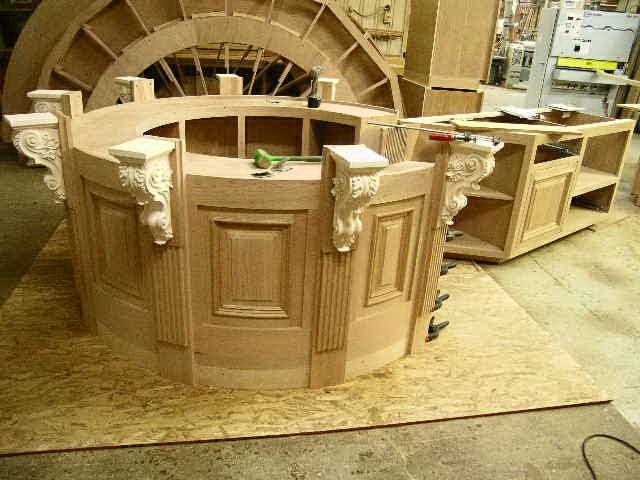
David found his way back to his home state of Indiana. Odd jobs such as framing pictures and restoring antiques helped develop his skills. Eventually, David landed a job with a true architectural shop, building curved staircases, mantles, shutters and other high-end pieces. “It was heaven for me. I had finally found myself.”

As David’s abilities progressed, he eventually helped establish a shop that employed 25 woodworkers and cranked out high-end residential work. Ultimately, in 1991, he had to walk away from the operation. “The owners were less than human. One of them is now doing time in jail. It was a very bad situation.”

He went home that afternoon and announced to his family that he had quit the job. Rather than be alarmed by his move, David’s wife suggested they withdraw some cash to purchase some essential new tools for his hobby shop. “When I got back from the shopping trip, I already had two orders waiting for me on my home answering machine. That was the birth of Acorn Woodworks, and we’ve been running like hell since.”

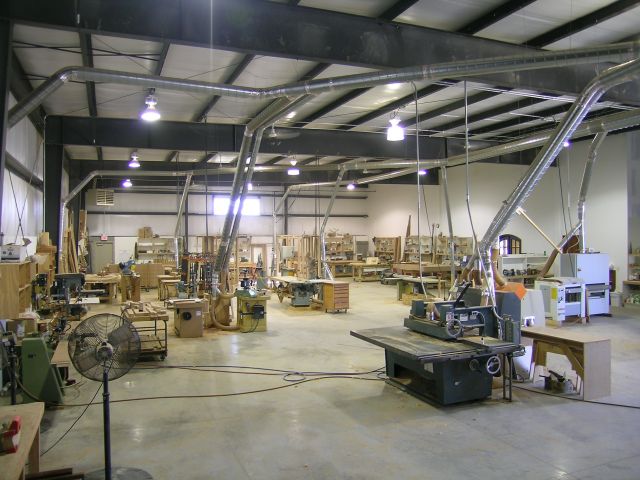
Today, Acorn Woodworks has a brand new 9,000 square foot facility just outside of Indianapolis. “We have room to dance, if needed. We even splurged and now have a forklift to unload and move lumber – talk about a back saver!” The shop is very well equipped with some of the latest equipment. A 20” Laguna band saw, Delta Unisaws… “We even bought a laser guided rip saw from the last Ethan Allen plant to close in the US. A wonderful 2-1/2 tons of solid American cast iron that can work all day without breaking a sweat.”

While the shop may have some of the latest and greatest equipment, David’s philosophy with his employees hearkens back to a different day and age. Currently, Acorn Woodworks employs five full time woodworkers, and each of them is considered one of the company’s greatest assets. “Today, I have the pleasure of working with some of the best woodworkers I have known, and doing the best work. We have no employee problems and each of these people is like family. I easily trust them with my livelihood.”

In fact, David encourages each of his employees to use the shop equipment to do his own ‘homework.’ “I encourage everyone to make things for themselves, since the problem solving takes on a new dimension when they have to live with their results.”

That trust in each employee easily shows in the quality of the work Acorn turns out. “Problem solving is what we do. Daily. On the fly. Anticipating. Always problem solving. All we do is custom work, so every project requires the sum of an individual’s experience, and the collective shop experience. We call this shop equity since it is an asset that is important to what we do. We all enjoy a bit – or more – of a challenge.”

Sometimes that custom work can take some very strange twists. “I was commissioned to make a cedar chest for a bridal dress. The customer told me that the bride – his wife to be – was killed in a car accident the day before the wedding. He wanted bluebirds painted on the lid and fittings inside for memorabilia of the wedding that never was. It was an extremely sad story, but it was gratifying to build and he was very appreciative. He explained how this helped with the grieving process.”

With all of the success David is enjoying at Acorn Woodworks, how does this one-time free spirit relax? For someone who has woodworking in his soul, there’s really only one thing he can do. “Well, my wife insists I need a hobby – other that wood – but I can’t imagine what she is talking about.”

Woodworking Spotlight: Andrew Lunn

With care… always.

When people talk about the good old days of hand tools, they often cite the attention paid to the small details. Plane mouths that are machined to tight tolerances. Comfortable handles on chisels. The look and feel of a solid performing work of art.

That’s why you might be surprised that one of the true artisans making new hand saws started out doing rough work.

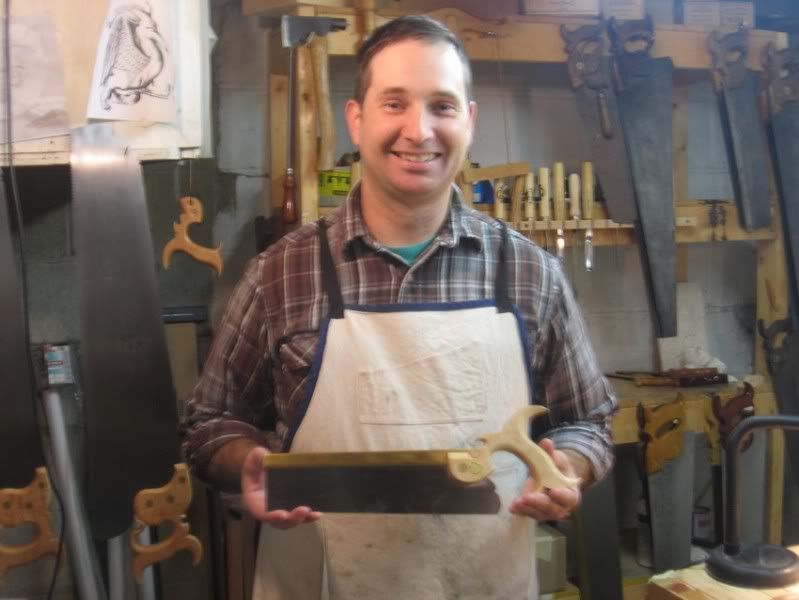
Andrew Lunn, the owner of Eccentric Toolworks, got what some folks might call a late start in woodworking. “I did have a shop class in junior high school when I was 14 years old. But that wasn’t what really got me going. In fact I didn’t make anything after that until I was 27 years old! I was working in an office and started to get the feeling that I wanted to work more with my hands.” According to Andrew, this career change came totally out of the blue. “I got myself a job working on a construction crew, doing restoration work to fire damaged buildings. It was all really unfocused at first–I knew I felt drawn to working with wood, and that I felt drawn to working with my hands. But I didn’t know if that would mean carpentry, or furniture, or what. So I put together a modest hand tool shop in my garage and began making things by hand. That’s what really got me going.”

Over time Andrew realized he was attracted to the smaller, more skilled tasks that focused his attention. “Several years ago, I got the idea that I wanted to make myself a whole set of hand tools, and that I would in turn use that set of tools to make things. The prospect of making a saw felt particularly interesting so I thought I would start there–and basically I started and just never stopped!”

Today, Andrew makes some of the most comfortable, true cutting – and beautiful – hand saws available for sale. His saws are not mass-produced. Instead, just as a tailor would fit a suit to a customer, each saw is fitted to the individual client placing the order.

“Basically I start with a measurement or two from the customer then send them a poplar prototype of their handle that incorporates those measurements. I get feedback from them and incorporate their input into the actual handle. I also tune the saw for the particular woods the customer will be using.” Andrew ships the saw with the final handles made of beautiful curly maple, cherry, quartersawn beech, or walnut.

Yes, you are reading this correctly. Each saw is truly made by hand in his shop. The handles are shaped entirely by hand. Most of the metalwork is done by hand with files and other hand tools as well. “The saws are tuned and fussed over until I am totally happy with them.”

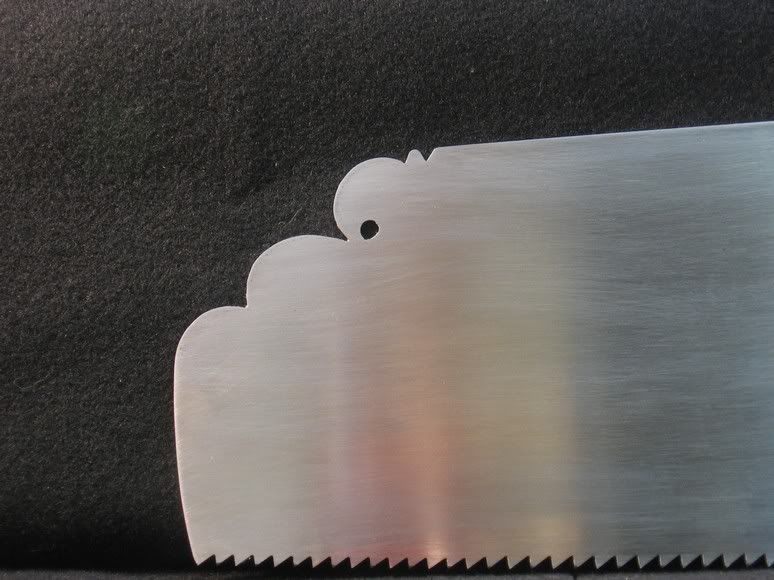
While Andrew could certainly just build some functional plain-Jane looking saws and call it a day, his signature on these tools makes his work truly stand out. Decorative cut outs at the front of the saw make what would normally be a shop workhorse a thing of beauty. “Saws to me represent a creative outlet, so the way they look reflects various openings or possibilities that I thought could be explored. I enjoy the entire design process, both with function and appearance, so as much as possible I try to meld the two into a single fabric.”

When I asked Andrew about his favorite aspect of building these beautiful tools, he had some difficulty identifying it. “I don’t know if I really have one. I like each part of it and get really absorbed while doing it. The metalwork is so important, and has a subtle art to it. The handles, those are a really big deal too. Saws are just very lean tools–there’s nothing there that isn’t important. It takes a lot of concentration and care. That’s why on some of the saws I etch the words, ‘With Care … Always.”

Species Spotlight: Purpleheart

When I say the word ‘wood’ to you, you probably think of the stuff that trees are made of (obviously) and a color that runs somewhere in the pale (maple), brownish (oak) or dark (walnut) category.

Some logs, however, can really surprise you with their dramatic colors. Purpleheart is a striking example of just how unique the natural color of wood can be.

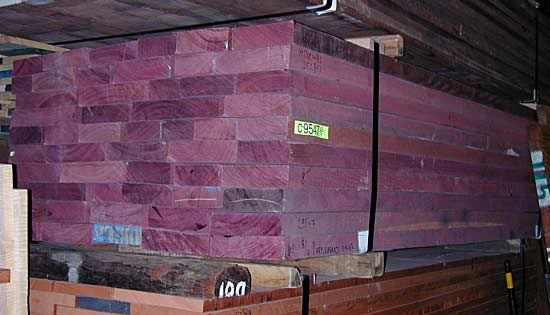
This South American hardwood grows in the rain forests of Brazil, Guyana and Suriname.  “When the stuff is first cut, the boards are very plain looking – kind of a light tan,” said Eric Proirier of Bell Forest Products.  “But, once they are exposed to the air, they take on a vibrant purple color.  It’s an amazing transformation.”  But, Eric warns, if you want to keep the bright purple, you are going to have to put a UV blocking finish on it.  “If you don’t, eventually the wood will change to a darker brown color with just a hint of the purple in it.  Still nice looking, but nothing like what you started with.”

Since it is harvested from the tropical rain forests, there is a concern about over harvesting.  “There have been some cases of that in the past, but we have made a commitment to buy our logs from environmentally-responsible loggers.  For something as dramatic as purpleheart, we want to ensure that future generations of woodworkers will be able to work with it.”

Purpleheart is also legendary for its hardness.  In the Janka test (how much force it takes to push a steel ball halfway into the wood), purpleheart rates at 1860 pounds of force.  “That’s more durable than North American hickory… it’s pretty strong stuff!”  Very sharp tools are the keys to successfully working with this tough wood. “Keep your chisels and planes honed, and be sure to use carbide on your power tool bits and blades.  Other than that, it’s a very well-behaved wood that works well.”

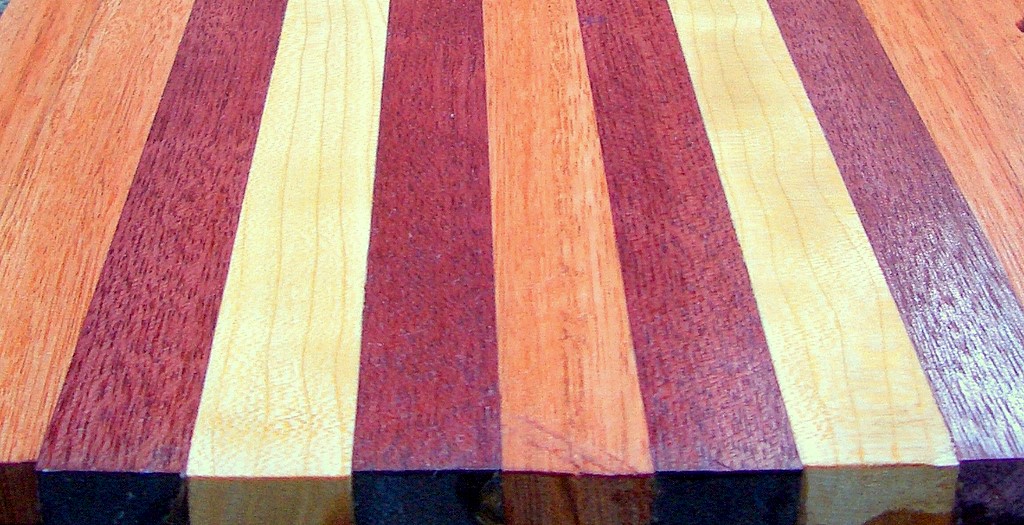
What can you do with Purpleheart?  The unique color makes it a natural accent for lighter woods. Dovetail keys and splines to reinforce a corner are naturals, and it makes outstanding cabinet knobs and pulls. “An inlay or stringing done in purpleheart is eye-catching especially on a maple or birch table top.  People who see your work will ask how you stained the wood to look like that.”

Since the wood is also very hard and durable, it’s a natural for making the bodies of wooden planes.  “You can’t dent the stuff with a fingernail, making it ideal for plane makers.  Even if you just wanted to laminate a purpleheart sole onto another material for the plane body, that would give you the durability you need to make a long lived tool.”

Its  tough nature and shock resistance makes it a great pool cue material, and Bell Forest Products keeps a number of pool cue blanks on hand for that purpose.

It also excels in the kitchen.  “We have put together a kit of the wood necessary to make a Wood Whisperer cutting board containing maple and purple heart.  Even if your culinary skills aren’t all that good, the cutting board you use will dazzle your guests!”