
 What separates an ‘OK’ woodworker from one who has a passion for the craft? Sometimes, it’s as simple as encountering someone who can show a new, interesting way of looking at things. For Wood Magazine’s contributing craftsman Jim Heavey, showing the way for others is something that – due to a family tragedy – he took to at an early age.
Jim’s dad passed away when he was in grade school. Out of necessity, Jim assumed a leadership role as the man of the house at an very early age. “Being the oldest of seven kids in a household with very little money, repairs and projects around the house fell to me. I think that it was there that I developed an appreciation for woodworking and the sense of accomplishment that completing a project brings.”
Later in his life, Jim’s leadership ability again came to the fore. He even served as his children’s school board president for 16 years – all this after doing his ‘day job’ as a firefighter. His years at this important position allowed him to hone his presentation skills considerably. “Having audiences both happy and irate – sometimes at the same time – kept me on my toes and helped me develop a style that people seem to enjoy. I don’t take myself too seriously and I think that I can relate to my audiences.”
Does he ever! Jim’s easily approachable style allowed him to marry his love of woodworking and presenting when he landed a position doing tool demonstrations for the Skil tool company at the now-defunct Builder’s Square home improvement stores. When Bosch bought Skil, Jim’s expertise was recognized, and he was chosen to present at national shows. One day in 1996 at one of these national shows, a Wood Magazine representative approached Jim to fill in for an ailing presenter. The rest, as they say, is history.
 Jim has been teaching at the Woodworking Shows for Wood Magazine ever since. You can find Jim at the Wood Magazine demonstration booth, teaching tips and techniques to dozens of very interested woodworkers. While you might assume his presentations are just tool or magazine sales pitches, Jim always keep his focus firmly on helping the audience learn new techniques. “What I enjoy the most is being able to bring enough content to the presentations to touch some aspect in every attendee’s shop experience. We have a wide skill level in attendance at the shows and I am so glad when people will say, ‘Thanks, I learned something new today.’ The challenge is to remember that I’m not selling the tools, I’m imparting knowledge. A good tool sells itself and I’ll use it to its best advantage but I want them to learn something.”
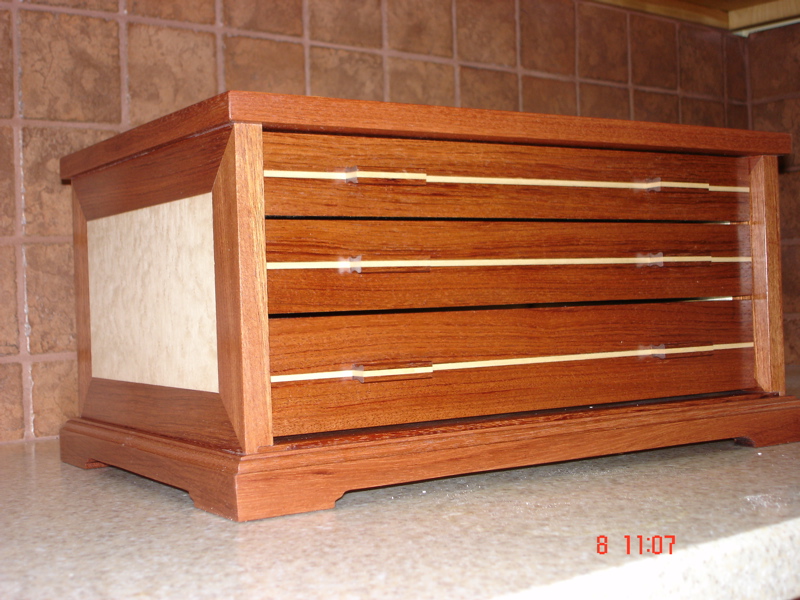 Learn something they do. The day I met Jim at the Woodworking Show in Tampa, he was demonstrating a very simple yet elegant way to embellish a project by using an applique technique.
By cutting a shape out of a contrasting piece of wood – a leaf pattern, for example – and gluing it on the surface of the project, then sanding it down to about one sixteenth of an inch with a belt sander, anyone can create an interesting design feature with minimal work.
“I do like to watch the faces of the attendees when they see that a topic I’m talking about suddenly look so simple to them. It’s that ‘ah-ha’ moment. My hope is that attendees will try some of the techniques that I use. When they find success, they will take one more step that brings additional success. It’s very rewarding to talk to someone who had watched and tried something that they learned come back the following year even more excited about their craft.”
What’s the toughest part of the job? “The traveling part can be very tiresome. There seems to be a different TSA standard in each of the 30+ airports I’ll see in a season.”
“But,” Jim continues,”when you see the crowds at the door, you know it’s show time. They expect a good experience and I really do enjoy giving it to them.”
“In the end, a one on one discussion with a fellow woodworker brings out our commonality regardless of locale. It must be in the wood,” Jim laughs, “or maybe it’s the high from applying lacquer.”
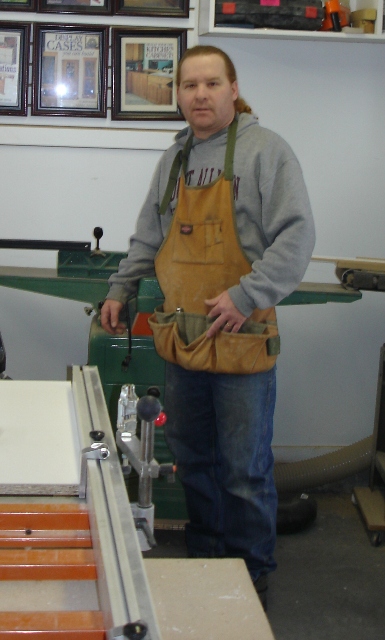
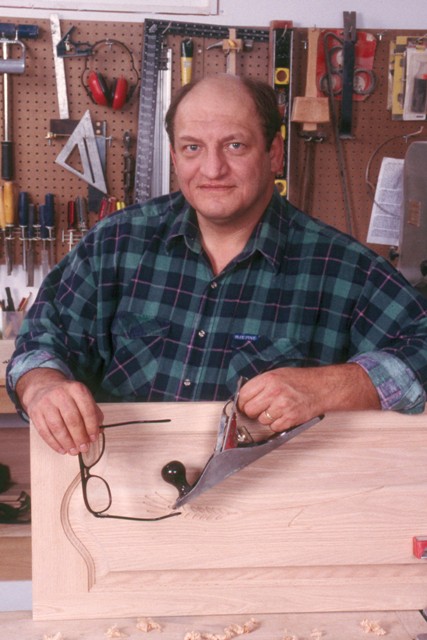
 After a month of intense grief, the two sat down to talk about the projects that were left incomplete. “I finished a lot of projects over the winter. Then in June, Jim Stack, the editor from F&W Publications, and I sat down and planed the other six chapters of 50 Jigs.”
 All woodworking is a matter of scale. Some woodworkers build in huge dimensions – entire libraries of bookshelves, complete room paneling systems and kitchens full of cabinets. Others work on the small side – boxes, clocks and other small items such as toys.
 Doug has his father to thank for his woodworking roots. “My earliest
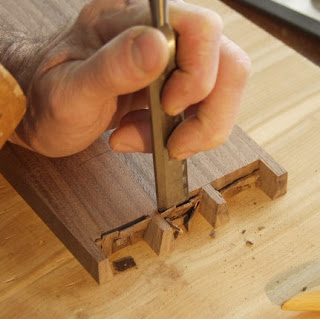
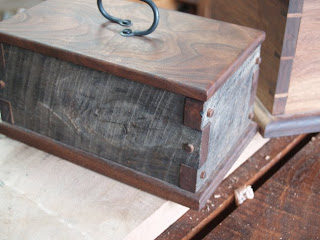
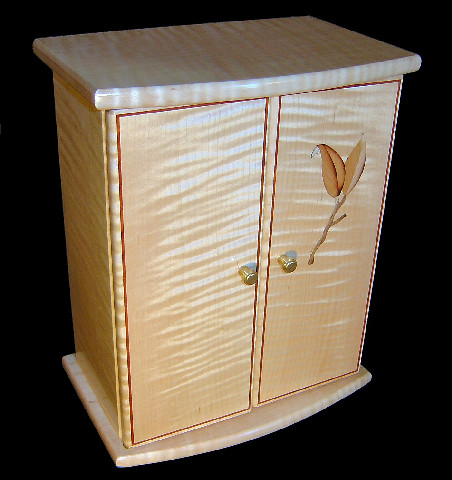
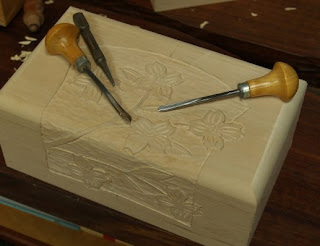 Doug has built a number of outstanding larger pieces, but his work with the smaller boxes is his calling card. His boxes are seen universally as creative, innovative and drop-dead gorgeous. While these masterpieces may seem beyond the abilities of an average home woodworker, they can serve as an excellent starting point for acquiring new skills and breaking out from beyond the norm. “Making boxes takes so little material, and so little space compared with larger work. You can learn so much from them. Nearly every technique associated with larger work can be learned through making boxes. You can more easily take risks in design making a box, so you get to be more experimental. When you make a box, you don’t have to think of the whole room setting the piece will compliment or dominate.”
 While his boxes are striking and dramatic, his preference for materials actually brings his interest closer to home. “I have a very strong preference for using Arkansas hardwoods. I seldom find Arkansas woods with very dramatic figure like you may find in exotic woods, but that is not a problem. Nearly every piece of wood is suitable for box making. If you have plain wood, you have to apply more craftsmanship to come up with something striking. And what’s wrong with that?”
 Besides the immense satisfaction Doug takes from building these boxes and teaching the craft to thousands through his writing, he also sees the big picture what people will take from these pieces years down the road. “We each can leave an important legacy in the things we make that tell more clearly than our words about caring for each other and for the planet. In the meantime, we become more potent, more creative, and more alive when we are engaged in making things from wood.”


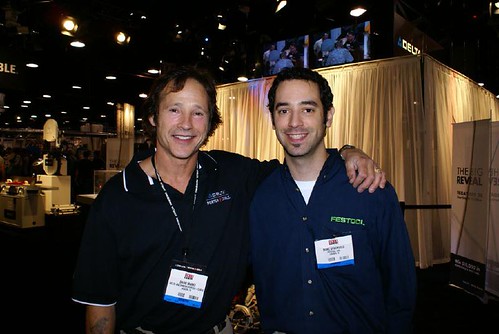
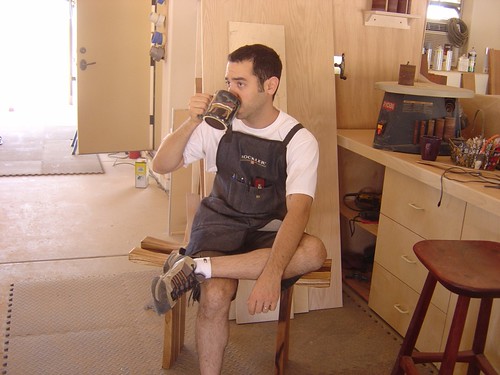
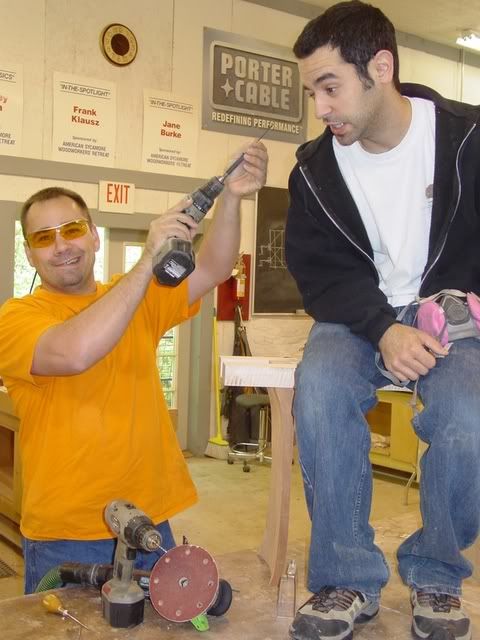
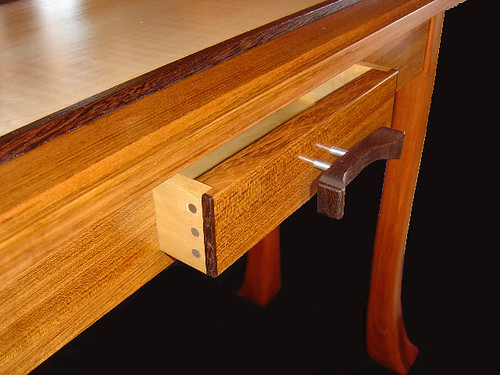


 As Ralph’s expertise grew, he was called upon by the editors of two British woodworking magazines – The Router and New Woodworking – to write his first two works – Success with Sharpening (ISBN – 978-1861083296) and Success with Joints (ISBN – 978-1861084156).
 After much thinking and collaboration with his wife Sue, Ralph hit on the idea for a book of storage projects for the home woodworking shop. Aptly titled Workshop Storage Solutions (ISBN – 978-1558708129), the book offers some interesting projects that draw their inspiration from some unlikely sources. “One day in the shop, Sue and I were talking about somewhere to put routers. A few sketches were made but nothing seemed right. A couple of days later Sue came up with the idea that the routers need to be taken to the work, just like a hairdresser uses a trolley to take the tools to the customer. A couple of thousand words, A few sketches and a working drawing, some MDF, a few wheels and the trolley was a reality.”
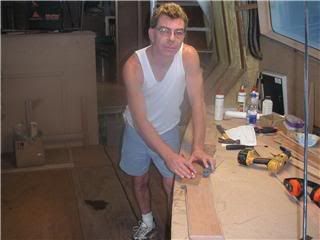 When woodworkers speak about the challenges they face, they normally mention something like cutting tight-fitting joints, selecting the proper wood and achieving a flawless finish. Now, imagine stepping up the challenge dramatically by working on a project entirely of curves, exposed to salt water and worth several million dollars.
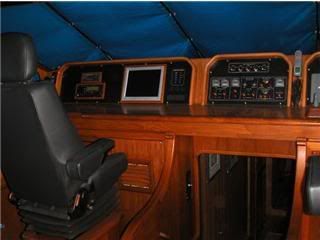 Achieving these outstanding results takes time, patience and a lot of planning. After receiving the yacht’s unfinished hull, it is taken to the boatyard where it first has to be set perfectly level to help make the woodwork easier. Once set, measurements are taken, pencil is put to paper and the real planning work begins in earnest. It typically takes several months to arrive at a plan that is both workable and approved by the client.
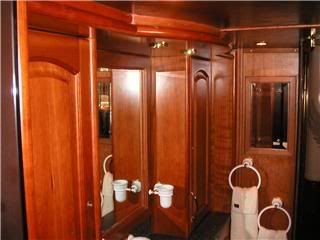 With all of these curves, two tools are essential in Francois’ arsenal. “I’d really have a difficult time working without a band saw with a 6 mm blade and my router and bit collection. They give me the control and flexibility I need.”
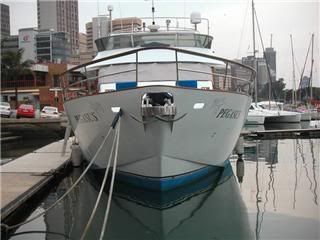 You might expect the owners of these hand-crafted beauties to forget who did all of the work once the yacht is delivered, but that’s not the case. When Francois finished a yacht called Pegasus back in 2005, the owner invited him out for the first cruise. “The day it launched, we fired up the engine and went for a test run. The next day we fitted all the windscreen wipers and then went to top up the tank with diesel. Now it was time to go deep sea far out for sea trials which took about 6 hours. It was awesome to say the least.”