Tom's Workbench

|

part of the Wood Talk Online community

Archive for the ‘Shop Talk’ Category

Shop short cuts

Wednesday, March 14th, 2012

A few years ago, I embarked on one of my most ambitious projects.  It wasn’t just one woodworking piece – it was nine copies of a wine rack plan I had seen in Wood Magazine.  The holidays were just around the corner, and I knew that the wine lovers in the family were just going to love having their very own Tom Iovino creation to rest their fine bottles on.

The one thing I hadn’t counted on was just how many pieces I was going to need to cut in order to make these projects.  Each one had four uprights, four stretcher, four curved bottle holders and two feet.  Add in that each stretcher needed to be tenoned on both ends and each upright had to have two mortises cut to receive each tenon… well, I quite literally had my work cut out for me.


I also knew that I wanted each of these projects to look identical. Well, maybe not identical – I was using different kinds of woods for the project pieces – but similar in shape and form.

Cutting each of these pieces individually was going to be out of the question. I mean, if I  had to set the cuts for each of these components by eye looking at pencil marks, it was going to take a long time to set up for each operation, and there was little to help ensure that the cuts were going to land on exactly the right place.  With the time ticking down  toward the holiday season, I was going to have to work smarter, not harder, to make my deadlines.

That’s when I turned to some tried and true shop short cuts that helped to knock this big job down to size.

The first had to do with the measurements.  Now, I’m sure I could have brought out a steel ruler to mark the depth of the tenons I had to cut, but how was I going to be sure that I hit the right tick mark every time? And, a combination square would work well, but, ya know, if it ever got reset for another measurement, how was I going to remember the exact point I had set it to at the beginning?  No, my friends, I needed to work with a known distance.  That was conveniently provided for me by a set of set-up bars.

These handy little blocks were perfect for setting the depth for my mortising gauge so I could scribe the depth line for the shoulders of the tenon. This way, I could keep coming back to the  correct measurement time and again without having to re-measure.  Pretty convenient.

Another thing I did was to set stop blocks on my miter gauge to establish the width of a set of notches I had to cut. This way, there was no need to eyeball a pencil mark on each piece to ensure the right width of notch.


I was soon using shortcuts like this in other parts of the project. MDF spacers to ensure that glue ups were nice and square.  Templates so I could mark and cut the curves on the pieces, and later pattern rout them to the proper shape. Why, with the proper short cuts, I was nearly invincible!


As near as I could figure, my little short cut tricks saved at least one day in the shop on some very monotonous, repetitive operations, and made the pieces look pretty darned sweet.

And, the proof for me was the sight of so many happy faces when the recipients opened their presents. It just goes to show you that simply taking the right shortcut to completion can make your shop time a whole lot more rewarding.

==================

And, remember everyone – this Saturday at the Tampa Fairgrounds, we’re having the first ever Modern Woodworkers Association Florida meeting!  Be there or be out of square!


Short and useful

Monday, March 12th, 2012

In the past I have written lovingly of my spokeshave. What a great little tool. That thing can sweeten up curves – both inside and outside – with no trouble. It can do a little bit of chamfering work. Heck, a sharp spokeshave is just plain handy to have around.

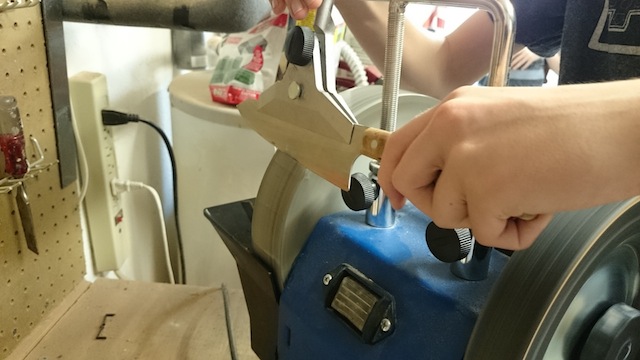
Note the key word in that last sentence – SHARP. That’s where I – and many other woodworkers – have trouble. You see, the iron on the spokeshave is just so short, it’s not easy to get a good grip on the sucker. I tend to scrape my knuckles against the sharpening medium as much as the blade bevel. And, after working the blade for a while, I tend to cramp up.

What I needed was a way to hold the blade more comfortably while getting a precise honing on the bevel. It may seem like a no-brainer to just put the blade into a sharpening jig and have at it, but there’s a problem with that – most side-gripping jigs can’t get a good purchase on the short spokeshave blade. And, holding the blade at a consistent angle is pretty darned important.

One low-cost solutions I have seen is to tape the spokeshave blade to a larger plane iron using duct tape, and then using that larger surface to get a better grip for either freehand or jig-based sharpening.  It’s a pretty clever way to use what’s at hand, and, if you aren’t using the blade that often, it will certainly work for you.

There are other methods to secure such short blades. For instance, Lee Valley offers a short blade holder that uses magnets and a stop block to secure shorter blade for sharpening.

On my Tormek, a multi-purpose flat tool rest fills the bill for short blades.  It’s a simple matter to adjust the platform on the guide bars to get the right angle, and it creates a solid base to rest the blade on while doing the honing. Quick. Easy. Back to work. Gotta like it.

While sharpening spokeshave blades can be a bit of a hassle, there are definitely opportunities to make the job a lot less onerous. Which, of course, leads to more time at the bench. And, isn’t that what we are all here for anyway?

Stuck on you…

Monday, March 5th, 2012

It has been a while since I last used polyurethane glue. I found it messy, a hassle to use and, once the container was opened, it would foam up in my humid Florida shop  into a hard blob of goo in the bottle. Yuck.

Recently, though, the folks at Gorilla Glue sent me a few bottles of the stuff to try in my shop. They say that the new stuff is a better formula, and they have improved the cap so the stuff won’t go bad.  So, why not give it another go?

I’m in the process of building my first drawer-based bandsawn box, and I needed a thick piece of wood to build it.  I didn’t have anything thick enough to do the box on its own, but I had a nice big block of white oak that had been sitting on my lumber rack for a long time. It measured out to 7/4 thickness had a big crack down the middle. That wasn’t going to be an issue, because I ripped the board down the middle with my band saw and planed up the pieces. It looked nice.

From there, I followed the instructions on the bottle.. Imagine that.  Since this glue cures in the presence of moisture, I took the time to carefully dampen one of the mating faces with a little bit of tap water.  On the other face,  I took my time to lay down a good bead of glue and then spread it with a wood scrap.

Once everything looked good, I placed the dampened face of one piece on top of the glue-covered face of the other. I broke out my shorter K-body clamps and put a good amount of pressure on them. As expected, as the glue began to cure, it foamed up. It was pretty cool to see happen…

Once that was in the clamps, I wanted to get the bottle sealed up carefully so I wouldn’t have ‘issues’ later. The new cap from the folks at Gorilla Glue does two things to help keep moisture out.  First, it’s a very tight screw-tip fit. This seals out air better than the old style of cap. The other tactic they are using is a steel pin mounted in the cap that inserts into the neck of the bottle. This presents another physical barrier preventing air from messing up the glue in the bottle.

Once the glue cured (I gave it 90 minutes), I took the assembly out of the clamps and scraped off the foam. Then, I ran the block through the thickness planer to ensure everything was nice and flush.  It seemed to turn out good…

I stared working on the bandsawn box, but my saw decided to chew up and spit out the lower tire off the band wheel… Crap.  Oh, well, time to buy a new tire for the saw. I’ll have to put this project on hold until I can get the replacement part. And, I’ll have to check on the bottle of glue to see how well the contents have fared with the new cap.


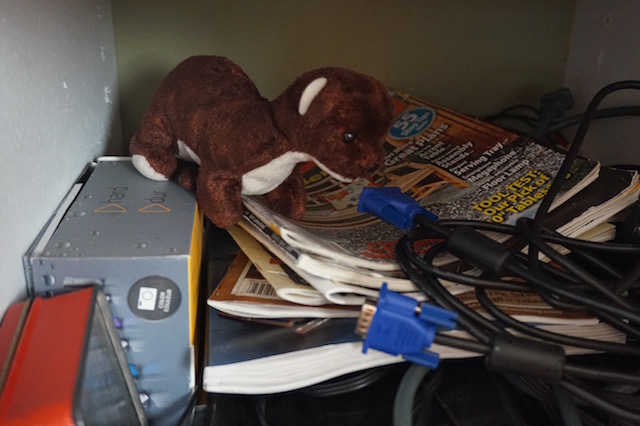
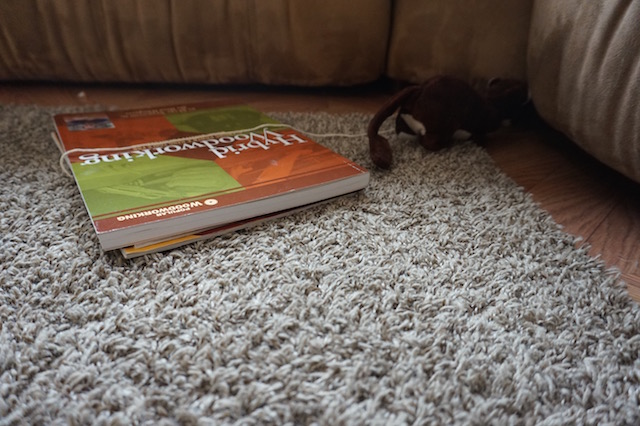
My shop weasels

Wednesday, February 29th, 2012

For a guy known as the Shop Monkey, you’d think that I would have had enough of animals in my shop.  But, I’d be remiss if I didn’t tell you about my shop weasels.

Some people have gremlins.  Others have gnomes. Everybody has that mischievous spirit that runs off with that important thingamabob that you need for your next step in the project, but darned if you can find it.


Oh, I know your shop is waaaay too organized to have anything like that happen.  But, for us mere mortals who work in less than pristine shops, we have swarms of these little guys all over the place.  Where did I put that tape measure?  Why can’t I find the right chisel?  It was just on my bench right here…


For me, learning to live with the weasels was a study in patience. I knew if I kept my cool once they did their thing, I could spend time retracing my steps and – magically – that missing tool would show up where I least expected it.  Also, the weasels move so quickly and with such care, they have managed to reclip my tape measure to my belt or replace the safety glasses they took back on top of my head without me feeling a thing.

Fortunately, I have developed a straightforward plan to help keep the weasels under control. It comes down to being more organized and cleaning up more.  I’ve discovered that when I place tools I get out to do a simple task – say a particular size of chisel to do some paring – back where I took them from in the first place, it creates a weasel-proof barrier.


There are other techniques you can use. From the simple lanyard type safety glass retainers which allow you to hang them around your neck to advanced router bit and saw blade organizing cases to protect and organize your cutting investment, there are dozens of ways you can deter weasel mayhem.

And, manufacturers are starting to listen.  I was pleasantly surprised to see that Festool had weasel proofing in mind when they designed their tools and the cases that went with them.  My track saw kit – with all of its numerous parts and accessories – has yet to have a weasel encounter.

For smaller, easier to conceal items such as delicate screws for a set of hinges or your router base, take a tip from another vocation that deals with weasels on a day-to-day basis.  Mechanics have long relied on magnetic bowls to hold the small bits securely while they work on another component. Magnetic bowls can be found at most auto parts stores and in many larger home improvement big box stores.


The last step I use to keep the weasels away is to clean up the wood shavings and sawdust that build up near the bench. You’d be surprised how efficiently the weasels can camouflage themselves in that stuff, waiting for an important piece to fall off the bench.  If that happens, you may never see it again… Take the time to clear that waste from underfoot on a regular basis so you too can make your shop a weasel free zone.

Now, where did I put that remote?


Wracking my brain

Wednesday, November 9th, 2011

People have often wondered exactly what I have been thinking.  I’ve been told more than once that I really need to have my head examined.

(For those of you who may be concerned… relax. I’m undergoing a 24 hour EEG test just to verify that I truly am OK after a recent health issue. Everything so far looks A-OK, and I’ll have the results for sure in the next few days.)

Since I have the rig on, I’m sure the doc is going  to be surprised at just how much I’ve been thinking about how I need to fix a boo boo on another project.  You would think by now I have made every single possible mistake there is to make, but I am pretty resourceful.

Basically, here’s the situation.  New project – new issues. I am building a pantry for a friend of ours. I ordered the (EXPENSIVE!) high quality maple plywood and hardwood for the build, and I used the Festool track saw to cut the pieces down to size. This is going to be a piece of cake, sez I, because I have used this before and I know all of the pitfalls of making cuts without using a self-squaring rip fence.

Well, If you put the track of the saw down where it’s not square, and then you make a cut, you will have a perfectly straight cut that just doesn’t quite measure up square. That’s what happened when I cut one of the sides, and I didn’t discover my boo boo until after I had the piece glued and screwed together.  Dangit.

So, I thought I could hide the issue by cutting a long wedge from a maple board and gluing the piece down to the plywood before I put the face frame on. Gosh, that plan stunk. There’s no way I am going to hide this problem.

So, I got to firing those brain cells off – how on Earth am I going to fix this project.  The client was looking to get a pantry like the one I have in my kitchen, and I did a good job ripping the sides on that one straight and true on my table saw.

Think, Tom. THINK!  (By now, the brainwaves are just bouncing all over the place. The doc is going to have his hands full working on this one…)

That’s when a flash of inspiration hit me. When you look at the sides of most cabinets, they are very plain affairs. Just flat end panels sitting there in their monolithic glory.  But, I can also remember a book by Danny Proulx about building your own kitchen cabinets, where he too lamented the fact that slab sides tend to look a little boring.

So, why not take the opportunity to turn my mess up into a design feature?

Danny’s idea was to dress up the end panel of a project like you would the doors of your project to give the piece a little more visual interest. A great idea, especially since I’ll be building the doors for the project, and can use the bits to create a ‘mock panel’ for the sides. Basically, I’m going to mill some maple down to 3/8″ thick, bead the edges and then picture frame the pieces on to the cabinet… making the ends look pretty fancy…

Sure, it will cost a little extra and take some additional milling to make it right, but the finished piece will look totally awesome.

That’s enough thinking for one day… I’ll let my brain sit back and kick its feet up to celebrate another job well done!


Transition time

Wednesday, October 26th, 2011

So, I lost this entire weekend. Total bummer, because I had a busy weekend planned of woodworking and finishing projects up my sleeve.

This past Friday, I took delivery of the material for the next project I’m working on – a pantry unit for a good friend. I also had the rocking horse that Dominic and I were working on to complete. So, the plan was to get into the shop, knock out the rocking horse, move it to a corner of the shop and let Rhonda and the boys complete the finishing job.  Then, start hoisting sheets of plywood up onto the bench and start breaking them down into project components.  It was going to be the perfect weekend. Heck, I even had the weekend off from coaching, as the basketball league took a one week break.

Well, all of that went out the window. Total bummer. So, I’ve been working after work to get some stuff done in the shop. Tonight, I was able to get the horse assembled.  The results… Well, they did leave a little bit to be desired. My horse has a bit of a forward lean – no doubt a miscut in the shape of the rockers.  Looks perhaps like there is a bit of a peak in the middle that needs to be shaved down.  Oh well, that’s why I have a spokeshave and a month or so before I have to drop it off at the pregnancy crisis center.

So, while the horse is up with the vet, the sheets of plywood for the new pantry project are taking up space in the shop. It’s amazing how large – and heavy -  4 x 8 sheets of plywood are in person. One of these days very soon, I’m going to have to find a safer more out of the way place to stash them…

Because this Saturday is the annual pumpkin carving party as well…

Oh, well, life is all about going with the flow. And, I know that once I get everything back on track, we’ll be off to the races.

So, I’ll just have to sit tight, get some stuff done a little at a time, and try to enjoy the start of the hectic  season!


Mudflapping

Monday, October 10th, 2011

Last week, a computing pioneer passed away. Steve Jobs, co-founder of Apple Computer, succumbed to the pancreatic cancer he had battled so bravely for the past years. His vision helped to revolutionize computing, music, phones… a lot of what we take for granted today.
While he is being memorialized, many of his more famous quotes are being posted on the Internet. Some are inspirational. Some are snarky. Some are full-on competitive. And, then there’s this one, which seems aimed at the woodworking community.
When you’re a carpenter making a beautiful chest of drawers, you’re not going to use a piece of plywood on the back, even though it faces the wall and nobody will ever see it. You’ll know it’s there, so you’re going to use a beautiful piece of wood on the back. For you to sleep well at night, the aesthetic, the quality, has to be carried all the way through.

Of course, if Steve Jobs was going to build a piece of furniture, he would probably make an app for that.And, I get the point he was trying to make – that if you are going to invest the time and effort into building something beautiful, don’t use ‘inferior’ products and methods to finishing things off.  But, this quote did make me stop and think about the work I do in my shop.

No one is going to deny that nothing quite captures the beauty, depth and richness of solid wood other than solid wood itself. And, when it comes to building certain types of woodworking projects, there is nothing quite like solid wood. Small boxes that can be picked up and handled?  You bet. Pieces that will be opened and examined closely… sure.

And, I have no issues with the plywood that Jobs pointed to as substandard. The cabinet grade plywoods I use for higher-end cabinet projects costs upwards of $100 a sheet. In effect, it is stacked, glued up veneer instead of a crud-filled piece of sheathing. So, I would feel fine going with plywood on a project.

But, the spirit of his quote  – do you put the same level of care into the hidden parts of your projects as you do into those that are seen? You know, I don’t always. And, that’s something that was once referred to as Mudflapping.

If you have ever driven behind a truck, you will notice that some drivers love to embellish their rigs with fancy looking accessories. High end paint jobs. Fancy chrome. And, if you look down at the wheels, you will often see fancy mudflaps. Sometimes sporting the chrome silhouette of a nude reclining woman. While they make the rig look snappy, these flaps serve a utilitarian purpose – preventing the dirt on the road from being flung backward toward the cars behind the truck. So, as you can imagine, the inside of these snazzy looking flaps is just ugly and covered in mud.

When I know the piece I’m building is going to be permanently attached to the wall, I won’t do a darned thing to finish the piece. There’s simply just no reason to. The home office setup I built last year for my friend Paul was built from a series of boxes, and when they were secured to the wall, no one was going to see them. Ever. I guess maybe when they get ripped out 40 or 50 years from now, but no time soon. The unfinished backs were the perfect place for me to write notes about where they were going to be placed, what was going to be stored in there and if I had to do anything special to accommodate wires or other electronics.

For projects that are going to be seen ‘in the round’ – from all directions and angles – of course I take the time to carefully finish all sides. Everything gets sanded down to 180 grit, planed or scraped, sealed and finished. You never know where or how the piece is going to be used, so it’s best to go on the side of caution.

However, there is a case in which I need to more carefully consider my finishing regimen.  For the recently completed stair-stepped bookshelves, I carefully finished the ‘front’ side of the piece. I sanded it carefully, applied the gel stain, buffed it down with some 400 grit paper, applied the wipe on varnish, re-buffed and wiped on a coat of wax. It looked really nice.

The only problem was that I didn’t put the same level of care into finishing the back. I wasn’t quite as careful in the sanding, applying the stain or the finish. My thought was that the piece was going to be pushed against the wall, it wasn’t going to matter much.

What I hadn’t counted on was that the client was having her walls painted. So, she had the two shelves out in her living area. And she had to look at their backs until the painting was done.  So, she asked for the can of stain, and was going to apply it herself.

D’oh! Never something you want to hear about your work once it has been delivered. In this case, mudflapping was NOT the way to do things… And it provided me with a valuable lesson.  After all, if you are going to be following me on this blog, I can’t be flinging mud your way!