Category Archives: Tools

Meet daddy’s nemesis …

As a fan of the James Bond series of movies (Goldfinger was my favorite movie in the franchise), I was thoroughly amused by Austin Powers, the Mike Myers spoof of the classic spy films.

One of the most memorable scenes happened after the hero Austin Powers and his partner Vanessa Kensington were captured by Dr. Evil’s minions and brought to an elaborate dinner party in Dr. Evil’s lair. In a nod to the the first movie in the Bond series, 1962’s Dr. No, Austin and Vanessa, clad in their quasi-futuristic costumes, are sat between Dr. Evil’s henchmen while Dr. Evil explains in great detail his fiendish plot to destroy the world if his demands are not met.

That’s when Dr. Evil’s son Scott enters the room from his bedroom. Dr. Evil, in a grand gesture, introduces Scott to Austin by saying, “Scott, meet daddy’s nemesis, Austin Powers.”  Scott, incredulously, asked, “And you’re feeding him?”

In my shop, there are few tools I have yet to at least have a working relationship with. Sometimes, the tracking on my band saw gets a little ‘drifty’.  Sometimes, a few of my hand planes can be finicky. But, with a little bit of time and effort, I can get them to do what I need them to do.
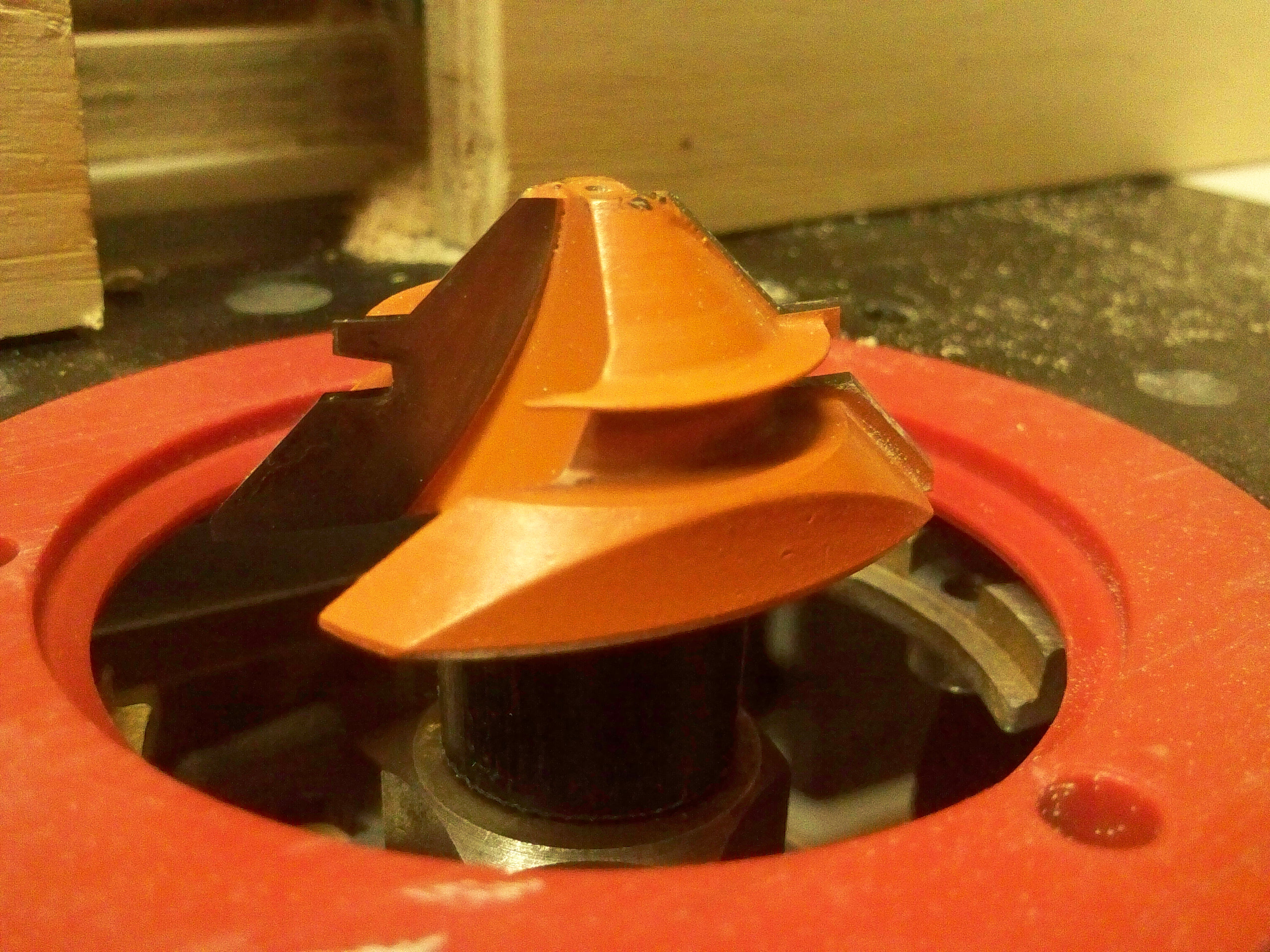
Then there is this.  My lock miter bit. This little router bit called to me at a woodworking show a few years back.  The slick talking exhibitor showed how useful the joint is.  How quick to cut. How easily the joint goes together.  He cut joint after joint, winking to viewers as his smooth voice lured others over.

I had to answer the siren’s call.  I dropped my money and took this miracle bit home with me anxious to make things happen.

Boy, did stuff happen.  Some head scratching.  Some grunts of frustration.  Some cursing.  And lots of wasted test boards. And, worst of all – a lot of wasted precious shop time.

I’ve used the so simple a child could do it  ‘adjust the height until the boards match up’ method, with no success.  This time, armed with the Groove Center made by Prazi, I was bound and determined to make things work out.
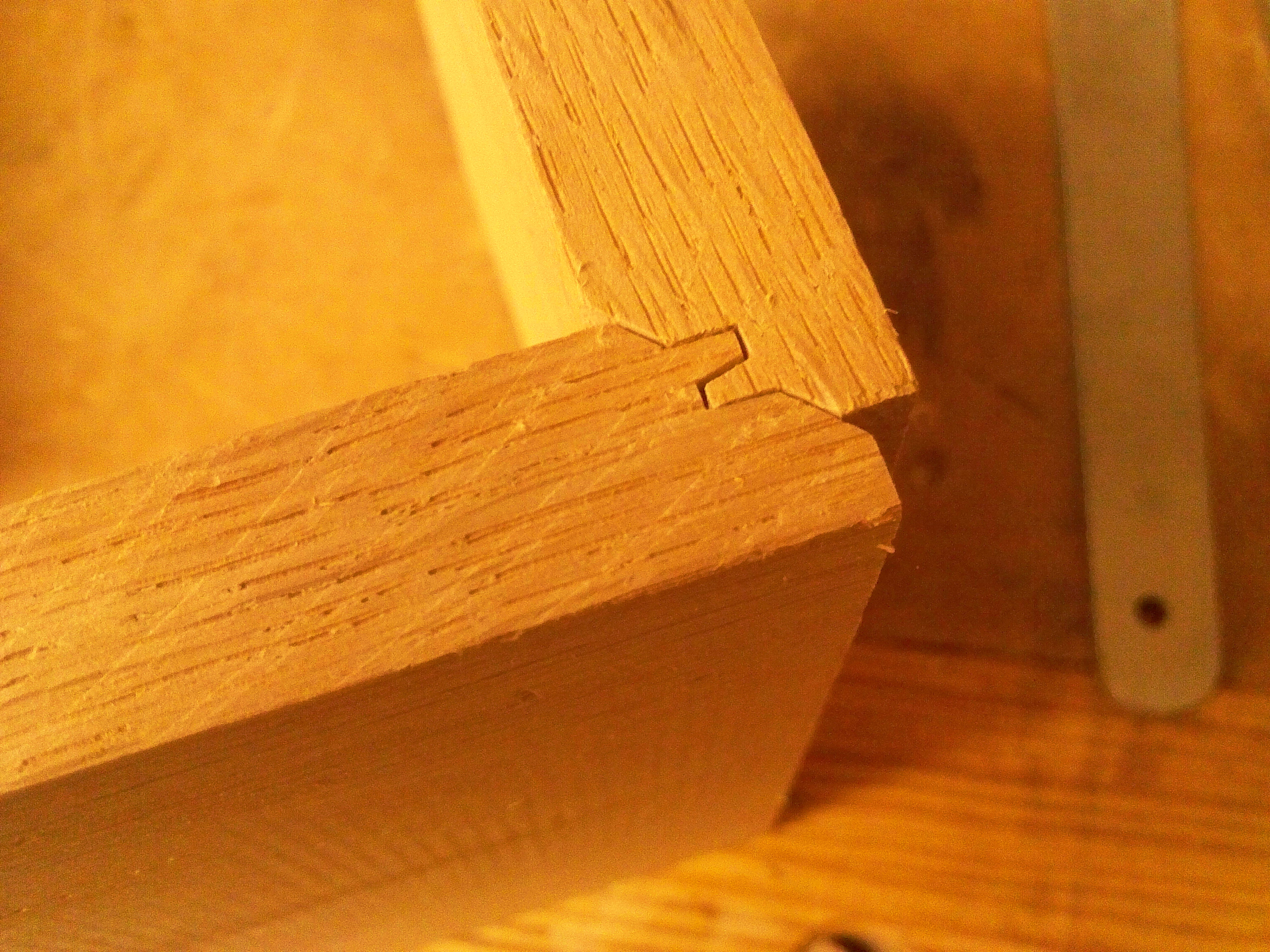
I followed the instructions to the letter, but still found myself scratching my head with yet another bad result.  Now, I’m sure the problem with this bit is that there’s an id10t error going on somewhere in my setup.  Maybe it’s because I’m not getting the accuracy I need in my router setup.  Maybe it’s because I’m not using the tools properly.  I’ve seen both the bit and the Groove Center work flawlessly in demos.  I just can’t make it work in my shop.

I’m sure I could continue to fiddle with this bit again and again, and maybe after a few more hours of shop time, I might be able to make one of these joints work.

But, ya know what? The heck with it. I’ve given too much to this time vampire.  For the love of Pete, I could just cut a basic miter joint and break out my biscuit jointer if I needed to reinforce it.  Or, maybe set up for a Kehoe dovetail spline or just a basic spline reinforcement if I wanted – either through the joint or hidden within.

One thing is for certain.. using this bit has been one of the most frustrating experiences I have ever had in the workshop.  I just might put this baby back into its case and set it somewhere in the back of my tool storage cabinet and keep it there for a very long time… I don’t think I’ll be feeding this one any more of my shop time.
Happy Birthday to me!

This past Friday, I celebrated my birthday.  Which one?  Let’s just say I know the answer to the question of life, the universe and everything. I spent a very enjoyable day at work, where I was feted with bagels, donuts and other morning goodies by my coworkers, and then I came home to get ready for a special dinner out with my family.

While the time with my family was certainly the main thing to celebrate on my special day, I was especially eager to open my birthday presents…

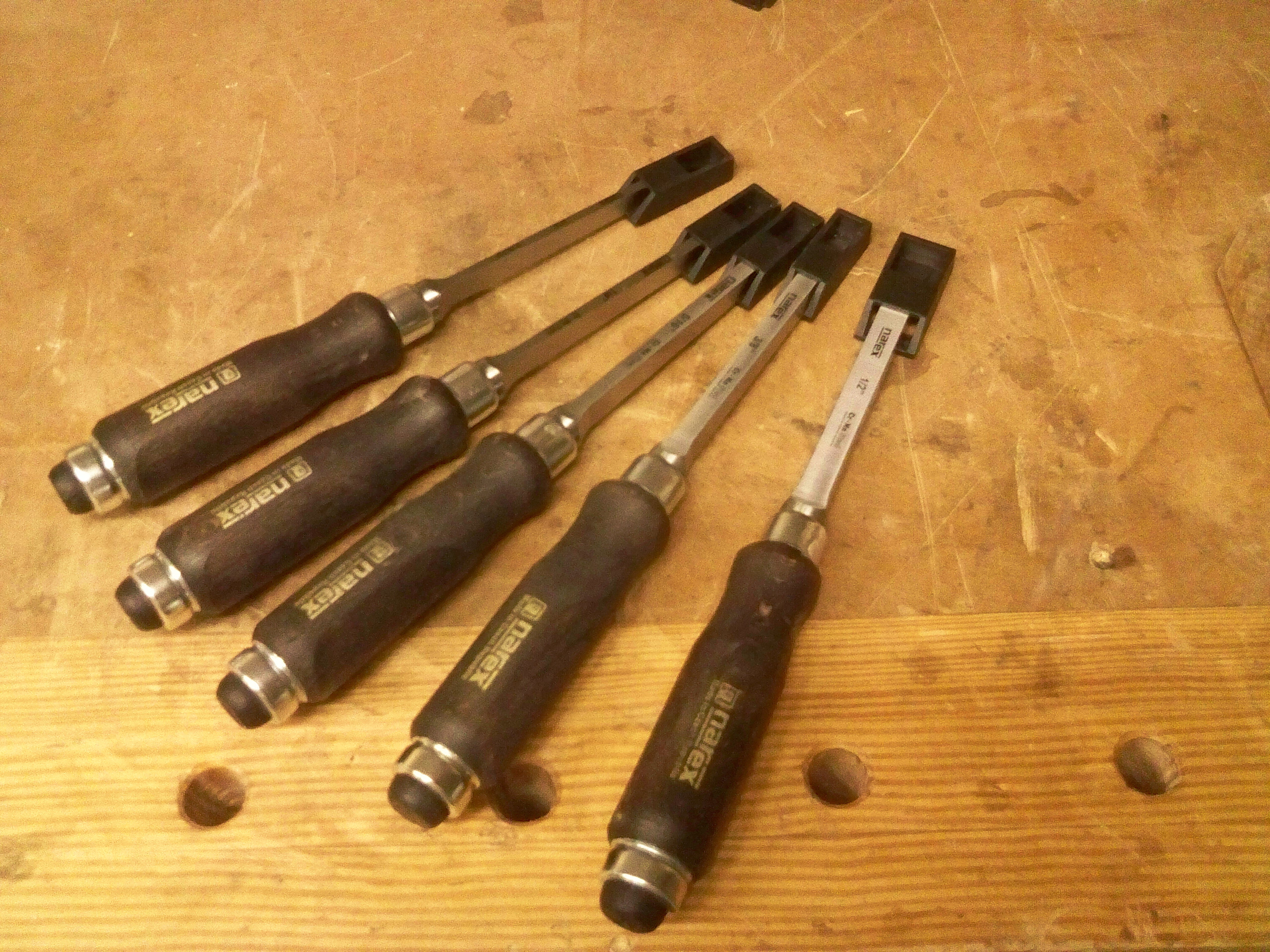
My wife and sons gave me this sweet set of Narex  mortise chisels.  This things are very substantially built with heavy duty handles and some beefy blades with very thick irons.  This is – of course – is because these babies are never babied like you might do with a set of bench chisels or certainly would do with a set of paring chisels.  They are meant to be driven with a wooden mallet to excavate deep mortises.  I have got to get out the sharpening equipment and hone them all to a very fine edge, and that will certainly be happening this week.  I just have to ensure I get a night or two of shop time.

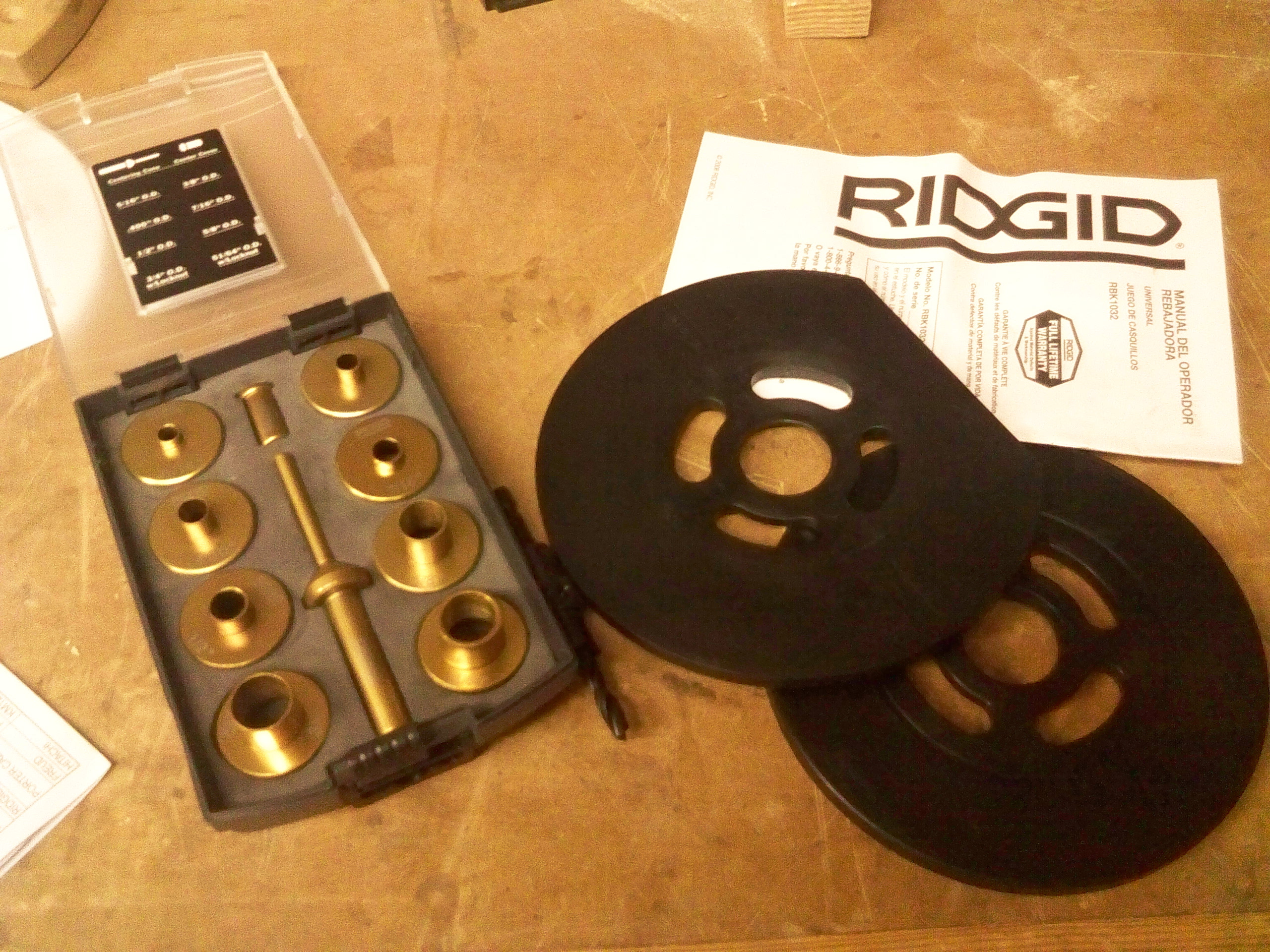
This is a universal router bushing set from Ridgid for my Freud FT 1700 combo base router. While my DeWalt setup has a standard Porter-Cable baseplate, the Freud has a more unique proprietary set up which, of course, I can’t find. This kit, however, allows me to drill a new baseplate  to accept these standard model bushings.  It’s funny, but these bushings can make help me make an easy mortising jig that works on my plunge router… I wonder if I’ll be needing to do that as much with my new mortising chisel?

There was also my cake… my absolute favorite kind of cake of all times. Trust me.. if you haven’t tasted one, you owe it to yourself if you get the opportunity.

I also got a few birthday checks from relatives… and I’m starting to wonder what I can use the funds to purchase.  I think I will hold off until after Christmas… I’m not 100% sure what Santa’s going to bring, but I’ve been a very VERY good boy this year!

A collection connection

Woodworking is an awesome craft, hobby, profession and avocation. You can build family heirlooms, make your living area more functional or create a work of art. It’s something that can make your spirits soar or just provide you an opportunity to unwind after a hard day’s work.

But, it should never be something you get hurt doing.

That’s why a lot of research and development money is spent on safety equipment. Safety glasses, hearing protection, guards and jigs are developed and improved each year. And, they protect the users from risks such as eye or hand injuries.

When it comes to safety, another critical component to consider is dust collection. Keeping the dust out of your lungs and nose can prevent a number of problems such as nasal polyps, sinus infections and cancer.

“Besides the health concerns, there are far more practical things to consider,” said Tim Walter of Eagle America. “If you don’t like sweeping up mountains of sawdust, adequate dust collection is for you!”

Tim explained to me that when it comes to dust collection, defense in depth is a key. “Taking care of dust in your shop starts where it’s created with the big stuff and gets finer and finer.”

Tim pointed out that the big offenders in the shop need to be addressed first. “A bigger dust collector in your shop can pull in dust from your table saw, jointer, planer, band saw and other tools. You can have a portable hose that you move from tool to tool, or, if you have a powerful enough collector, you can set up a fixed dust collector system with piping in place from tool to tool.”

Some tools – such as cabinet table saws – make dust collection an easy proposition. They already have a dust collection port and handling built in to the design. “There are many other tools such as contractor table saws and router tables that are a lot tougher. That’s why we offer products such as the Dust Cutter which make these tools a lot easier to collect dust from.”

While fixed systems are great for stationary shop tools, those hand-held power tools can generate a blizzard of sawdust that needs to be handled as well. “Ever try collecting the dust from a session of routing into MDF? You’ll drive yourself nuts!” To help with these situations, you can rely on light flexible hoses that can plug into your larger system, or get a point of origin collector. “Any shop vacuum can serve well as a dust collector, but there’s definitely a step up with either a Fein or a Festool collector. They both come with a feature that will turn the collector on when the tool is activated. It makes using the collector a lot easier.” Added bonuses include portability, better filtration than your average shop vacuum and a whole lot less noise. Built in mufflers keep both the Fein and Festool at a more comfortable decibel level.

For the finer dust that gets into the air, filtration systems can help keep the airborne particles at bay. “These are not replacements for a dust collection system, but offer another layer of protection for your lungs.” While most tool manufacturers offer expensive systems that can be hung in the shop, Eagle offers the Demo AirNet. “It’s a very cool system that attaches to a normal fan. It will filter debris out down to five microns, making the air a whole lot easier to breathe.”

Finally, when working it a very dusty environment, there’s nothing quite like a personal air mask. “If you are working in dusty environments for a short time or not too frequently, disposable masks make a lot of sense. If you spend more time in the dust or haven’t yet gotten your dust collection system up to snuff, a respirator with replaceable filters is a sound investment in your health.”

While it may not be as glamorous as a new table saw or the latest router bit collection, dust collection is a sound investment in keeping your shop a safer, cleaner and more productive place.

‘Tis better to have loved and lost…

Can it be?  Just a few weeks ago, flush from my return from Woodworking in America, I proclaimed my love for a new set of old English chisels…

They were beautiful… made in the 1950s… with curvaceous boxwood handles and legendary antique steel. These were going to be the Mack Daddy… the be all and end all of my hand tool collection. I envisioned myself in chisel Valhalla, able to slay my hand tool working demons.

It was easy to fall in love with them.  They were on the table, still in their original box.  My hand was drawn to them. I imagined the former owners working with them, creating perfectly pared dovetails on an heirloom project.

I was grinning from ear to ear flying back from Cincinnati, trophies safely stashed in my check on bag.  I could almost imagine the TSA folks checking through my bag, stopping when they located my beautiful set of chisels to admire and fight off their desire to covet them for themselves.

The next day, after that pesky work thing was out of the way, I raced back to the shop with visions of freshly-honed chisel bevels dancing in my head. As soon as I could get changed into some dirty work clothes, I dashed off to the shop to retrieve my diamond stones and strop to begin the sharpening process.

Of course, I had to start with the backs. Can’t really sharpen chisels without ensuring the backs are nice and flat, right?

Well, that’s when I discovered a heartbreaking surprise. These chisels were – how shall I put it – not flat.  Not by a long sight. They were plumb out of whack. I colored the back of the blades with a permanent marker and ground some, then checked my progress.  My fears were confirmed.

Now, I can understand that decades ago, technology wasn’t quite what it is today. But, wow, these things were curved. I was rubbing the back against my coarse diamond stone to discover that the back of the blade only touched at the tip and right near the handle.  I double – even triple checked to ensure I wasn’t trying to grind away the bolster, but no.  The blade was lying as flat as I could make it…

I e-mailed Patrick Leach of Superior Tool Works to ensure I wasn’t seeing things. He and I had an exchange about the chisels and encouraged me to keep at it.

But, wow, those chisels were really out of whack.

I want to say this about Patrick and Superior Tool Works – he gets his hands one some sweet old tools, and he is a stand up guy…  On his site, he writes:

Old tools have been an obsession now for some sixteen years, and this source has been selling old tools through the internet longer than anyone else. When you buy old tools from The Superior Works, you not only receive quality goods at fair prices, but you also get unlimited “road service” in their proper usage, tips for making them do stuff you might not imagine, advice on which is the correct or better tool for the job you have in mind, historical perspective of their design and use, construction advice from architecture to cabinetmaking (there isn’t just an anonymous merchant looking to part you from your money behind this screenful of text – much of this stuff is actually used here) and, of course, a 100% satisfaction guarantee.

Every word the man wrote is true.  After some more work and a few more e-mails, I sent the chisels back to Patrick and received a prompt and courteous refund. The next time I go shopping for old tools, I’m checking with him first.

So, what now?  Well, I have a birthday coming up, and the holiday season is right around the corner.  Maybe I’ll drop a few hints to the Jolly Old Elf about finding a new set of chisels.  Until then, I have decided to drop back and punt…

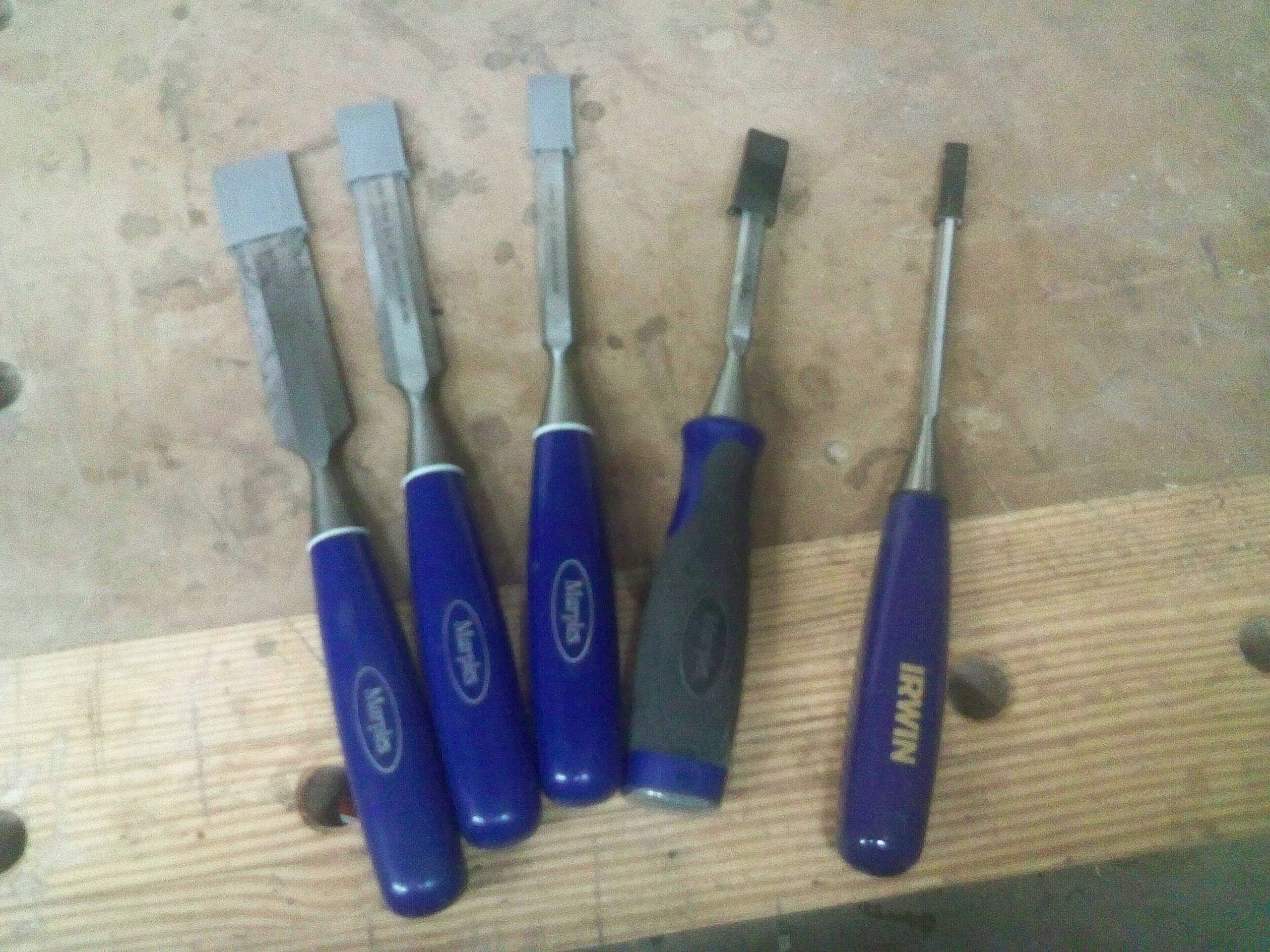
I broke out my set of Marples Blue Chip chisels I have been using and started honing them on the equipment I already had out. I put a sweet edge on them, so nice they can pare end grain maple. That’s sharp.  I’ll just have to keep an eye on them and be sure to hone the edges when they start to drag.

Besides, there’s lots of wood out there that’s waiting to get built into projects!

One Smooth Customer

Make no mistake about it, one of my favorite woods is curly maple.  I love the light color and the dazzling figure that a finished piece shows.

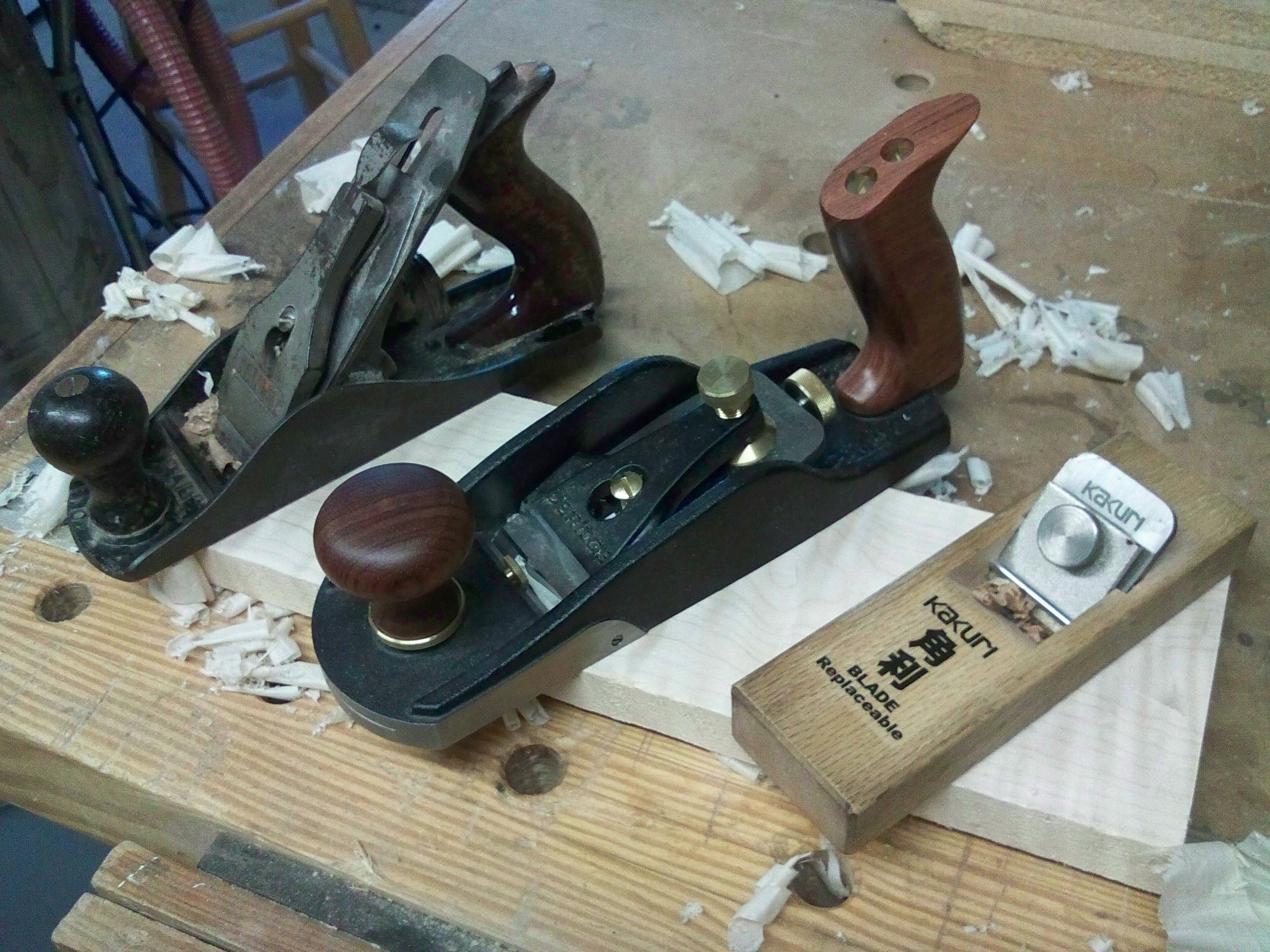
The only problem is that getting it nice and smooth can be a nightmare. It’s difficult to get the board to go through the thickness planer without tearing out. Using a sharp jointer plane takes a considerable amount of care to get he surface flat and clean.  And, when it comes to smoothing planes, both my vintage Stanley No. 4 and my Japanese smoothing planes have moments where the would rather chew on the board than bring up thin shavings. Since both of these planes have irons set for working with well-behaved softwoods and hardwoods, they have difficulty dealing with the wavy interlocking grain patterns of figured boards.

That’s why I have frequently had to turn to ‘abrasive planing’ (read: the belt sander) to get the board’s face smooth before I could use a cabinet scraper to get it ready to finish.

That’s why I added the middle plane to my arsenal.  It’s a Veritas bevel-up smoothing plane, and this thing is the cat’s pajamas. (What is this? 1932?)

As with the Veritas planes I own, this is a solid piece of machined metal. It’s substantially heavier than my No. 4 and considerably wider, which makes it feel stable when riding on the face of a board. It has a great adjustment system that doesn’t involve a frog – instead the blade bears against the solid sole casting. The handles are large and comfortable, and the mouth can be adjusted to give a very fine opening, further helping to reduce the amount of tear out.

I had a choice steel for the iron – either an O1 or an A2.  I went with the A2 to better hold the edge so I’m not constantly honing during a project.The Veritas irons are ground very true, requiring only a honing on my extra fine diamond stone and some honing on a leather strop to slice paper.  That’s nice…

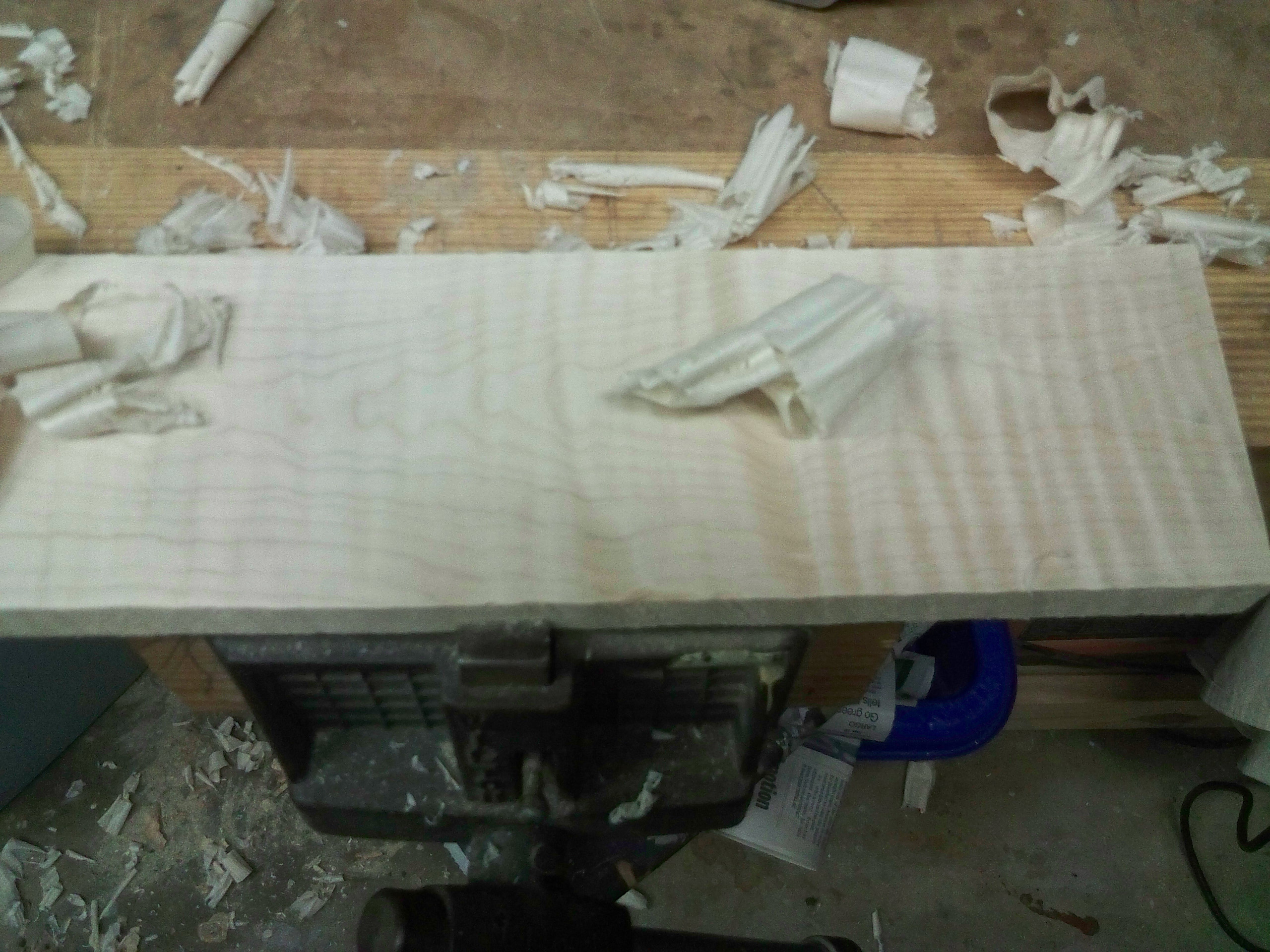
To put the plane through a quick test, I found this offcut of tiger maple on my bench.  I put it between the dog on my workbench and on the vise jaws and snugged it down. Within a few minutes, the surface of the board when from looking like the surface of the Moon to nearly translucent.  The shavings – even with just the coarse adjustments, were gossamer thin.  Once I get some real time to work with it, I’ll be using this plane a lot on my projects.

Will I part with my No. 4 and my Japanese plane?  No way.  Those soldiers have served loyally for years, and do a great job on straight-grained woods.  But, when I’m ready for the final pass or run into a board with a lot of visual interest, I’m reaching for this one!

A Love Story

I want to apologize to each of you – the loyal Tom’s Workbench readers. There was no quick poll yesterday…  But I have a good excuse!

You see, I had travel plans… plans to attend the Woodworking in America conference up in Cincinnati, Ohio. Well, just south of Cinci in Covington, Kentucky, but you get the idea.  The WIA, if you are unaware, is a big three-day woodworking summit featuring a large marketplace, numerous classes and plenty of opportunities to meet woodworkers from around the country.

While there, I didn’t have access to the Internet.  I had an issue with being charged extra for web access while I was already staying at a hotel that caters to business travelers.  I mean, honestly, it’s 2010 and most budget hotels don’t charge for the service.  I’m sure that indoor plumbing was an upsell at hotels a long time ago, too.

Besides, I needed to hoard my pennies because I was there on a mission – I wanted to upgrade my chisels.

This isn’t the article I planed to write. My initial idea for this article was to go from booth to booth, holding chisels from the many manufacturers to feel their handles, check their balance and see how well they pared and chopped wood. There were some serious manufacturers there – Blue Spruce, Lie Nielsen, Hirsch, Veritas … they were sweet!

After my first lap around the floor, I stopped at the booth where Mike Siemsen was hosting the hand tool Olympics. Mike is an extremely knowledgeable  woodworker who specializes in hand tools. I told him what I was looking to do, and his first response was interesting – he told me to look for old chisels. His reasons made sense – the older chisels were made in a time before the wide proliferation of power tools, so these were designed to be workhorses.  He also told me that some of the new chisel manufacturers like to polish their blades to a mirror finish – which makes them look pretty, but rounds over the sharp edges in the corners.  Regardless how well you sharpen the tool, you may never be able to truly get it ground to a sharp corner to pare into edges.

There was a booth I had to check out.  Patrick Leach of The Superior Tool Works had a booth there and WOW… did he have some tools for sale.  Classic planes, measuring tools, saws and chisels. First, I thanked him for running such a great site and told him how much I enjoyed reading his Blood and Gore page describing the different models of Stanley planes. I told him about what I was looking for, and – without blinking an eye – pointed across his booth crowded with classic tools and drooling woodworkers and showed me a set of chisels I might be interested in.

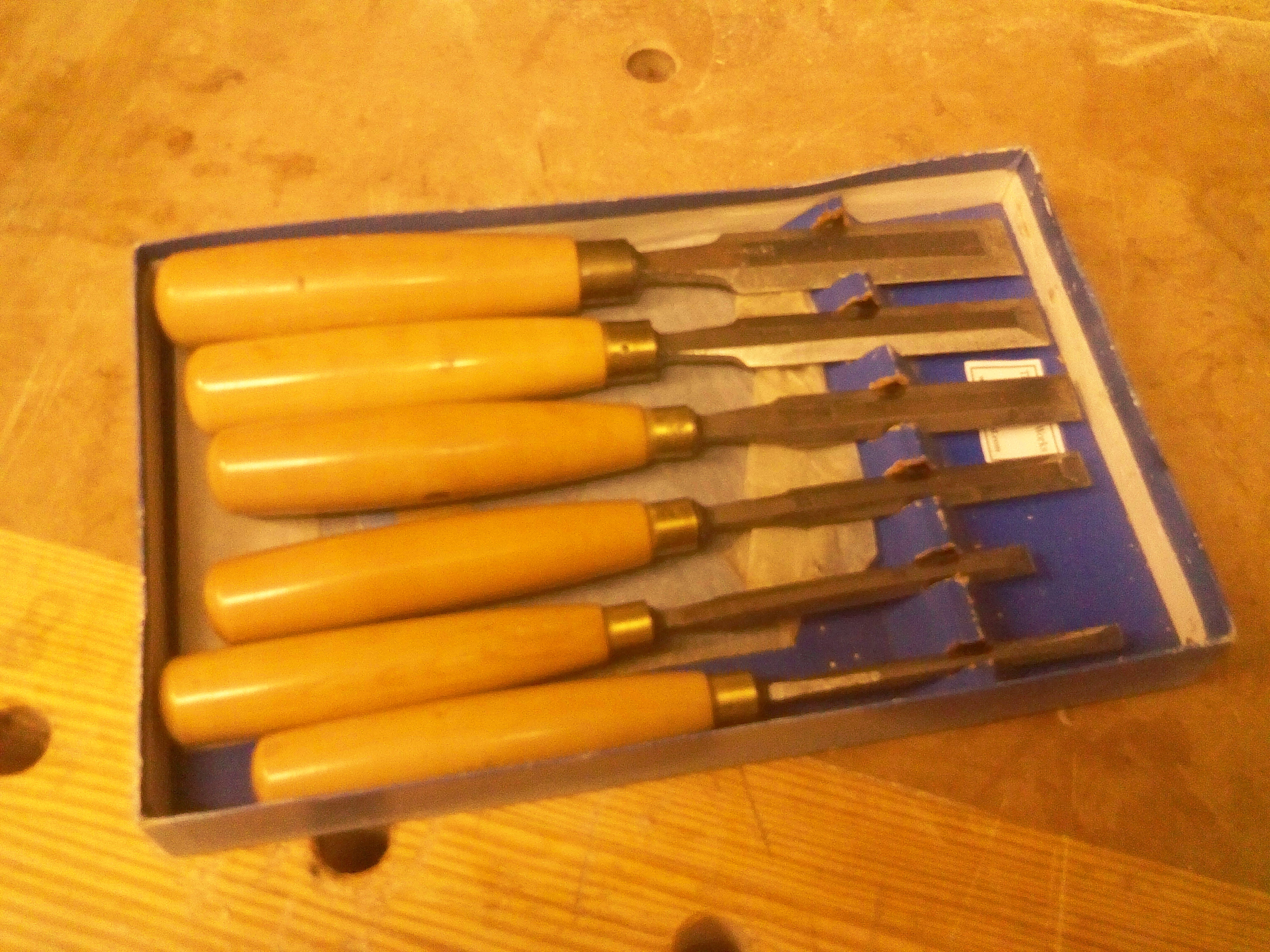
There on the table – in it’s original box – was a set of 1950’s vintage English Buck and Ryan chisels.  Patrick explained that at the time, Buck and Ryan were well respected tool manufacturers working in London.  The set of six chisels did need some work, but the steel was beautifully ground and the handles were made of handsome boxwood. They slipped into my hand comfortably and had a great balance.  Patrick even worked with me on the price.

I fell in love with these chisels.

Now, I’m back home in Tampa getting ready for a day at work.  But, I know a date with my diamond stones is in order to get these chisels into shape.

This year’s WIA event was full of outstanding experiences and reminded me why I fell in love with woodworking in the first place. Now, I’m really looking forward to spending some quality shop time with these new old chisels to see where the inspiration leads me.

Chipping Away

So many times in woodworking our thoughts turn to the straight and narrow. We build boxes with 90 degree corners. Some tables may have splayed or curved legs, but the vast majority may have a taper cut in them at most. Even turned items have nice symmetrical coves, beads and other decorations cut perpendicular to the turned axis of the piece.

It takes a certain kind of creativity to think outside the proverbial box and think about flowing curves and more organic shapes. And, when we turn on the this color-outside-the-lines kind of aesthetic, we look toward tools that provide more flexibility. The band saw. The jig saw. The router.

And, in more intricate and involved designs, there’s nothing quite like carving tools.

“Carving tends to bring out the artist in woodworkers,” said Tim Walter of Eagle America. “With all of the curves, recesses and other embellishments, that’s when you see the imagination unleashed.” Tim points out that even projects with delicate curves that flow across different planes, such as a concave leg of a bench or lid of a box, can be easier to carve than to jig up several different tools.

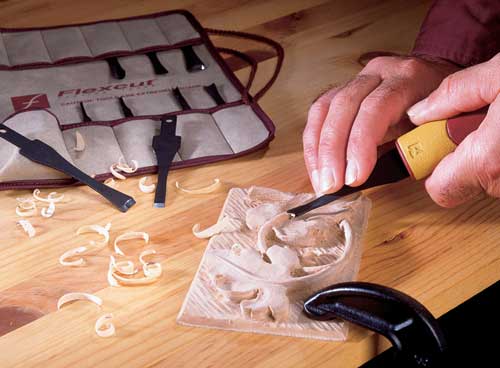
Eagle America offers a number of different tools that can be used to add maximum creativity to your projects. For those who are looking for hand tools, Eagle carries the Flexcut line of carving tools. “Flexcut has some outstanding choices when it comes to carving tools. The handles are comfortable and the steel in the blades can easily be honed razor sharp.”

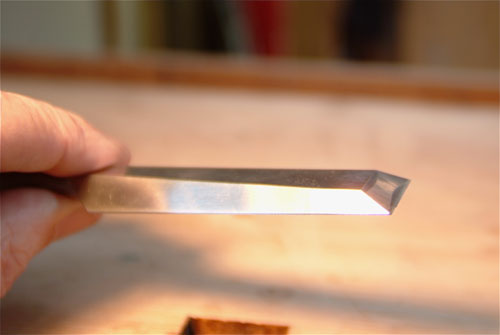
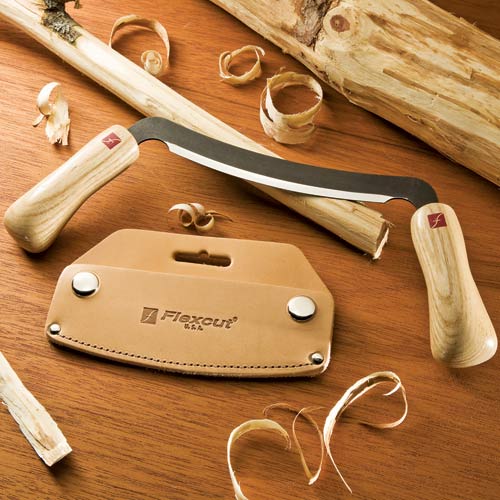
The Flexcut tools are divided into two broad groups. First you have the knife family. “Chip knives, carving knives – even draw knives – if you can use hand power alone to slice or cut the wood away, you are looking at a knife-type tool.” The variety and design of these knives is impressive, and each of the tools is the product of examining and improving upon older forms. “For example, many people find larger drawknives too awkward to use for smaller-scale project,” said Tim. “Flexcut offers a three inch straight drawknife and a five inch model with more traditional bent handles. Now, imagine carving curves into the body of an electric guitar blank with these tools. They offer excellent control.”

Flexcut’s other family includes the chisel-like tools. “We offer a wide array of sweep sizes and shapes which can be used by hand or tapped with a mallet. A carver can easily use these to carve beads, veins or do relief carving with precision.”

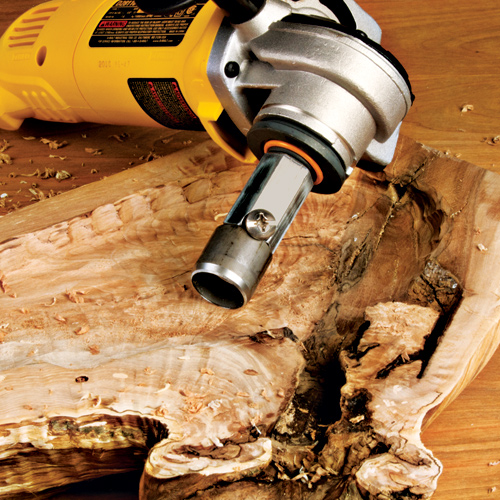
For those who prefer to carve larger areas or who prefer to use power tools, Eagle proudly offers the Denker line of power rotary carvers. “These tools are – pardon the pun – revolutionary in design and function.” While most power carving heads are circular disks featuring either chainsaw-like teeth or carbide cutting spurs, Denker’s tools use a hardened steel cutter to quickly remove wood. “These cutters are much less prone to skid across the surface of your work or grab and kick the work back.” Rather than tearing into the wood and removing chunks, the tool’s cutter slices more than 200 times a second, allowing a great deal of precision.

One of the most convenient features of the tool is that it doesn’t require any special sharpening equipment. “The tubular hardened steel cutter can be rotated to use their entire circular edge before you need to sharpen it at all. When have to, sharpening can be done in seconds with the furnished arbor using any bench grinder or abrasive wheel.”

While most woodworkers won’t get into wood carving for the majority of their work, adding carving tools to the arsenal can help add a creative flair to even the most utilitarian projects.