All posts by Tom

I'm the guy who writes the blog...

Link of the Week

Custom Engraving by Catharine Kennedy

A woodworking tool is often just that – a utilitarian item that does a particular task in the shop.

But, sometimes you want your tool to make a statement.  If that’s the case, how about having one of your hand planes custom engraved?  Catharine Kennedy is a talented engraver who has extensive experience both engraving and using hand tools.

Designs can be as simple or complex as you would like. Monograms, acanthus leaves and other classic elements are some of the mainstays of her work, carved crisply into the tool’s metal sides.

Sure, the plane, knife or other tools may not work any better after it is engraved, but it will look so good.

Woodworking Spotlight: David Keller

Oh, what the heck.  This is the other article I have had in the hopper for more than a year.  David Keller is a legend in woodworking, and even though I don’t have a photo of him, his story is just too good to sit on my hard drive anymore!

If you can go to your shop and cut through dovetails without having to reach for a hand saw and chisels, you may want to stop and offer some thanks to David Keller. After all, David was one of the brain trust who invented the router-driven through dovetail jig way back in the mid 1970’s. While the owner of Keller Dovetail Jigs is well known in woodworking circles, his path to the level of accomplishment he has achieved didn’t really start with woodworking at all.
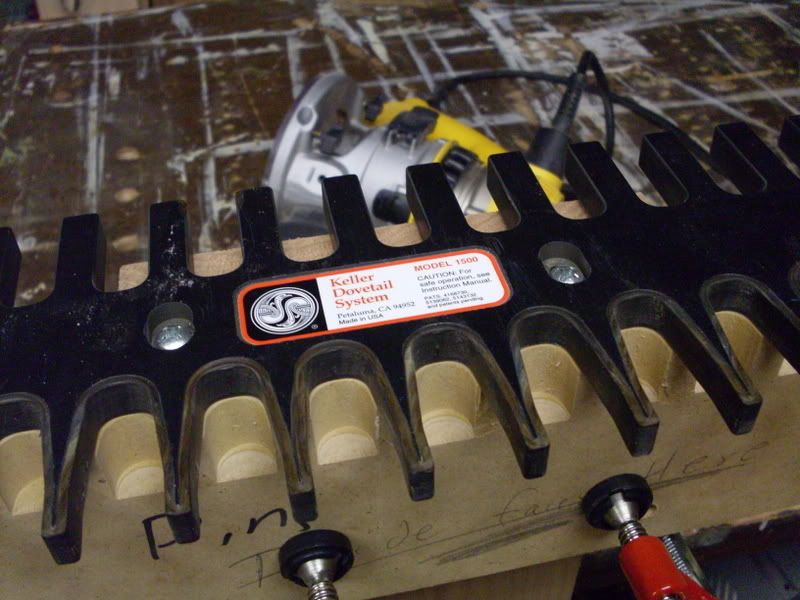
David actually graduated with a degree in social psychology and worked at a state hospital in Michigan before he realized that it just wasn’t for him. “I knew I was in trouble when I discovered that there were just too many insane people that I had to work with.”

After looking for a big career switch, he moved west to try his hand at furniture making. He bounced around working odd jobs – such as taking an apprenticeship at a reupholstry shop (he didn’t like it one bit ) while looking for the dream furniture. His search, however, wasn’t very successful. “You have to remember that during that time period, custom furniture making wasn’t really done. People were buying machine-made pieces, and the whole idea of craft building hadn’t yet caught on.” But, David was soon to discover that he was in the right place at the right time.
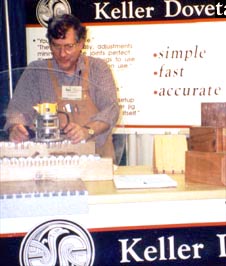
In a move to the San Francisco Bay area, he met up with noted woodworker Art Carpenter. “It was a very interesting time. We met after lunch on a cold day back in ’71. He liked my enthusiasm and brought me on board. I started out sweeping the floor and sanding for Art for a whopping two dollars an hour. But I learned so much there.

Carpenter was well known for his California Roundover school of furniture design, which dictated a very smooth, tactile approach to building furniture. Another thing Art demanded was that all casework be dovetailed. But, all those dovetail joints took time to cut by hand. Surely, there had to be an easier way…

Carpenter first cut some plexiglass jigs to work as a template for through dovetail work. They worked OK, but David realized that if the work was going to be tight and consistent, it was going to require some precision machining. So, drawing upon his extensive knowledge of drafting – that he remembered from a high school drafting class – and prepared plans for a machine shop in San Jose to cut out. That modest jig he designed is still sold today as the model 3600.
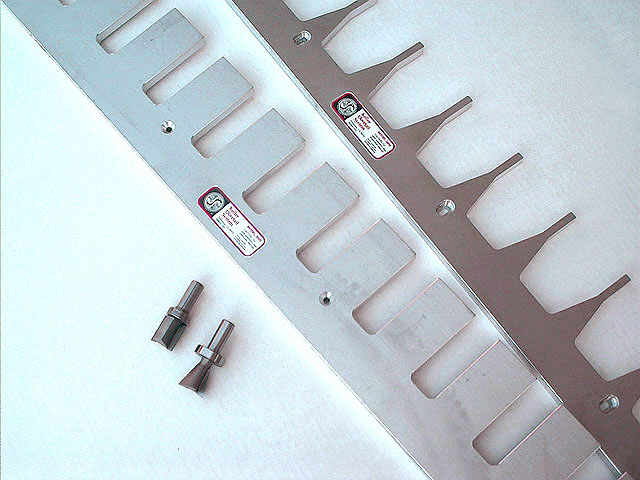
David’s recommendation to improve the router bits even led to the invention of a very commonly used router bit. “By doing away with a guide collar and going to a ball-bearing guide, we effectively designed the first flush-trim bit.”

The rest, as they say, is history.

When you succeed, there are critics. After all, hand cut dovetails are a signature joint for woodworkers the world over. Some woodworkers who rely on the hand-cut methods have remarked that a jig that allows the average woodworkers to make this venerable joint ‘cheapens’ the craft. “For those who like to cut your dovetails by hand, more power to you. That’s a skill that is very enjoyable and very centering. But, if you want to get a project done with properly fitted dovetails in a reasonable amount of time, using a jig and router provides excellent results and allows you more time to design, assemble and finish.”
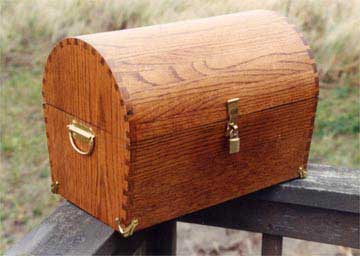
In fact, a common criticism of router-cut dovetails is a ‘generic’ feel they have, with pins and tails at precise intervals. Some jigs can overcome this during their setup, but that can be tedious. “We’ve found that users of the Keller jig have been very creative in their suggestions and recommendations. The simplicity of the jig gives the user a flexibility to variably space the tails and pins, or even dovetail around curves.”

While many other companies have released through dovetail jigs since Keller first released his in 1976, the product’s longevity is a strong indicator of its worthiness. “Yes, even after all these years, the jig’s design is still durable, useful, easy to set up and the damned thing still works well!” In fact, one of the original jigs Keller built back in 1976 is still in operation at a Salt Lake City high school wood shop.

Of course, I had to ask if Keller ever had the opportunity to do any woodworking on his own nowadays. “Heck no! You should see what passes for my shop. Every horizontal surface is covered with jigs to mail, manuals, magazines – the works,” Keller laughed. “In fact, we had to shoot the instructional video in someone else’s shop – mine was just too crowded.”

It sounds like Keller might be a victim of his own success.

You can find reviews, customer testimonials and even order a jig online at www.kellerdovetail.com, or by calling 1-800-995-2456.

Woodworking Spotlight: David Sochar

With the New Year, it’s time to look into the article closet to check on some gems that haven’t seen the light of day.  This one has been almost two years in the making.  It turns out that David is slightly camera shy, but the work he and his crew does is unbelievable.

Woodworking can be a very personal endeavor. We get into it for our own reasons. Maybe it’s because a parent or relative did it. Others of us find the path on our own.

That’s what happened with David Sochar, owner of Acorn Woodworks of Westfield, Indiana. You see, David has always had the ambition to get into woodworking, but didn’t have the right encouragement. “When I was a kid, everything was geared toward higher education. I went to prep school, then to college. During all this education, all I just wanted to do was make things using my hands. My counselors were highly entertained by this novelty.”

When the peace movement hit full stride in 1971, David was caught up in the effort. He wandered around the country for a few years, earning a living doing manual crafts and labor to provide a decent living. “After a few years, I settled on working with wood as what I wanted to do. It’s forgiving, plentiful and a perfect natural material.”

David found his way back to his home state of Indiana. Odd jobs such as framing pictures and restoring antiques helped develop his skills. Eventually, David landed a job with a true architectural shop, building curved staircases, mantles, shutters and other high-end pieces. “It was heaven for me. I had finally found myself.”

As David’s abilities progressed, he eventually helped establish a shop that employed 25 woodworkers and cranked out high-end residential work. Ultimately, in 1991, he had to walk away from the operation. “The owners were less than human. One of them is now doing time in jail. It was a very bad situation.”

He went home that afternoon and announced to his family that he had quit the job. Rather than be alarmed by his move, David’s wife suggested they withdraw some cash to purchase some essential new tools for his hobby shop. “When I got back from the shopping trip, I already had two orders waiting for me on my home answering machine. That was the birth of Acorn Woodworks, and we’ve been running like hell since.”

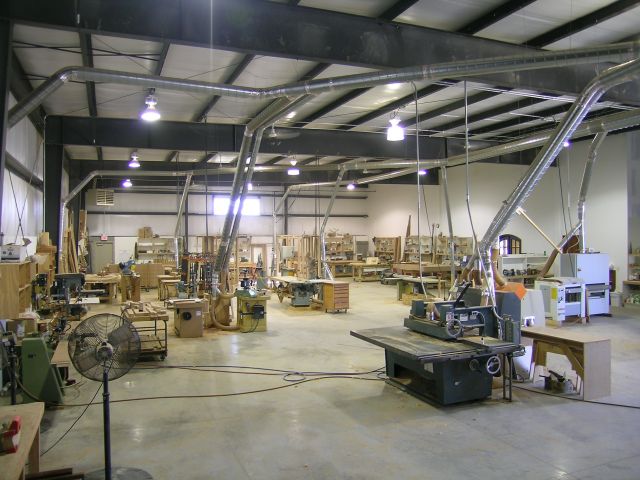
Today, Acorn Woodworks has a brand new 9,000 square foot facility just outside of Indianapolis. “We have room to dance, if needed. We even splurged and now have a forklift to unload and move lumber – talk about a back saver!” The shop is very well equipped with some of the latest equipment. A 20” Laguna band saw, Delta Unisaws… “We even bought a laser guided rip saw from the last Ethan Allen plant to close in the US. A wonderful 2-1/2 tons of solid American cast iron that can work all day without breaking a sweat.”

While the shop may have some of the latest and greatest equipment, David’s philosophy with his employees hearkens back to a different day and age. Currently, Acorn Woodworks employs five full time woodworkers, and each of them is considered one of the company’s greatest assets. “Today, I have the pleasure of working with some of the best woodworkers I have known, and doing the best work. We have no employee problems and each of these people is like family. I easily trust them with my livelihood.”

In fact, David encourages each of his employees to use the shop equipment to do his own ‘homework.’ “I encourage everyone to make things for themselves, since the problem solving takes on a new dimension when they have to live with their results.”

That trust in each employee easily shows in the quality of the work Acorn turns out. “Problem solving is what we do. Daily. On the fly. Anticipating. Always problem solving. All we do is custom work, so every project requires the sum of an individual’s experience, and the collective shop experience. We call this shop equity since it is an asset that is important to what we do. We all enjoy a bit – or more – of a challenge.”

Sometimes that custom work can take some very strange twists. “I was commissioned to make a cedar chest for a bridal dress. The customer told me that the bride – his wife to be – was killed in a car accident the day before the wedding. He wanted bluebirds painted on the lid and fittings inside for memorabilia of the wedding that never was. It was an extremely sad story, but it was gratifying to build and he was very appreciative. He explained how this helped with the grieving process.”

With all of the success David is enjoying at Acorn Woodworks, how does this one-time free spirit relax? For someone who has woodworking in his soul, there’s really only one thing he can do. “Well, my wife insists I need a hobby – other that wood – but I can’t imagine what she is talking about.”

Quick Poll

Figured wood can be some of the nicest stuff to work with. Using burls, tiger, flame, quilted and other figured pieces can add some great visual interest to an otherwise ho-hum project.

The only problem with these woods is that they can pose some trouble when you bring them to a final finish.  Many smoothing methods that work on plain boards will introduce tear-out on their figured cousins.

This week, we want to know how  you prefer to get a final finish on figured woods?  Hand tools?  Sanding?  Some other magic?

[poll id=”106″]

Resolve…

What are some of those New Year’s traditions that make the holiday so special? Champagne. Noisemakers. Watching the ball drop in Time’s Square. Kissing that special someone at midnight.

Yeah, the New Year is a magical time, when we close the book on the old year and start the new one fresh again. It’s the perfect time to dedicate yourself to doing something different.

Yes, to make resolutions.

New Year’s resolutions are usually a bunch of hooey. Don’t believe me? Here’s an experiment you can conduct. Find a local gym. Could be a commercial establishment, a city-owned facility or the local ‘Y’. Now, note how many people are there on – say – January 10th, working themselves into a lather. Those are the folks who resolved to drop that extra 20 pounds they packed on with the Halloween, Thanksgiving and holiday goodies.

Go back in March. A lot fewer folks feeling the burn, hmmm… Many folks just give up because their goal suddenly seems too far away to achieve.

The people who do stick with their resolutions are the ones who make realistic, achievable goals. Going someplace new. Adding a quick lunchtime walk to the routine. Heck, calling your parents a little more frequently.

As a woodworker, part of my ‘package’ of resolutions always includes a few items around the shop. Last year, I promised to myself that I would try bent laminations, and try I did. In fact, I should be posting something very soon about a project I’ve had in the shop for a while.

“Of course, the toughest part of coming up with new woodworking resolutions is actually coming up with them,” said Tim Walter of Eagle America. “That’s also what makes woodworking such a vibrant and exciting craft… there are just so many different aspects to explore.”

To help get the pump primed, Tim offered the following suggestions:

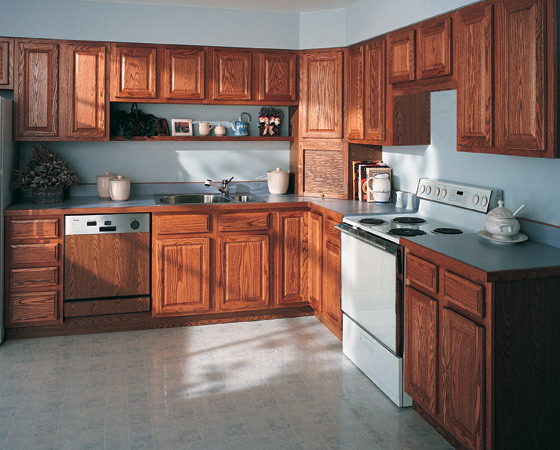
  • Build those kitchen cabinets. With the current economic picture, people are tending to stay put longer in their homes. Why struggle with a terrible kitchen design when, for a small investment in tooling, you can build a set of custom cabinets that will outperform and outlast anything you can buy at a big-box home improvement center. “With a Kreg pocket screw jig, the boxes and face frames are easy, and we have many decorative options of stile and rail bits, panel raisers and door and table edge bits to build a kitchen to suit your taste. If you are building cabinets for an average kitchen and you work at the modest pace of building one cabinet box a week, you can plan on hosting a Fourth of July party at your place and proudly show off your handiwork.”

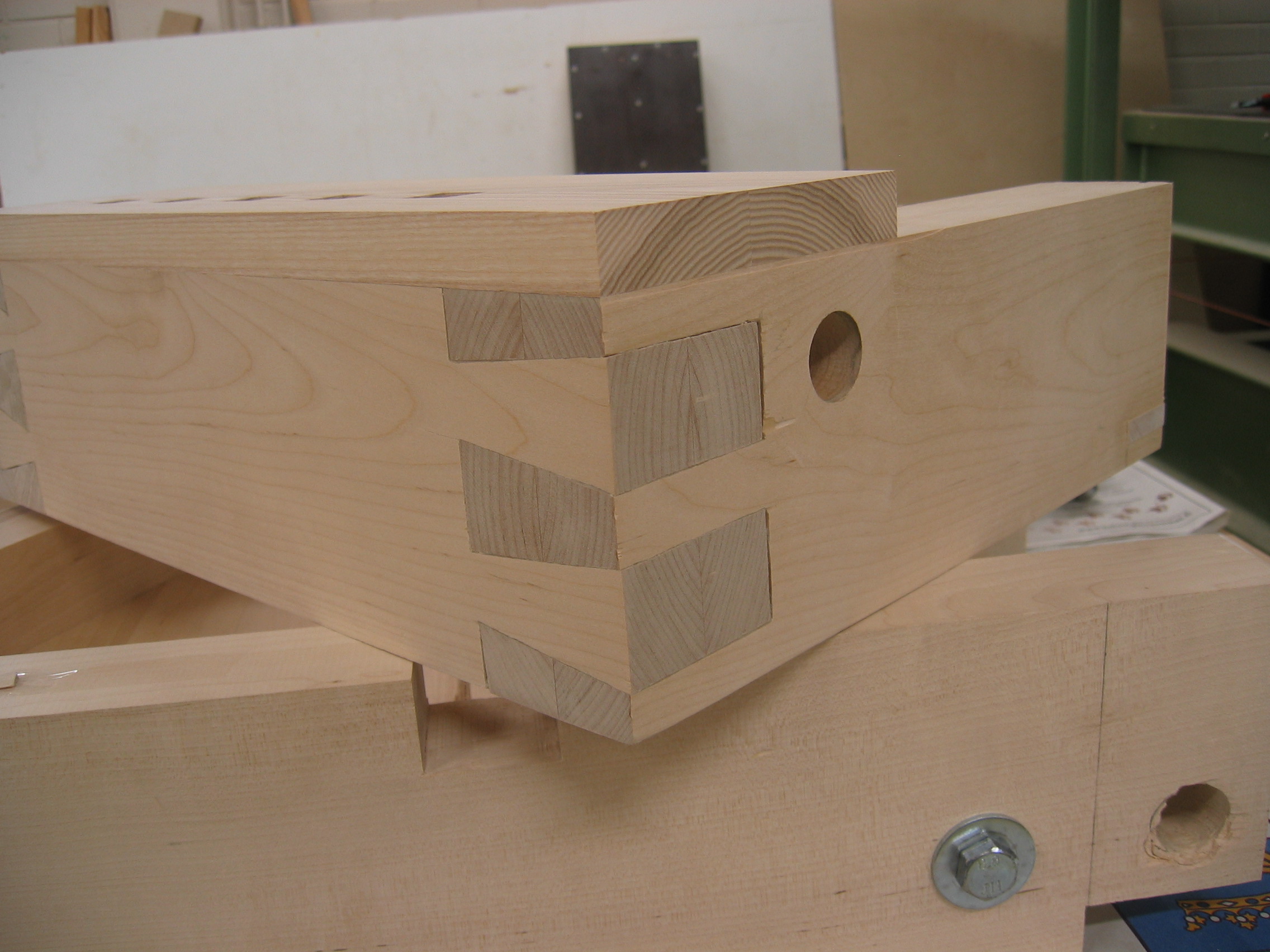
  • Cut your first dovetails. Dovetails are still looked upon as the hallmark of craftsmanship. Learning how to cut the joint should be something you consider trying. “We often look at woodworkers who make flawless hand-cut dovetails with awe, but machine cut joinery is every bit as strong and just as beautiful. We offer both Porter Cable jigs and the Chestmate, so you can take your pick. Oh, and we also sell some very high quality bits for those jigs as well.”

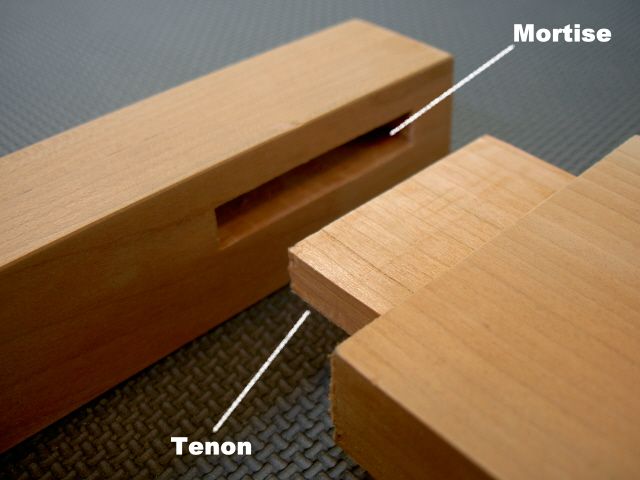
  • Cut better mortise and tenon joints. The mortise and tenon joint is one of the most important joints to master. It’s been around since the time of the Egyptians, and can be used for small and delicate projects as well as big, burly ones. “Sure, you can buy a hollow chisel mortiser or lay out money for a set of mortising chisels, but you may not realize that your plunge router can serve as an excellent mortising machine. Carbide up-cut spiral  bits are ideal for this purpose, and router bushings can help make a mortising guide a snap to build.”

  • Get your tools razor sharp. Many people just give up on hand tools after a while. No, it’s not their technique, it’s the fact that they are working with dull tools. Dull chisels require more force, can damage your work and are even more likely to hurt you than sharp ones. “We carry an extensive line of sharpening supplies for getting rough bevels ground and honing supplies to put that very fine cutting edge on the tools. The WorkSharp 3000 is a very popular sharpening system and makes honing easy even for a beginner.”

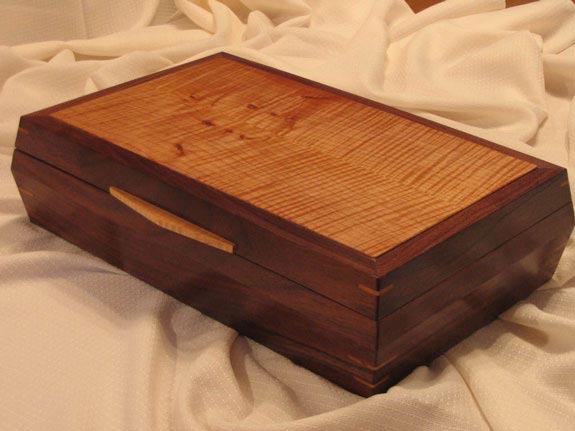
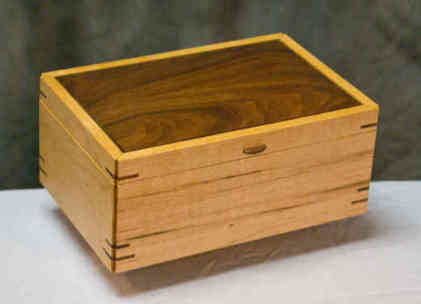
  • Build a decorative box. Making small boxes is an excellent way to improve your skills without making a large investment in wood or tools. You can let your imagination run wild or go with timeless details in a more traditional form. And, they are a great way to use up those valuable bits of leftover wood just waiting for the right project. “Whatever designs you can think of, we can certainly help supply the tools. Decorative edge forming and box making bits, clamping and finishing supplies and a large number of books can help turn your vision into reality. We even sell musical movements so you can make your new box sing for a loved one.”

And, these are just some starting points. From there, the sky is truly the limit. How about building an instrument? Building a project to donate to charity? Going to a woodworking school? Heck, even starting your own woodworking blog!

One thing I have noticed as a blogger is that putting articles on Tom’s Workbench requires constant effort. I have to be thinking about six steps ahead in order to keep bringing you quality content. I have written articles in the last minute, and found most of those to be lesser quality ones.

That’s why my resolution is to continue to push myself to try new things and let you look over my shoulder while I do. Will everything I touch turn out OK? Of course not. But, in 2010, I hope to keep all of you as my constant companions on this journey.

Happy New Year, everyone, and I hope it’s a very healthy and happy one for us all.

A block of time

This is always a strange time of the year for me.

From January through April, our office spends a lot of time getting ready for hurricane season.  From April through September, we do a lot of talks and other public presentations.  From September through early November, we spend a lot of time cataloging our accomplishments and making notes for the next year.

Then, from November through Christmas, my wife and I spend a large amount of time getting ready for the holidays.

Finally, after the Christmas roast is put away, I get about ten days off.

I mark this time off on my calendar very early in the year.  Those May or June nights when I drive  home sometime after 9:30 p.m. after my third hurricane talk of the day, I think about this week.  I long for it.

Now it’s here!

What should I do?

It’s always a tough decision. A whole week of free time.  I turn the work phone off, let any work pile up on the desk back at the office and just be.

Part of me wants to sleep in, play video games and just goof off with the kids.

Another part wants to get active with the family and go places we’ve never been to do things we haven’t done. Why, a visit to the Florida Craftsman Gallery sounds like it would be a fun trip.

There’s also the list of projects that has been sitting around unfinished, needing a solid block of time and effort to reach completion.  For instance, with our counter tops in, now I have to tile the back splash.  Yes, that’s on today’s agenda.

And, then there are the final touches to put on the cradle for donation. And, some finishing touches on a special art project that has been in the shop since July.

There’s football.

Oh, and yes, the shop does need to be cleaned up!

You know, this week is a great one to get most – if not all – of that stuff done…

After my next cup of coffee.