All posts by Tom

I'm the guy who writes the blog...

Quick Poll

There’s nothing quite as satisfying as watching a perfect curl of wood ejected out of the mouth of a hand plane.  Or, the sound of wood fibers yielding under the razor sharp edge of a honed chisel.

It’s a well known fact that sharp tools perform circles around dull ones. It takes less effort to use them, they provide cleaner cuts and they are safer, given that they get a purchase on the wood fibers instead of sliding across a surface.

The real trick is knowing when to sharpen. For some woodworkers who have a good feel for their tools, they can quickly tell when it’s time to break out the honing equipment.  For others, sharpening their tools is a chore they want to put off until the last possible moment.

This week, let us know how frequently you sharpen your hand tools. Do you hone every time you use the tool, or does it happen less frequently than that?

[poll id=”136″]

Link of the Week

Hinge Dummy

When you need to build a set of cabinets and you need to install some doors, the choice of hinges can make or break your design. Do you need the hinges to make a design statement or do you need them hidden? Simple or high tech? Adjustable or locked into place?

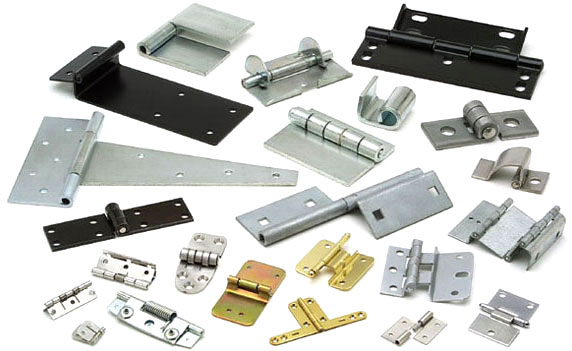
Confused?  Don’t be. Hinge Dummy may have your answers. This site, run by D. Lawless Hardware, gives readers the low-down on hinge history, the choices available and tips on how to measure and installation pointers.

On each page, there are little nuggets of information.  For instance, I discovered that the Romans had a goddess of hinges named Cardea.

If hinges are in your future, Hinge Dummy should be a first stop.

The Cutting Edge

What do all woodworkers have in common?

An all-abiding love of wood comes to mind first. Yes, that’s probably the number one trait shared by everyone who works in wood.

But, think deeper. I don’t care if you are carver, turner or cabinetmaker. I don’t care if you use western or Japanese tools. Power tool junkie or hand tool enthusiast to a fault. I don’t care what continent you call home. What is the one thing we all do universally in our shops?

We all do some kind of wood cutting.

Whether is a chisel, router bit, saw blade or even sandpaper, at some point, every woodworker is going to make a chip, a cloud of sawdust or a shaving. You are going to rip, crosscut, shave or sever something in order to craft that chunk of wood into your final project.

“Kind of funny, isn’t it?” asked Tim Walter of Eagle America. “In order to build something, it’s almost always necessary to remove wood.” When you break it down to that level, woodworking is almost a zen-like exercise of addition by removal.

This universal truth means, of course, that woodworkers need tools to cut the wood. For some, this process strictly involves hand tools. “I’ve seen master craftsmen and women work with some pretty impressive tools,” said Tim. “From hatchets and draw knives to very fine hand planes, spokeshaves and paring chisels. It’s an awesome experience to see, and I have absolutely nothing but respect for those who practice the traditional crafts.”

For the majority of woodworkers, however, their shops use a combination of basic hand tools and power tools. “Power tools are great in a shop,” said Tim. “Just think how long it would take to hand rip all of the boards for a fancy bed headboard or gorgeous dining room table…”

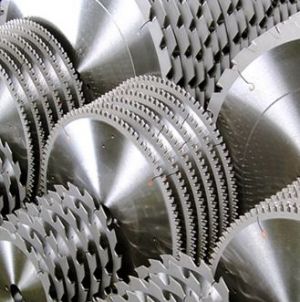
No matter how much you pay for your power tools, there’s another universal truth. “Band saws, table saws, routers – each of these tools, no matter how sophisticated – is only as good as the cutting bits and blades they are equipped with.”

To help woodworkers upgrade their woodworking, Eagle America is holding its huge cutting tool sale. “Now is a great time to upgrade your basic bits and blades, and to get your hands on some of the ones you have always wondered about.”

From the Eagle and Price Cutter router bits to offerings from well-known manufacturers are Freud, Forrest and Olson, there are offerings for nearly all budgets. “And, when you throw in savings of up to 20% from regular prices, you have the opportunity to upgrade your collection and improve your woodwork.”

Unlike most sales, Tim reminded me that the sale prices also apply to sets of bits and blades as well as clearance items. Normally, most sales don’t allow discounts on these already marked-down items. “It’s our way of thanking our customers for their support all of these years, and to see what kind of new projects we can encourage our customers to go ahead and build!”

What do all woodworkers have in common?

An all-abiding love of wood comes to mind first.  Yes, that’s probably the number one trait shared by everyone who works in wood.

But, think deeper.  I don’t care if you are carver, turner or cabinetmaker. I don’t care if you use western or Japanese tools. Normite or Neanderthal. I don’t care what continent you call home. What is the one thing we all do universally in our shops?

We all do some kind of wood cutting.  Whether is a chisel, router bit, saw blade or even sandpaper, at some point, every woodworker is going to make a chip, a cloud of sawdust or a shaving. You are going to rip, crosscut, shave or sever something in order to craft that chunk of wood into your final project.

“Kind of funny, isn’t it?” asked Tim Walter of Eagle America. “In order to build something, it’s almost always necessary to remove wood.” When you break it down to that level, woodworking is almost a zen-like exercise of addition by removal.

This universal truth means, of course, that woodworkers need tools to cut the wood. For some, this process strictly involves hand tools. “I’ve seen master craftsmen and women work with some pretty impressive tools,” said Tim. “From hatchets and draw knives to very fine hand planes, spokeshaves and paring chisels. It’s an awesome experience to see, and I have absolutely nothing  but respect for those who follow the traditional crafts.”

For the majority of woodworkers, however, their shops use a combination of basic hand tools and power tools. “Power tools are great in a shop,” said Tim. “Just think how long it would take to hand rip all of the boards for a fancy bed headboard or gorgeous dining room table…”

No matter how much you pay for your power tools, there’s another universal truth.  “Band saws, table saws, routers – each of these tools, no matter how sophisticated – is only as good as the cutting bits and blades they are equipped with.”

To help woodworkers upgrade their woodworking, Eagle America is holding its huge cutting tool sale.  “Now is a great time to upgrade your basic bits and blades, and to get your hands on some of the ones you have always wondered about.”

From the Eagle and Price Cutter router bits to offerings from well-known manufacturers are Freud, Forrest and Olson, there are offerings for nearly all budgets.  “And, when you throw in savings of up to 20% from regular prices, you have the opportunity to upgrade your collection and improve your woodwork.”

Unlike most sales, Tim reminded me that the sale prices also apply to sets of bits and blades as well as clearance items. Normally, most sales don’t allow discounts on these already marked-down items. “It’s our way of thanking our customers for their support all of these years, and to see what kind of new projects we can encourage our customers to go ahead and build!”

Every Stick it Tells a Story, Don’t it?

Even though many people laugh when I say it, I really do like music from the 1970s.  For a kid coming of age during the 1980s, this is a huge leap, as many of my friends referred to the 1970s as an error instead of an era.

Sure, there were no Beatles, but the individual members were cranking out some good music. The Rolling Stones, the Who and Led Zeppelin had moved from their deep 1960’s music into a snappier sound. Funk was really coming into its own and – yes – I’ve discovered that disco revolves around frenetic bass grooves. Which I’m trying to learn.  But my blasted fingers are still too fat to hit all of the notes.

One of the acts from that era I have come to appreciate is Rod Stewart. Yes, at the time, he was Rod the Bod who made the ladies swoon, but, as time has passed, I’ve come to appreciate the way he composed his music and  soulful lyrics.  The album that put him on the map as an artist was his 1971 work Every Picture Tells a Story. The offerings ran the gamut from a re recording of Elvis Presley’s That’s Alright Mama to the lyrical Maggie May. My favorite song on the album is the rocking title track, Every Stick it Tells a Story, Don’t it?

You heard me right.  For the first dozen years or so after I first heard the song, this is how what I understood the lyrics to be. Hey, mistaking lyrics is an easy thing to do… in fact, there are plenty of songs that are misunderstood.

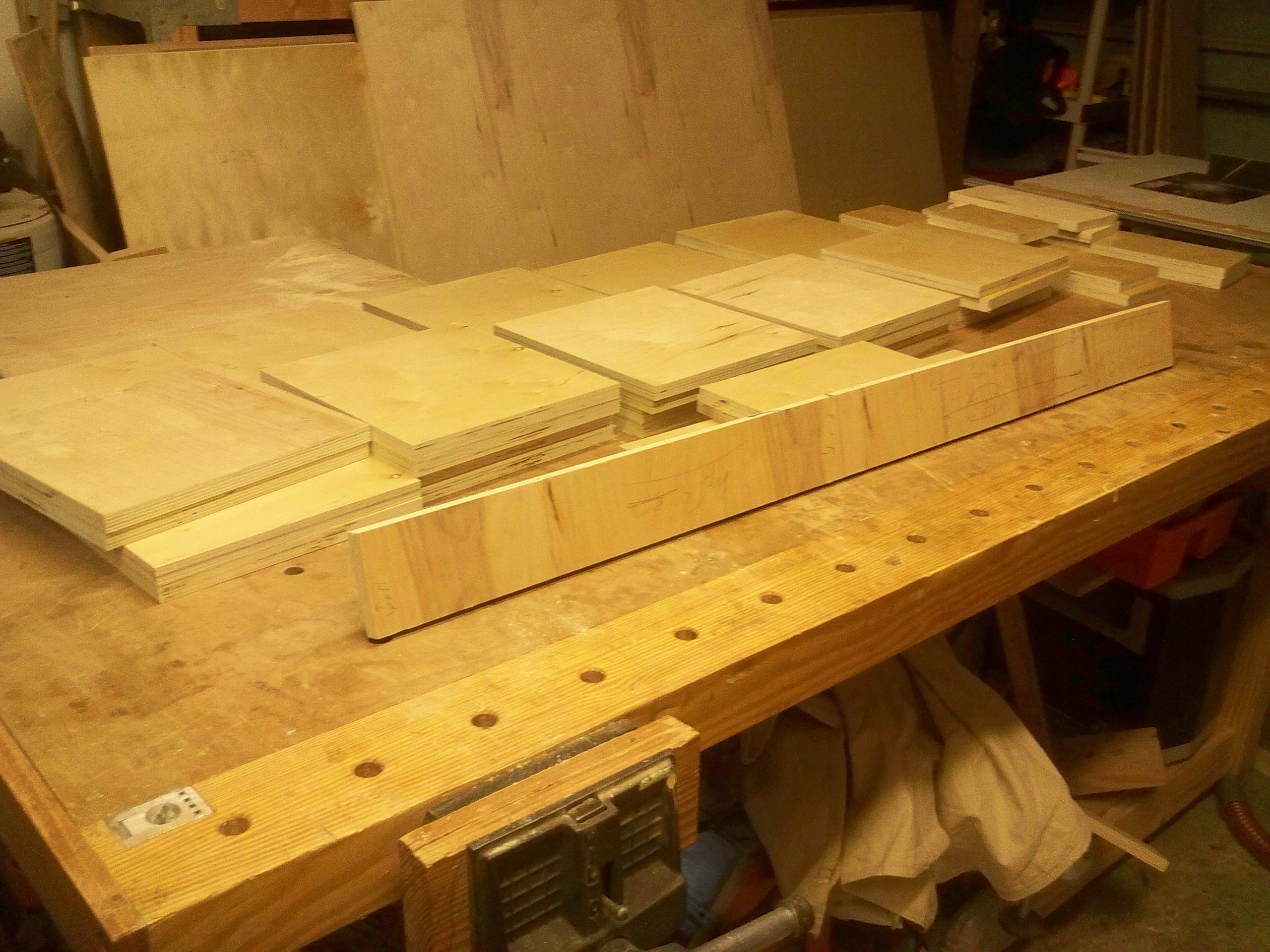
Now that I think about it, perhaps those misunderstood lyrics do mean something to me as a woodworker. I’ve discovered during this cabinet job with my friend Paul that relying on a tape measure to do all of your measuring can lead to inaccuracies that translate to miscut boards. It’s surprisingly easy to measure a piece at 9 7/16 inches and come back from the saw with a piece that measures 7 9/16 inches.  Or 8 7/16 inches.

When you really need to be precise, you can buy a more accurate tape measure or a stainless laser-engraved rule…

But, I bet you can find the most accurate measuring tool sitting right in your scrap bucket.
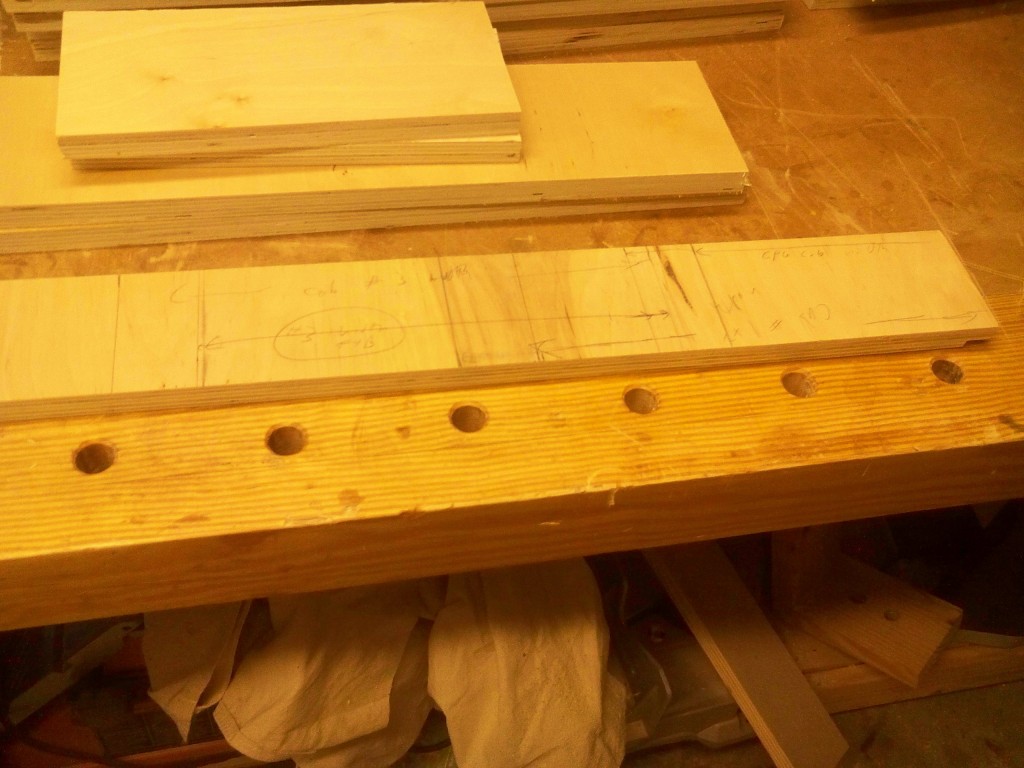
Yes, I’m talking about a story stick.

Just what the heck is this magical story stick, and how does it work?  Gosh, it’s the easiest thing to use.  When you look at any woodworking project, there are two kinds of measurements.  Nominal and actual. The nominal measurement is what the piece is supposed to measure.  If you are working from a plan, and the plans say a face frame rail should be 24 inches long, well, it should be, right?

Then, there’s the real world.  Maybe your saw was just a bit off.  Maybe you had to plane a little extra to get rid of some machining marks.  Maybe you accidentally cut with the kerf on the wrong side of the blade.  Hey, stuff happens.  Remember, it’s not a mistake, but a design feature…

So, if you have to fit a drawer box which has to be a very specific  into this less than perfect opening, how are you going to be sure you hit the exact mark to allow enough room for the drawer slides and face frame, if you are building with one?

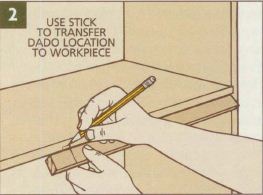
What you can do is get a piece of inexpensive wood or strip of plywood from the scrap pile.  I’ve found that lighter colored species make it easier to read your marks.  You just have to take this strip of wood, push it against the back of the cabinet and mark where the piece intersects the outside of the cabinet.  You just accurately measured the cabinet box’s depth.  Lay the stick across the front of the cabinet box, and mark the width.  That’s it.  No squinting to see where the cabinet’s width falls on the ruler. No deciding if you need to cut a piece strong a millimeter or 16th of an inch.  The measurement is what it is.
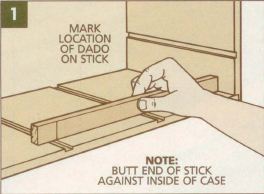
When you get back to the shop, building couldn’t be any easier. For this project, I built the drawer boxes to be 21 inches deep. I knew this would fit into the depth of the cabinet because, yes, I had measured the depth with the story stick and it fit in the marked space.

I was using a rabbet and dado joint for the fronts and backs of the drawers.  I knew I had to leave 1 inch of space free to fit the drawer into the space with the slides, and I was going to cut the depth of the rabbet at 3/8 of an inch, so by subtracting 1 3/4″ (1″ for the drawer space and 3/8″ x 2 for the length of the depth of the rabbet on both sides), I had my drawer width nailed. I subtracted this distance from the drawer opening width, set the stop on the miter gauge on my table saw and bingo, I was off to the races.
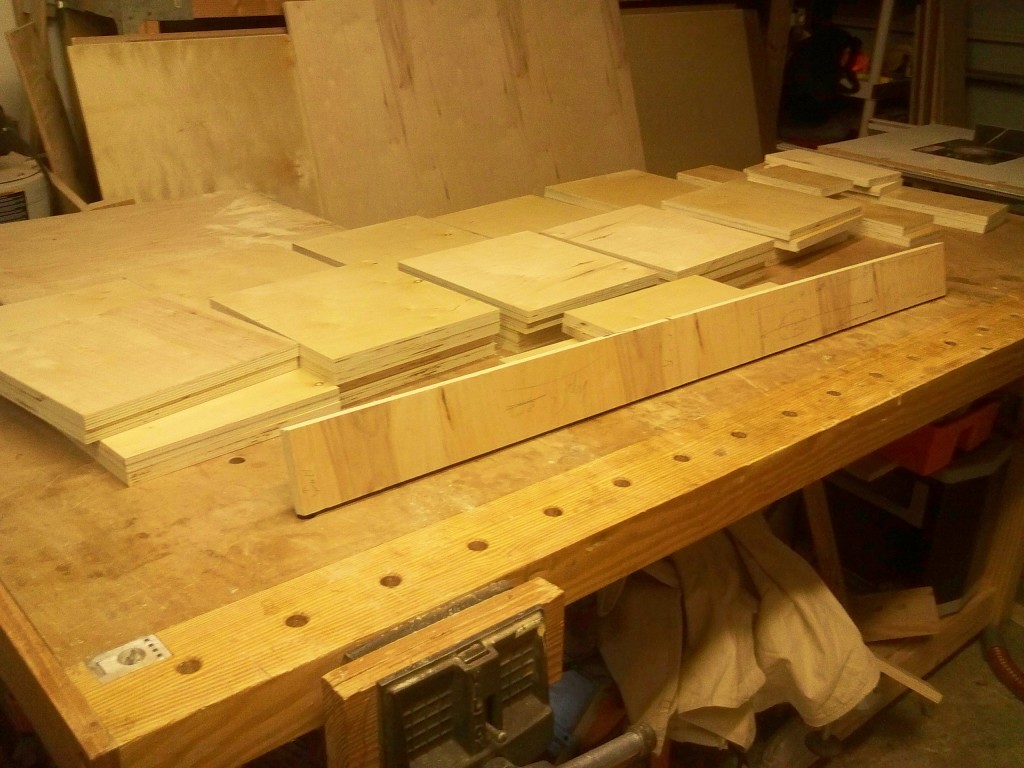
This system also works well for complex projects that would  require a notepad full of measurements and notations.  Instead of advanced calculus and an arcane measurement system, just a few sticks with the appropriate marks taken directly from the project’s dimensions would make your work so much easier.

Last December, when we had our kitchen counter tops replaced, the guy who came out to measure used only 20 or so strips of plywood, a hot glue gun and a pencil to get the dimensions he needed for fabrication.  Two weeks later, the installers moved the pieces in and laid them down perfectly on the first try.

That is the power of the story stick, and you’ll feel like a rock star once you learn all it can do for you!

Quick Poll

Shop time is supposed to be enjoyable.  If you are a hobbyist, it’s time at your avocation.  If you are a pro, that’s when you are making money.

There are those times, though, when you will spend hours on your feet working to meet a shipping deadline or to hit a promised-by date for a client. Shop time can become an endurance test.

This week, tell us how long the longest shop session lasted that you can remember.

[poll id=”135″]

Link of the Week

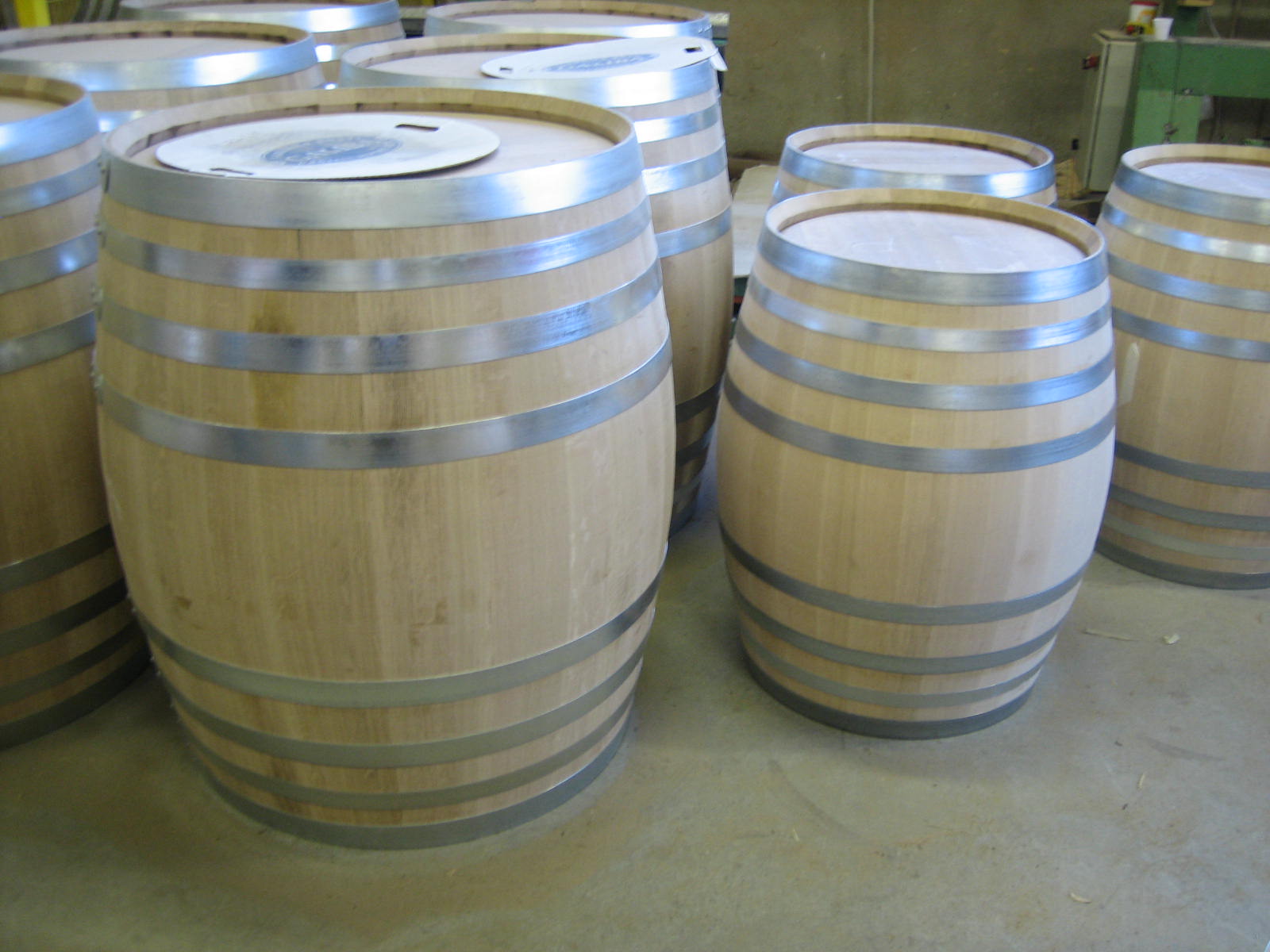
Cooperage – Making of a Wine Barrel

It’s a skill that was critical wherever people lived. Coopering, the craft of building barrels, was in demand for a wide variety of daily functions.  Carrying dry goods, liquids, construction materials … whatever needed to be contained.

Today, plastics and metals tend to fill the need that barrels once filled.  Now, the greatest demand for barrels is with distillers, brewers and vintners. This site, run by Maryland woodworker Tom Crowl, shows the step-by-step process of how to make a wooden barrel, helps define the specialized parts of the barrel and offers numerous links to additional barrel-making websites.

If you ever wondered how these beautifully-crafted workhorses were made, this is a good place to start your exploration.

Trust in the Wedgie

If you ever grew up with siblings, mischievous friends or spent the night at a sleepover camp, you probably know what a wedgie is.

Yeah, it’s a prank that grade school kids often pull on each other which leads to humiliation or even – if done with enough force – discomfort or pain. I’ve had it done to me – a danger of wearing loose-waisted jeans without a belt in grade school.  I’ve also given my fair share of ’em – mostly in retaliation.  Ya know…

Thankfully, I have grown beyond that phase in my life now.  Although the urge to give a wedgie to the guy who cut me off in traffic does pass my mind… but I don’t act on the impulse…

Instead, I am here today to propose that a wedgie is a good thing,  Something that woodworkers should come to embrace to make your work more efficient.  Something that can save you money while solving a number of problems.

Oh, I mean a wedge!  Yes, that simple triangular mechanical device that has been in use for the past 9,000 years or so. By tapping a wedge into place, you can solve a number of difficult woodworking conundrums for a small investment.

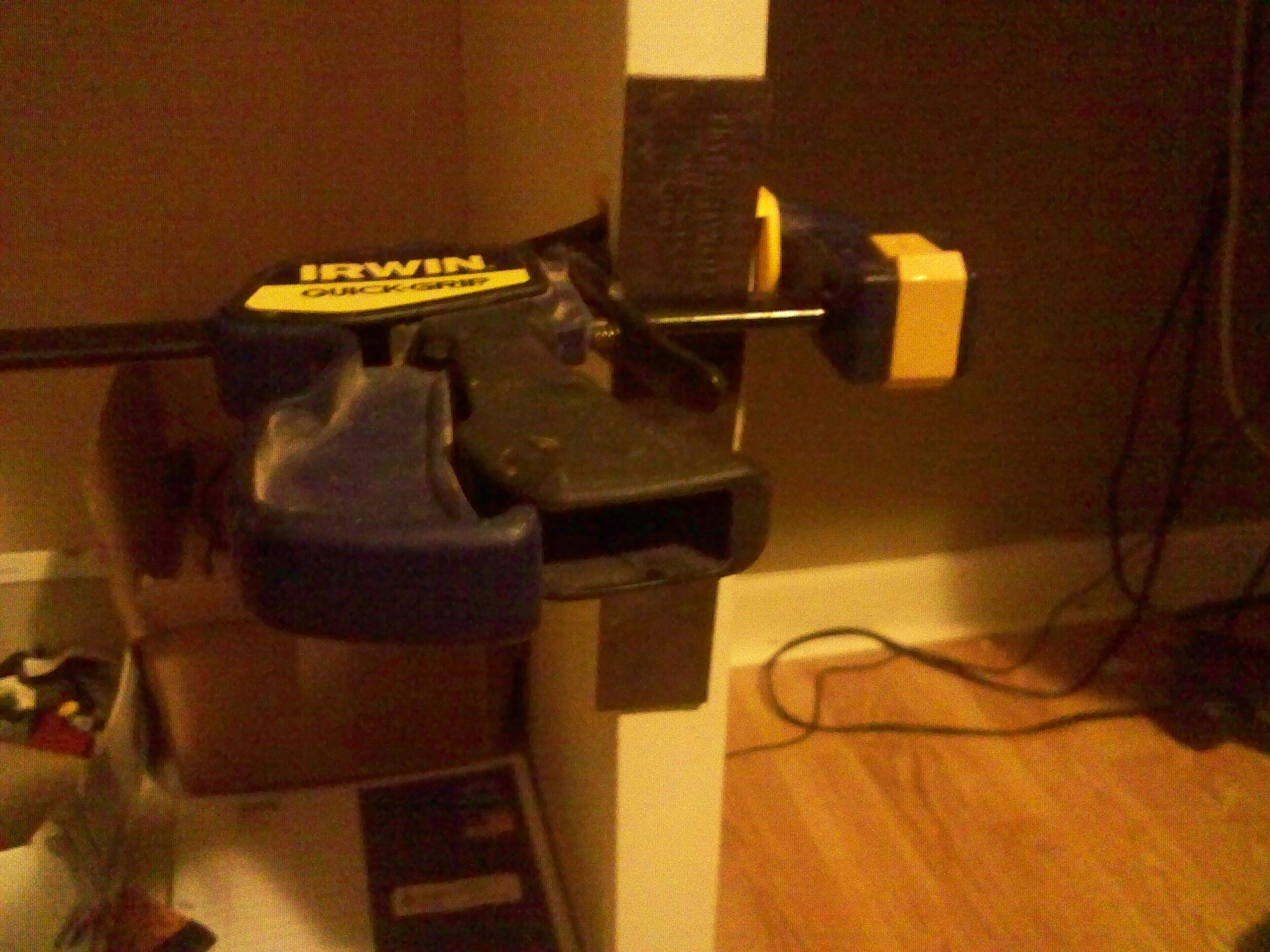
One of the best uses I have recently put wedges to are as a clamping tool. As you can see, it’s a simple arrangement.  Any bar type clamp can be clamped in place on the cabinet body, and a wedge – this case, a commercially available shim – is driven in under the bar to put pressure on the piece until the glue dries.

On the  cabinet project that Paul and I are building, we wanted our face frame to be unified… you know – one solid top and bottom rail with individual stiles covering where the cabinet boxes meet.  I  think that arrangement looks better.  We were able to join the pieces with pocket screws, and we were able to use pocket screws to attach the top and bottom rails to the cases.  But, those stiles needed to be snugged down until the glue locked everything into place.  Most importantly, Paul and his wife didn’t want to have to see filled brad holes when they looked at the piece.  We employed this strategy… and it came out pretty darned nice.

This is a great little trick, but it’s not all that the wonderful wedge can do. Many woodworkers fail to realize one of the best uses for a wedge at the workbench.

While working on a workbench, the most critical thing to remember is that the work needs to be secured for you to do what you need to on it. A vise becomes an important piece of equipment, but, with the economy the way it is and the price of premium bench vises, not everyone can afford to put one in their shop. Other issues, such as the set height of a vise’s jaws can also make planing a tough task. You don’t want to whack your plane iron against a metal stop, unless, of course, you would rather sharpen than woodwork.

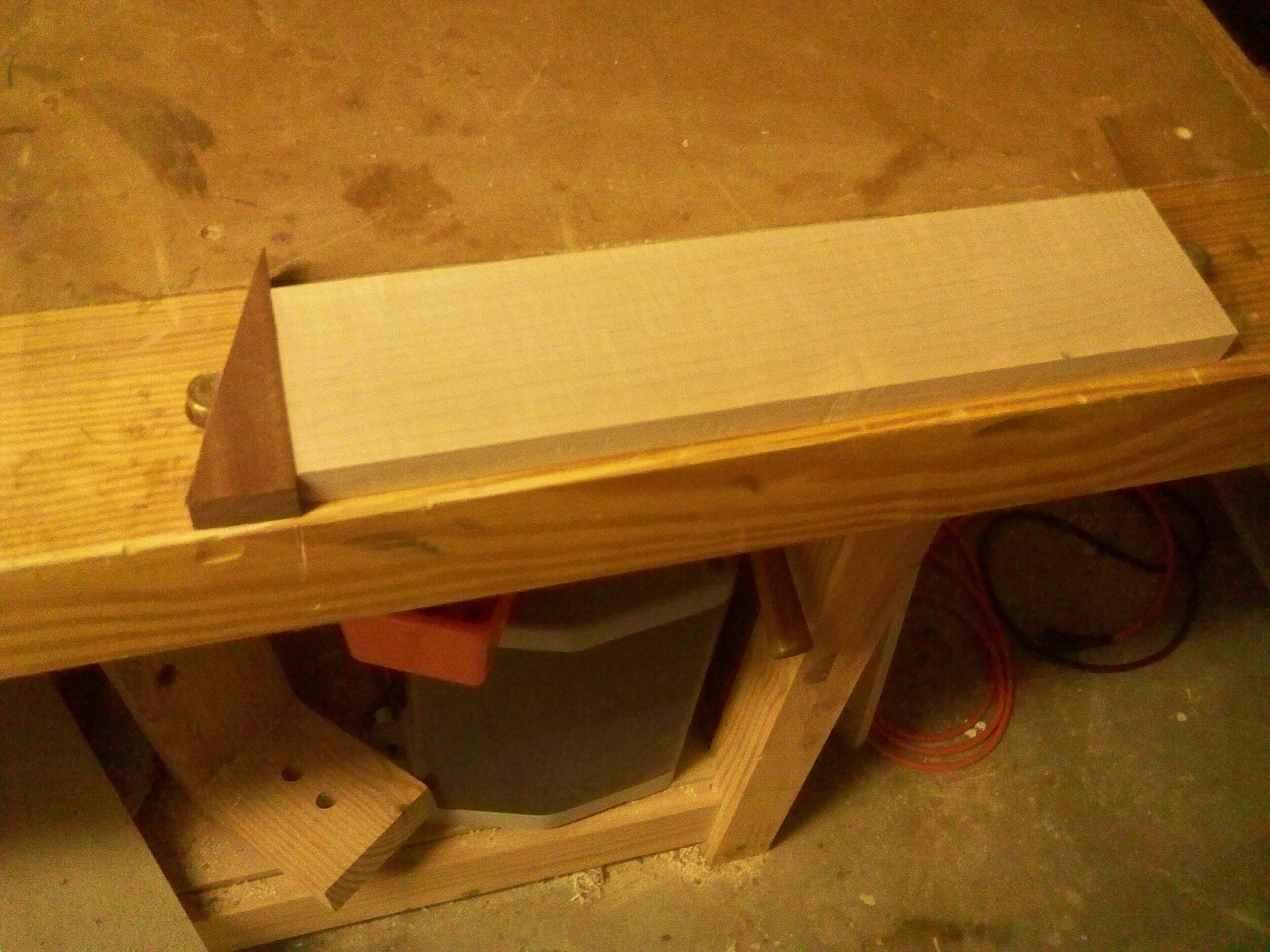
But, with a bench dog or two and a wedge, you can easily secure a piece of wood at your bench.  Just set up the dogs and use a larger wedge – cut from a piece of your scrap pile – to lock the board in place. A tap or two on the wedge secures the piece, another tap can loosen the board so you can move it.  You can also make the wedge any thickness you want. So, if you need to hand plane a 3/8″ thick board, you can easily cut a wedge out of 1/4″ thick  material.  Should your plane’s iron hit the wedge, it’s no big deal. Remember it is made out of wood.

It’s surprising how often we overlook the basics.  However, if you want to give your woodworking headaches a wedgie, going with wedges isn’t a bad idea.