All posts by Tom

I'm the guy who writes the blog...

Link of the week

HMS Victory

On October 21, 1805, Admiral Horatio Nelson of the British Royal Navy devised an audacious plan of attack to beat a larger combined naval force comprised of French and Spanish ships. The two armadas squared off just west of Cape Trafalgar in southwest Spain, and the mighty ships traded canon fire for most of the day.  At the end of the encounter, Admiral Nelson’s forces proved superior, defeating the enemy ships and derailing Napoleon’s plans to invade the British isles.

Admiral Nelson’s flagship, the HMS Victory still exists today as a naval museum ship serving as a goodwill ambassador for the Royal Navy and giving visitors a glimpse into  what life was like on board.

The Victory is about to undergo a massive refurbishment, and the work will give naval archaeologists – and interested woodworkers –  an opportunity to see just how this important piece of British history was built.

Band of utility

Curves. Resawing. Joinery.

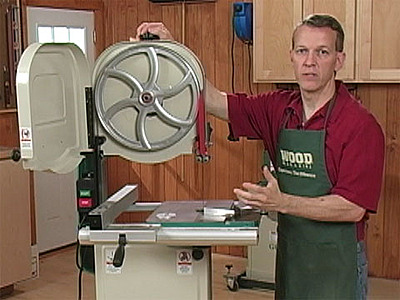
The band saw is one of those tools you wonder if you need at first, but wonder how you got along without after you  have used one.

“Band saws are amazing tools,” said Dan Walter of Eagle America. “When set up and properly tuned, even the most basic of band saws can improve your woodworking capabilities.  Slice your own book matched veneers. Make elegant band sawn boxes. Heck, you can even cut hand cut dovetails without touching a hand saw simply by using your band saw.”

The band saw works by – as you might imagine – pulling a narrow band of steel with saw teeth cut into the edge through the saw’s table. The energy for the cutting is provided by one powered wheel, with a second idler wheel on the top of the saw that keeps the band spread and helps it track. “The size of the saw is based on the diameter of each of these two wheels. So, a 14″ saw has two wheels 14″ in diameter… and, no, it doesn’t take a 14″ long blade…”

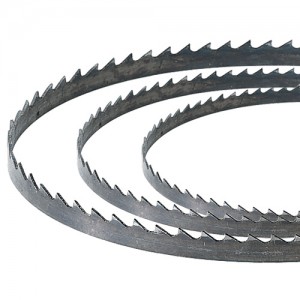
Band saw blades are exceptionally thin under some tremendous pressure, so the steel has to be both flexible and strong. It also has to have hard teeth in order to slice through wood with little trouble. “It’s a delicate balancing act for saw blade manufacturers, and it takes a lot of thought to get things to work just right.” Dan explained to me that Eagle carries the Olson line of bandsaw blades. The standard Flex-Back models are a great value general-purpose blade, and the All-Pro blades have additional elements added to them to make a harder steel that gives more durability while still maintaining flexibility.

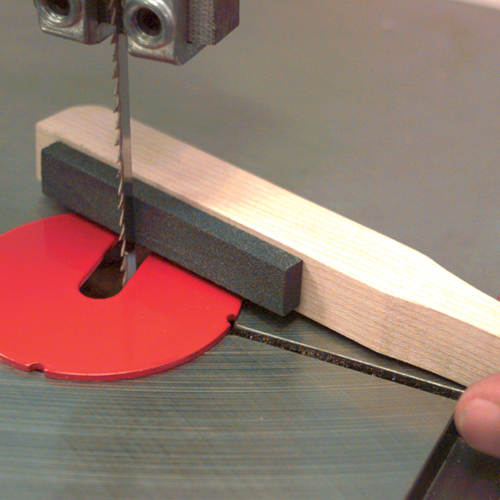
Because the blades are cut and then welded together, there’s a chance that a rough weld could give you a rougher cut. And, curves are easier if the back square corners of the blade are rounded slightly. Eagle sells a special band saw blade stone that can be held against the back corners of the running blade to smooth  things out, or a standard whet stone can be used as well. And, once the blade is polished with smooth back corners, a blade lubricant can help improve the quality of your cut.

What those blades ride on are the wheels – and the tires that cover the wheels.  “Tires are so often overlooked on band saws, but they play a major role in how true a blade will track.  Rubber tires can crack and wear over time, and urethane tires give a better ride for the blades.  If you have trouble with your blade tracking true, you might want to check the condition of those tires and replace them if needed.”

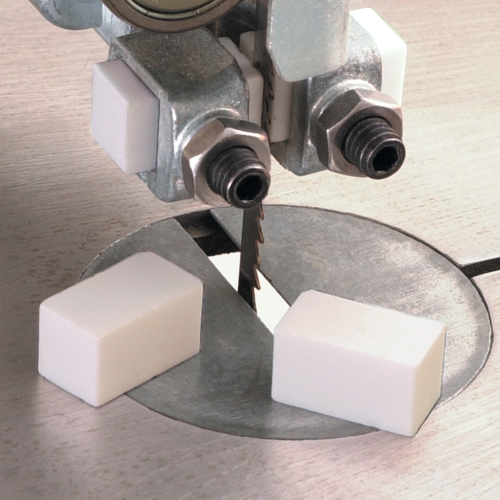
The blade on most band saws is guided both above and below the table. They help keep the blade running true and prevent unnecessary twisting as the cut is being made. “Your standard-issue blade guides in most saws are metal blocks that help to contain blade movement.  They are adequate, but they tend to create a lot of heat as the blade rides through. To help extend the life of your blades, you might want to consider something like Cool Blocks that deposit a dry lubricant on the blade as it brushes against them, or upgrade to ceramic blocks which also reduce friction heat build up and can ride very close to the blade.”  Dan pointed out that even a standard set of blade guides can be replaced with a product called Band Rollers, which use bearings to guide the blade, meaning that the guides can touch the blade body with no chance of heat build up.

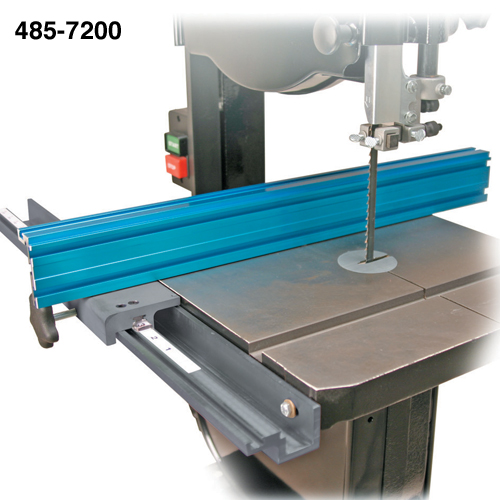
In order to reduce costs, many manufacturers don’t include a fence in most entry-level band saws. To overcome this, you can build your own fence system, clamp a flat, straight piece of wood to the table or you can purchase an aftermarket fence system like the Kreg precision band saw fence with an optional micro-adjust feature and a resaw guide to make working safer and more accurate.

“The three most important things about the band saw – or any tool for that matter – are to assemble and prepare it right when you set it up, understand the best ways to work with it and to maintain it properly. If you take care of your band saw, it will serve you well for years to come.”


I’m developing an Affinity for these

So, a few weeks ago, the folks at Affinity Tool Works contacted me.  They wanted to explore the possibility of some kind of agreement with Tom’s Workbench.  Hey, who am I to turn down a future potential advertiser?  I told the representative, “Sure,” and that we could look to see where things went.

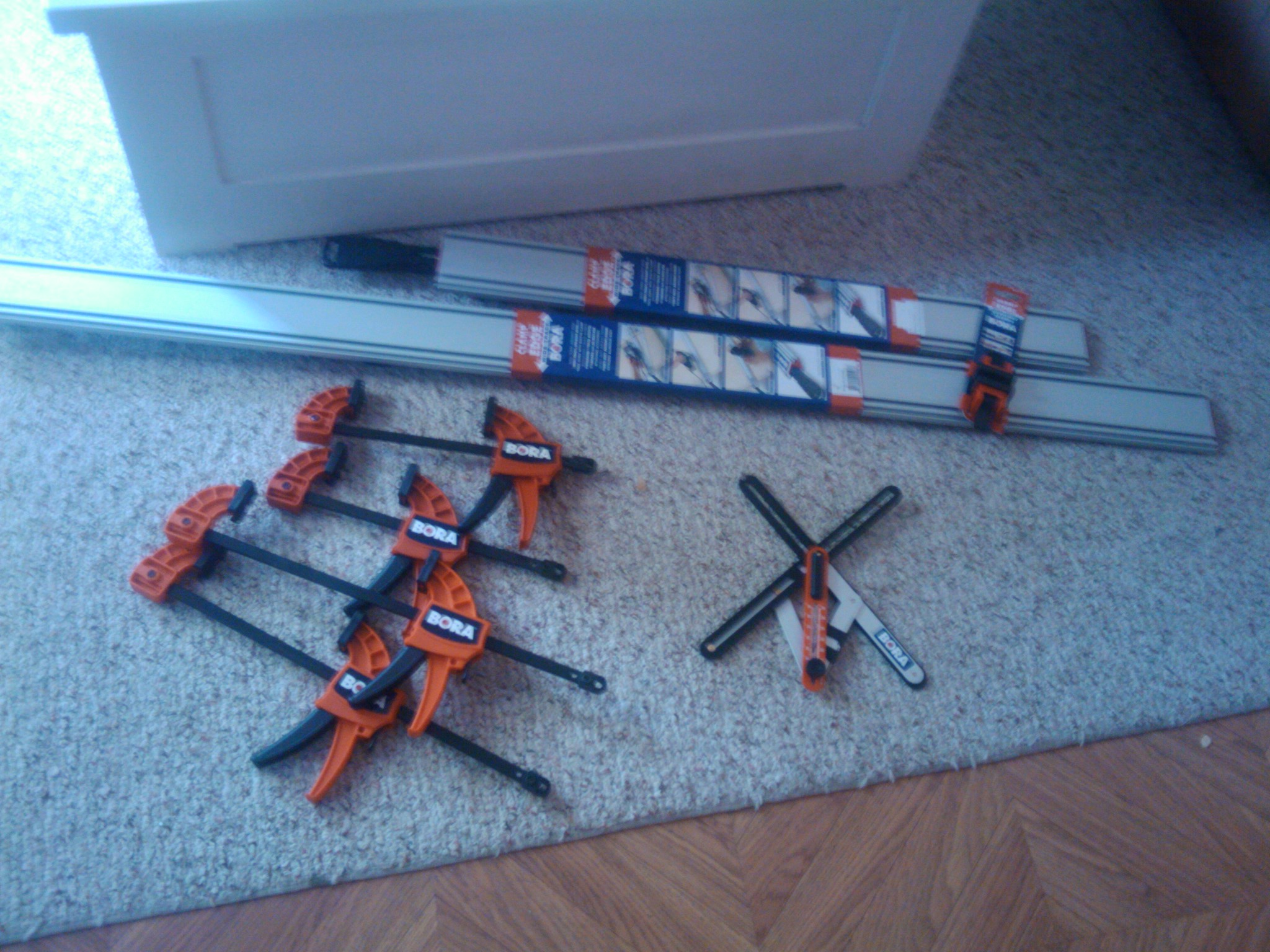
Well, imagine my surprise when I came home from work one day to find a care package from Affinity with some sweet looking tools. One of their Angle Master tools, some squeeze clamps and a pair of their Bora wide track clamps. I was thoroughly impressed by the tools… they are very high quality, and gosh, tools are cool! (Add to the fact that my friends at Eagle America are also distributors, and wow, this is a win-win all around!)
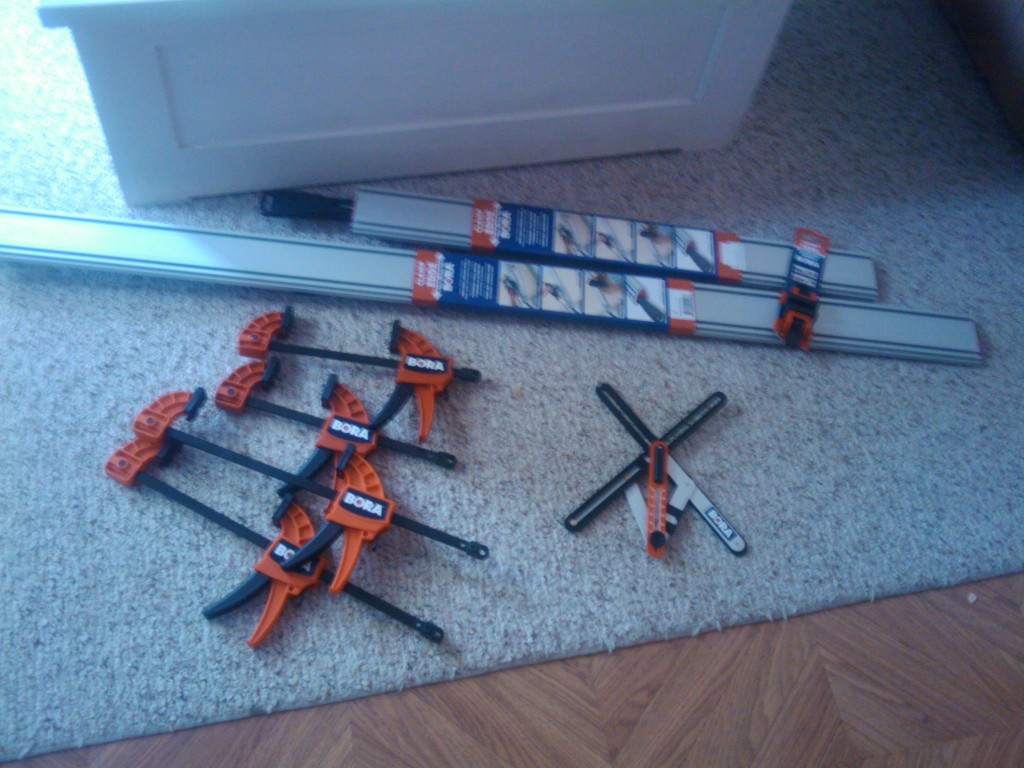
The only concern I had was with the wide-track clamps. I mean, they are swell, but I already had a similar clamp I had bought years ago, but never got any use out of it. It was kind of awkward to use, and it never really gave me the accuracy as a tool guide I needed.Were these tools going to end up as dust collectors in my shop?

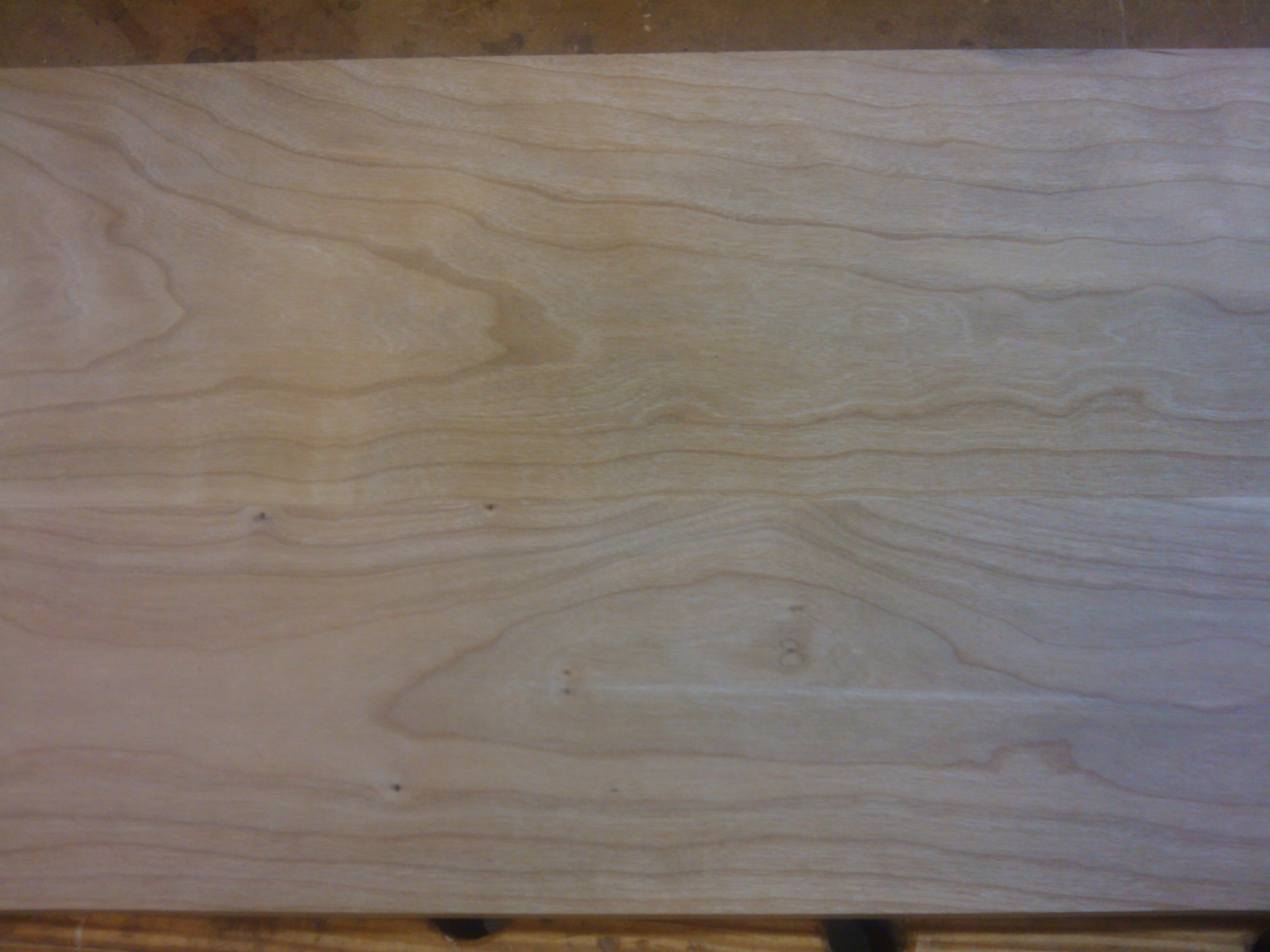
That’s when I got a round-house kick of inspiration right upside my head.  Even better, it had to do with the project I am working on. The bookshelf units I’m building are from some gorgeous – yet rough – cherry boards I got from Bell Forest Products. I have to take them from their rough condition to smooth, flat and square. I had spent some serious time in the shop face planing with my hand plane and thickness planer to get the top and bottom faces smooth and parallel, but I wasn’t looking forward to starting the edge-planing process.  The shop is hot, and the thought of extra exertion didn’t appeal to me.

I looked at the boards. I looked at the new Bora clamp. The boards. The clamp. Back to the boards. Right back to the clamp.

BINGO!

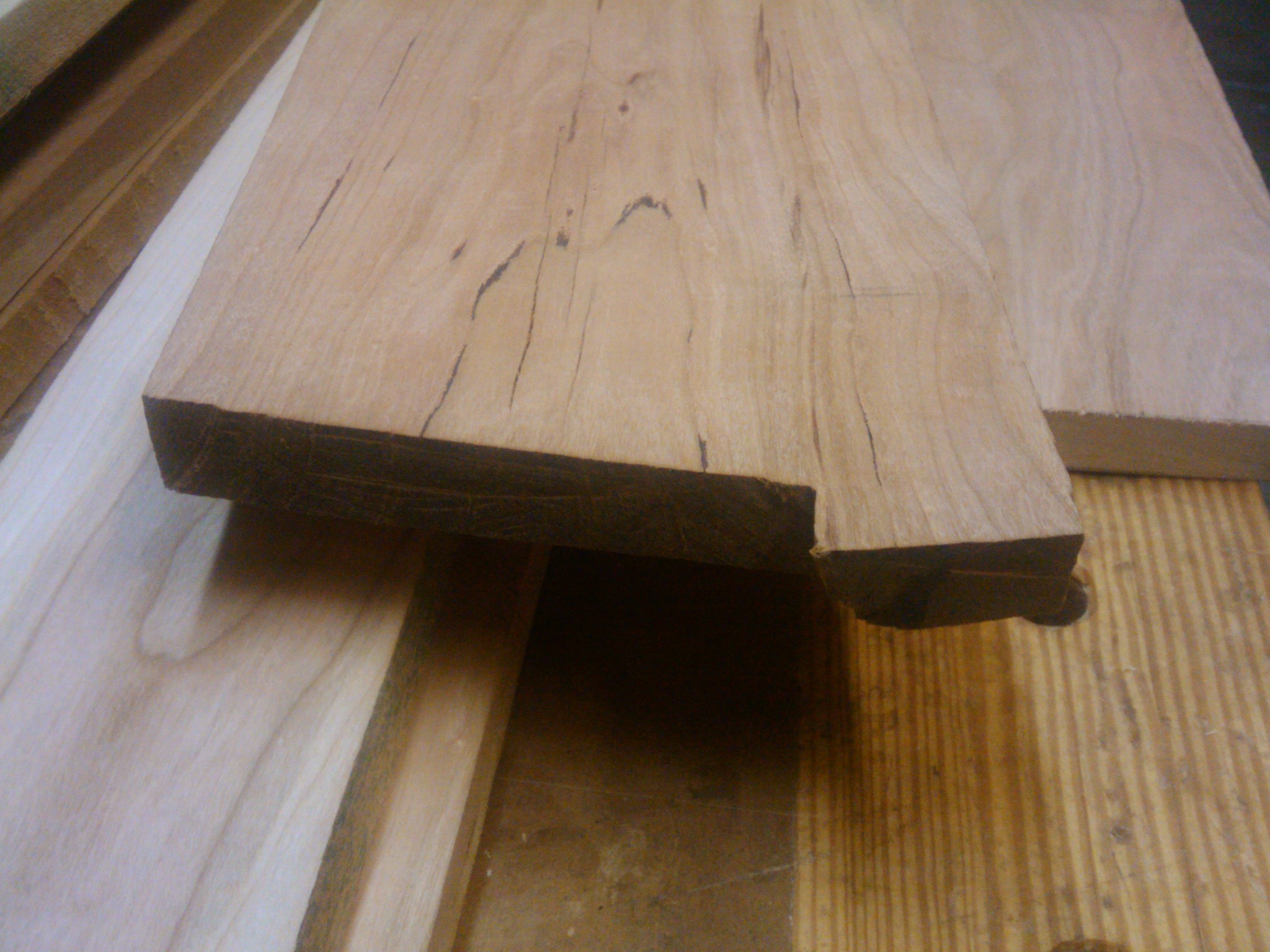
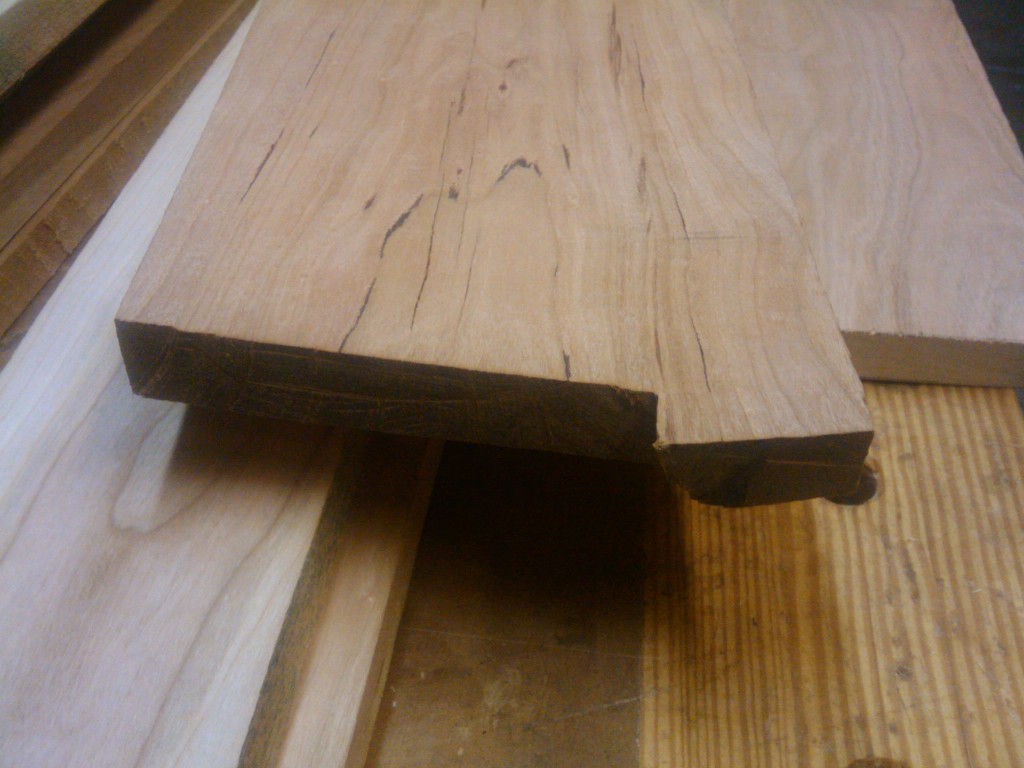
I jumped into action. The first thing I did was take my boards and cut them to rough length. I added a generous four inches to the length of my finished dimension so I would have plenty of material to trim the final shelves to length. I also made sure that the ends of the boards were relatively square. Not dead on precise at 90 degrees, but if your ends look jagged like this, you will need to de-jagify them.
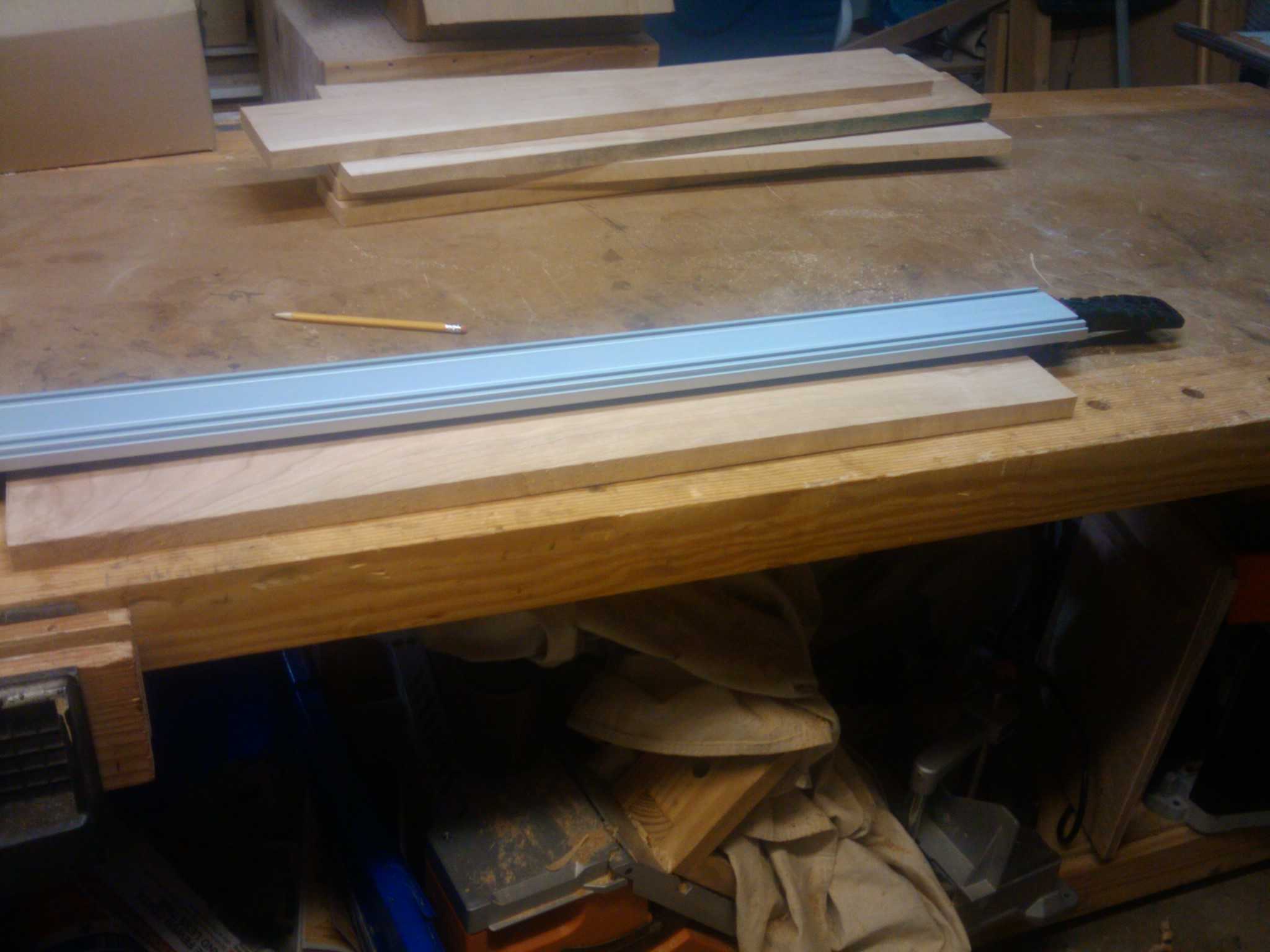
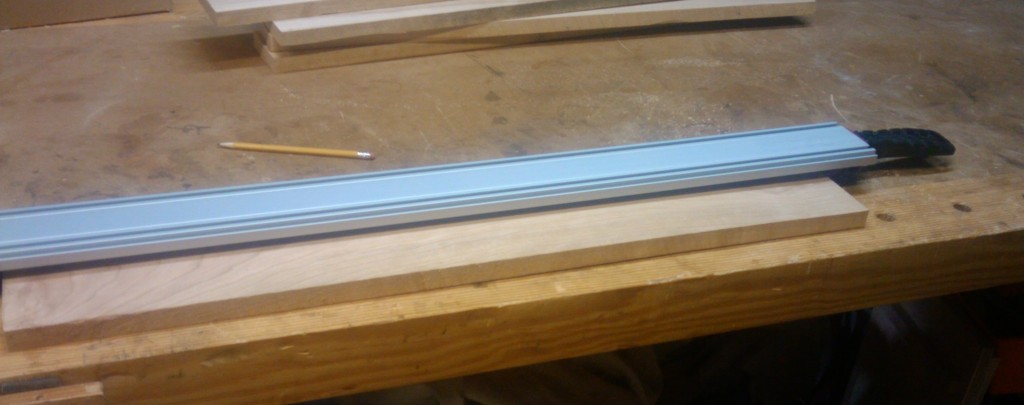
I placed the board down on the bench, then clamped the Bora to both ends of the board, overhanging one edge by the slightest amount.  Make sure the locking lever is up on the clamp, so when you push it down to lock the board in place, it’s in line with the clamp body.
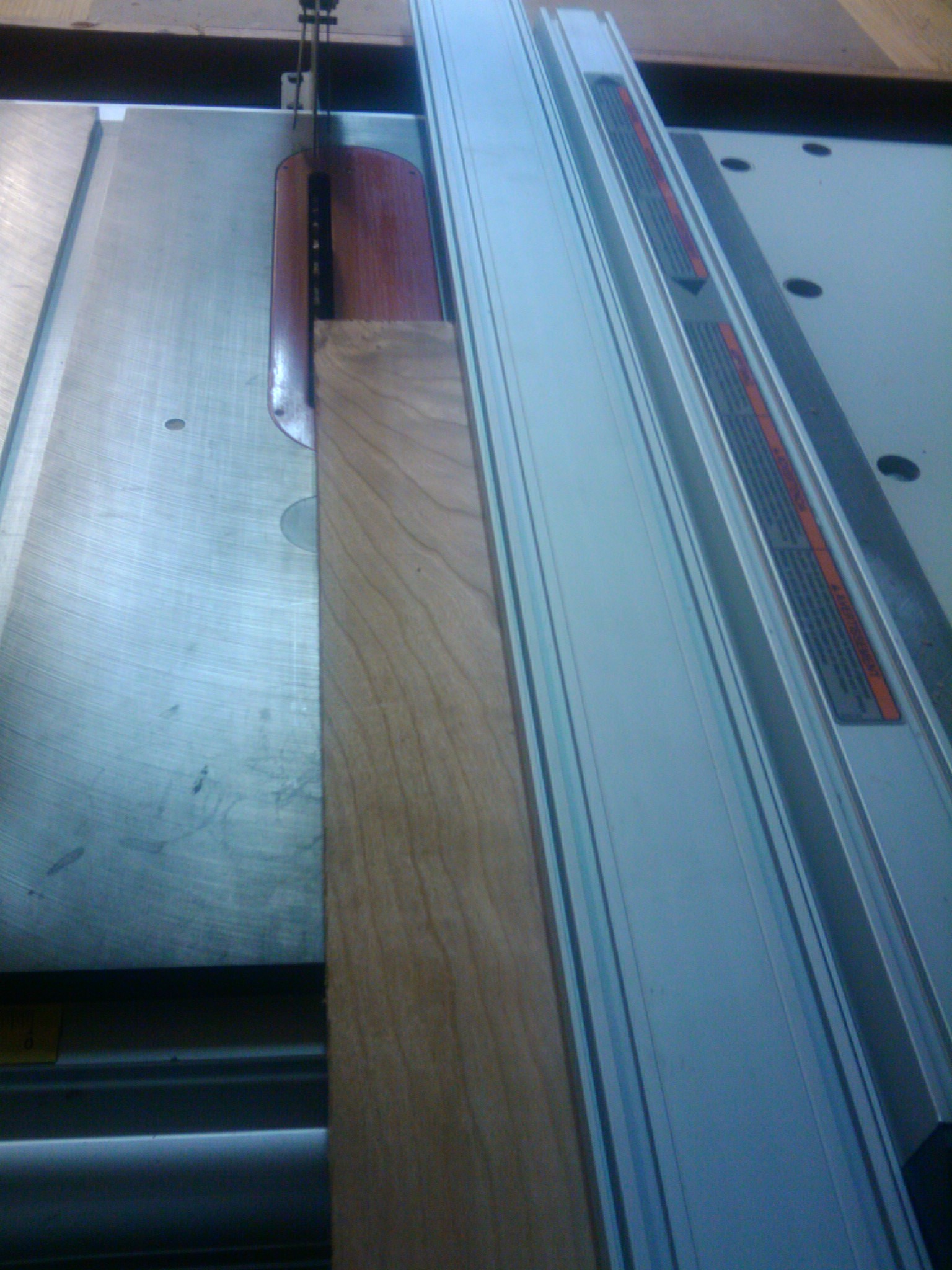
Now, here comes the fun part.  Unlike my older edge clamp, the Bora’s clamping gear doesn’t extend past the edges of the clamp. This means you can present the dead-straight clamp  edge to your rip fence.  I set the fence until it just grazed the free edge of the board, started the saw and pushed the assembly through.
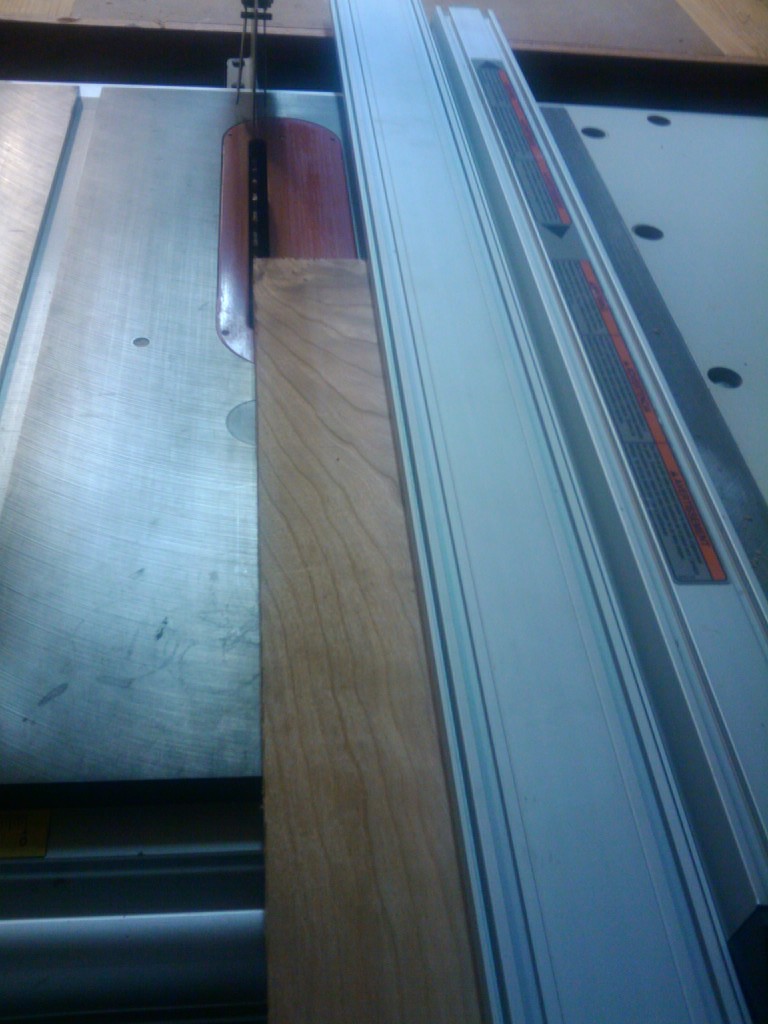
Since only the straight edge of the clamp is riding on the fence, the resulting cut on the free edge will be dead straight. After I got that first edge nice and straight, I simply unclamped the board, flipped it so the fresh edge rode against the rip fence and blammo, a pair of parallel, smooth edges that are ready to be glued. It’s really that easy.
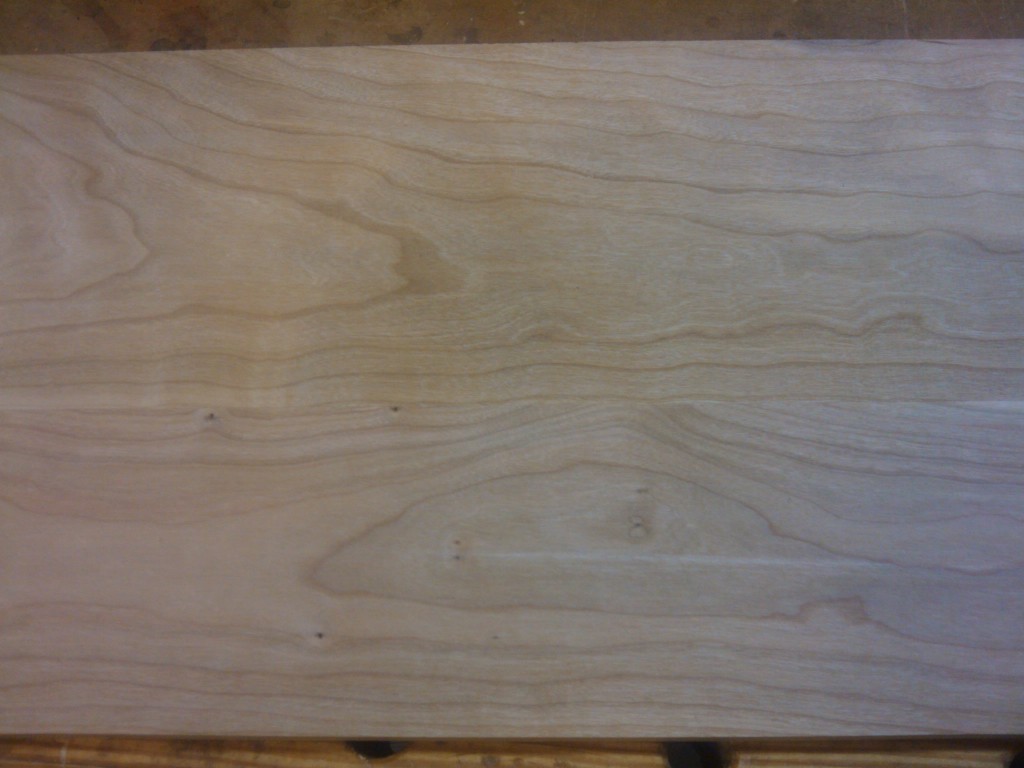
Using the Bora clamps like this drastically reduced the amount of time necessary to edge joint the boards for the project, and gave me some pretty sweet results.




Gimme Five with the Shop Monkey: Share the craft

Kids are out of school.. and, the later we get into the summer vacation, the more you can hear the whining.  “I’m BORED!”  Iggy’s been watching this phenomena in our house, and he’s been shaking his head. I mean, come on, if Iggy had time away from the shop, he’d be catching up on his mad ukelele playing skills.

Knowing that bored kids are an issue, Iggy drafted this week’s list of the top five reasons why woodworkers should share what they know with eager young learners during the hazy, crazy, lazy days of summer.

  1. Kids are curious.  Maybe they don’t want to become a worker in a cubicle farm and they want to discover a new path in a well-respected field of work.  Not everyone wants to – or even needs to – go to college.
  2. Shop class has been canceled.  With budget cuts and a greater emphasis on computer education, kids aren’t even getting exposure to woodworking in a shop class.  Many of them may go through life without putting a nail into anything more than drywall in order to hang a picture.
  3. Clean up on the cheap! When you bring eager young learners into your shop, you can get them to sweep up and vacuum for the cost of a few ice cream cones afterward!
  4. Math maniacs.  Sure, kids learn a lot about math from textbooks.  But, how do they apply it in the real world?  Woodworking allows kids to use all of that book learnin’ in a real-world setting.  I was terrible working with fractions until I applied it in the wood shop.
  5. Process matters.  A lot of kids can’t handle homework.  It’s not that they are bored or lazy, it’s that they don’t understand the process involved.  Woodworking provides that lesson in spades.  From selecting a board and milling it square and true to cutting joinery  from assembly and glue up to sanding and finishing, there is a logical progression in how you arrive at a finished project.  That kind of self-discipline and organization will help well  into the future.

Link of the week

Glass Etching Secrets

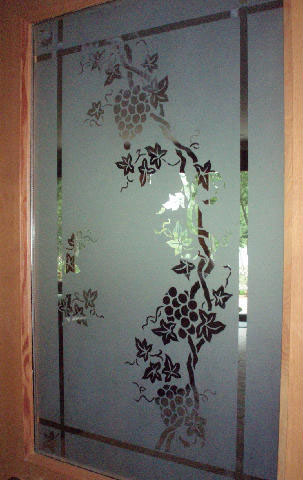
Glass doors on a cabinet can really make a project shine. Glass table tops allow for interesting effects. Glass covers for picture frames and flag holders display what’s behind.  But, they all have one problem… plain glass is BORING to look at.

Wouldn’t it be great if there was a cheap and easy way to jazz the stuff up?

There sure is.  It’s called glass etching, and it can turn your plain-Jane glass into a work of art.

The Glass Etching Secrets site goes into detail about the common methods to do glass etching, shows you where to get some etching patterns  and even sells supplies to allow you the opportunity to try your hand at this impressive skill.  Perhaps this would be a great skill to add to your repertoire.


Are you ready for some football?

Millionaires arguing with billionaires?  Yup.

Spoiled athletes making big bucks playing a game kids play?  You betcha.

But, I couldn’t be any happier that the NFL lockout is over and football will happen this year.

What does this have to do with woodworking?  Plenty.

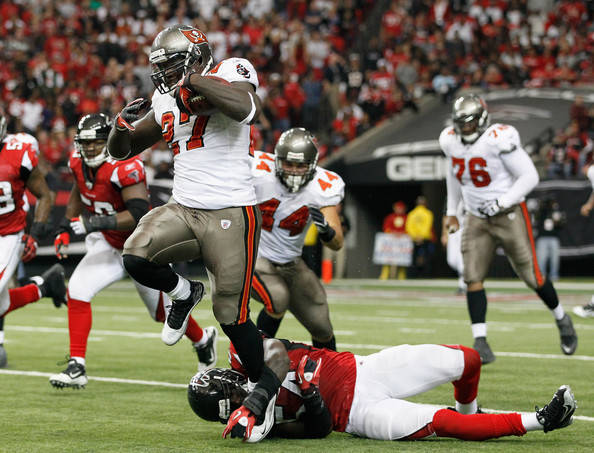
You see, in my shop, I have a longstanding tradition.  For me, the best and most productive days in the shop happen in the fall, when the infamous Florida summer heat and humidity breaks. There’s a project on the bench, the garage door is open wide and the kids are playing touch football in the street. And, on my radio, Gene Deckerhoff and Dave Moore are calling the Tampa Bay Buccaneers game.

I’ll often stop after an amazing play, poke my head outside and tell the kids they need to come in and check out the replay on TV. After they check it out, they’ll run right back outside to try to recreate that play. And, I’ll smile.

Of course, as the game starts to wind down, the announcers get a little more excitable as the game hangs in the balance.  I’ll drift in to watch with the family as the end game plays out. We’ll slap high fives all around when our teams win, and we’ll shake our heads in disgust when they can’t get the deed done.

I’ll head out to the shop and listen to the post game analysis. I’ll listen to the late game. And, after a hard day in the shop, I’ll come in, clean up, eat dinner and snuggle with the kids as we get ready for the night game.

Oh, yes, I’m ready for some football!