A big piece of steel

At the end of January, I joined several members of the St. Petersburg Woodcrafters guild at Heritage Village, where we demonstrated some traditional woodworking techniques.

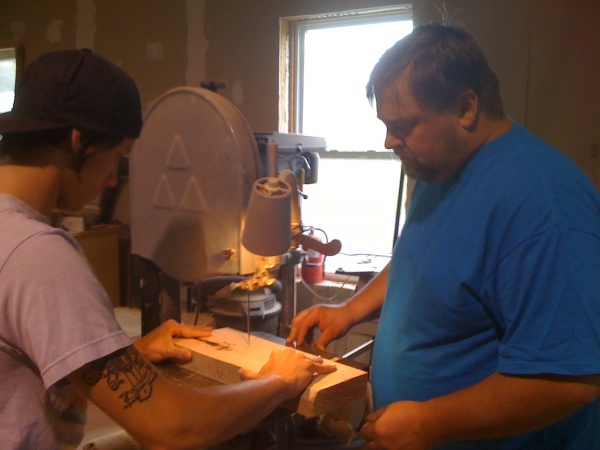
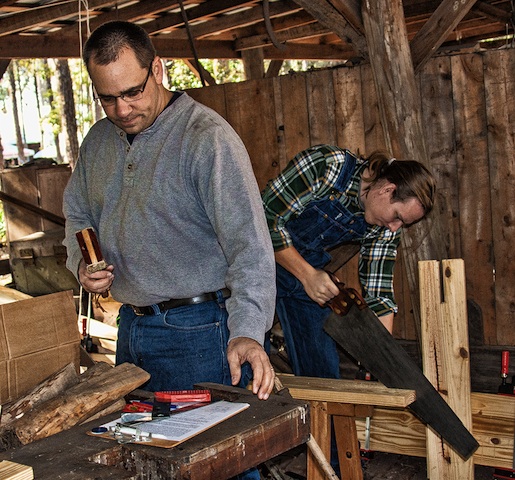
Tom and AndyOne of the things we were trying was cutting some three-sided tenons (basically, deep notches) using hand tools. Andy Gibson, the guy who put a new handle on my rip saw, was slicing and dicing with the best of them as he cut the two sides of the notch. But, to slice out the bottom of them, he was using a mortising chisel I had purchased a few years ago. Andy whacked the heck out of it as he cut into the wood, and remarked, “Dude, why don’t you sharpen your tools?”

Which got me wondering – have I ever sharpened my mortising chisels?  The answer is a resounding no.

Sharpen that chisel

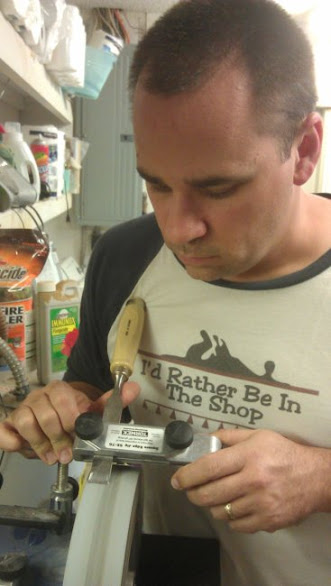
So, my first thought was to turn to my Tormek with the standard straight-edge guide – the regular method for sharpening bench chisels. But, there is a slight problem…

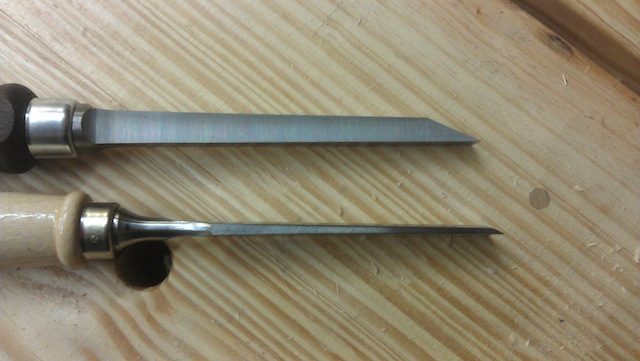
Cross sectionsYou see, mortising chisels are so much thicker than bench chisels. They are designed to be banged on with a mallet, driven into the cut. So, they have to be much tougher to take that beating. Which means, of course, they don’t fit in to the square edge jig.

Bummer.

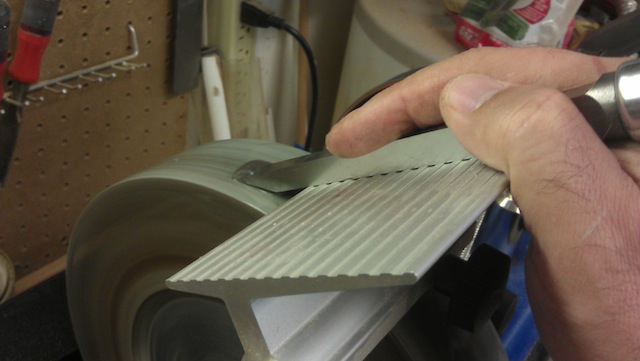
So, I started reading through the guide for my Tormek, and I thought it would be a good idea to use the universal platform for this. It is basically a piece you can adjust to any angles and clamp on the guide bar.

The platform

And, this worked OK. It was difficult to keep total control over the chisel, and I spent a lot of time concentrating on holding the bevel against the wheel and holding the chisel as straight as possible.

The results were OK, but not spectacular. My bevel ended up faceted, and I was afraid that my grip could have shifted during the session, leaving me with a non-square tip.

I will have to do some more research on this, but I’m sure that as versatile as this tool is, there is going to be a solution…

Quick Poll

Shop maintenance is one of those things you gotta do. The saws need to be aligned, the tools organized and the sawdust swept up. And, you know that the tools need to be sharpened.

Sharpening is a task that some people relish. They pull their tools off the sharpening medium and look at their handiwork with glee. They even demonstrate just how sharp their edges are by shaving the hair off their arms, legs or other body parts.

Others know it has to be done, but they dread the work. I mean, it time spend grinding steel off the edges of tools, not working with wood. Isn’t working with wood why we got into this craft?

Today, tell us how you feel about sharpening. Are you all jazzed about doing it, hate it, or feel indifferent about the whole process?


Link of the week

Making Wooden Olympic Rings

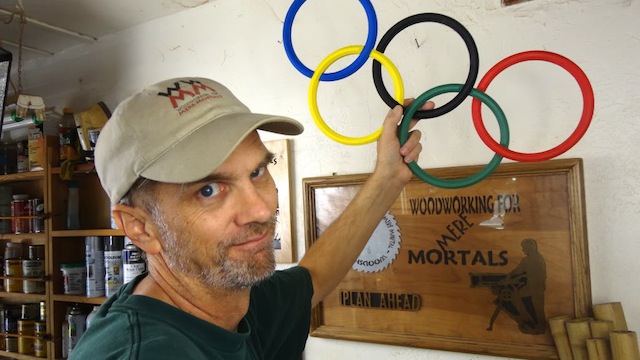
Sure, Steve Ramsey of Woodworking for Mere Mortals made these for the 2012 London summer games, but the rings are identical to the ones being used in the Sochi 2014 winter games.

Steve Ramsey's Olympic RingsAt first glance, they seem very easy to build. But, look closer at how the rings are interlocked, and you will want to know how Steve managed to pull these off. Fortunately, he did a how-to video filled with the techniques and tricks to pull off this complicated project.


The smooth sled

After years of listening to music stations on my ride in to work, I have discovered the joy that is sport talk radio. Sure, there are some big talkers out there, but I have found a great morning show on 98.7 FM – The Fan radio.

The Kirk and Dinger Morning Show

Two time Stanley Cup champion Chris Dingman and his co-host Kirk McEwen talk serious sports on the Kirk and Dinger Morning Show. In addition to the regular who’s-going-to-get-traded-who-do-you-think-will-win-this-weekend kind of sports talk, they frequently open the phone lines for listeners to weigh-in on a particular sports question. The other day, the pair and the rest of the crew posed an interesting question – are you a Summer Olympics fan or a Winter Olympics fan?

For me, hands down, it’s the winter games. It’s all the speed that really interests me. Watching the skiers tackle the downhill slopes, the ski jumpers sail through the air or the hockey players chasing down the puck in world-class competitions, that is pulse pounding.

My favorite event of all, however, is the four-man bobsled. I will drop whatever I am doing when I see the time trials begin in that. The start is just organized chaos as all four athletes try to get the speed of the sled up as high as possible to shave hundredths of a second off the fastest time. They scream down the track, hugging the turns, and then try to stop the massive sled at the end of the course.

They also universally have someone ringing a cowbell at the start of the race. I remember hearing this going all the way back to the 1980 Winter Olympic games in Lake Placid, New York.

Not only are today’s sleds impressive to watch race, they are models of safety and smoothness. Again, in a race where hundredths of a second mean the difference between gold medal and no medal, an incredible amount of engineering goes into each sled.

Another place where a sled is useful is on a router table. Oh, sure, many times a simple router fence or a bearing guide can keep your workpiece on track, but what about the times you want to rout a profile on the end of a workpiece – say, when making a cope cut on the rail ends for a set of doors?  What then?

Well, you could go freehand – and mess up your pieces, make a trip to the emergency room, or both. Or you could use your miter sled or a fixture that runs in a miter track.
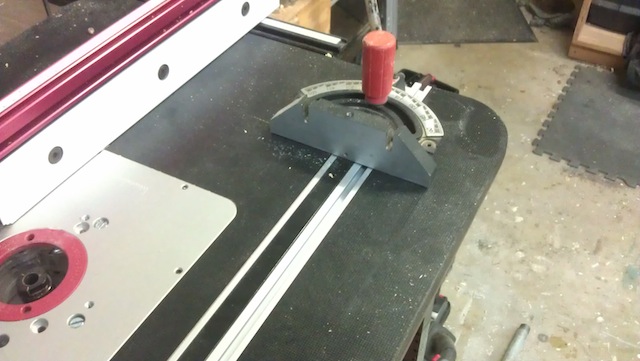
This could work.. a miter gauge

That’s a great idea, but the problem is that the router bit is a single point on the router table, meaning that the router fence doesn’t need to be parallel to the miter slot to get a decent cut. With this situation, you can see how trying to use both the miter slot and the router fence means the fence could either fade away from or pinch toward the track, making it a challenge to get a good cut.
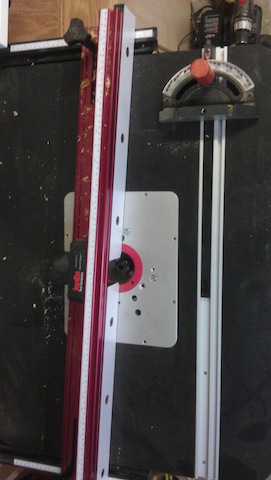
The fence fade

A better idea is to use a contraption that rides along the fence, making it easier to guide the work along only once reference point. Now, I have used something as simple as a piece of plywood with a handle nailed to it, but this sled I picked up from my friends at Infinity Cutting Tools is the bomb.
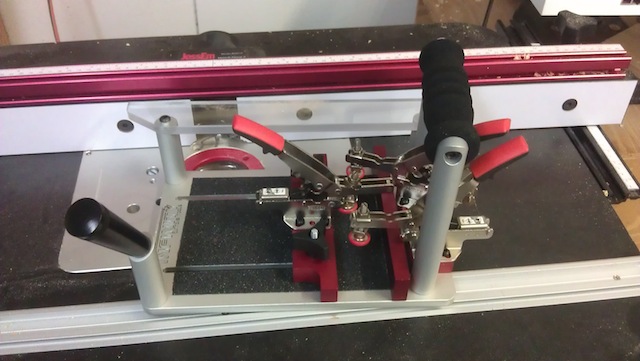
The pro coping sled First, it holds the workpiece tightly down to a base, preventing any movement away from the bit as it is fed through. These hold-down clamps are easy to use Bessey models, and they hold the workpiece – as well as a backer board to prevent blowout on the back edge.

What runs against the fence is the clear visor, which allows you a good view of the work going through the bit while preventing any chips from flying up to hit you in the face.  A great feature.
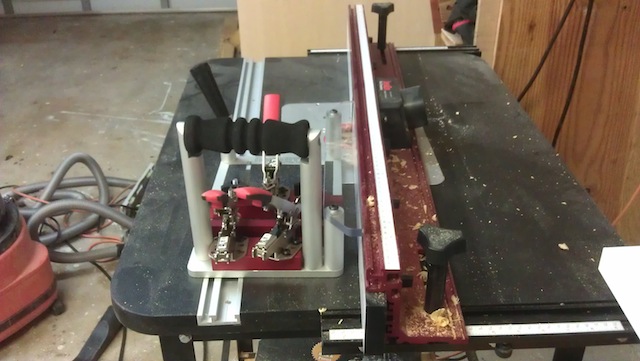
Check out the tail viewPlus, it has some great handles that afford the user a firm grip on the sled, helping to keep positive control over the work as it pushes across the table.

The real test comes when you have to make a coping cut. I put the coping bit from the set I have into the collet of my router and adjusted the height and depth of cut with the fence. From there, I put the sample piece and a backer into place and clamped everything down.

While I have successfully used this bit set before, I had always worried about the safety and precision of the cut on the cope ends. Well, the first test pass showed I had nothing to worry about.

The cut

I can see myself using this sled for years to come as I build new cabinet doors and chest panels. I’m going to say that using a coping sled gets a gold medal in my book.

 

Living with it

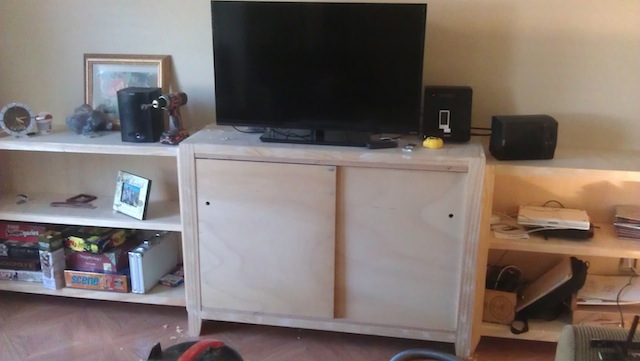
One of the greatest things about building a built-in project is that you can put it into use before the piece is totally done. And, since I installed the boxes on our front entertainment center, we have been using the piece to hold our TV, stereo, Blu-Ray player and other goodies.

We have moved in to the entertainment centerThe bad part? Well, when you have to do more work on things, you have to move all of those goodies around to keep them out of harm’s way.  I have been drilling holes to feed cables into the setup, tacking down wires and doing other tasks required to get things in order.

Of course, one important thing that is coming up is sanding. Now, I would normally never give sanding a second thought – in my shop. But, in the living area of the house, keeping dust under control is going to be a big deal. After all, getting sawdust in the electronics, all over the surfaces and in the air is a big no-no.

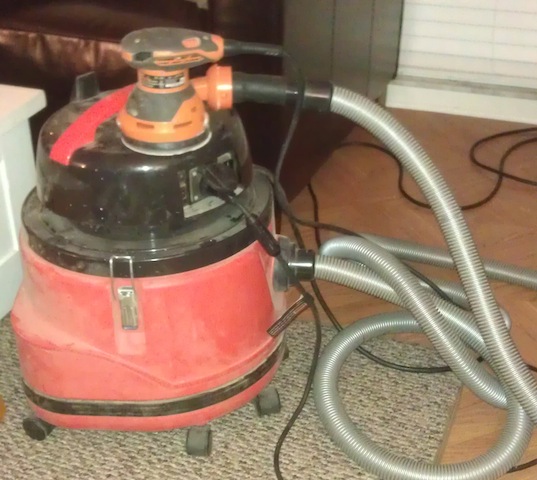
The FEIN setupThat’s why I am happy that I have a dedicated dust extractor for the random orbit sander. I got this when my friend Paul and I were working on his office system, and it had proven its worth time and time again in the shop. The collector hooks up to the sanders, saws and router table and keeps the dust and chips down to a manageable level. Even better, it has an outlet on it that you can plug the tool into which triggers the collector when you turn the tool on, and stops the collector five seconds after you release the trigger.

But, would it work on the house?

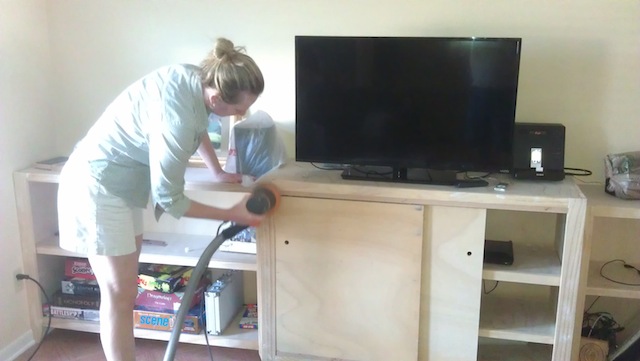
Rhonda goes a-sandingThis past weekend, after a few fun family events, we put the collector and sander to the test. Actually, I say ‘we’, but Rhonda offered to do the sanding, and I was more than happy to turn the task over to her. With a 150 grit pad on the random orbit sander loaded on, she proceeded to take care of business.  She was able to level any irregularities in the joints, break the edges and get everything nice and smooth.

The best part?  No dust wafting through the house. This is great.

Fortunately, there isn’t much more to do on this project. Some finishing touches, priming and painting on the cases, and building three solid oak tops for the pieces, and we can move to decorating and cable dressing the piece.

Then we can really start living with the entertainment center.


Get Woodworking Week 2014 – Saturday

As we wrap up Get Woodworking Week 2014, it’s important to note that we began and ended with contests of great physical effort.

On Sunday, the Seahawks beat the Broncos in the SubPar Super Bowl, and today is…

The Sochi Winter GamesNo, it’s not the Winter Olympics, although I am looking forward to watching some of that crazy four-man bobsled competition. I mean, those guys can fly down that track. Oh, and hockey…

But, today really is about the City of Largo’s Adventure Run. Rhonda convinced me that this mud/obstacle run through one of the city’s nature parks would be a good thing to participate in.

Largo's Adventure run

Last year, I watched her and her friend tackle the course, climbing walls, running through obstacles and crawling head-first through deep pools of sticky, gloppy mud.

When the first registration fliers came out for this year’s event, I thought about ways I could weasel out of it. “Oh, it’s going to be too cold.” “Oh, I can’t run 5K, my knees would hurt too much.” “Oh, I don’t have any old sneakers to wear…”

Eventually, Rhonda looked at me and said, “Why don’t you just get off your behind and do this?”

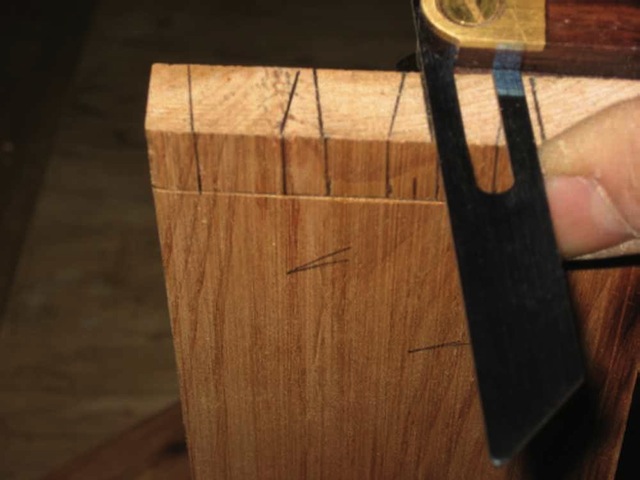
Laying out dovetailsAs we leave Get Woodworking Week, I think the most important lesson of all came from my wife. For many of us, we hold ourselves back from trying new things in our shops. Chairs are too difficult. I can never cut a mortise and tenon. I’m not comfortable working with expensive wood.

Maybe we know we want to show our spouses, children, friends or neighbors what we do, but are not sure we are good enough to serve as teachers. Maybe we even are too modest to show off our successful projects because someone may notice a few imperfections.

teaching woodworking

We now have 51 weeks until next year’s Get Woodworking Week. And, I’m pretty sure that many of you out there truly meant to pass along your woodworking knowledge to others, but time and circumstances conspired to get in the way. Here’s a challenge to each of you… Do something… anything… between now and next year’s event to help spread the love of woodworking to someone new. It doesn’t have to be a big thing, but, believe me, it will have a huge payoff as we get more new woodworkers off the sidelines and into the shop.

And, one day in the future, someone will look back on their woodworking hobby and recall how you gave them the kick in the pants to make it happen.

Here are some more articles to read about Get Woodworking Week:

Get Woodworking Week 2014 – Friday

My wife is a high school English teacher, so we work hard here at home to make sure we speak more goodly… I mean better… Definitely better.

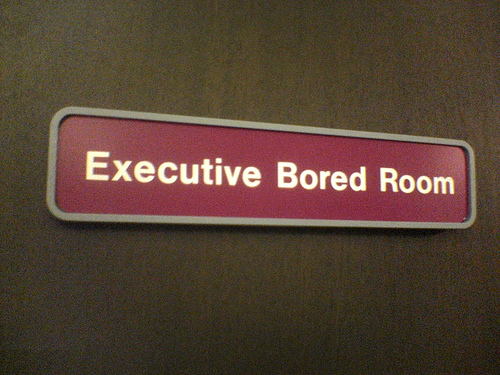
A part of that effort is that we play a bit of a game when it comes to spelling and grammar. I have been asked to take out my camera to document a misspelled or poorly punctuated sign. In fact, she offers extra credit to her students if they can submit a sign with a spelling or grammar mistake. Some of the submissions are pretty funny.

No wonder the executives are falling asleepAnother thing that makes her want to pull her hair out are modified absolutes. What are those? Well, think about a newscaster reading a story about a fire that totally destroyed a building. Since destroyed means that everything is collapsed and in a smoldering pile, there can’t be a partial destruction… either it is, or it isn’t. In the same way, you can’t have something that is kind of perfect.

The one that drives her up a wall is used frequently on those talent scout reality shows. You know – American Idol. America’s Got Talent. Stuff like that. After a performer finishes his or her song, one of the judges is bound to say, “wow, that is the most unique act I have ever seen.”  Either it’s unique, or it’s not…

Americas Got Talent Judges

When it comes to woodworking, there are hardly any unique ideas left. A table is a flat top that you can use. A bookshelf is someplace you can store nick-knacks or books on.  A chair is someplace to park your behind.

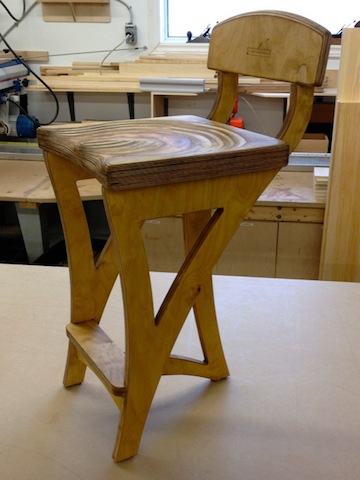
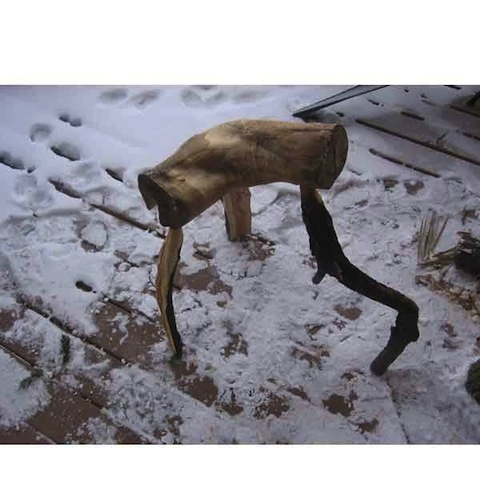
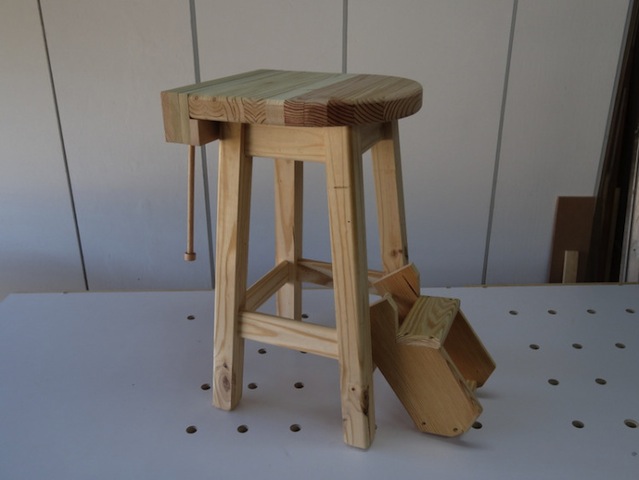
But, that doesn’t mean you can’t take the design into different directions. Recently, Chris Wong hosted a great event – the shop stool build off. This event took place on January 25, and 45 entries were eventually received. Talk about some creative thinking.

A plywood designWhile there were many traditional designs, there were others that pushed the design limits. One of my favorite submissions was this one, using plywood in unexpected ways. I loved how the stool uses curves and is shaped to expose the plies on the seat.

Roubo stoolThis design looks very much like a Roubo bench, with the rising dovetails and hold fast holes. The Roubo design is just so classic, and this one screams traditional strength.

Branch out, why don'tchaThis one is a totally organic design, featuring branch legs and a nearly whole log as the bench. Not sure how comfortable it would be to sit on for a while, it definitely showcased the creativity of the builder.

With a vise!And, how handy can you get? This stool incorporates a vise that actually works, giving the user additional work holding options and a comfortable place to park your behind.

These are just four of 45 entries, so you may want to cruise on over to Chris’ site to see each of them. Who knows what type of inspiration you may find while you are there?


part of the Wood Talk Online community