Starting to think upgrade

I remember my first table saw. It was a Delta benchtop model that made all kinds of noise, had a 12 inch rip capacity and could barely hold a setting. I built some projects with it, and it was a definite step up from trying to cut everything with a circular saw.
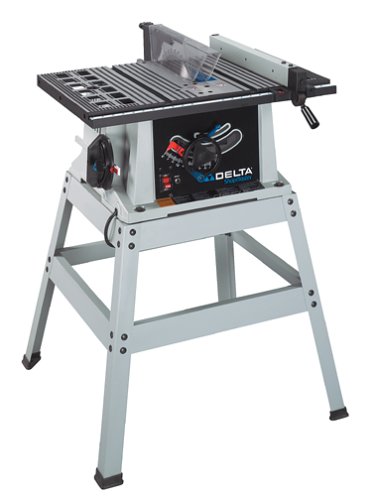
My old Delta

Once I reached the capacity of that saw (which took no time at all), I stepped up to the saw I have – my Ridgid 3612.  It has been my trusty companion for the past 14 years, and we have built a ton of projects together. I’ve ripped and crosscut with it. Cut box joints. Dadoes and grooves. We’ve been inseparable, and it works well in my shop.
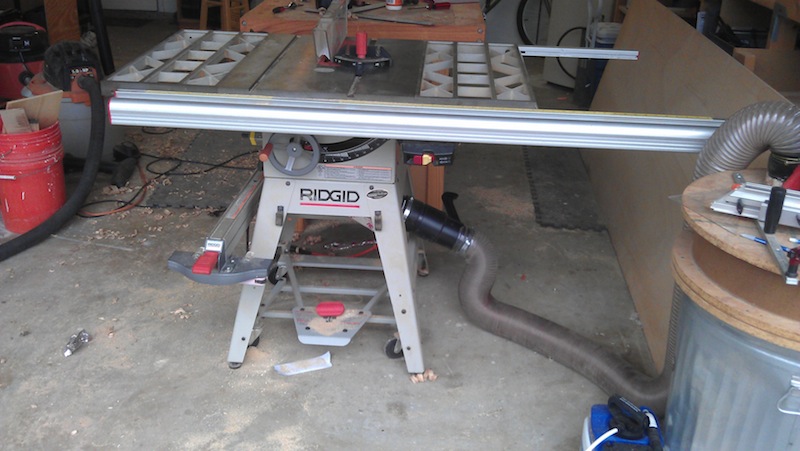
I’m beginning to wonder, however, if perhaps it might be time to upgrade the saw. There are some features of the saw that definitely mark it as dated. For instance, it has an old-style splitter instead of a riving knife. While I haven’t had a lot of issues with kickback, it has happened. I know that the new style riving knife design shortens the distance between the back edge of the blade and the splitter, reducing the likelihood that a kickback will happen. Plus, the fact that the riving knife rises and falls with the blade means that I can leave it in for non-through cuts (grooves and the like), meaning it will spend less time off the saw.
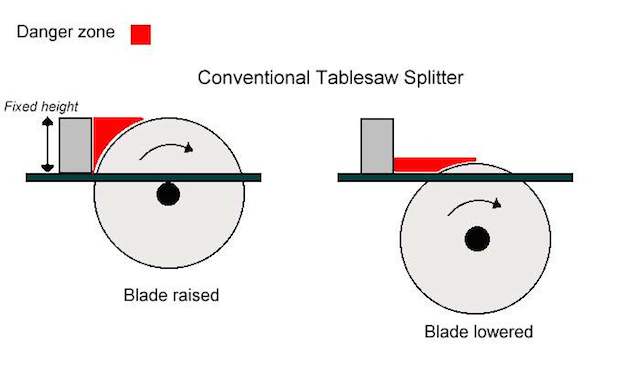
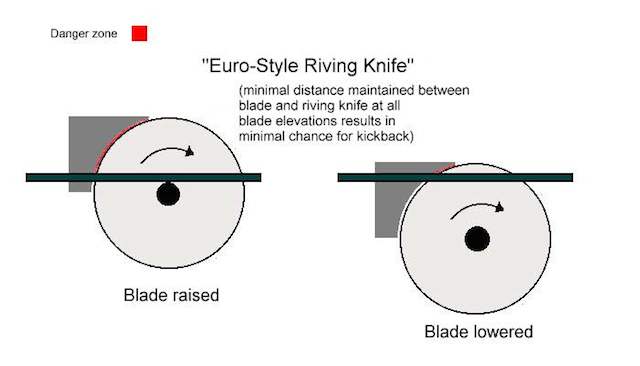
A traditional splitter

A riving knife

The newer saws also have shied away from the old-style open contractor style bases. My 3612 is wide open, and it took some wrangling to fit a dust chute onto the saw to control the dust that falls out from the cuts. The motor also sits out of the back, leaving a gaping hole where dust can still pour out from.  Newer designs – known as hybrid saws – have enclosed cabinets and much better dust collection, meaning less vacuuming after a session with the saw. Plus, with the motor inside the footprint of the saw’s cabinet, I can wheel the saw closer to my bench to serve as an outfeed table.
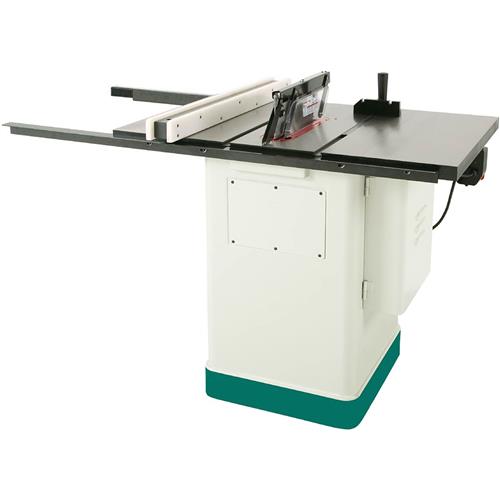
The back of a hybrid saw

So, I’m looking. The saw will definitely have to have a mobile base – that’s non-negotiable. And, it has to be able to spin a dado stack, which eliminates many of the portable jobsite saws. I also don’t think I need to go to 220 volts for the saw. That would make for a pretty expensive wiring job, and I have been managing with a 110 volt model for the past 14 years with few issues.

The Ridgid 4512

Honestly, I am looking very closely at another Ridgid saw. The current offering, the R4512, is a hybrid model complete with a mobile base, excellent dust collection and some very good reviews. However, I have looked at a few other models. I’m not sure where this is going to take me, or if I will even pull the trigger after doing a more thorough evaluation, but I will certainly be doing my homework on this one.

After all, I plan on getting at least another 14 years out of this sucker!

The weekly plan

Build a queen size bed with storage

Have I mentioned yet that I live in Florida? Oh, that’s right… I sure have! That means I won’t be shoveling snow anytime soon this winter, but it also means that I don’t have a basement. Which, as you might guess – means that any project that I build has to have a storage component to it.

The storage bed as built

One project I have been asked to build is a new bed. Rhonda is looking for something to replace the bedframe we bought waaay back when we first got married with something a little sleeker and with some storage space. Right now, I’m evaluating some plans, and I’m starting with this one by Anna White. I like the idea of converting cabinets into a bed riser, and this is probably how I will work my plan, but with some modifications. For instance, I’m not a big fan of the drawers pulling out at the foot of the bed…

Stay tuned… this could be my during-the-holidays build…

Link of the week

The Tape Measure clicks in 

You can find them in just about every woodworking shop: the ubiquitous tape measure. Whether it’s clipped to a tool belt, tucked in a tool box or laying on a workbench, these amazing little devices help us ensure our work measures up.

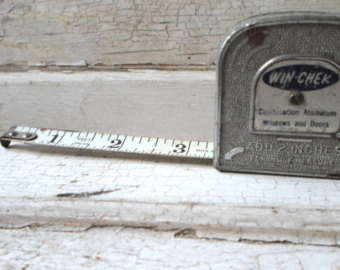
A classic tape measure

This article from Wired Magazine tells about the retractable tape measure’s history – from the flat tape to the metal case to the retractable mainspring. No, it’s not woodworking per se, but it sure gives you some valuable insight into how this important tool came into being.

The saw’s at hand

Remember a few weeks ago, when I was lamenting the lack of a panel saw for my Dutch tool chest? Well, I’ve got that handled now…

The saw in its box

That’s because this arrived from the folks at Pax Saws. They sent over one of their 22″ crosscut saws for the tool box to help round out my tool collection, and I have got to tell you, this is a very cool saw.

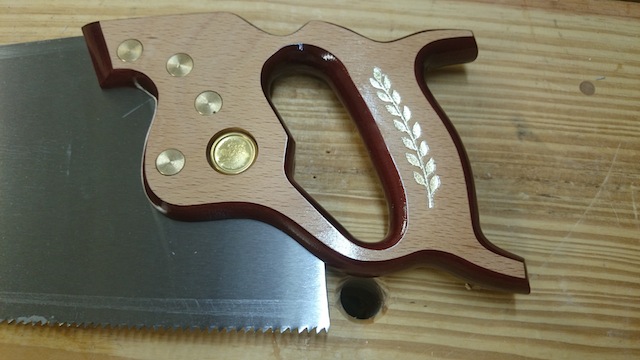
Handle up close

First, I like the look and the feel of the handle. It’s a two-toned beech model, and it comes to the hand comfortably – far better than many of the other saws I have held over the years. The blade is a sweet piece of steel, the plate true and the teeth very sharp.

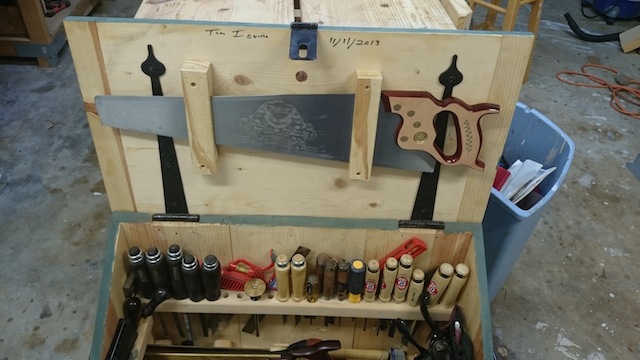
Plus, with its smaller size, it will easily fit into my tool chest, something I was able to accomplish with a few pieces of pine and a couple of screws.

Tucked away in the lid

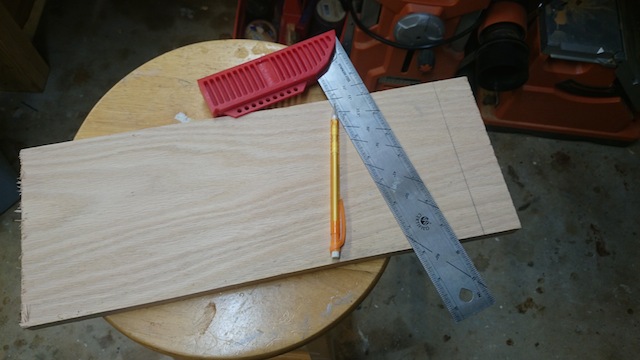
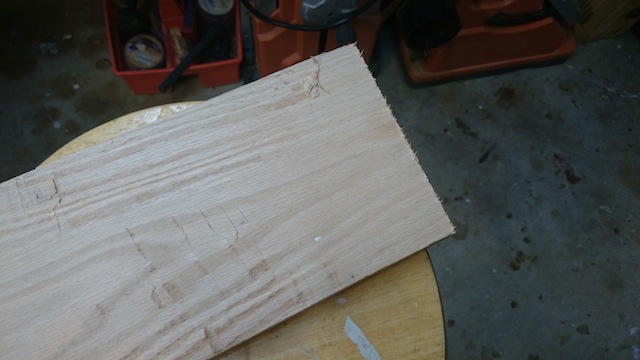
But, how does it cut? An excellent question, since even the prettiest saw isn’t worth a darn if it won’t cut. To check it out, I grabbed a piece of oak, and struck a line down it.

The test materials

The saw cut beautifully, with that rhythm you grow accustomed to hearing when someone is using a well-tuned saw. Now, I was trying to cut this on a surface that was too high, so the blade did wander on me. Which means, for sure, I’m going to have to build myself a lower saw bench. But, for the first cut with the saw, not too shabby…

The cut end

It’s nice finally having the tool chest finished out – exactly one year to the date that I put the finish on it. If the tool chest serves me as well in the coming years as it has already, I’m going to enjoy my time with it.

A great exhibit

If you were playing along this week, you probably noticed that I was not my typically verbose self. I was at the Emergency Management Institute in Emmitsburg, Maryland, helping to revise a public information officer class. It was important work, as the class becomes a standard which many of my colleagues must meet at their jurisdictions. So, I was one of four public information officers flown in from around the country to offer my services.

Me and my colleagues

It was a real honor to be there, and it was a blast.

While I was up there, however, it didn’t stop me from paying a visit or two to some popular museums. I had to visit the National Air and Space Museum in Washington, D.C. to check out the awesome items there…

Jim Irwin's suit from Apollo 15

And, I had to pay my respects at the World War II Memorial. It was a sobering experience, especially this close to Veterans Day.

At the World War II memorial

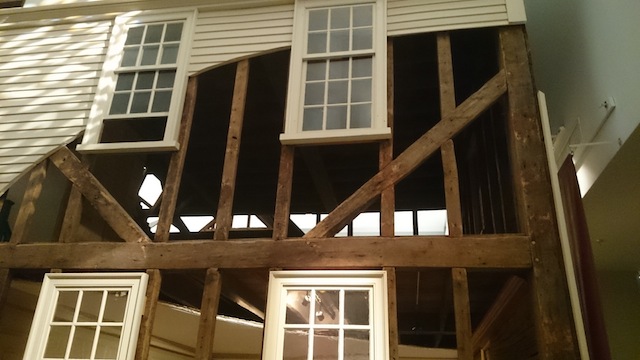
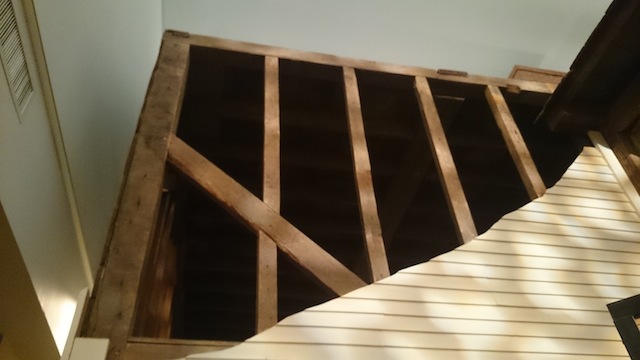
But, by far, one of the most impressive exhibits was at the Smithsonian’s Museum of American History. Called Within these walls, the exhibit is a  home that was relocated to the museum from Massachusetts. The building was built more than 200 years ago, and the story of the building is how the families that called it home lived there through changing periods in American history.

For a woodworker, the exhibit was just breathtaking…

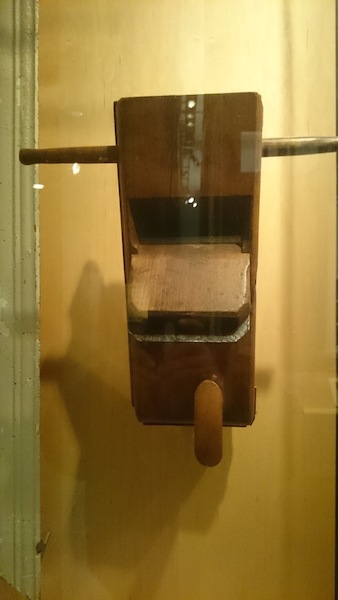
Molding plane DSC_0247


There were tools there, such as this molding plane, and a hand’s on exhibit showing the difference between simple and more ornate moldings.DSC_0251 Of course, they had to have period furniture that decorated the home. This table and chairs from the front parlor were beautifully crafted and showed some stunning workmanship.DSC_0248

DSC_0254


And, the structure of the building was art in itself, giving the viewer a chance to look back in time to see how buildings were made more than two centuries ago.

If you get a chance to visit the Museum of American History, I would strongly recommend you take the opportunity. There is a lot there for a woodworker to see.

The weekly plan

Build your own face frame kitchen cabinets

If you ever decide to redo your home’s kitchen, a new set of cabinets can cure a ton of ills. Do the ones there look like they were made of cheap particle board, crappy laminate and maybe went out of style during the Carter administration? Maybe they are the wrong size, in the wrong location… or just look wrong.

Installing the cabinets

Well, building your own kitchen cabinets is a great way to get the right look, the right layout and a great way to save a ton of money over buying a set of custom cabinets.

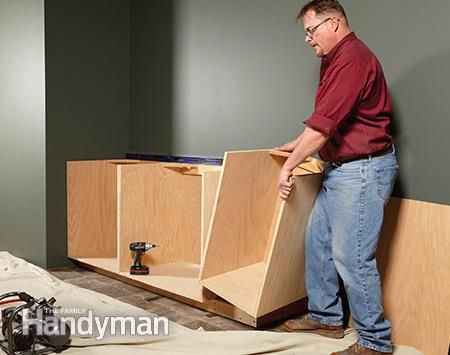
While the scale of building your own kitchen cabinets can be daunting, the entire job is just a series of very basic, repetitive woodworking steps. This link from the Family Handyman can walk you through the process from the first cut to the showing off of your work.


Link of the week

WooooD Magazine

Today is Halloween, the spookiest day of the year. So, it’s only appropriate that I feature the scariest woodworking magazine in the world…

WoooD Magazine

That’s right, folks, this year’s edition of WooooD Magazine hits the stands with a satisfying thud. It’s a frightfully good read, with a spoooktacular selection of projects, techniques and tool reviews to send a shiver down your spine.

I have read it from cover to cover, and it’s a real Thriller….

Happy Halloween everyone!

part of the Wood Talk Online community