
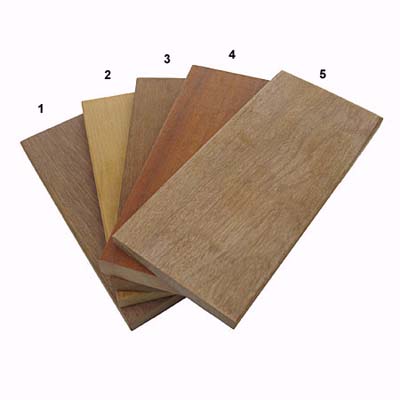
 While local hardwoods can be a pleasure to work with and can leave you with a gorgeous project, tropical hardwoods can be eye-poppingly beautiful. Whether the vividly colored bloodwood or purpleheart from South America, the highly desirable bubinga or wenge from Africa or the hard wearing teak or rosewood from Asia, these boards from the planet’s tropical areas can be a woodworker’s dream, giving your projects a style all their own.
They do come with some drawbacks, however. First, they have different characteristics than the native wood you work with, leaving a splintery mess where a clean cut should normally be. They can also be very expensive, since they have to be harvested and shipped great distances to your supplier. And, the harvesting of these trees isn’t always done in a responsible manner, possibly being pulled from forests without consideration of their future health.
This week, let us know how you feel about using these tropical hardwoods.
[poll id=”73″]
***
Please help support Tom’s Workbench by visiting our advertiser Eagle America. Thanks!
 Welcome to Woodworker’s Safety Week 2009 where we will start by taking a look at one of the most dangerous tools in the shop – the table saw. All saws come with two basic pieces of safety equipment – a splitter or riving knife which keeps the wood being cut from closing behind the blade or being accidentally pushed into the back of the blade should you make an error in feeding and pull the board away from the rip fence.
 People love to classify things. Speak to a biologist and you’ll learn a boatload of Latin in when talking about an animal’s classification. Chemists classify the elements as metals, non-metals, noble gasses… the list continues.
 Before screws and nails were common, adding dowels to joints was one of the first ways ancient woodworkers reinforced the joints they were working on. Since then, dowel reinforced joints for furniture construction, face frames and other applicaitons has been used in furniture factories and by hobby woodworkers as a fast and easy way to build projects.
 There is little doubt that a properly functioning dust collector can make cleaning up at the end of a woodworking session a breeze. Just a little sweeping and vacuuming can turn a difficult chore into a quick and easy exercise.
 For many of us, the allure of woodworking is that we get a chance to work in our own shops – our own space set up exactly to our wishes … well, maybe you would add a sweet brand new Unisaw to round out the collection…
 Drawers in woodworking projects can be very useful. They can be dainty affairs, holding just a few pens and pencils, or they can be massive and built to withstand an entire file drawer’s worth of files and papers.