On October 21, 1805, Admiral Horatio Nelson of the British Royal Navy devised an audacious plan of attack to beat a larger combined naval force comprised of French and Spanish ships. The two armadas squared off just west of Cape Trafalgar in southwest Spain, and the mighty ships traded canon fire for most of the day. At the end of the encounter, Admiral Nelson’s forces proved superior, defeating the enemy ships and derailing Napoleon’s plans to invade the British isles.
Admiral Nelson’s flagship, the HMS Victory still exists today as a naval museum ship serving as a goodwill ambassador for the Royal Navy and giving visitors a glimpse into what life was like on board.
The Victory is about to undergo a massive refurbishment, and the work will give naval archaeologists – and interested woodworkers – an opportunity to see just how this important piece of British history was built.
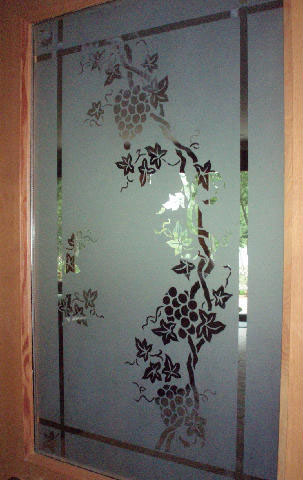
Glass doors on a cabinet can really make a project shine. Glass table tops allow for interesting effects. Glass covers for picture frames and flag holders display what’s behind. But, they all have one problem… plain glass is BORING to look at.
Wouldn’t it be great if there was a cheap and easy way to jazz the stuff up?
There sure is. It’s called glass etching, and it can turn your plain-Jane glass into a work of art.
The Glass Etching Secrets site goes into detail about the common methods to do glass etching, shows you where to get some etching patterns and even sells supplies to allow you the opportunity to try your hand at this impressive skill. Perhaps this would be a great skill to add to your repertoire.
Woodworking on a small scale is pretty cool. But, how about on a massive scale – doing something like building a timber-frame house?
The folks at Popular Mechanics put together this lavishly-illustrated article a few years ago, and it shows readers the step-by-step process of designing, selecting material for and building a timber-frame home. If you can’t get excited about the massive timbers, joinery on an enormous scale and the extensive use of wood, well, maybe we need to have a big woodworking meet-up at a timber frame construction site!
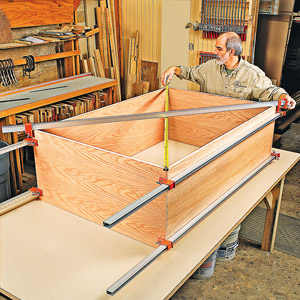
So, I didn’t use a square when assembling the sides of my ladder bookshelf project. Is there a way I could have checked for square without breaking out my squares in the first place?
Turns out there’s not just one way – there are TWO easy ways to determine if a project is square using just a lowly tape measure. This site clearly describes the two procedures – the 3-4-5 triangle method, which uses the Pythagorean Theorem to determine if an angle is at 90 degrees.
The other method is very familiar to anyone who has ever watched the New Yankee Workshop. By measuring the diagonals of a square or rectangular assembly, if the measurements are equal, the assembly is square.
Sure, some of this may seem like common sense. However, you’d be surprised just how quickly that bit of common sense can be forgotten in the heat of an assembly!
I’m a big fan of Joe Gorleski at Joe Woodworker. The guy is like the MacGyver of veneering, giving the average Joe (pardon the pun) the know-how to build his or her own veneer press using common shop materials.
Joe links to a great primer on the process, his plan and a number of plans submitted by woodworkers who built their own systems. He also goes into great detail about the other materials you will need to get the job done, including breather mesh, vacuum bags and platens.
No desire to go the vacuum route? No sweat, Joe even links to other tried-and-true methods to get to veneer nirvana. A must read!
While the vast majority of flag poles installed at homes and at businesses are either metal or fiberglass, there are still companies out there making classic wooden models to fly your flag from.
One of the most notable is Hennessy House Wooden Flagpoles, which makes their models in the traditional method using western Douglas fir, and their standard models come with several coats of clear exterior lacquer or a gloss white paint and all of the installation and flag hardware. They even show how their flagpoles are made – an interesting tutorial.
If you are looking to install a flag pole in your yard, Hennessy gives you a good reason to consider going with a traditional wooden model.
If you want to cut a tenon, you could do the task with a backed hand saw, a dado stack or even a router bit. And all of those ways are perfectly acceptable. But, hey, you have a table saw (Well, most of us do, anyway) – why not consider a commercial tenoning jig?
Sure, you could build your own from scrap wood, but these babies are heavy, accurate and have a very quick clamping capacity.
This article by Wood Magazine shows you the ins and outs of the jig, how to set it up accurately and the best way to employ it in your own shop. If you are considering taking the plunge, this article is a good place to get some pointers.