Category Archives: Link of the week

Link of the week

Micro Jig Tools

With my last post this Wood Worker’s Safety Week, it’s only fitting that I focus on a company whose purpose is safety… Micro Jig.

While their offerings include the MJ splitter system (in both plastic and steel core models) and their Zero-Play guide bar system for building jigs, without a doubt, their flagship product is the GRR-Ripper 3-D push block.
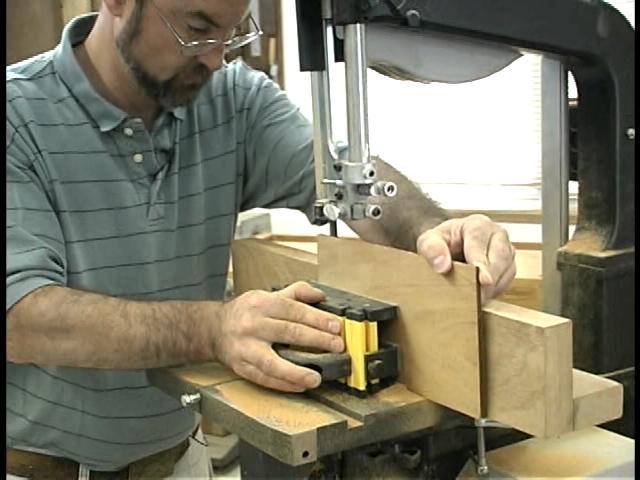
This little baby is famed in song and story as what is close to the ultimate push block for work on table saws, router tables and other power tools. It offers excellent control , and even allows the user to push it over the table saw blade, securing the work while allowing the blade to pass through the tunnel formed by the block’s two feet.

Take a look at their offerings, their fully-video information center and their support pages to find out more about their offerings. While not the most glamorous tools, their offerings will definitely help you amp up the safety in your shop.
 

Link of the week

Wood-Mizer Portable Sawmills

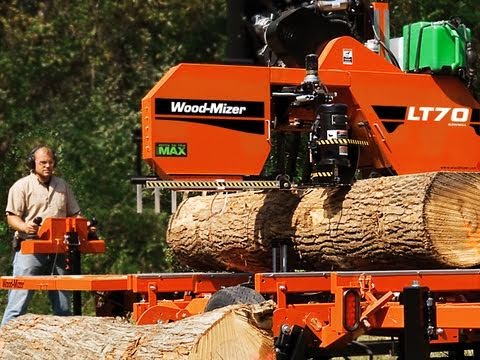
When you want wood, you go to a hardwood supplier or local sawmill and get some awesome stuff. When the old tree you used to climb in behind your grandparent’s house blows  over during a storm and you don’t want to see it ground up into mulch, you need to bring in a portable sawmill.

The folks at Wood-Mizer are specialists in portable wood mills, but that’s only one part of their offerings. In fact, they sell all of the the equipment to take a tree from its whole form to useable lumber. Even if you don’t want to own your own, the company can put you in touch with local portable sawmill owners who just might be able to help you out.


Link of the week

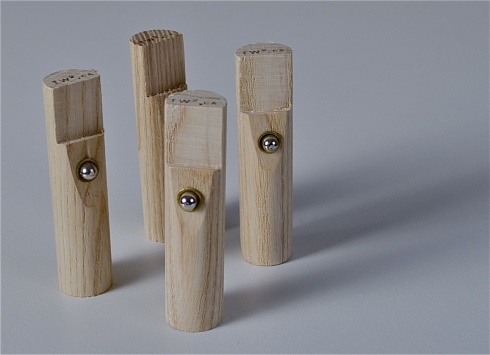
Time Warp Tools’ wooden bench dogs

RUFF!  Bench dogs are some of the handiest things you can have for your workbench. These babies set into dog holes in your bench allowing you to clamp work down securely using either the dog in your bench vise, wedges or other holding contrivances.

Many of these bench dogs are metal. And, should you plane past the edge of your work and your plane iron hits the metal dog, well, get ready to do some serious sharpening. And, if you really crank down on the pressure to hold the work down, metal dogs are more likely to mar the face of the board they bear against.  That’s why wooden dogs are preferred… and that’s where the folks at Time Warp Tools can help.

These babies are made of kiln-dried, quartersawn ash which is both plenty strong to immobilize the workpiece and soft enough to avoid causing any dents.  Just as importantly, cutting edges aren’t affected in the least when they accidentally hit the dog.  A sprung ball catch allows the dogs to hold their vertical position.

Now, if you need a plane to go with that snazzy new set of bench dogs, why not check out their hand made wooden planes?

Link of the week

Joe Woodworker’s guide to using veneer tape

Veneering can open your woodworking to exciting new possibilities. Imagine a wildly swirling walnut burl door panel on your next cabinet project?  How about a gracefully veneered mantle clock featuring crotch grain? If you can imagine it, you can do it.

While it’s great to be able to cover your project with one complete sheet of veneer, sometimes, you will need to join two sheets to cover a large project. Or, maybe you want to cut your veneer sheets into smaller pieces and combine them into a fancy book matched or star burst pattern. If you need to do this, your secret weapon is veneer tape.

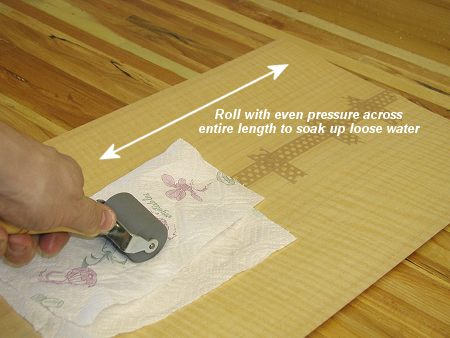
This tape activates with moisture (kind of like a postage stamp) and helps to hold the sheets of veneer together until it can be adhered to a substrate.  As the tape dries, it shrinks ever so slightly, ensuring that seam is as tight as possible.  Joe Goreleski share these tips – and many others – on this information-packed page.  Definitely a good read for up and coming veneer users.

Link of the week

The segmented turner

If you turn pieces on your lathe, you know that you can make some gorgeous looking pieces from a single piece of wood. But, if you want to add more visual interest while using up smaller pieces of wood, you should check out segmented turnings.

By gluing up these smaller bits of wood, you can create pieces with tremendous visual interest. The process is quite simple to accomplish, but it takes some care to get the smaller pieces lined up and arranged properly so the final piece is just as you planned it to be.

This site serves as an excellent jumping-off point, offering segmented turning tips, plans and links to other sites featuring more segmented turning advice. Why not take it for a spin yourself?

Link of the week

New Woodworker’s kickback video

PLEASE DO NOT TRY THIS AT YOUR SHOP!  SAFETY IS A PARAMOUNT CONCERN, AND YOU DON’T WANT TO INJURE YOURSELF!

Nothing is more terrifying to a woodworker than the possibility of being injured in his or her shop.  One of the most potentially gruesome injuries could occur if the piece you are cutting on a table saw gets caught up and kicked back at you. I don’t care how small your saw is – because of the dynamics of how the blade cuts, it can happen.  I remember once having a piece kickback on me while using a powerful Delta Unisaw. While I wasn’t hurt, I did need to change my drawers…

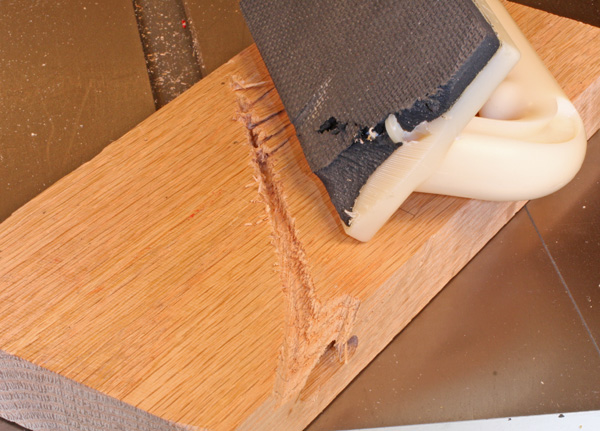
Tom Hintz of New Woodworker.com does a tremendously foolish – yet valuable – thing for all woodworkers by purposely causing a kickback and capturing the results on video.  Even knowing the kickback was coming didn’t prevent a violent reaction from taking place. The results of the video will leave you feeling a bit sick to your stomach (Look at how freakin’ close his hand comes to the saw blade), the video disproves some long-held beliefs many woodworkers have about this kind of accident (I don’t need a splitter or riving knife, I can hold the board down and ride out the kickback, etc.).

Please, watch this video if you work with a table saw. These accidents happen in the blink of an eye and can carry tremendous force. Remember – your hobby shouldn’t have to cost you a trip to the hospital.

And, Tom – please don’t ever try this again… OK?

Link of the week

Making a form and  a bent lamination

Building furniture with straight lines and square corners is a great accomplishment. But, when you throw things a curve … wow.

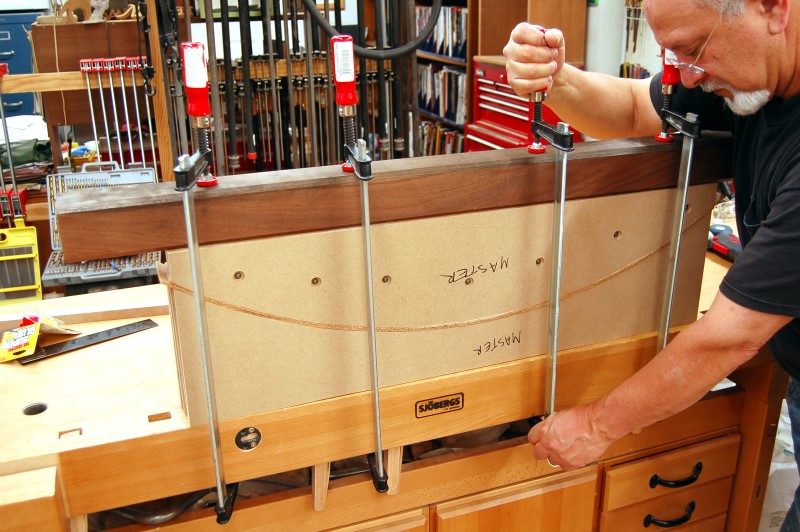
Online woodworking how-to guru Al Navas of Sandal Woods Blog built a table with some sweet curved legs a few years back. While there were many compliments, there were many more that came in about how he built those legs.  Al used the tried-and-true method of bent lamination – an easy way to make the curve without having to create a steam box.

To answer those e-mails, Al created a tutorial page that takes readers from layout to form preparation to resawing the stock to the think strips required to make the lamination.  Even if you don’t want to build a project with flowing curves, it’s still a joy to watch Al go through the process – and see the results!