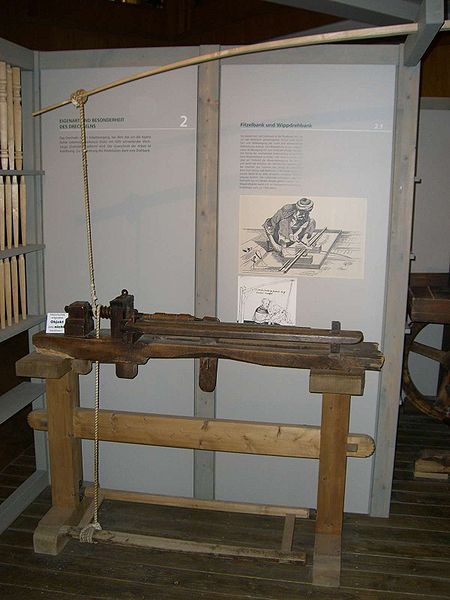
It’s one of the oldest woodworking ‘machines’ ever invented. It can be made quite simply, and yet turn round stock or other spindles out of square blanks.
It’s a pole or treadle lathe, and in the UK, the Association of Polelathe Turners and Greenwood Woodworkers has a great plan on how to build one of your own. The plan goes into great detail about how to build the stand, the stocks and centers and how to select wood for the pole.
Building your own pole lathe may be just as impressive as the projects you turn on it.
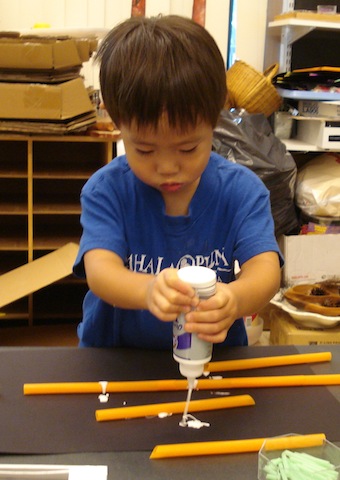
So, the kids are about done with school, but they still need to be kept occupied and their curious minds engaged during the summer break. Why not conduct a little experiment?
EHow has a great page to help you and the young scholar in your life to conduct a simple strength test on glues. This process will teach your students about the scientific method, how to prepare samples and how to record results. While you may get a few grumbles at first, projects like this can be a lot of fun, and it will also help you get an idea of just how strong your glues really are.
The page also links to other glue experiments that can be done. Just in case you want to continue the fun!
Some woodworkers love to turn. Others love to use hand tools. Still others love to fire up their ultra-high-duty powered tools and let the sawdust fly.
But, a woodworking blog about tortilla presses? Llamas? Dude, get ready for a trip to Nik Brown’s blog!
Nik is one heck of a Renaissance guy. His blog covers many different aspects of woodworking. Hand tool selection? It’s in there – with his blended East meets West approach. Milk paint? You betcha – it’s a great finish, and Nik takes the time to tell you why. Photography? Welding? Llamas? Hey, it’s his blog! Let him write whatever he wants!
I would say that Nik is serious about his fun, but he is about as goofy as I am, so it’s safe to say he takes his goofing around seriously. He’s been a big time supporter of the blog, and my hat is off to him.
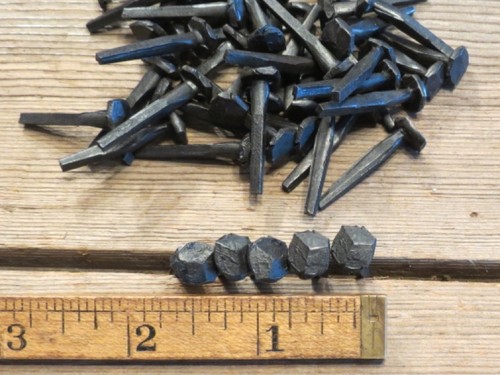
Centuries ago, nails were a very important – and expensive – method to join boards for projects. So valuable, in fact, that old homes were routinely burned down so the old nails could be recovered and used in a new structure. Why? Because each one had to be forged by hand by a blacksmith.
Today, nails are cranked out by the millions in factories and sold for dirt cheap. But, those new nails don’t have the charm or period appearance of those classic ones. If you are looking for those kinds of nails, there is a company that can help you with period authentic models. Tremont nails has been making nails in the traditional method using period nail making machines more than 130 years old.
They have a wide selection of rose head nails, cut nails and other period types that can lend a flair of authenticity to your next project.
Chuck Norris doesn’t do push ups. He pushes down, and the world moves away from him.
There is no theory of evolution – only a list of species Chuck Norris allows to live.
Chuck Norris can cut through a hot knife with butter.
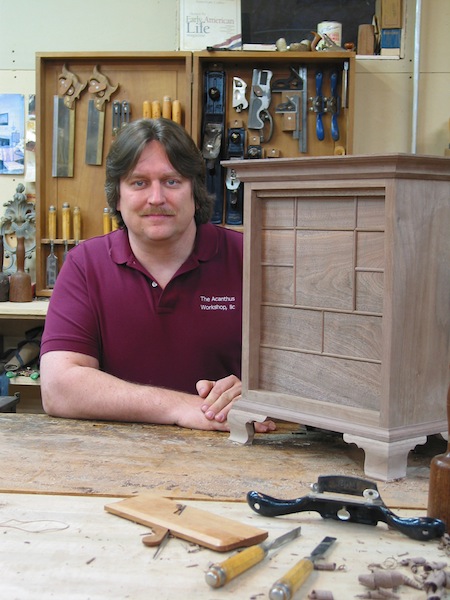
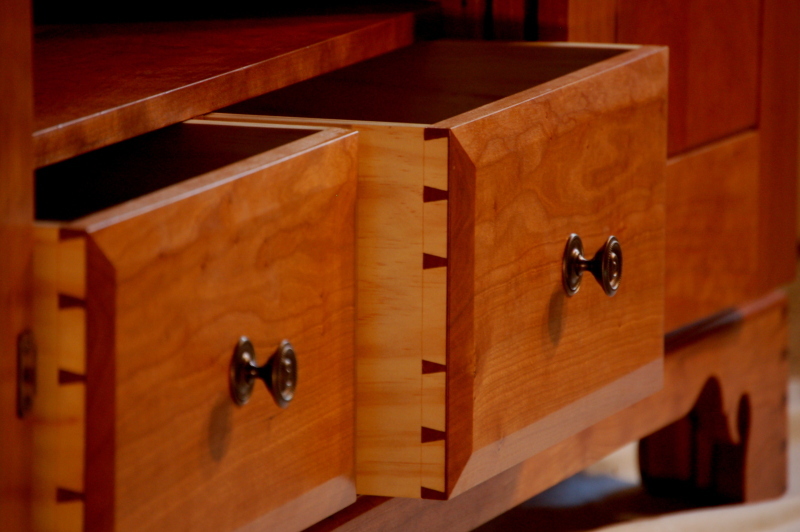
And, you’ll never guess who taught Chuck Norris how to cut dovetails. Why, it was Chuck Bender of the Acanthus Workshop. All kidding aside (and who the heck am I kidding?), Chuck (Bender) is a magician when it comes to hand cut joinery. From the very simple to the mind-bendingly ornate (Bermuda Dovetails, anyone?), Chuck can do it , and – even better – teach you how to do the very same techniques online or at his school.
But, be careful. Chuck Bender cuts both is pins and tails at the same time…
Following a lifelong passion for building things, Mark Hochstein’s interests went from building model airplanes, leatherwork and eventually his first woodworking project – a skateboard – when he was the ripe old age of 12. And, when he joined the military, he rediscovered the passion for building.
Today, he runs Gunpowder Woodworks, his haven where he builds furniture in his blended tool workshop. The design of his work is classic and refined, with bold lines and skilled joinery. Take a look at his site and you will come to appreciate his skilled design eye and craftsmanship.
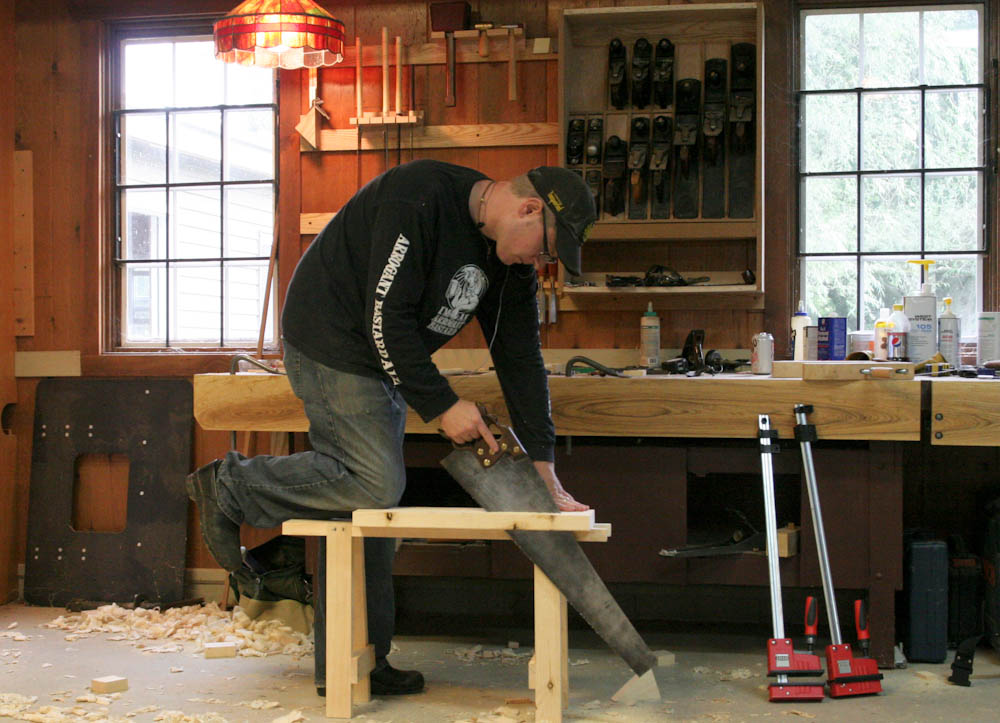
In Wednesday’s post, I mentioned that I was working with fellow St. Petersburg Woodcrafters Guild member Andy Gibson to get my old saw sharpened. I thought it was only fitting to feature his website this week.
Andy is a talented young woodworker, skilled in the use of hand tools. But, he’s also more than that. You should see the ukeleles he builds And, he’s also building his first guitar out of locally-harvested camphor wood. He had to name his instruments as Sideways Eight instruments, because Gibson Guitars was already taken.
Check out his work. I think you are going to be pleased with seeing his skills.