Category Archives: Tools

You say goodbye and I say hello …

I don’t normally like to part with anything in my shop.  I have tools, gadgets and ge-gaws that I bought, used once, hated and chucked on a shelf to collect sawdust. In fact, one day I really do need to take a full block of shop time, pull everything off the shelves and just make a purge of the stuff I will never use again.

However, there are some times I don’t hesitate to part with items.  I have given a few older routers to friends struggling to get a start in woodworking.  I sold my bench top table saw.  My first drill got cooked while installing hurricane shutters on my house.

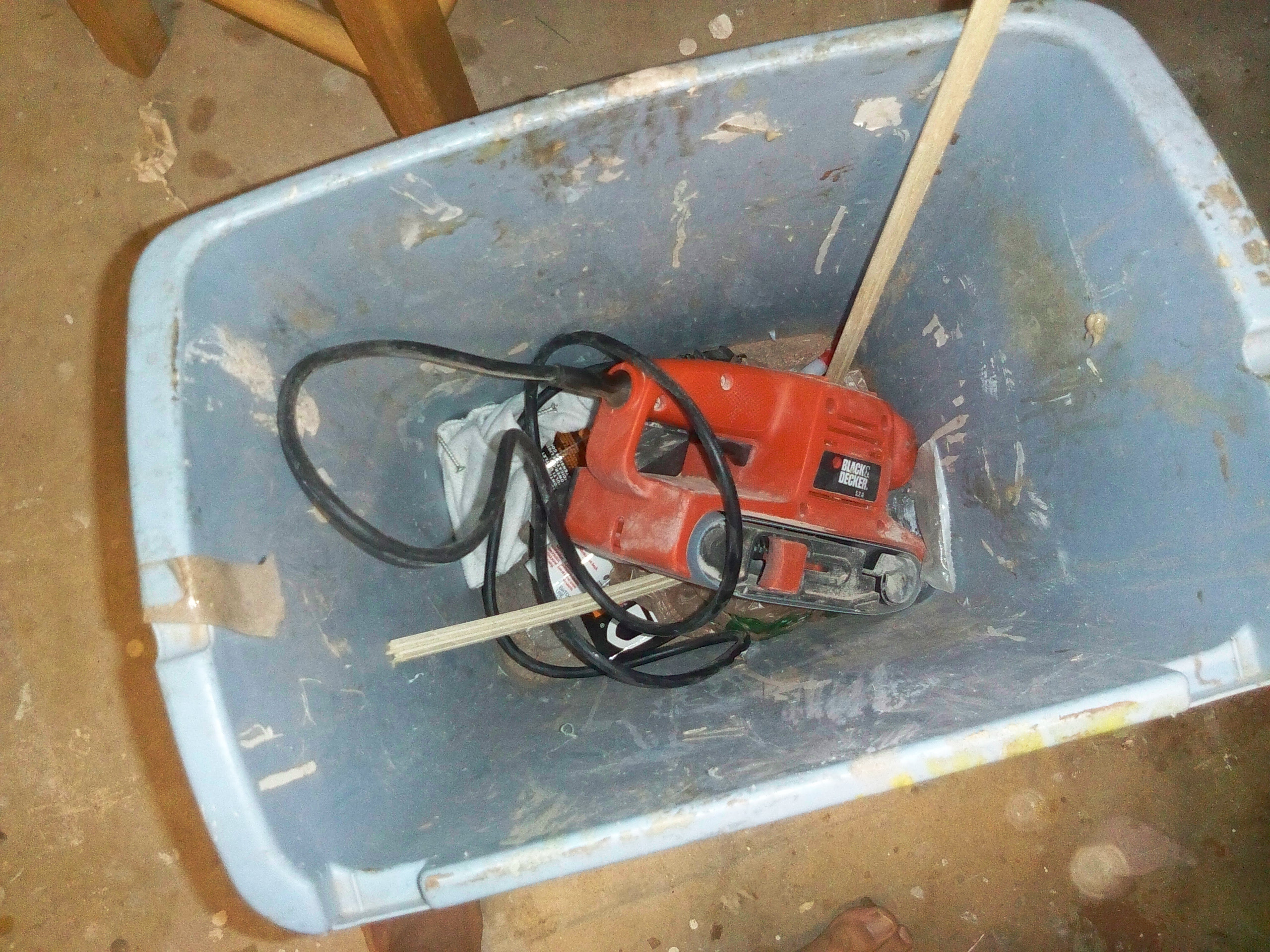
I knew that soon I was going to make another move to dispose of a tool. I have a belt sander.  A Black and Decker light-duty model I picked up at a local WalMart five years ago when I was building a series of banded boxes as Christmas presents.  It worked well for that project, served me admirably for more than a few others.  I eventually came to like the tool’s utility and handiness. It was as if I had made my peace with the tool and was hoping that it would last forever.

But, who was I kidding?  I knew the day was going to come when it was going to give up the ghost.  It was just a matter of time.

I was using the tool to sand down some excess dovetail spline material when I noticed some strange behavior. First, when I hit the trigger, I could hear a clicking as the belt rotated. I removed the belt and replaced it with a fresh one, but it didn’t change. I ran it without a belt on, and still heard the ominous clicking.  Shot bearings? Hmmm…

I also noticed the rate of rotation of the belt would vary… very fast, then slower, then faster.  The motor would struggle during those periods of slow running.  Hmmm…

And, there was no mistaking the scent of burning when I used the sander for a few minutes. Hmmm…

Yeah, the time has come.

So, I ordered one of these.  It’s  heavy duty Ridgid  belt sander that uses the same size belts as the Black and Decker.  That’s good – at least I’m not wasting any of the belts I have on hand.  It’s heavier that the old one, indicating to me that the motor is beefier.  The dust collection port actually fits a standard reducer for my shop vacuum’s hose.

And, for me, this is my first foray into the world of reconditioned tools.

I was looking at the brand new models, and they were very impressive.  But, for our family’s finances, maybe just a little bit too much – especially as my wife and I look to pay for summer camps for our boys and save for some brief-yet-exciting family vacations.  The reconditioned model was half the price and still had a warranty as long as many as some of the other brands I saw in stores.

I plan on putting the sander to the test soon and giving it a serious work through.

In the meantime, well, sorry, little red.  You gave solid service for a number of years, but the time has come.  It’s time to move on to where good power tools go after a long and rewarding life.

A new product: Prazi Groove Center

I’ve been told by many people that I need to take up meditation.  No, not some kind of mystic zen-like kinda thing, but just a few minutes every day to sit quietly, relax and do some deep breathing in order to take the edge off.  The benefits are that my blood pressure would drop, I would sleep better and it would help me find my ‘center’ of calm.

Well, at my house, with a busy job, two sons and all the other stuff that goes with being a dad, husband and homeowner, time to relax is at a premium.

Fortunately, the folks at Prazi USA have found an easier way for me to find my center.

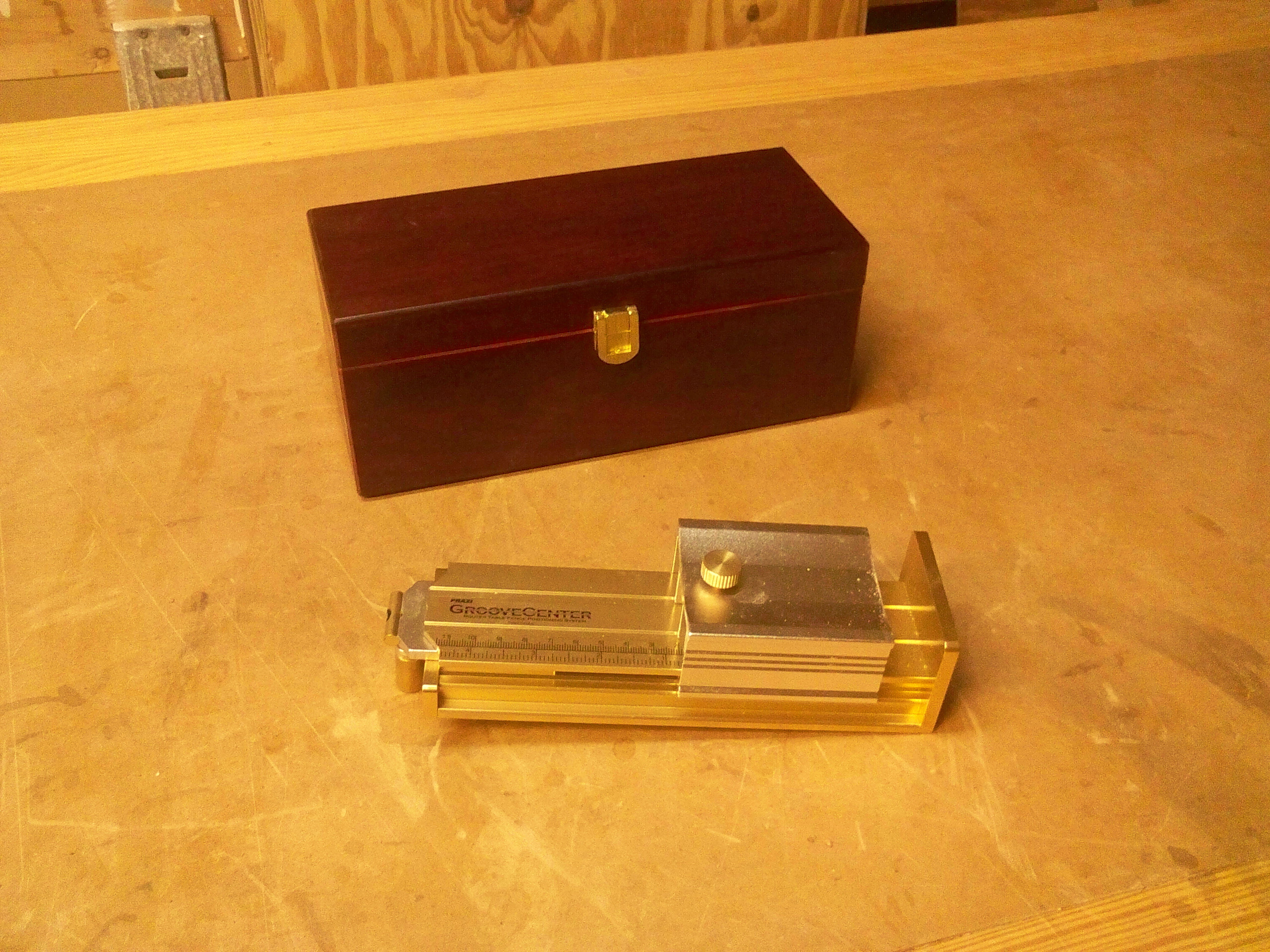
To be precise, they have created the Groove Center. This nifty device helps you find the middle of a board while routing grooves.  The first time.  Seriously.

What do you get?  Well, the tool comes packed in a beautiful box befitting a precisely-functioning tool. The tool its self is a gold anodized aluminum beauty. It consists of a flat base that allows the tool to sit securely on your router table, and a sliding ‘truck’  that rides in the slots of the base.  As you move the ‘truck’ along the base, you will notice the third piece which extends from the front of the piece.  You will notice that this piece moves exactly one half the distance you move the ‘truck’. This measuring tool is what allows you to set your router table’s fence perfectly the first time around.

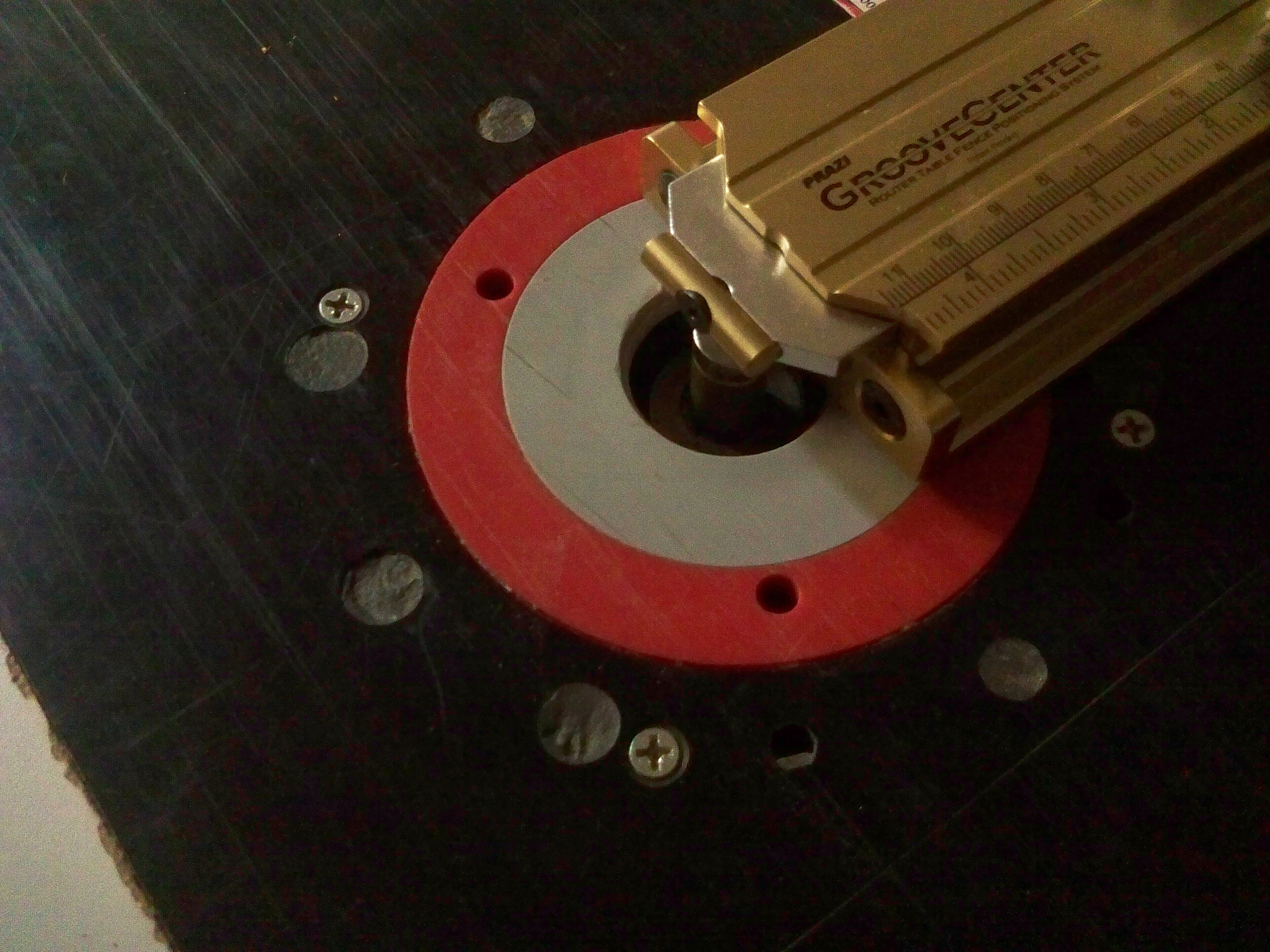
To set up the tool, first, you have to make sure the device is zeroed out, with the ‘truck’ far over to the stop at the back of the track. Push your router’s fence back away from the bit, jack your table-mounted router with the collet as far up as it will go.  There’s a 1/2″ diameter pin at the front of the jig that you slip into the collet (the 1/4″ pin is coming soon) and tighten so it grips the pin.  This is a very important step, since you are precisely measuring where to set your fence.

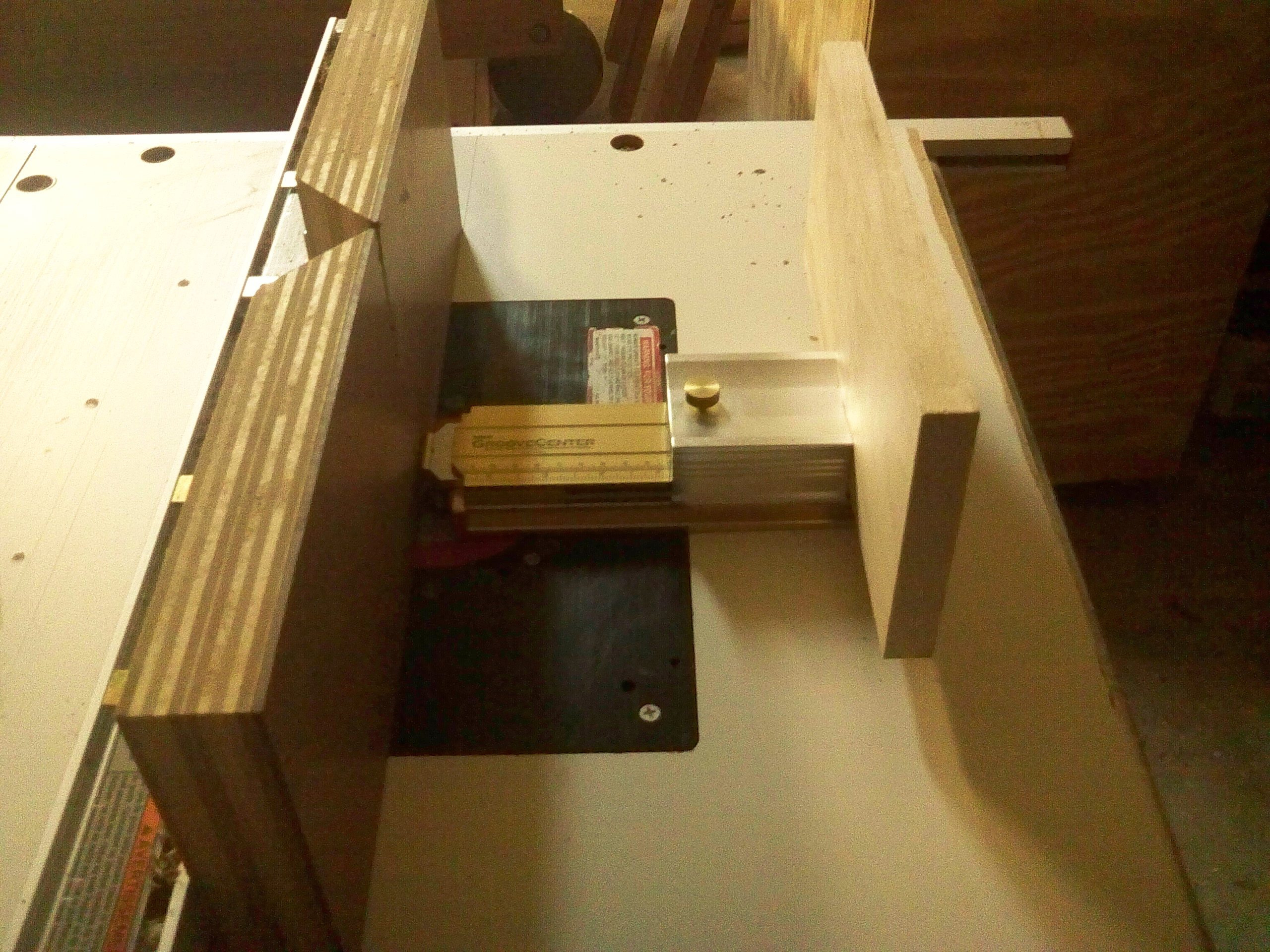
Next, push the ‘truck’ toward the front of the jig and slip a piece of the stock you will be routing into the opening and close the ‘truck’ to capture the piece.  Gently tighten the knob that locks everything into place, and voila, you will see that the nose of the jig has extended half the distance of the workpiece thickness.  Bring your router table fence over until it touches the nose and bingo, you are set up good to go.

Just don’t move the router fence.  It’s set perfectly.  If you have to move the fence in order to get to your router bit, you can clamp some wood to your table as a stop to allow you to get the fence back into the right position after you set the bit up.

Loosen the collet and remove the jig.  Insert your router bit and tighten it in place. If you had to move your fence, return it to its original position and you are good to go.  The groove is centered on the first run – no fuss, no muss.  And, it’s not just for grooves – cutting mortises on the router table is a snap once you know that everything is lined up perfectly.

Is this all the Groove Center does?  Absolutely not.  It has another trick up its sleeve – setting up the tricky-to-master lock miter bit.  But, that’s another post for another day.

Right now, I have a quick 15 minutes to spend meditating.  Gotta find my center, ya know.

FYI – here’s a video of the Groove Center in action…

Kehoe-ly smokes!

A few years ago, I wrote a review of the Kehoe jig on my website. It was an interesting and very decorative way of making ‘dovetails’ (actually dovetail splines) for boxes, chests and other 90 degree corners. Since then, I have used it on more than a few projects – each one coming out looking good with very tight joinery.

In fact, on more than one occasion, I thought I was doing something wrong because the process went so smoothly.

Here I was thinking that I would use that jig time and time again for years to come.

But, boy, was I wrong. That’s because the folks at Kehoe have recently made some significant improvements to the jig, and are offering more options.

I got a call from Kevin Jaynes who said that the company was going from the old vinyl extrusion for their jig to all aluminum models. The new material – 1/8″ thick aluminum – allows a significant improvement in accuracy – and they just look so much better.

A great deal of care was also given to the selection of materials and manufacturing process during the redesign process. “Everything about these jigs is American – from the ore to milling. We went out of our way to make sure that everything was from the States.”

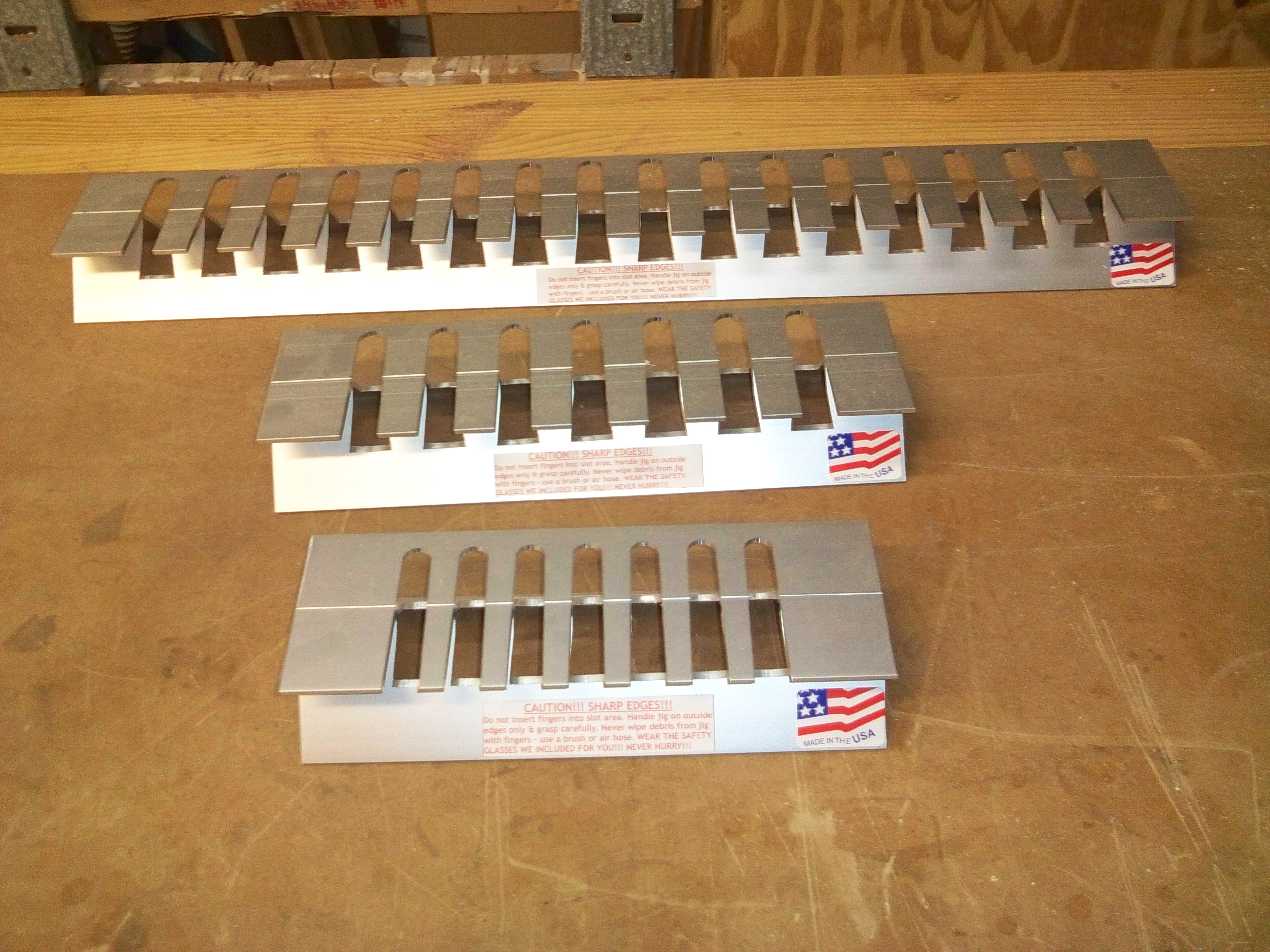
Instead of the former one-size fits all approach, Kehoe now offers three models to choose from. The smallest of them is the K-8, which works best for humidors, memory boxes and other small-scale projects. “This is the only jig that doesn’t offer the ‘standard’ size slots for routing. This one works well with almost any size router bit and a 1/2” outside diameter router bushing. This is best with 1/4” collet dovetail bits.” Kehoe also sells a smaller bit with a 1/2″ bearing that rides on the smaller K-8 jig.

The K-12 is a direct replacement for the old vinyl model. The slots fit the bits that the company provides in their kits; two 1/2” dovetail bits. One comes with a 1/2” bearing and one with a 5/8” bearing. “The 5/8″ bearing bit is the same one we sold with the original vinyl jig. So, if you have a setup for the older jig, you are good to go with the new model.”

The big surprise is the K-24 jig. It has the same groove size as the K-12, however, it is twice as long and is ideal for larger chests and other pieces of large-scale furniture. “While it’s easy to use the K-12 for larger projects, the K-24 gives you the opportunity to cut joinery without having to move the jig. It’s a great way to save time during the building process.”

While the jigs are new, the other components of the jig package, including the spline maker, haven’t changed and are as still as simple as ever to use. Kevin also wants us to know he sells quite a few miter saw spline makers especially to European customers. A surprising number of woodworkers do not have a table saw – he says around 7% of his sales are to customers who do not have one. If this describes your set up, you can still use this jig by requesting the miter saw spline-maker free of charge.

While the new jigs do allow a lot of creativity in your projects, the same level of imagination wasn’t used in naming the product. “Sure, all of the names of the new models may sound like former Soviet Navy submarines, but the results are something to behold!”

Tom’s Workbench Readers: Kehoe is offering a special deal on their new jigs for you.  Click here for the details. Funny, I always thought the first special named after me would be a pizza with the works on it…

Tools I use: My striking tools

OK, folks, you may want to hit play on this video while you read the article…

When people think about woodworking, the image of driving nails typically comes to mind.  While driving nails does happen in woodworking shops, there are many more tasks for which a hammer or a hammer like tool is appropriate.

So, for your viewing pleasure, here are the tools I use for hammering-type tasks.

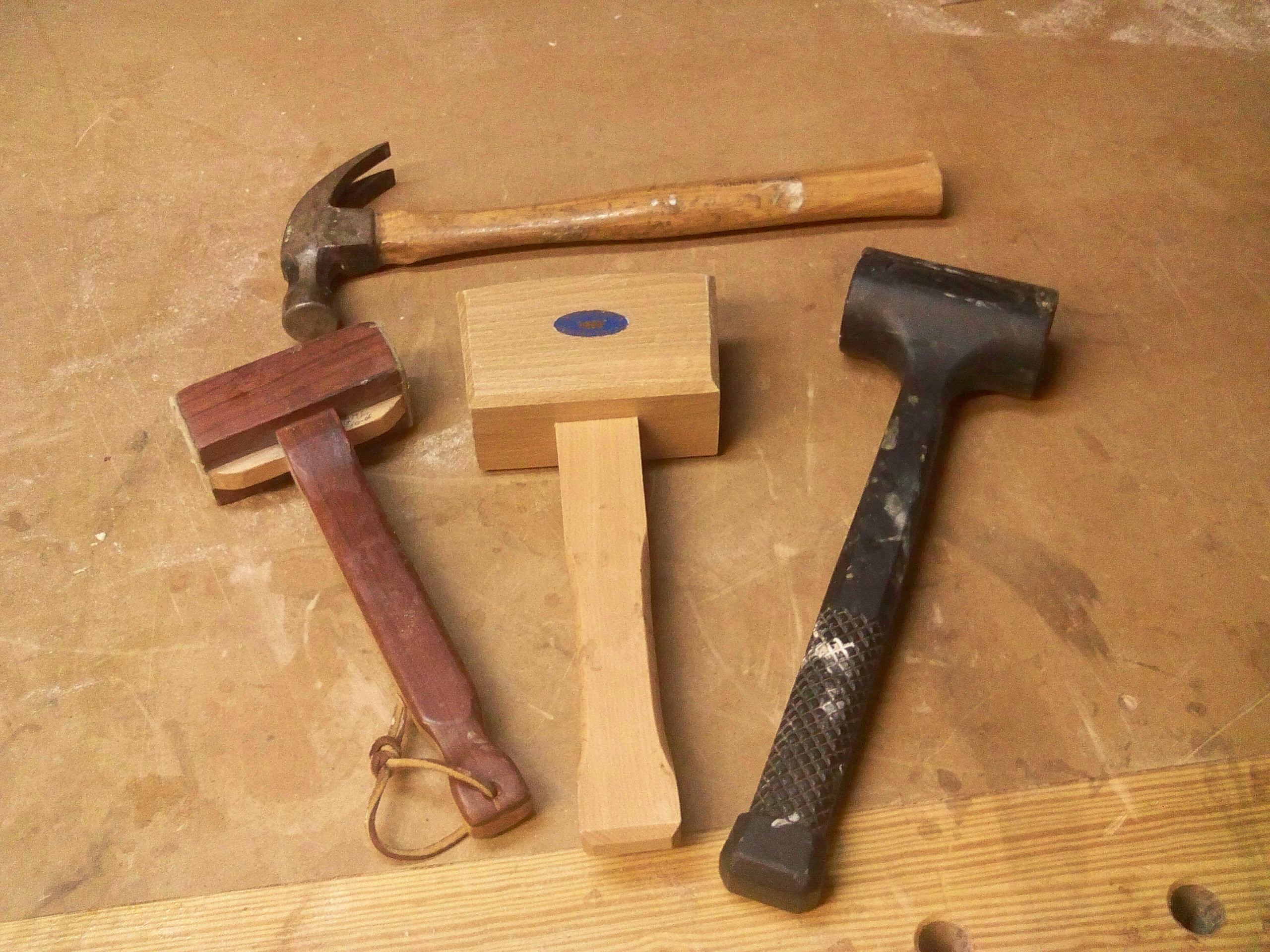
On the top is my 16 ounce claw hammer.  I think it was the first tool I had ever purchased back in 1987 to drive nails into the wall to hang some pictures in my apartment.  It’s not a bad little hammer, and I have yet really need to replace it.

I bought the  first mallet on the bottom left from a fellow woodworker on the Woodworker’s Website Association.  It’s a beautiful specimen, built of an exotic wood (I can’t remember which) and maple.  The faces are glued on leather, which soften the impact on pieces I am trying to assemble.  The head is also filled with bird shot, making it more of a dead blow mallet.  Great for assembly of pieces.  I keep this mallet on hand at all times.  Very useful.

The one in the middle is a Crown carpenter’s mallet.  A heavy chunk of beech, this is a great mallet for driving chisels and adjusting irons in my wooden planes.  I also love the large striking face… it’s hard to miss what you are swinging at.  It was very inexpensive and if anything happened to it, I would definitely buy a new one.

At the end  is a cheap dead-blow mallet.  I used to use this mallet for just about everything, but today I use it for snugging down bench hold fasts, driving wedges and other odd jobs.  It’s also great for sealing cans of finish after I pour out what I need to finish a project.

Sure, it’s not a large collection.  However, now that I have a few ‘hammers’, I guess I should start hammering in the mornin’ and in the evenin’….

Steel yourself!

Tens of thousands of years ago, the first woodworkers used bone, rock and other raw natural materials to create their works. Since then, metals such as copper, bronze and iron have greatly improved the quality, durability and effectiveness of the tools in the chest.
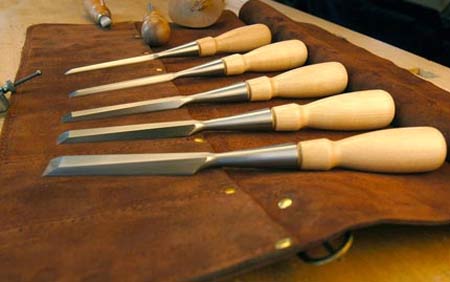
But, once steel was created, tool making really took off. Durable and resilient saw blades made cutting wood easier and chisels and plane irons could take and hold a sharper edge for longer.

With today’s modern production methods, there is plenty of quality steel out there for the woodworker to choose from. Choose is the operative word here, and many’s the woodworker who has had to decide between different kinds of steel for their new tool. A2. White. O1. High speed…

How is a woodworker supposed to navigate this mess without help?

Fortunately, there are many guides out there to help make sense of the confusion. One of the most knowledgeable is Ron Hock of Hock Tools, but even someone as well-versed as Ron needs help in properly describing the different types of steel out there. “In my recent book The Perfect Edge, I had to enlist a small army of specialists to get to the bottom of the metallurgy behind today’s modern steels.”

First and most importantly, what is steel? “It’s an alloy of iron, carbon and some other elements, depending on what you want the steel to do. Basically, the carbon is necessary for hardening the steel through heat treatment.”

But, doesn’t that make all products made of iron steel? Not really. Cast iron is also iron and carbon, but its carbon content is too great to be considered steel, and the very high carbon content tends to make cast iron brittle. Wrought iron, on the other hand, has too little carbon to be called steel. Its low-to-zero carbon content isn’t enough to add the strength that we want from steel.
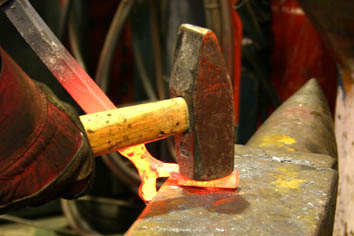
Ancient steelmakers used to repeatedly heat iron and hammer out the impurities. It took a lot of heating and a lot of hammering to make steel in this process, but the quality was quite good in the case of Japanese and Damascus steels.

Today’s modern processes use a powerful electric arc to heat raw iron and recycled steel in a crucible. Pure oxygen is then pumped through the molten mixture to ‘burn’ off impurities. Elements such as additional carbon, tungsten, molybdenum are then added to control the metal’s characteristics.
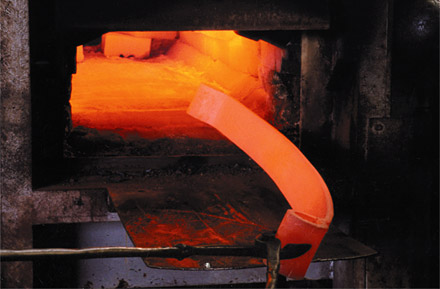
Some steel is designed to be very flexible – called spring steel. This steel has a moderate to high carbon content. Surprisingly, the composition of spring steel is not that different from harder tool steels. What makes it different is that it receives a special heat treatment to allow it to return to its normal form after significant bending and twisting. It is great for making items such as saw blades. This kind of steel cannot hold a sharp edge for a very long, but is very easy to sharpen

Other steels have elements added to them so they will be tougher, harder and can hold an edge longer. These are called tool steels, and they come in many varieties. These steels are typically heated, forged to shape, then reheated and cooled rapidly to freeze the crystalline structure of the material. The rapid cooling from high temperature is the essence of hardening by heat treatment.
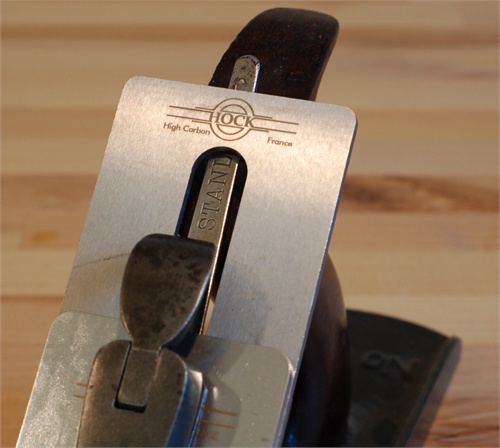
When looking at a premium tool catalog, you will notice that the steel in chisels, plane irons and other cutting tools is often indicated, and you will have to decide what kind you will want. Some of the more frequently-seen types of steel include O1 and A2. “Both are very high quality steels,” said Ron. “The A2 is air quenched and slightly tougher. It will take a very keen edge and hold it longer, but it does take more time to hone. The O1 steel is oil quenched and just a bit less tough, so it won’t hold the edge quite as long, but can be rehoned easily. It’s a matter of personal preference.”

High speed steels have additional elements such as tungsten and molybdenum added so the steel will keep its strength at high temperatures. “This is very important when using things such as drill bits and power saw blades. That high temperature strength makes the tool much more useful in high temperature applications.”
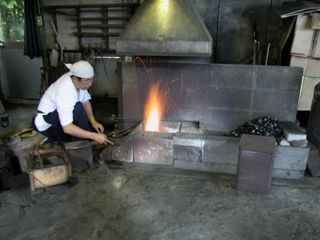
Of course, a discussion about tool steel wouldn’t be complete without a foray into the world of Japanese steels. During the Woodworking in America conference last October, master woodworker Toshio Odate explained that the composition of steel is indicated by a colored paper band wrapped around bundles of steel used to create tools. Hence, the actual color of the steel is the good old silvery-tone you are accustomed to seeing, regardless of the ‘color’ of the steel used to make tools.

White steel (steel bundled with a white paper band) is the purest variety, nearly free of impurities. This steel takes much more skill to forge, and the masters with the knowledge are becoming harder to find as they age and retire. Blue steel (yes, steel bundled with a blue paper band) has a number of other elements added to make it easier to work with, but these elements change the characteristics of the tool itself. Other varieties, such as yellow steel, are available, but are not typically used to make tools.

While this blog entry isn’t designed to be the be-all and end-all of steel knowledge, hopefully it will spur you to find out more about this revolutionary woodworking material.

Tens of thousands of years ago, the first woodworkers used bone, rock and other raw natural materials to create their works.  Since then, metals such as copper, bronze and iron have greatly improved the quality, durability and effectiveness of the tools in the chest.

But, once steel was created, tool making really took off.  Durable and resilient saw blades made cutting wood easier and chisels and plane irons could take and hold a sharper edge for longer.

With today’s modern production methods, there is plenty of quality steel out there for the woodworker to choose from. Choose is the operative word here, and many’s the woodworker who has had to decide between different kinds of steel for their new tool.  A2. White. O1. High speed…

How is a woodworker supposed to navigate this mess without help?

Fortunately, there are many guides out there to help make sense of the confusion.  One of the most knowledgeable is Ron Hock of Hock Tools, but even someone as knowledgeable as Ron needs help in properly describing the different types of steel out there.  “In my recent book [rjh1] The Perfect Edge, I had to enlist a small army of specialists to get to the bottom of the metallurgy behind today’s modern steels.”

First and most importantly, what is steel?  “It’s an alloy of iron, carbon and some other elements, depending on what you want the steel to do.  Basically, the carbon is necessary for hardening the steel through heat treatment.”

But, doesn’t that make all products made of iron steel? Not really. Cast iron is also iron and carbon, but its carbon content is too great to be considered steel, and the very high carbon content tends to make cast iron brittle. Wrought iron, on the other hand, has too little carbon to be called steel. Its low-to-zero carbon content isn’t enough to add the strength that we want from steel.

Ancient steelmakers used to repeatedly heat iron and hammer out the impurities.  It took a lot of heating and a lot of hammering to make steel in this process, but the quality was quite good in the case of Japanese and Damascus steels.

Today’s modern processes use a powerful electric arc to heat raw iron and recycled steel in a crucible.  Pure oxygen is then pumped through the molten mixture to ‘burn’ off impurities.  Elements such as additional carbon, tungsten, molybdenum are then added to control the metal’s characteristics.

Some steel is designed to be very flexible – called spring steel.  This steel has a moderate to high carbon content. Surprisingly, the composition of spring steel is not that different from harder tool steels. What makes it different is that it receives a special heat treatment to allow it to return to its normal form after significant bending and twisting. It is great for making items such as saw blades.  This kind of steel cannot hold a sharp edge for a very long, but is very easy to sharpen

Other steels have elements added to them so they will be tougher, harder and can hold an edge longer.  These are called tool steels, and they come in many varieties.  These steels are typically heated, forged to shape, then reheated and cooled rapidly to freeze the crystalline structure of the material. The rapid cooling from high temperature is the essence of hardening by heat treatment.

When looking at a premium tool catalog, you will notice that the steel in chisels, plane irons and other cutting tools is often indicated, and you will have to decide what kind you will want.  Some of the more frequently-seen types of steel include O1 and A2.  “Both are very high quality steels,” said Ron.  “The A2 is air quenched and slightly tougher.  It will take a very keen edge and hold it longer, but it does take more time to hone.  The O1 steel is oil quenched and just a bit less tough, so it won’t hold the edge quite as long, but can be rehoned easily.  It’s a matter of personal preference.”

High speed steels have additional elements such as tungsten and molybdenum added so the steel will keep its strength at high temperatures.  “This is very important when using things such as drill bits and power saw blades.  That high temperature strength makes the tool much more useful in high temperature applications.”

Of course, a discussion about tool steel wouldn’t be complete without a foray into the world of Japanese steels.  During the Woodworking in America conference last October, master woodworker Toshio Odate explained that the composition of steel is indicated by a colored paper band wrapped around bundles of steel used to create tools.  Hence, the actual color of the steel is the good old silvery-tone you are accustomed to seeing, regardless of the ‘color’ of the steel used to make tools.

White steel (steel bundled with a white paper band) is the purest variety, nearly free of impurities.  This steel takes much more skill to forge, and the masters with the knowledge are becoming harder to find as they age and retire.  Blue steel (yes, steel bundled with a blue paper band) has a number of other elements added to make it easier to work with, but these elements change the characteristics of the tool itself. Other varieties, such as yellow steel, are available, but are not typically used to make tools.

While this blog entry isn’t designed to be the be-all and end-all of steel knowledge, hopefully it will spur you to find out more about this revolutionary woodworking material.


[rjh1]Please make this a link to: www.theperfectedgebook.com. Thanks!

Heaters… in… Space!

Wasn’t the original Star Trek show just too darned cool?

I mean, they had the tricorders that could tell them what was in the air on the planets they visited.  They had transporters to go from place to place quickly.  Dr. McCoy had that little salt-shaker looking thingamabob that he waved over patients and told him everything he needed to know about their condition.

And, the uniforms on the female crew members were something to look at.  Of course, that was 1960’s TV for you.

The one thing I thought was really interesting was how they stayed warm in cold locations.  Basically, someone would unholster their phaser, point it at a rock, squeeze the trigger and then huddle around the warm goodness until the Klingons were vanquished, Captain James T. Kirk came to grips with his split personality or some other plot issue was resolved.

Oranges during the recent freeze, Altoona, Florida

Given the recent cold snap in Florida, I wish I could have just used a phaser on a rock to raise the temperature in my shop.  But, I’m afraid that technology is a few centuries away.  So, I’m stuck with what’s out there on the market to heat things up on those chilly winter days.

Yes, this is heater advice from a guy who lives in Florida.  Pay attention…

A quick word about heat.  If you remember high school science, heat is basically just a form of energy.  The transfer of heat always goes from high temperature (energy) to low temperature (the lack of energy).  That’s why you have to power a heating device to keep your shop toasty and why your air conditioner has to work so hard to move heat out of your shop during the summer. In effect it’s actually trying to warm up the outdoors by using the heat in your home or shop.

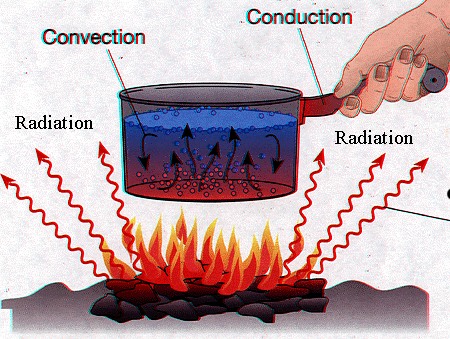
Three methds of heat transfer

There are also three methods of heat transmission that we commonly see.  The first is conduction, which really won’t come into the discussion here unless you wear some kind of heated shop apron on chilly days.  Conduction actually moves heat through physical contact between items.  That’s why my hands were going numb when I held a cold hand plane last weekend… the heat was being conducted along its merry way.

Next, there’s convection.  Warm air is lighter in density than cold air.  That’s why hot air balloons fly.  A heater relying on convection will heat up the air, send it upward and draw in cold air from the room to fill the void.  This is a great way to evenly heat an entire room.

The final way is through radiation.  No, not the ionizing radiation you expect to see Engineer Montgomery Scott handling in the engine pods, but a little something like it.  The heat is actually directly transferred through waves through space from the heat source to your body.  This makes it great for spot heating, something like you do in a workshop you don’t want to heat entirely.

Many methods of heating employ both convection and radiation.  For example, if you light a fireplace, the fire (if you use glass doors or a fireplace insert and don’t let all the warm air rush up the chimney) will heat the air in the room through convection.  If you walk over to the fireplace and point your hands at the fire to warm them up, the heat you feel is arriving via radiation.

Now, when it comes to shop heaters, I’ve learned that there are many choices, and each does its own thing exceptionally well.

First, there are whole-shop heaters.  If you live where there’s plenty of ice and snow and you want to work during the winter, you’ll have to spring for one of these.  They are usually permanently mounted into place and have larger BTU heat outputs and a correspondingly larger fuel consumption.

Since my shop just gets chilly from time to time, I’m going to be selecting from column two – the space heaters.  These are smaller, portable units that can warm up a specific area.  The beauty about them is I can stash one up in the attic all summer long and just drag it down when I need it for the brief cool season in my shop.  They could also provide some supplemental heat for a fully heated shop to lessen the effects of a cold spot.

Next, I have to choose the method that powers the space heater.  There are ones that burn some type of fuel like kerosene, propane or natural gas.  These offer a good deal of heat for their weight and don’t rely on the power to be on to do their thing.  That makes them ideal in the event of a blackout.  The down side is that they produce a deadly gas called carbon monoxide (CO).  Let’s just say that this stuff is lethal, and it’s a great idea to buy a CO detector when you pick up your heater.  Sure, it may add to your cost, but it probably will cost significantly less than hospital bills or a funeral. Seriously.

The other option is an electric heater.  They take power off the grid to do their work, eliminating the threat of CO in the shop.  They come in several different sizes, and in three main designs.

The first ones are primarily convection heaters. They have a fan which draws cold air over a heating element, blowing the warm stuff back into the room. These give a nice, even heating to the room, but, in a larger shop without insulation – like my shop here in Florida – it may take a while feel any warmth.  Like the arrival of spring kind of while. For smaller, insulated shops, though, not a bad idea.

The next ones are primarily radiation heaters. No, they don’t need dilithium crystals, but they do use quartz or metallic heating elements and a reflector.  Just like a spotlight, if you are in the path of the beam from this heater, you’ll warm up.  These might be a great solution if you spend a lot of time in one area (your workbench) and want to direct your heat that way.

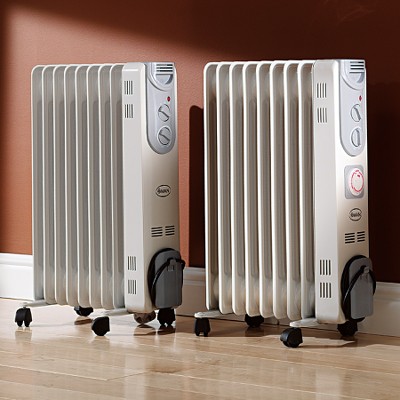
Oiled Filled electric space heaters

The one I am leaning toward purchasing is sort of a combination radiator/convection heater.  These models look like the good old steam radiators found in older buildings.  Instead of channeling scalding hot steam, these models are filled with an oil that is warmed by the electric heater.  The best thing about these heaters is there are no exposed heating elements. The element is immersed in the oil in the unit and the heat is conducted (Actually convected through the fluid medium) to the outer fins by the oil.  This way, there’s nothing directly exposed to sawdust in the air. I have used these way back when I lived in Maryland, and found them to give off a nice, even heat to the room while still allowing you to warm your hands – or posterior – by holding them near the unit.

Whatever method or fuel you choose to heat your home, just keep this in mind – The National Fire Protection Administration reports that heating equipment is the leading cause of home fires during the months of December, January and February, and trails only cooking as a cause for home fires year-round.  Some other sobering facts include:

  • In 2006, heating equipment was involved in an estimated 64,100 reported U.S. home structure fires, with associated losses of 540 civilian deaths, 1,400 civilian injuries, and $943 million in direct property damage.
  • In 2006 heating equipment fires accounted for 16% of all reported home fires (second behind cooking) and 21% of home fire deaths.
  • Space heaters, whether portable or stationary, accounted for one-third (30%) of the home heating fires and three-fourths (73%) of home heating fire deaths in 2006.
  • In 2003-2006, the leading factor contributing to home heating fires (28%) and deaths (46%) was heating equipment too close to things that can burn, such as upholstered furniture, clothing, mattresses or bedding. These statistics exclude fires that were confined to a chimney, flue, fuel burner or boiler.

Some safety tips from the NFPA are:

  • Maintain a 3 feet (or 1 meter) separation between things that can burn and heating equipment.
  • When buying a new space heater, make sure it carries the mark of an independent testing laboratory.
  • Plug your electric-powered space heater into an outlet with sufficient capacity and never into an extension cord.
  • Use the proper grade of the proper fuel for your liquid-fueled space heater, and never use gasoline in any heater not approved for gasoline use. Refuel only in a well-ventilated area and when the equipment is cool.

Oh, and if you do want to heat that rock with your phaser, be sure no one is standing in the line of fire.

I’ll have to set my new heater to ‘stun’ once I turn it on…

Tools I use: My fine hand saws

One of the most popular ‘family’ of shows on TV is the CSI franchise.  For some reason, people love to watch police crime scene investigators show up at some location, sift through the evidence and arrive at a conclusion of what happened.

There is no doubt in my mind that if they came to my house and investigated my choice of hand saws over the years, they would wonder what I was up to.  It’s a baffling collection of tools, but – I fear – it’s how many woodworkers have evolved their collection over years.

Let’s check the evidence we have on hand, shall we?

Here are the ‘fine cutting’ hand saws I have, in order of when I purchased them, with a brief analysis  about them.  Those with weak constitutions may want to turn away.

My uber cheap plastic Big Box back saw.  I would ask for a Mulligan on this one, except for the fact that the $12 I spent on it 13 years ago makes it not worth the effort.  This ‘saw’ came with a plastic miter box that cut ’45 degree’ angles and ‘square’ cuts on the end of boards.  I did use it for several years, but soon discovered that no, this was just not going to work.  I keep it with my fine cutting saws, but I’m not sure why.

My plastic big box ryoba.  This saw proved to be a step in the right direction, showing that at least my mind was moving up from where I had started.  Rip saw on one side and crosscut on the other, the blade is not supported by a back spine.  This means that technique is essential in order to get an accurate cut.  The only problem is that I’m really not set up in a traditional Japanese style shop where the proper technique is easy to learn and apply.  It gives me better cuts, and I will use it to roughly crosscut boards.  Interestingly enough, I had a saw similar to this one before I bought my table saw, and I used to do most of my rip cuts with it.  Fascinating….

The folding dozuki.  This saw is considerably better than the big box ones I have purchased over the years.  I bought it from Lee Valley tools and it does cut rapidly and accurately.  The steel spine runs along 3/4 of the back of the blade, giving me straighter cuts.  It’s not quite dovetail cutting quality, but I have cut some tenon cheeks and shoulders with it.  All in all, a great saw to put in the tool box, but not for precise joinery.

My ‘professional’ dozuki.  After wasting a ton of money on some older, nasty fine cutting hand saws, I finally wised up and dropped some ‘serious’ money ($75) on a high-quality dozuki.  Everyone I had asked about the saw raved about its accuracy and ability to make fine cuts.  And, this one FINALLY got me into the category of real fine cutting saws.  It cuts beautifully, but the problem I have is that with the ‘stick’ handle, I must not be gripping the saw the same way for every cut.  The blade will often wander, and I’m left shaking my head in frustration.  Practice does make perfect, and I really do need a ton more.

My Veritas dovetail saw.  Now, we’re talking.  I picked this baby up earlier this year, and wow.  It’s a western-style push saw AND it has a handle that pretty much guarantees I’ll be gripping it the right way every time.  I love the cuts it makes and the accuracy.  The only knock on it is that the blade depth is just too small for all of the cuts I want to make with it.  I’m hoping the folks at Veritas will make a larger tenon saw in this pattern for folks who need a little more depth of cut.

What does the future hold?  Well, I do like these saws, and I wouldn’t mind getting my hands on a premium tenon saw.  Right now, however, these guys are the ones I turn to in order to get the job done right.

Case closed.