All posts by Tom

I'm the guy who writes the blog...

You never forget your first…

The first time I rode a bike. The first time I drove. My first date. The first night I spent away from home at college.

You really never forget your first time doing something memorable. And, yes, I am about to experience a new first.. my first 2 x 4 contest with the St. Petersburg Woodcrafter’s Guild.

I know. “Tom,” you must be thinking,”How on Earth are you going to contain your excitement?”  Easy there, Sparky. It’s a big deal, but not a life changer.

The real challenge with a 2 x 4 contest is coming up with something inspired. I mean, there’s only so much inspiration you can get from looking at an eight foot long piece of construction lumber. Well, maybe you can envision a room being studded out in your home… but a furniture project?  Hmm….

So, I tottered over to the local big blue home improvement center and saw the stack of  2 x 4s to pick from. They all seemed to look the same to me.
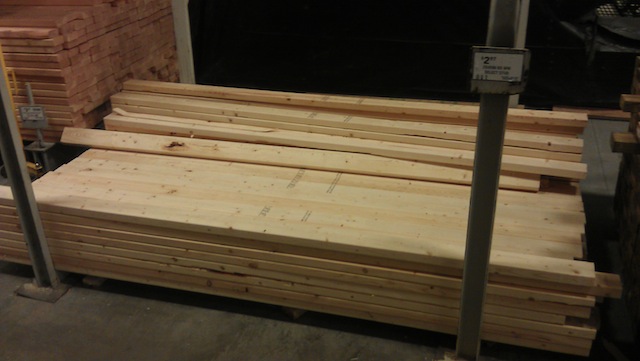
The stack

But, just as all the dogs look the same at first glance when you go to the kennel to get a new pet, a little bit of looking around will help you find the differences between the tail-wagging future four legged friends. After sifting through the pile, I found one that caught my eye. Very straight, just a few knots and not containing the pith of the tree.
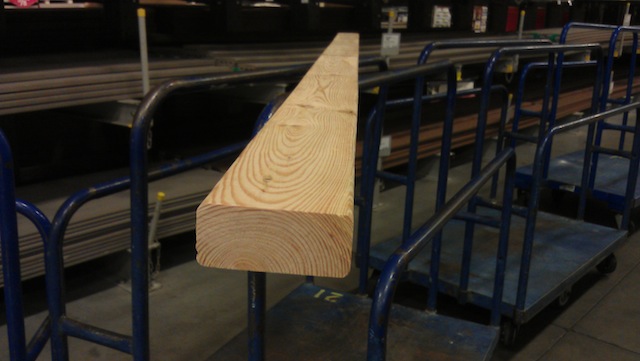
Awwww, look how cute...

OK, this one looks nice. Into the car with you!

Now, to think up a little inspiration… think.. think…think… A quick internet search shows some clever ideas out there floating around, and each of them is positively imaginative. Tables. Toolboxes. Toys. And boxes. Lots and lots of boxes.

Wait a minute. What about a little box?  Maybe built with a technique I haven’t yet tried before? A small box built like a pirate’s chest.. with a domed lid.  I mean, even if the thing falls flat on its face, I am only out the $2.50 I spent on one stud. A few minutes with some pencil and paper and voila…
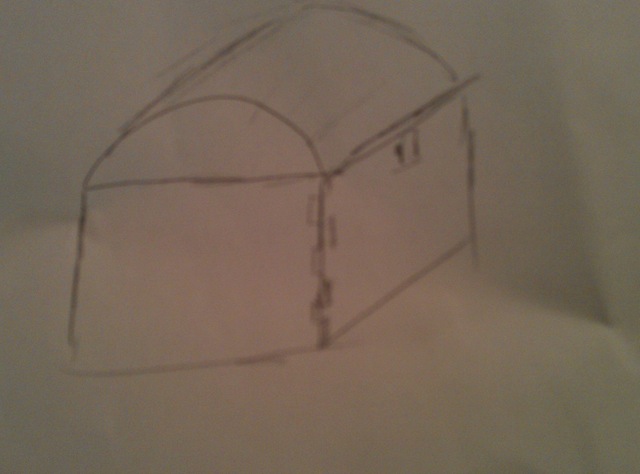
My sketch

I can see this thing with some dovetailed sides, a coopered top and an inset bottom.  Maybe I can even cut a fakie keyhole in the front to look like a lock goes there.  I know if I am going to build this, I had better get a jump on the building.. since the meeting is June 25 – giving me a little less than a week to work on it.

Guess I know what I will be working on this weekend!
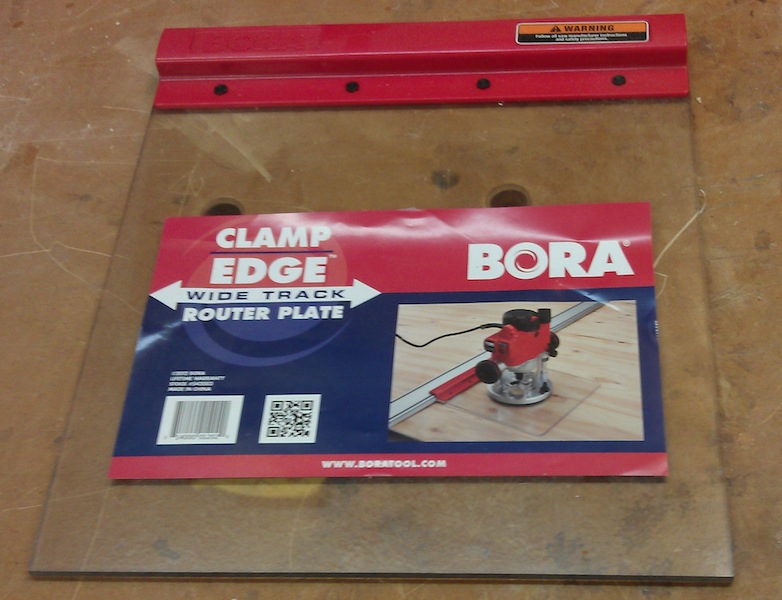
 

Tool review: Bora’s wide-track router plate

Abbot and Costello. Peanut butter and jelly. Rum and Coke.

Some things just go together beautifully. One complements the other so perfectly, it is like they were made for each other.

And, when tools complement each other, that makes things a whole lot more enjoyable.

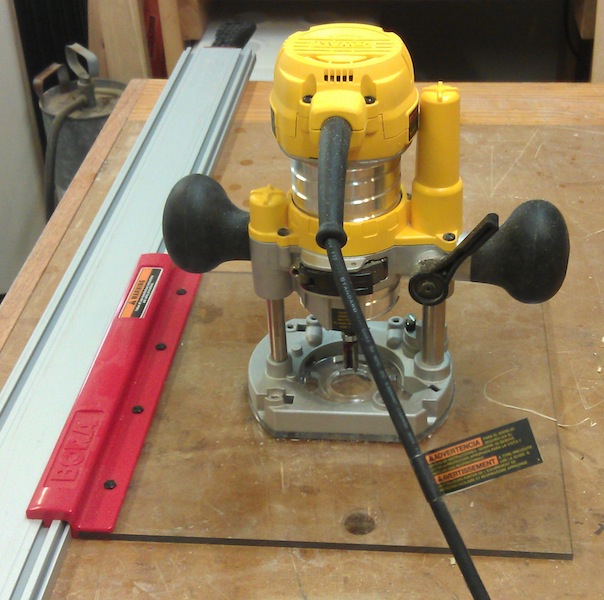
Wide track router plate

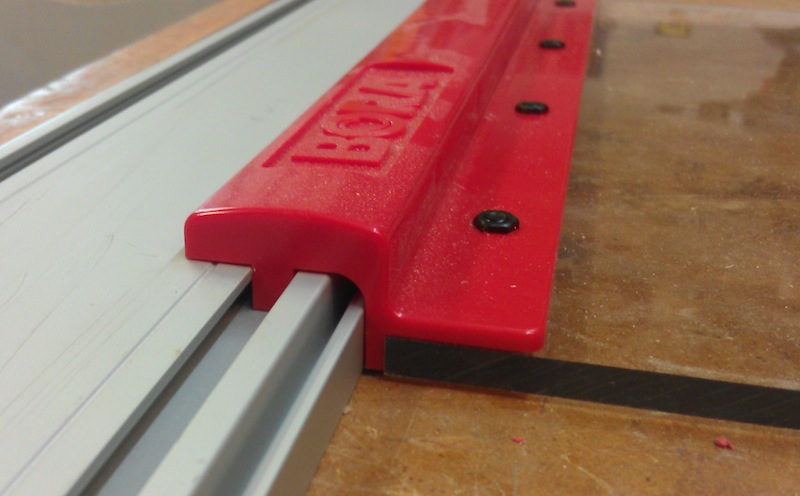
Case in point, the Bora wide-track router plate. My friends over at Bora sent me a copy to evaluate, and this thing is going to become a regular player in my shop.  It is basically a thin plate of clear plastic that you custom mount your router to. The key to the system, though, is how they ride on the Bora Clamp Edge cutting guides.  The cutting guides have this track on the edge that I have often wondered about, and it seems as if the clamp was just waiting for the right interlocking tool to make it complete.

The interlocking guide

The guide slides smoothly across the track back and forth. Now, imagine, you are building a bookshelf that needs dadoes and rabbets to hold shelves and a top.  Simply clamp the two sides together, and clamp the wide edge clamp across both pieces. Simply plunge the router down and get accurate cuts across both pieces – without having to worry if you are drifting away from the cutting edge. Which is much easier to do than you might imagine, given the rotational cutting of the router bit.   And, if you are looking to stop your rabbet – it’s easy to do with a plunge router.

Throw a router on it

If you can dedicate a fixed base on a multi-based router to this jig, imagine how quickly you can change your router to work with this plate – and you can also use the plate for times when you need a wider base to ensure the router doesn’t drop into an opening you may have cut on a jig.


Link of the week

Make a pole lathe

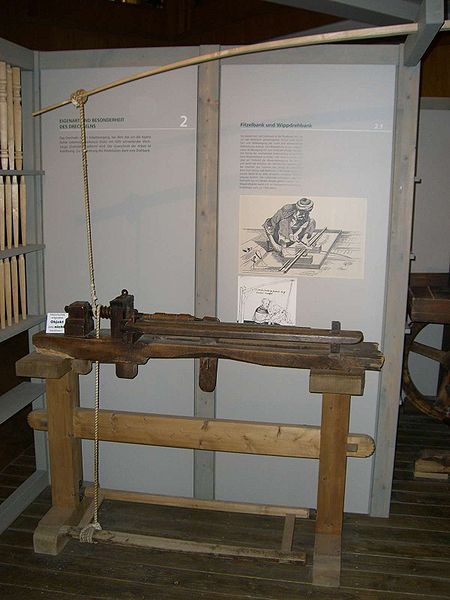
It’s one of the oldest woodworking ‘machines’ ever invented. It can be made quite simply, and yet turn round stock or other spindles out of square blanks.

A pole lathe

It’s a pole or treadle lathe, and in the UK, the Association of Polelathe Turners and Greenwood Woodworkers has a great plan on how to build one of your own. The plan goes into great detail about how to build the stand, the stocks and centers and how to select wood for the pole.

Building your own pole lathe may be just as impressive as the projects you turn on it.


Stuff I’ve Built: Bob’s wine glass holder

So, as you know, I’m friends with a guy named Bob. Not only is Bob a great public information officer, he also loves wine.

Yeah, you can say that Bob is a wine kinda guy. So, when he asked me to build a wine glass holder for his family’s collection of stemware, you knew I was all over it.  Working with some rough dimensions, I decided that I was going to build the piece with some gorgeous soft maple I had gotten from my friends over at Bell Forest Products. This stuff is beautiful, but I ran into a problem. At 8/4, there was no way I was going to rip this stuff on my contractor’s saw. I would push the board a few inches, and I could stop the blade.

So, I had to do a little work around.. I turned to my Laguna band saw to do the ripping. Now, I’m not going to say that I have that saw tuned to the nth degree, but it was more than capable of ripping the boards with minimal drift. A few passes with a hand plane and a few runs through the thickness planer, and I had the pieces cut and ready to go.

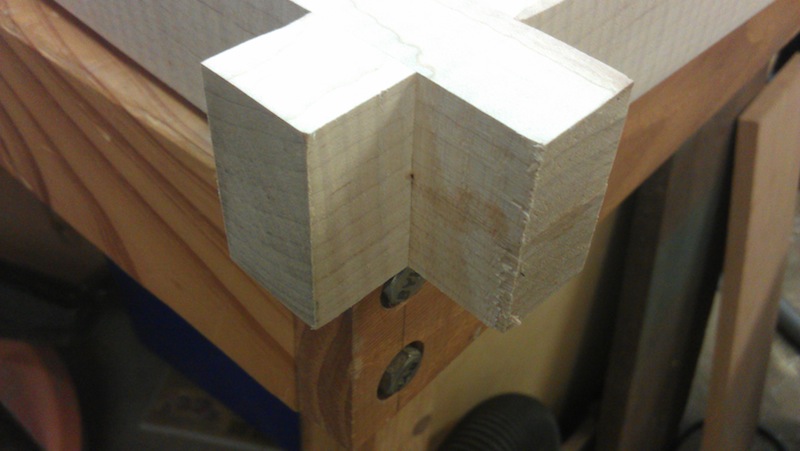
For the frame, I decided to go with a half-lap joint at the corners.  The half-lap joint

I figured this would be a tight joint that – if properly fitted and arranged – could provide a lot of strength. It was an easy one to cut on the table saw with some stops. Yes, the table saw could handle this shorter crosscut…  Once I had it cut to size and ensured the joints were snug, I glued them up and tapped them into place with my mallet. A few clamps while the pieces set was all that was needed…

Once I got the frame done, I had to start thinking about how the wine glasses were going to stay in the rack. I puzzled with the idea for a while, until I hit on something… What if I created a rib with a t-shaped profile that could be attached to the frame, but would give a lot of support to the glass base?  So, I hit on this idea…

The T-rib

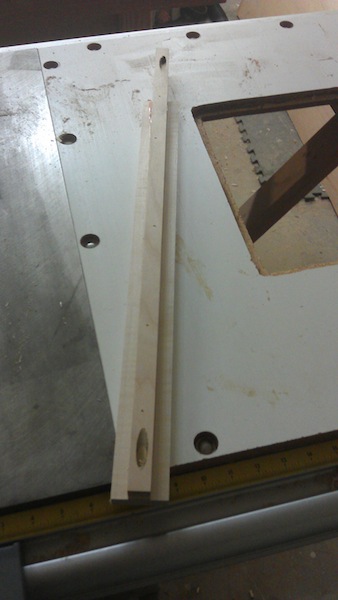
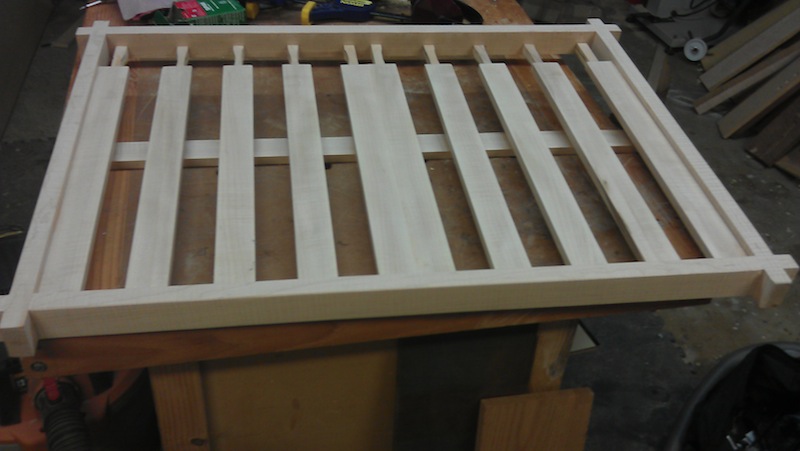
The top of the rib is a piece of 3/4″ maple plywood ripped to 3/4″ . It is glued down and bradded to the top of a 2 inch wide maple slat. Properly spaced, these would allow enough room for the glasses to be raised into place and slid forward onto two adjacent slats.  This is what the top looks like:

The top of the rack

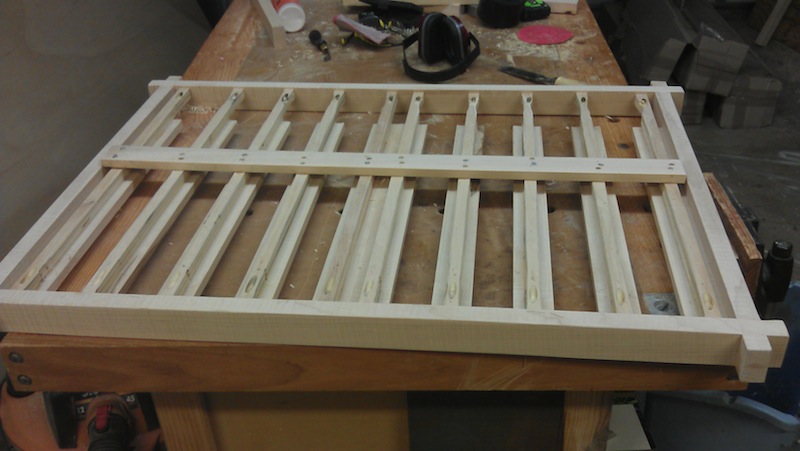
Those ribs are pocket screwed fore and aft into the long rails of the frame, and a stabilizing bar of maple is glued and screwed into each of the ribs to ensure they wouldn’t rotate in use, and to help spread the load of the weight of the glasses. While this isn’t the pretty side to look at, the underneath looks pretty streamlined:

The underneath

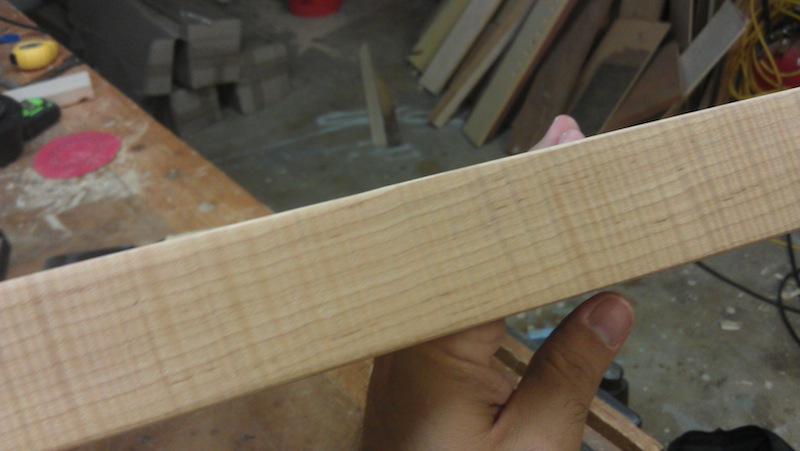
Remember when I said that the wood looked good when I jointed it? After some sanding and a quick wipe with some mineral spirits, well, it looks AWESOME.  Tiger throughout…

Grrrr... Tiger!

I realize all of this talk about up and down can be confusing with this piece on the bench.  What exactly will you be seeing from the ground? Well, I decided to hold it up in the right orientation to give you a better look at it.

The Italian forklift holds the rack

No, the unshaven woodworker will not be holding the rack in its final position. It will be held up with some type of cable or chain attached to the ceiling. But, as you can see with the one wine glass in the holder, it seems to be working as advertised.  Now, just a little more sanding and a coat of finish, and I hope to deliver this to Bob this coming weekend. Look for some complete pictures soon…

After we toast to the wine glass rack!


Tool review: The BitVise

I have a friend named Sjoerd who works for Valfor Tools. He sent over one of their tools recently, and he asked for my feedback on it.

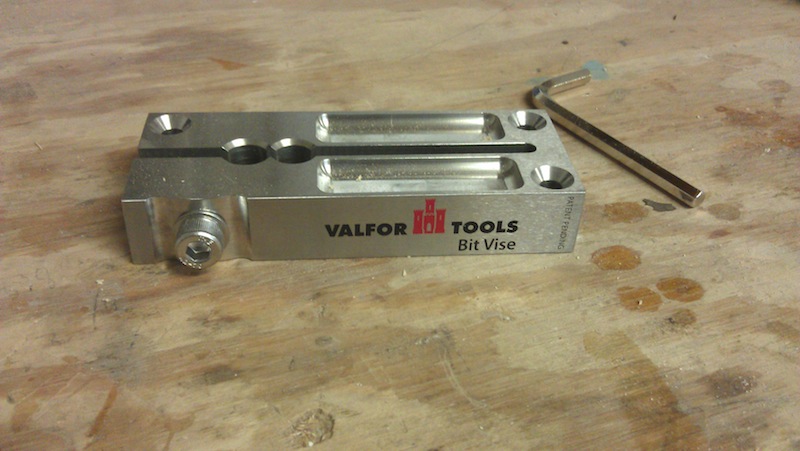
It’s a pretty simple looking device, but when it comes to working with router bits, it sure does come in handy.  It’s called the BitVise, and it provides a very valuable third hand when it comes to router bit maintenance.  Think about it – a rabbeting bit set may have multiple bearings to adjust the depth of cut. A reversible frame and panel door bit. A slot cutting set. How do you get a good grip on the shank to work with the bit while doing the delicate work of holding on to the bit, the screw and the washers that come with the set while you make the changes?

This tool just might be the answer.

The bit vise

It’s a substantial piece of milled stainless steel with a slit milled into it with a pair of holes in that slit. One is for 1/2″ inch shank router bits, the other for 12 mm shanks. The slit in the block is opened and closed by a bolt, which allows the bit to be inserted and then tightened down on a shank.   If you also work with 1/4 or 8 mm shank bits, you will need to use a reducer in those holes to get a grip on the shank.

The top has three holes for you to mount the vise on a bench, eliminating the possibility you may dump the entire setup onto the floor.  There are also two milled channels on the top, where you can rest those small bits of hardware until you need them.

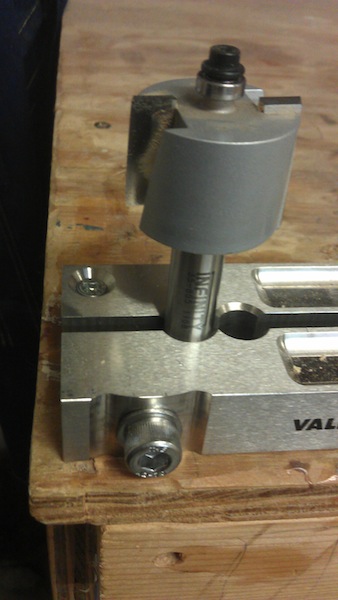
A bit set in place

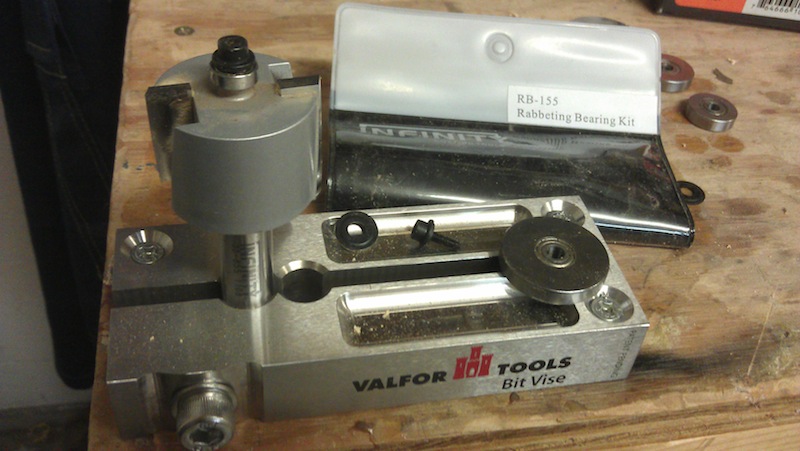
With a bit set firmly into place – like this mega rabbet kit I got from Infinity Tools, it’s now a simple task to break out the allen wrench to change the bearings. Since I don’t have to worry about the bit slipping out of a regular vise or hardware dropping into the cooling vents of the router, I can work with more confidence on the bit set up.

The pieces parts

Now, imagine doing other tasks like cleaning pitch off the cutters, or passing a diamond hone over the carbide edges a few times to ensure they are sharp and ready to go for the next use.  Sure, it may be a one-trick pony, but the one trick it does is pretty handy.


Quick Poll

Woodworking is many things to many people.

For some, it’s a fun and easy way to spend a Saturday afternoon.  For others, it’s the continuation of a family legacy, carrying on the work of a parent or grandparent.  Some may even consider it a form of therapy, getting them out of their daily routine.

While it may seem clear cut to some, for others, it’s a debate.  Is woodworking an art, or is it a craft?

Sure, this is typically discussed among the high-minded folks at some fancy gallery opening, but it’s an interesting question. Since most woodworking projects have a function, they are considered craft.  But, come on.  A George Nakashima table, with its use of live edges of boards and tastefully placed butterfly keys certainly isn’t the same as a plain old coffee table.

So, this week’s poll is trying to get to the heart of the matter – do you believe woodworking is art, craft or something else?


###

Link of the week

eHow’s science projects for testing the strength of glue

So, the kids are about done with school, but they still need to be kept occupied and their curious minds engaged during the summer break. Why not conduct a little experiment?

Glue test!

EHow has a great page to help you and the young scholar in your life to conduct a simple strength test on glues. This process will teach your students about the scientific method, how to prepare samples and how to record results. While you may get a few grumbles at first, projects like this can be a lot of fun, and it will also help you get an idea of just how strong your glues really are.

The page also links to other glue experiments that can be done. Just in case you want to continue the fun!