All posts by Tom

I'm the guy who writes the blog...

“Where have you been all my life?”

Sure, it’s one of those questions people tend to ask themselves a lot. For me, I can remember asking my wife this question. I can remember thinking this after my first taste of a quality pinot noir.

I asked it again this past weekend using the Tormek.

OK, let me start off by saying that I love working with sharp tools. They need a lot less force to use. They give clean results. And, they are just so darned cool…

But, getting there has always been a hassle. I have a high-speed grinder. Used it once. Created a multi-faceted mess of a bevel on a chisel. I have a flat platen grinder. Works very slowly and leaves a mess. It also heats up the metal in the edge I’m working on, leaving a blued spot that I have to grind off.  I have two honing jigs. Three diamond stones of different grits. A hard Arkansas oilstone. Float glass with sandpaper glued to it. Yeah, you name it, I might have it.  And, so far, I have been able to get good edges with the diamond plates, but the effort I have to put out – especially in a steaming hot garage – well, let’s just say I don’t relish the sharpening chores in the summer.
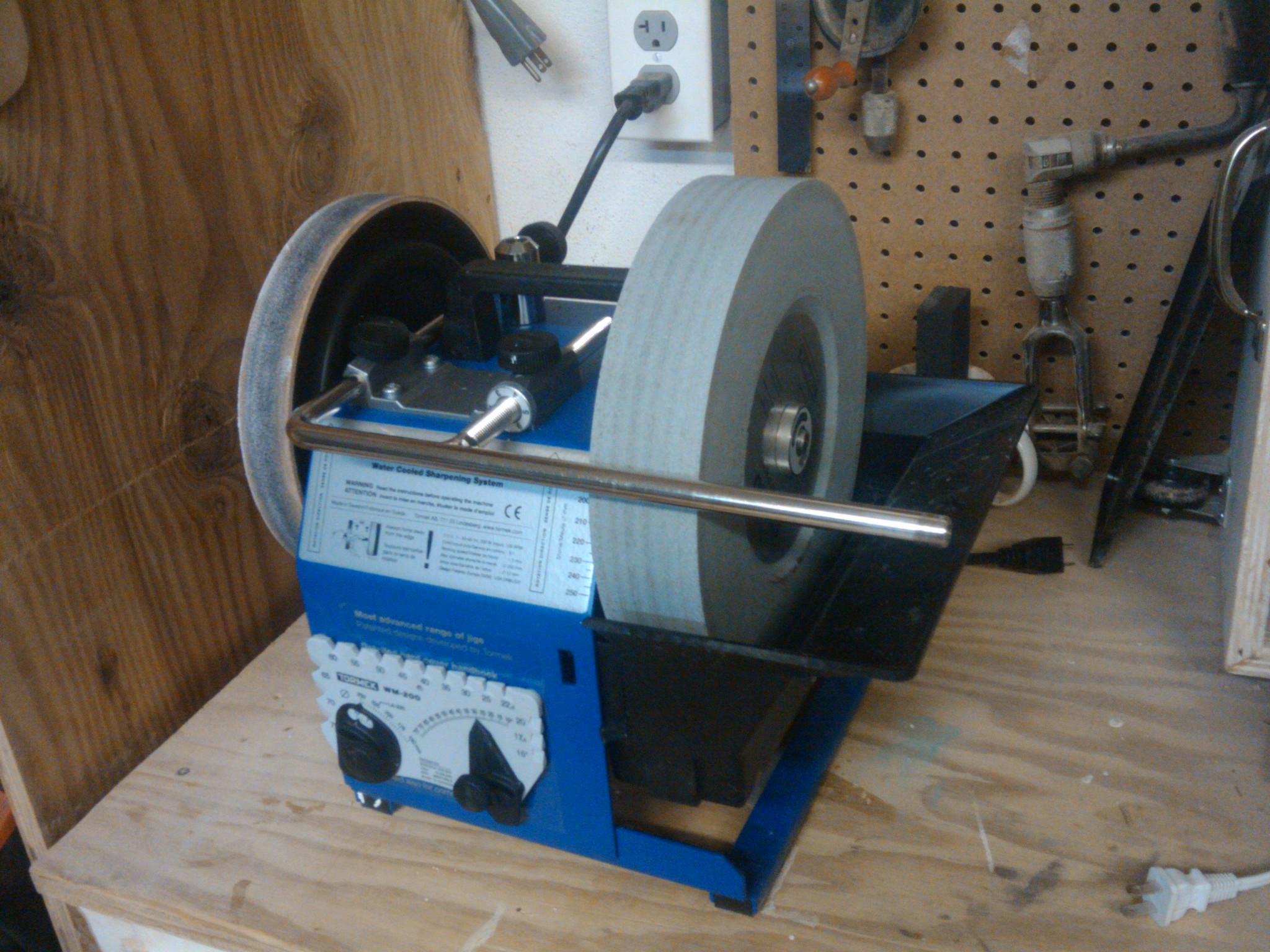
The Tormek jig is going to revolutionize how I sharpen.

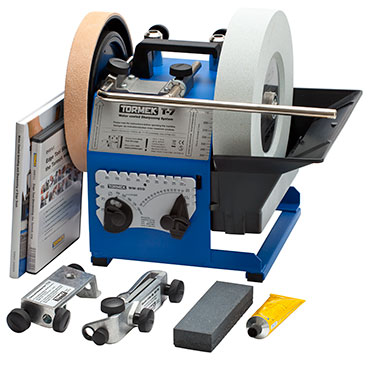
First, this thing is heavy.  I have the T–7 model in my shop, and it took a little bit of muscle to get the darned thing up to the workbench. The basic kit has everything you need to get going right out of the box.  The unit itself, which runs on a powerful yet quiet induction motor. The sharpening stone itself is a large affair that screws to the unit’s drive shaft with a stainless steel cap. There is a leather covered strop wheel that goes on the other half of the spindle. A universal guide bar can go from the front for sharpening ‘with’ the rotation of the stone or the top for sharpening ‘against’ the rotation.

A jig for sharpening straight-edged plane irons or chisels comes with the unit, and it fits easily on the guide bar, allowing the user excellent control and mechanical leverage over the sharpening operation. The jig is very well thought out, even storing  the stops that prevent the jig from slipping off the guide bar.

An ABS water trough slips under the sharpening wheel, holding about a pint and a half of water to clean the sharpening debris off the surface, cooling the tool and lubricating the cutting action.
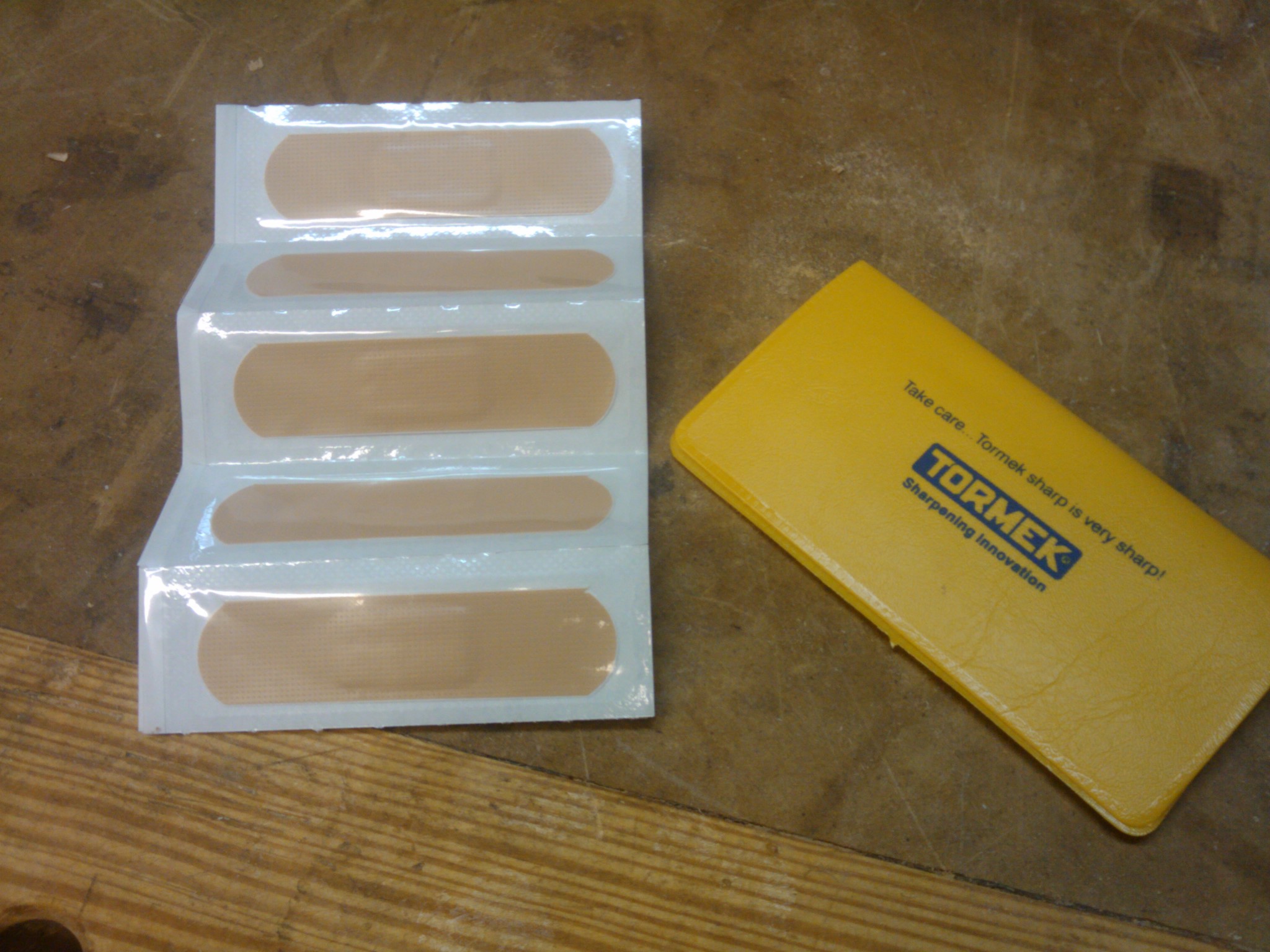
The folks at Tormek even included package of band aids in the kit, assuming that the first few times you try the jig, you might want to try the edge to see just how sharp it is.

I wanted to get a good idea of how well the sharpening system worked, so I put it to the test immediately.  Last Christmas, I bought a set of Hirsch firmer chisels for my shop, and had yet to truly hone them. I pulled out the 3/4″ model, and followed the instructions by the book.

The sharpening stone is kind of interesting – it can be graded with a grading stone to be rough for initial grinding and, by  using the fine edge of the grading stone, can put a mirror shine on the bevel.  Once I had graded the stone to the fine setting (the bevels were already in great shape from the factory), I measured the bevel on the tool’s bevel guide setting tool. This plastic gizmo takes the guesswork out of setting the sharpener, the jig and the guide bars. It allows you to set the bevel you want, and can make allowances for the stone’s size as it wears after numerous sharpenings. I followed the instructions to set the 30 degree bevel, and soon had everything read to grind.

The machine is quiet but powerful. I couldn’t press down hard enough to make the wheel stop. The effect was so cool, watching the the blade of the chisel slide over the face of the stone, with the cooling water just gliding out of its way.

After a minute of guiding the chisel’s bevel side to side across the face, I took it off the jig and held it  up to the light. It was a nice shiny bevel. I rubbed my finger over the flat back of the chisel and could feel the wire edge.  The instructions told me that the next step was to unmount the chisel from the jig and knock the burr off on the strop wheel. I had to charge the wheel with a little bit of oil first, and then put the supplied paste on the leather.  I flipped the machine on, applied chisel bevel and back to the strop, and bingo. That chisel was sharp enough to slice through paper.

It took me maybe ten to fifteen minutes, but most of that was due to the fact that I was reading the steps and ensuring I did everything the way I should have. I’m sure that number will drop considerably with a little bit of practice.
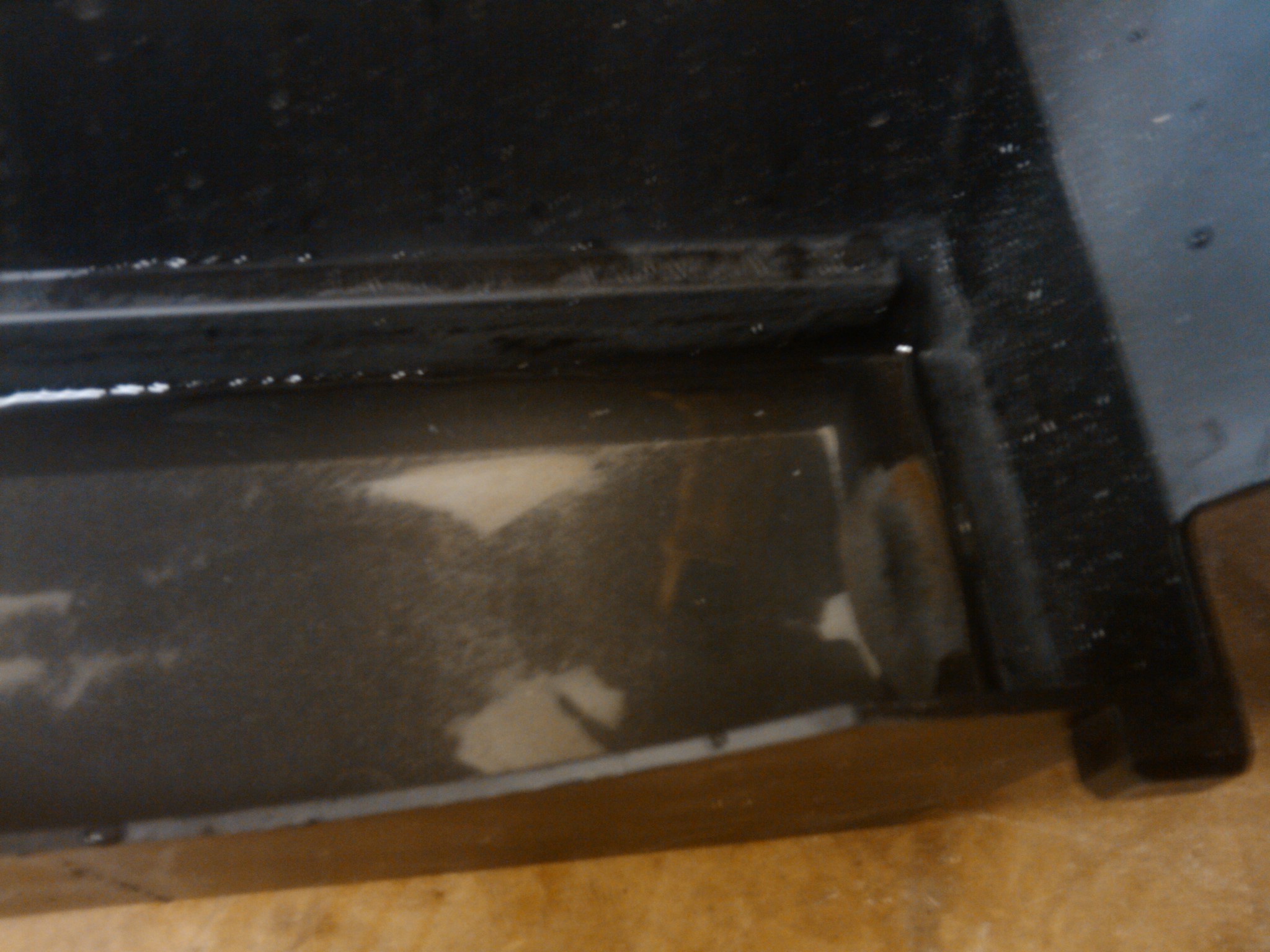
Clean up was just as easy. The plastic water basin unhooks to be dumped, and the instructions indicate that you should empty it at the end of every grinding session and not down the drain – the crud that the stone throws off sinks to the bottom and sets up like concrete. I had also read that there is a magnet built into the basin to catch the metal filings. Sure enough, a big clot of magnetized filings had grown amoeba-like around the magnet. I had to scrape that off with my fingers and throw it into the trash separately, but that was pretty darned cool.

Now, I know the Tormek is an investment.  There’s no doubt about that.  But, looking back at all of the money I had spent on the other gadgets, gee-gaws and gizmos to get sharp tools, if I had saved my pennies instead, I could have easily purchased one of  these babies – and saved myself countless hours of work trying to get sharp tools.

If  a lunkhead like me can set this up and use it quickly and effectively, I’d say it would be worth it!

 

Quick Poll

As I sit to write today’s poll, Hurricane Irene is raking the east coast.  The storm is the first hurricane to make landfall in the continental United States since Ike in 2008, and it appears to be well on its way to causing multiple billions of dollars of property damage through some of the most heavily populated areas of the country.

Tack Irene on to the unrelenting wildfires in the southwest, the terrifying tornado outbreak across the deep south this past spring and the  Japanese earthquake and tsunami in March… well, 2011 has been a year that has caused even the most nonchalant among us sit up and take notice.

This week, let us know if you have an inventory of the items in your shop, and just how complete is it? Remember, this initial work may help you get everything back and running should a disaster befall your home.

Link of the Week

Tormek Sharpeners

It has been proven time and again that sharp tools are safer, give better results and add to the overall happiness of woodworkers. And, when it comes to getting sharp tools, there are lots of different ways to get there. Oil stones. Water stones. Ceramic stones. Diamond stones. Grinders. Sandpaper. The choices seem endless.

One tool I have been anxious to try are the Tormek slow grinding wet wheel systems. I’ve done my fair share of ham handed grinding in the past, but this tool seems different. Sporting a gradable wet wheel grinder on one side and a leather honing wheel on the other, this tool promises easy, repeatable sharpening.

If you have noticed, I have added the Tormek logo to my list of supporters. The folks at Affinity Tools and at Tormek have been gracious enough to send me a model to do some demonstrations on.  While it is still in the box, I’m looking forward to setting it up and getting my plane irons and chisels honed.   Stay tuned.

Monkey in the middle

Hello, everyone, Iggy here again (You’d think this blog would fall apart if I wasn’t here, right?). I just wanted to take the opportunity to do two very important things.

First, I want to give a big shout out to all of my dedicated fans and followers (Yes, Holley, this includes you). If it wasn’t for your support – and Tom’s not charging me rent – the whole Shop Monkey operation would come to a screeching halt. And, that screeching sound – it sends shivers up my spine.  Yes, shivers. In Florida. In August. Even with all this fur.

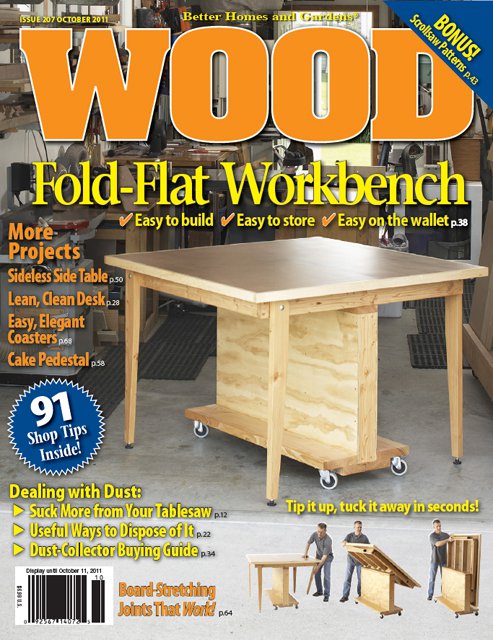
Second, and probably most importantly, if you get a chance to pick up the October, 2011 edition, you can see my latest article smack dab in the middle of the magazine. OK, well, maybe not exactly in the middle, but it is between the front and back covers.

The article calls for board hoarders across the land to embrace their inner acquisitory selves and revel in their vast collections of lovely boards. Of course, if you are going to revel, you are going to have to follow a few simple tips on how to keep the collection from taking over your shop – and your life!

As always, if you manage to get beyond my witty, insightful writing, you’ll find the magazine chock full of plans, tips and other woodworking goodies you can apply in your shop. Kudos to the folks at Wood for not being afraid to fill the rest of the magazine with outstanding content!

Now, back to the shop for more fun. I hear Tom may TRY to finish this bookshelf sometime before Christmas… of 2016. This should be good for at least a few laughs.


There’s learning in woodworking

Today is the first day of school here in Pinellas County, Florida. We’ve bought all of the school supplies for the kids, they have new shoes and some new clothes, and I think we may have the school lunch business taken care of.  Of course, there are new car line patterns, bus routes and the works, but we’ll get the rest of the logistics taken care of over the next few days.

With the boys going to school, I’m sure there will be lots of math, English, science and other homework coming our way (though maybe not during the first week). But, there are many other lessons that need to be taught as well. One of them is at my oldest son’s school – technology.

Last year, I had a chance to teach at Michael Dority’s class during the Great American Teach In. I brought my tools, some wood, my video camera and proceeded to tell the kids a little about what I do in my shop.  Turns out, the kids in Mr. Dority’s class were already hard at work doing their own woodworking!

With the new school year, I had a chance to ask Mr. Dority a few questions about the upcoming school year and the class he teaches.

First, of all, even with cuts in vocational education, how did he get into teaching this newer program in the first place? “I was studying Elementary Education at St. Petersburg  college. When one of my professors noticed something in me and asked me to join this new program he was starting for the college, He really got me when he said robotics.  I was a shipboard electrician before college and I had to visit a lot of boat yards while in the military I always marveled at all the mechanical stuff running and moving these mammoths ships and containers around the docks with cranes and dry docking system I would really get excited, when the boat started lifting up out of the water onto the block system the yards used.  I wanted to share that excitement.  My trade background actually helps me understand the class even better than if  I had just  gone straight onto college.”

In Mr. Dority’s class, there is a focus on four key areas: multimedia communications (computers), safety and tools uses,  product design and laws of motion. As it turns out, one of the most effective ways he has to teach the kids about these areas is in woodworking.  That’s because it all stems from STEM: Science, Technology, Engineering and Measurement. “Math is covered throughout the measurement processes, Technology is covered by student using tools to cut, chisel, and plane or sand the wood to a desired shape.  Science is represented by; picking the material for use in a product, some woods will break and crack easily other woods are so durable that you can even twist and bend them.  Engineering is represented through the students’ designs to create a plan for cutting and design the wood into the desired product.”

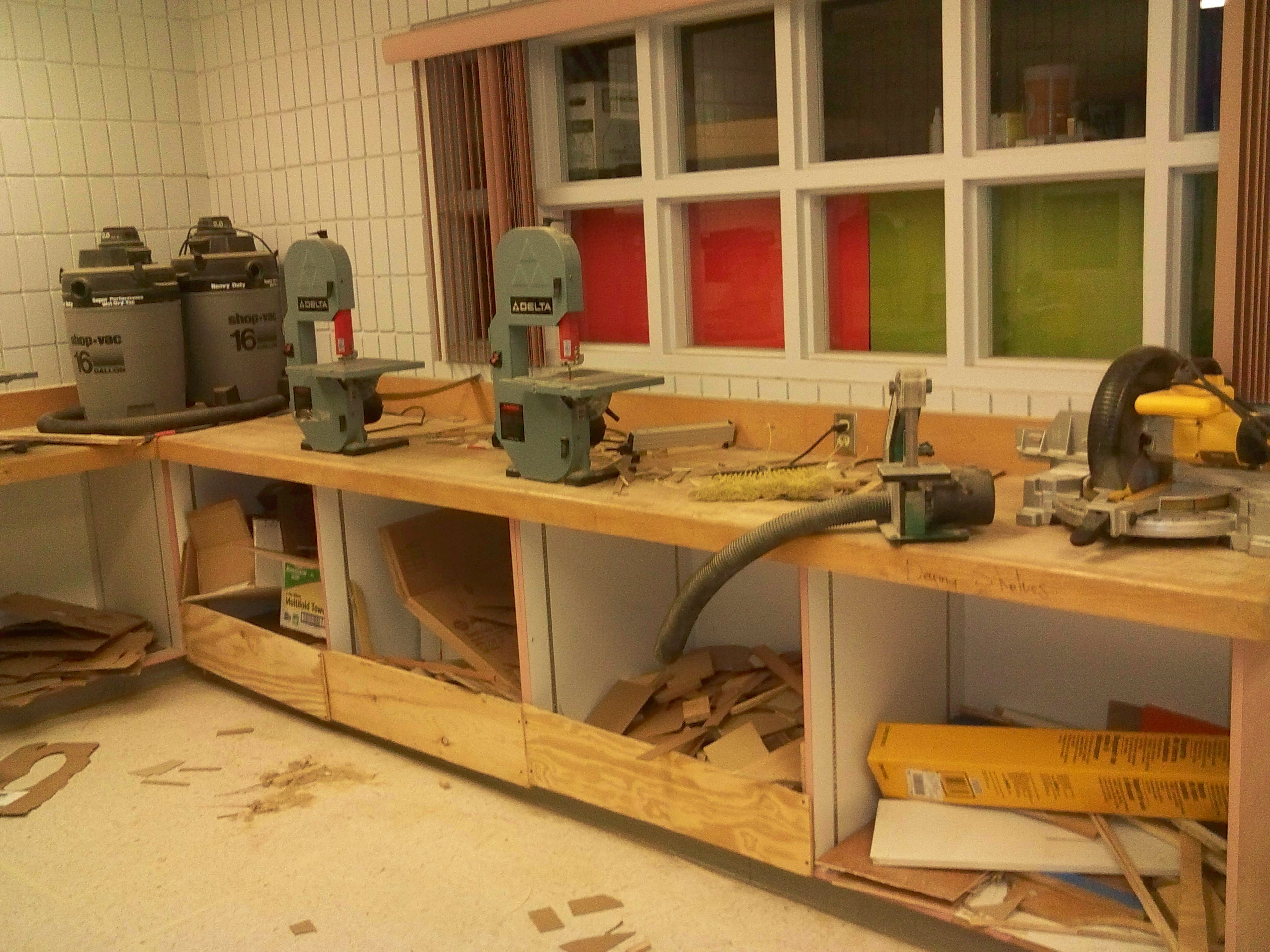
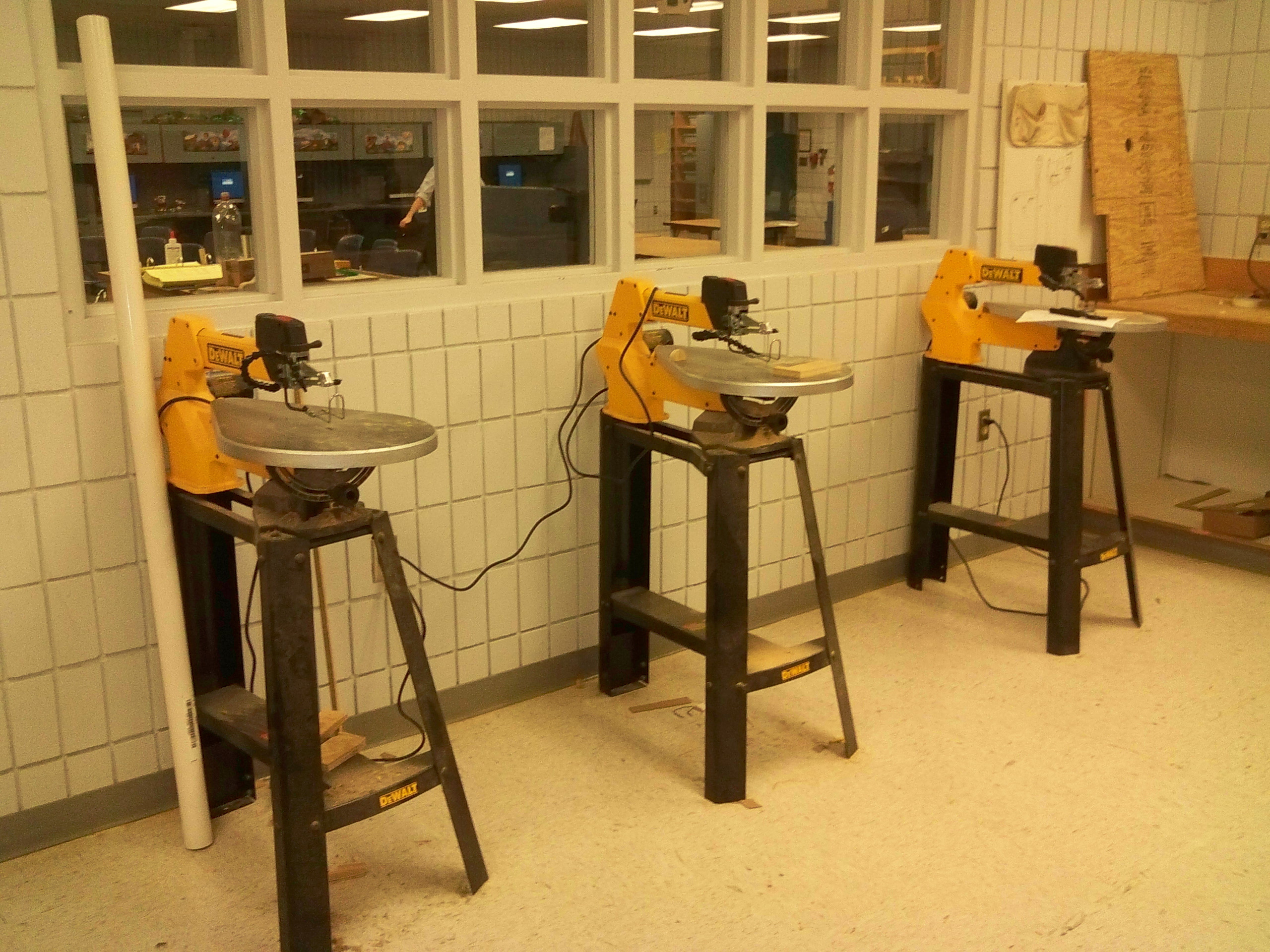
To make this happen, Mr. Dority has a fairly well appointed shop. “I love my shop because it is really set up for kids I have three DeWalt scrolls saws that have speed controls on them, and two 9 inch bench top Delta band saws, as well as one small drill press.”

While the tools are awesome, there is a very familiar first lesson that must be taught. “Safety is absolutely number one, there are tests and practical’s before anyone touches a machine by themselves and clothing restriction such as closed toed shoes and safety glasses are mandatory when in the shop area of my classroom.” And, as the kids start using the tools, there are some cues that Mr. Dority uses to gauge his students’ comfort level. “When many of the students first start cutting I try to be next them until they gain some experience on the tool they are using. One important rule I have though is if a student is afraid of a machine they do not have to actually use tools. The kids really enjoy this area of my room but because of the size of the shop I limit the amount of students inside of it at all times when machines are running.”

While Mr. Dority’s tech class may seem to be vocationally-minded at first, the skills he teaches reach way beyond the workbench – sometimes way beyond the workbench. “The main reason for tech is to get our student using their critical thinking skills to allow them to solve problems. It also provides our students practice in using their hands and their minds to solve problems, after all, even Doctors and Astronauts use tools and equipment everyday in their businesses.”

Mr. Dority even admits that much of his motivation is selfish. “I would love to hear the workshop and garages of our neighborhoods humming along with noise machinery instead of hearing that annoying buzzing sound coming from the computer and television sets.”

So, any parting words as we embark on a new year? “The most important thing though is if you know or see a kid that looks bored get  him or her out  in the shop. Start a project, keep it simple at first but many of my student surprise me all the time with their ability and skill.”


Quick Poll

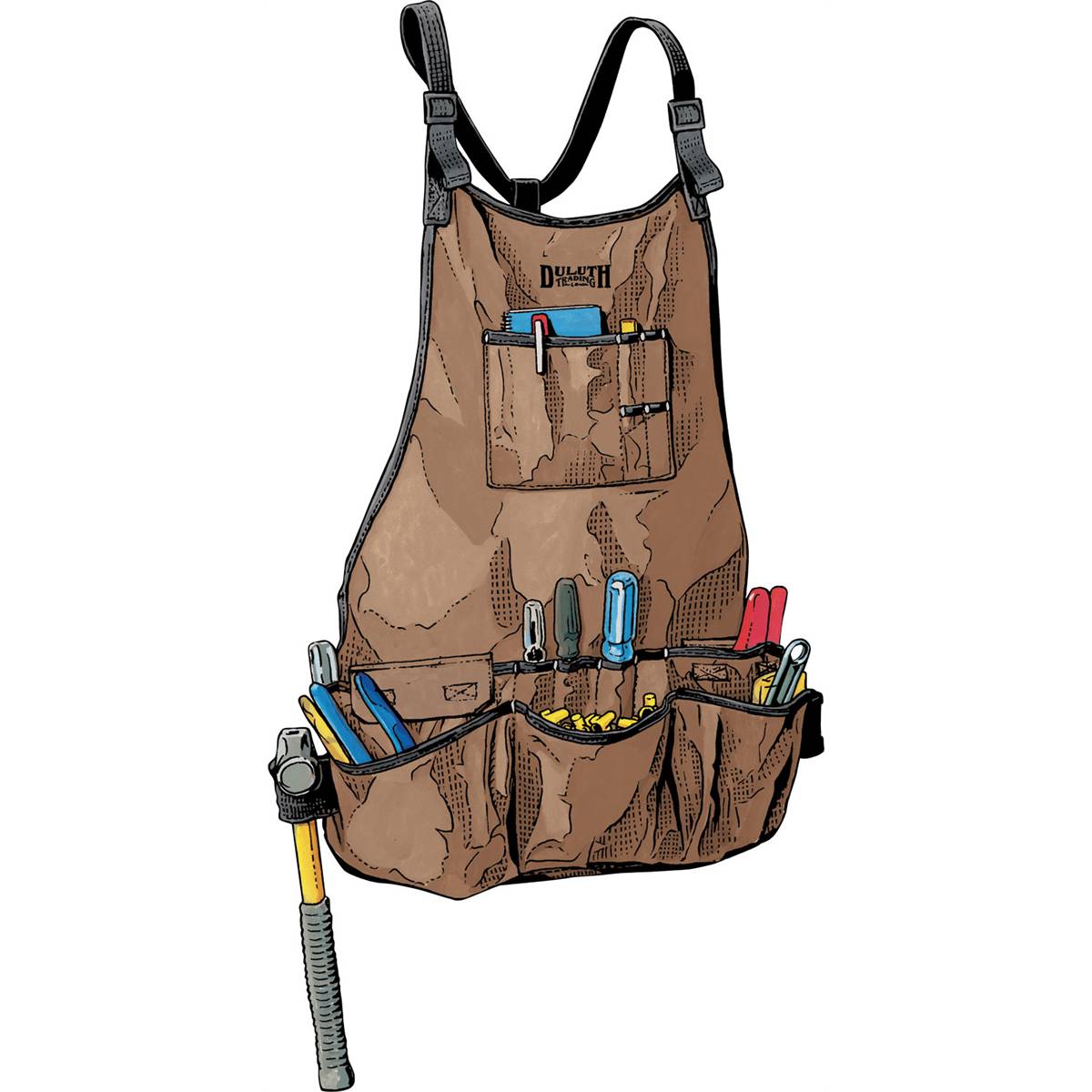
Whether fashion statements, safety gear or a wearable tool kit, shop aprons can help keep your woodworking clothes free of glue smears, finish spatters and caked-on sawdust.  They can also be hot, uncomfortable, awkward and complete pain in the rear.

This week, how do you feel about shop aprons?  Something you reach for all of the time or something you avoid like the plague?


Link of the week

Horton Brasses’ Woodworking School list

Ring the bell, school is either back in session now – or back in session soon.  While the kids may be moaning and groaning about getting back into the swing of things, woodworkers are dreaming of  perhaps attending a class or two of their own – at a woodworking school!

This list, put together by the folks at Horton Brasses, is a good starting place for you to find a woodworking school near you or one that suits your needs.

Now, the list is certainly not complete (I see Andy Chidwick’s school isn’t listed yet.  I’m sure you’ll get that one covered, right Andy?!?), and I would search for other schools as well, but if the list serves as a way for you to get jacked about getting to woodworking schools… it has served its purpose!