A workbench or solid work table is a joy to use in a workshop. Being able to plunk a heavy board down on that work surface and cut, plane, drill, rout or do any other kind of work on it breeds confidence in even the novice woodworker. Adding a vise to a workbench only helps expand its usefulness. Whether a fast-acting metal model or a traditional wooden face vise you craft by hand, it’s the icing on the cake.
A bench and a vise are an excellent combination, but it you stop there, you aren’t using all of your bench’s potential. In fact, there are some common time-tested devices and strategies that can help complete your bench and make your woodworking more enjoyable.
The hole truth
 Look at just about any workbench, and you’ll find holes it its top. No, those aren’t the handiwork of an eager drill operator with bad aim – they are called dog holes. These holes open an incredible array of opportunities to the woodworker through using some simple tools – dogs and hold downs. More on those tools in a minute…
In traditional workbenches, dog holes are square. They aren’t typically chiseled that way, they are built into the workbench top as it is being constructed by running dadoes across the boards before they are glued up. They are always directly in line with a vise – either a front or an end version, and are slightly angled back toward the bench’s tail vise so as the work is clamped in, the dogs don’t get pushed back beyond 90 degrees, which would make it easier for the work to slip.
If you didn’t build dog holes into your bench, you still have an opportunity to add them. By drilling holes into your bench, you can create round dog holes that can serve just as well. The typical diameter for these round holes is ¾”, and since they can be retrofitted, you can place them just about anywhere on your bench, but, it’s best to plan to line them up with your vises just as with the square versions. Just remember to drill the holes perfectly perpendicular or your dogs may have issues. You can use a plunge router with a ¾” bit to start the holes or build a jig that will allow you to drill them. I’ve used forstner and spade bits to drill holes in the past, but auger bits work beautifully for this task.
Your faithful companions
 Bench dogs have been found on the workbenches for generations of craftsmen, and can serve many purposes in today’s modern shop. They are equally at ease for securing boards to the workbench for traditional chores such as hand planing or more modern work such as routing mortises or edges.
The dogs can be made of metal, wood or even plastic, and have some means to prevent them from sliding through the dog hole onto the floor below. Wooden or metal springs can be used, or the top can be made larger than the hole.
They can be used by themselves as a stop to plane against or – even better – in conjunction with a vise to hold a board. In fact, many metal vises come equipped with an integral dog that can be raised to clamp work above the vise jaws.
Two dogs by themselves can be used to clamp work in place. Simply put two dogs far apart enough to allow the work to sit between them and use opposing wedges to lock the work in place.
Companies such as Veritas have made dogs even more useful through innovation. The Wonder Dog (or Wonder Pup – a shorter and smaller version) is a round metal dog with a threaded cross piece that passes through the dog body. By placing one of these dogs in a dog hole, you can create your own vise setup.
Hold that work!
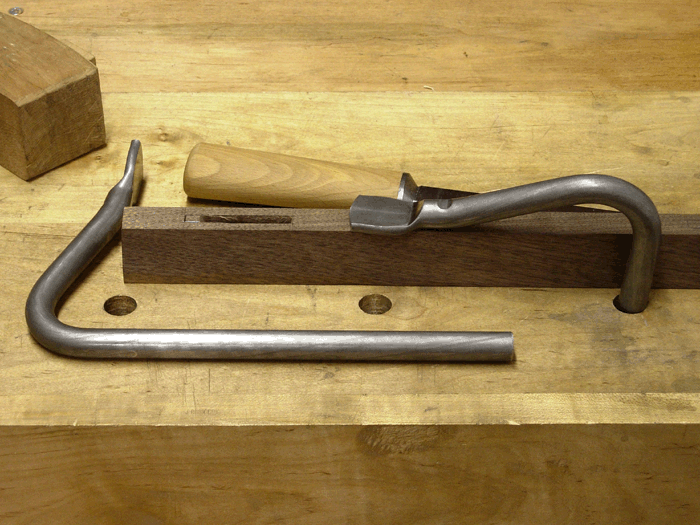 Vises and dogs are great for securing work that needs to be supported for uninterrupted work to take place on the face or edge of a piece. However, if your are doing something like chiseling for hand cut dovetails, you will need a way to secure the work that allows you to move the work as you progress. That’s where hold downs come in, and they are a time saver.
The traditional hold downs are called holdfasts. They are made from forged iron and are very simple to use. By inserting the long shaft into the dog hole, setting the holdfasts’ pad down on the work and giving the top a good whack, it will lock down on the work. When you need to release the grip, tapping the back with a mallet will unseat the holdfast, getting it ready to work again.
More modern holdfasts made of plastic or metal improve upon this devise by offering threaded fittings to make adjusting them easier. Some of these newer models, however, require the shaft to penetrate to the bottom of the bench in order to secure them. This may limit the thickness of the work you can clamp down.
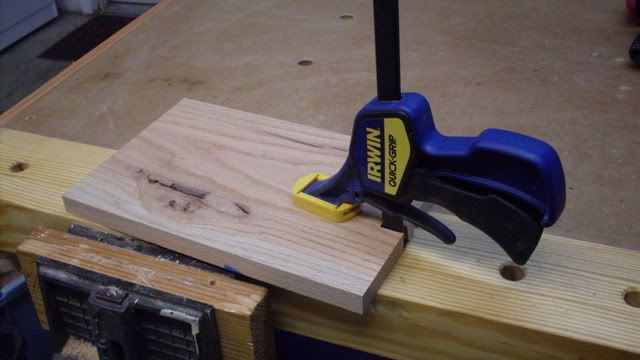 If you have a trigger clamp (Irwin’s Quick Grips type) where the head can be removed to turn the clamp into a spreader, you have a hold down just waiting to happen. I have found that by removing the head, inserting the bar through the dog hole and reattaching it below the bench, I now have a very handy hold down. The trigger gives me very good control, and it’s easy to release when I need to shift the work. For larger pieces, you may want to use two of these clamps to further ensure that the work doesn’t shift. Plus, you have now made these useful clamps even more versatile.
While dogs and hold downs are simple tools, they can make your bench a more versatile and useful asset in your shop. And, they can do so for a fraction of the cost of sophisticated new vises or rebuilding your bench from scratch.

 Buying new tools and purchased accessories is great. They can give you increased capability, improved assembly and flawless finishing results.

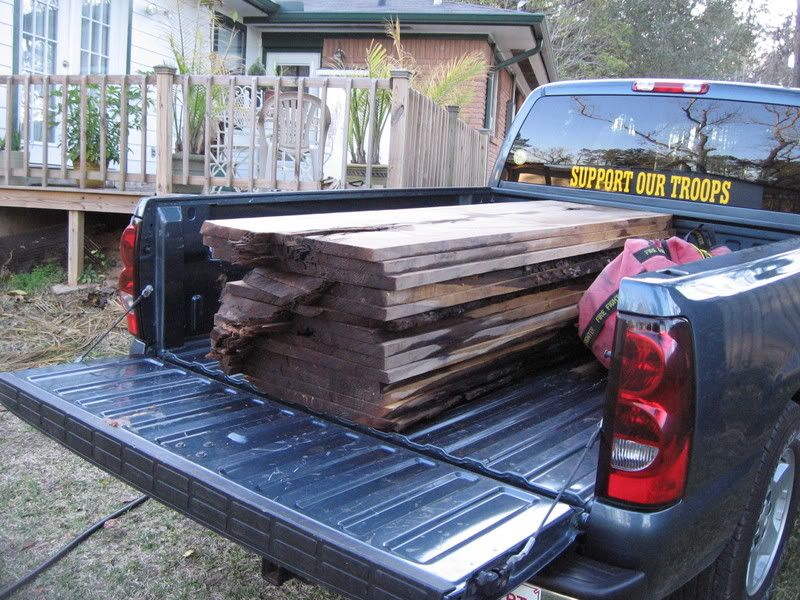 Some of the tales are legendary. “My two neighbors and I found out about this rare tree that was being cut into boards and we JUST HAD to have it. So, we loaded up the trailer and started a cross-country trek…”