
The market for woodworking safety devices is huge. Seriously.
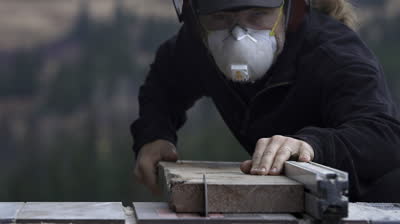 Dust masks. Eye protection. Hearing protection. Powered dust respirators with built in hearing and eye protection. Aftermarket splitters for your table saw. Safety covers for router bits used in router tables. First aid kids. First aid kits with tourniquets should something get hacked off. Dust collector ports. Push sticks. Push blocks. Emergency shut-off switches. Small part holders. Hold down clamps so you can build your own safety devices…
You could go into serious debt buying a selection of woodworking safety devices – before you even buy a single tool. And these safety devices can help reduce the likelihood that you will have a woodworking accident, or make that accident a lot less traumatic should something happen.
But, unfortunately, they are not a substitute for the most important shop tool in your arsenal – your brain.
Before I get accused of encouraging people to give up on safety equipment, hold the phone. The truth is that you really do need many of the basic protective devices and first aid products should the worst happen. But, let me draw you an interesting parallel.
Many of us have vehicles and drive them daily. Of those who don’t have their own cars to drive themselves about, I’d be willing to wager that many of you get a lift with friends of relatives when you have to go somewhere. Let’s face it, cars are an important part of life.

And, when we get into our cars, one of the first things you should do is buckle your seat belt. In many areas, this is the law of the land – click it or get a ticket. While this may be the case, I’m sure the other main reason you wear seat belts is to help prevent injury should you get into an accident. By wearing your seat belt, your odds of surviving a crash increase 45%, according to a study conducted by the National Highway Traffic Safety Administration.
But, even with a seat belt buckled and air bags in your vehicle, you still take the necessary precautions to prevent getting into an accident in the first place. Stopping for red lights, using your brakes to prevent plowing into the car in front of you… ya know, the basics.

In much the same way, woodworking safety is an exercise in engaging your brain. Think before you cut, route, chisel or do something else which can harm you. Is the area clear of obstructions? Does the board have a warp in it that could bind the table saw blade? Will the routing operation bring my hands too close to the bit?
Listen to the little voice in your head. If it’s screaming “Danger! Danger!” before you turn the table saw switch on, see if there might be a better way to make that cut.
Don’t rush through your work. Unlike a lousy score on the back nine of your favorite golf course, rushing your work in the shop could lead to a nasty injury. Take it easy, and safe those tough cuts for when you are feeling fresh and rested.
Finally, you need all of your brain with you when you are working with tools. If you just had a fight with your spouse, are upset after a lousy day of work or are under the influence of alcohol or drugs – illegal or prescription – maybe you should make any shop time more about cleaning up and selecting boards for the next project instead of trying something you might regret later.
Just remember to treat your brain right – the rest of your body will thank you.
 Uhh, no. I was, however, tasked to go and assist our local health department with the public education effort in response to the 2009 Swine Flu outbreak. Yup, when there’s a crisis, I typically get called in. It makes my job a little more interesting.
 Finally, while you may be working with the right equipment, it still won’t hurt to use a dust mask or respirator when doing very dusty jobs – sanding comes to mind. Even with highly-efficient dust collecting sanders, enough of the fine stuff is produced and can affect your health after prolonged sanding sessions. It’s always a good idea to put on a dust mask and just be sure you are covered.
 The fact that I practice my hobby at home means I can put a project down, take a few hours to have some fun and then return when I get the inspiration. I know I couldn’t do that if I was out on the water fishing or on the links playing golf.
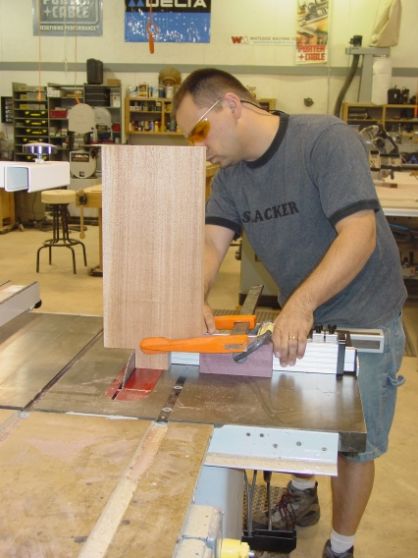 After sitting and thinking for a while about this danger, I decided that my method of addressing the problem was all wrong. I found myself waiting for something bad to happen before I addressed the issue. I can always control my actions in the shop, but I had to find a way to address the issues that are out of my hands.
 Unfortunately, making that finish can require the use of some pretty nasty chemicals and other products. Many of them are essential to the process, so that’s why safety has to be key when handling and applying them.
 Ears are not the only vulnerable opening on your body. Sawdust and chemical vapors from finishes and other noxious chemicals can also wreak havoc on your lungs. Sawdust has been shown to cause irritation , allergic reactions and certain types of cancer.
 There are few things in this world as precious as your eyesight. We humans have developed quite a reliance on this sense. So, it’s no question that protecting your eyesight is a top priority when it comes to woodworking.
 Another way you can get hurt is by sawdust getting into your eye. I heard a story about a woodworker who got some sawdust in his eye on a windy day. He rubbed his eye, ended up scratching his cornea (the clear eye covering) and got an infection. Never rub your eyes when you get something in them – rinse them out with water or an eyewash solution.
 Sure, they don’t have power cords or spinning blades. But, you’d be surprised how many injuries hand tools can cause.