So, you have a dragon problem near your castle, do ya? Before you call ye olde exterminator, you may want to consider slaying the best yourself. Never handled a sword before? Why not start with a wooden one – to practice with?
Known as wasters (or bokken in Japan), wooden swords have been used for centuries by warriors to practice their moves without damaging their fine – and very expensive – steel blades. Used primarily for costume or play today, these babies are carefully built and finished to resemble the real article. Roman, Japanese and medieval designs are all available.
There’s even link describing the step-by-step process of building your own wooden sword. This way, you can be ready the next time that dragon decides to cause trouble in the neighboring village.
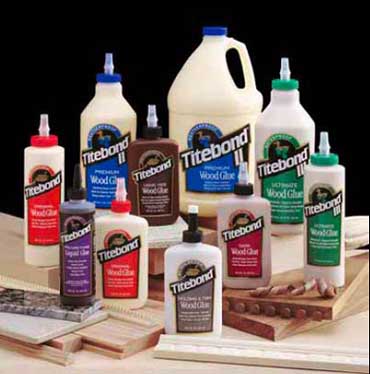
Not so fast. Do you need the glue to tack quickly? Withstand the weather? Emit no noxious fumes? Dry with a rigid bond?
There are many different varieties of wood glues out there. That’s why Titebond, one of the largest glue manufacturers, put this page together. From the basics of working with wood glue to the unique properties of the different varieties out there, this page is an excellent starting point to learn about the glues you use – and discover varieties you may have never heard of before.
Besides offering the lowdown on the different glue varieties, you can also find useful tips for achieving the best glue up and even read the material data safety sheets to learn what’s in them.
This site may help you out of more than a few sticky situations!
One of the saddest things to see is the reduction of the number of wood shop programs that have been closed in middle and high schools. It’s as if school planners believe that every student can’t be ‘successful’ without going to to a university.
Wouldn’t it be great to see a wood shop curriculum online? That’s exactly what you’ll find at the Materials Technology Wood site.
Created by Tony Sheridan at the University of Limerick in Ireland, the site is a resource for teachers of the Irish junior certificate with particular emphasis on practical skills development through the design and manufacture of woodworking projects.
Logically designed, the site offers excellent primers on safety, basic joinery and projects based on skill level. It’s an interesting site to brush up on some basics, get an idea for projects and to develop a plan to develop the skills of a budding woodworker in your life.
If you have lots of time, you could put a sample of wood out in your shop and measure its dimensions every day for a year to get an idea of seasonal humidity swings and how the affect the wood for your projects. Or, you could plug your numbers into the Shrinkulator and see how much different species of wood will move based on your local humidity conditions. A very useful utility to help anticipate the impact of seasonal changes and your construction methods.
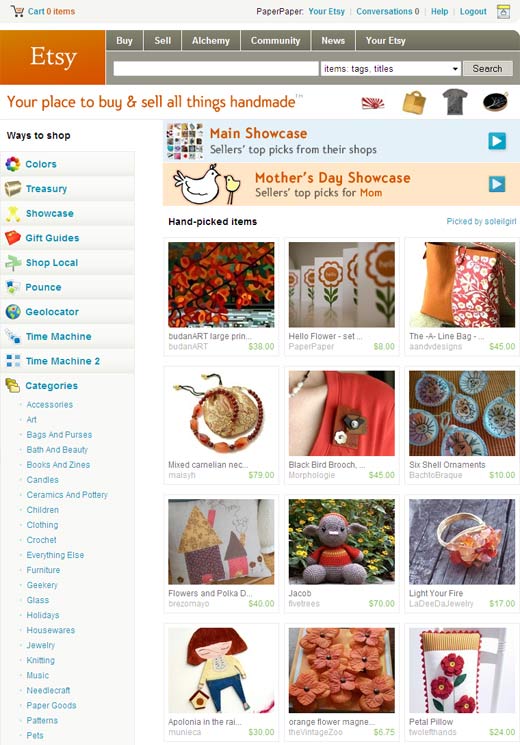
Sort of a cross between eBay, Amazon and a craft gallery, this online site gives artists, crafters and those who supply them an online marketplace to buy and sell their products.
The site also offers users the ability to set up a virtual storefront and sell their items. There is a fee of $.20 to list the item and an exchange fee of 3.5% should the product sell.
If you are looking to dip your toe into the online selling community, this could be an interesting way to begin.
I was recently at a local carving show when I ran into a guy named Jerry Moore. He was sitting at his booth showing off a pretty neat little product for wood carvers called the Flex-Sander.
Jerry explained that when you are doing fine detail carving, it’s difficult to get into the tight areas of your project. Jerry’s solution is a flexible piece of plastic and miniature sanding belts. By simply changing your grip, you can get the sandpaper into the narrow cracks and crevices, and you can rotate the belt to get fresh grit.
Not only is it a clever little invention, it’s also made locally, a few minutes from my house in the city of Pinellas Park, Florida. Here’s to successful local businesses!
The response to Wednesday’s post was very impressive – I got lots of comments from folks I hadn’t heard from in years.
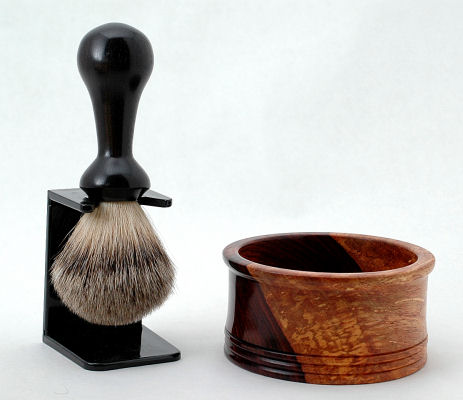
One response pointed me in the direction of Don McIvor, a wood turner who makes exquisite shaving brushes and bowls for whipping up lather for a great shave.
The woods he selects are exotic beauties such as Tasmanian Rose Myrtle, Cocobolo and African Blackwood. The brushes are made of silver tipped badger hair for maximum shaving comfort.
Even if you aren’t interested in shaving this way, it’s hard to deny the artistry of Don’s work.