
It’s good to be popular.
I mean, who doesn’t love being invited to parties, being picked for the adult kickball league or wowing the crowd at karaoke?
The best kind of popularity is when your family loves you. My wife and sons love to have me around. No matter how overworked or grumpy I get, they always welcome me home with big hugs and invitations to play video games, watch a TV show or take on all comers in a tough game of Monopoly.
 The fact that I practice my hobby at home means I can put a project down, take a few hours to have some fun and then return when I get the inspiration. I know I couldn’t do that if I was out on the water fishing or on the links playing golf.
Unfortunately, some of the attention can get dangerous. Specifically when it comes to all of that attention when the power tools are running. I’ve had one of my sons walk up behind me and hug my legs while ripping on the table saw. My wife came out to talk about dinner plans while I was working with the bandsaw. And, one of my son’s friends came out to the shop to ask if he could go home while I was shaping a piece on the router table.
At first, I was upset after each of these incidents. One split second of distraction could mean the loss of a finger or a some other gruesome injury. I started lecturing each offender, spelling out in gory detail just how badly I could be hurt.
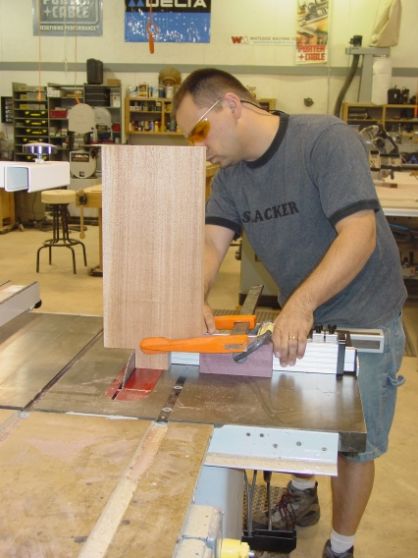 After sitting and thinking for a while about this danger, I decided that my method of addressing the problem was all wrong. I found myself waiting for something bad to happen before I addressed the issue. I can always control my actions in the shop, but I had to find a way to address the issues that are out of my hands.
That day, I started involving my family in the discussion about shop safety. After letting my family know about the potential danger, everyone understood why I am so concerned about this.
And then, something unexpected started to happen. My two sons started offering up suggestions on how I could stay safer in the shop. While some of their ideas were a little more fantasy (“Why not use bullet proof gloves?”), others were pretty sound ideas:
- “Put up a sign on the door warning us not to bother you when the tools are running.”
- “We could talk to our friends and let them know what the rules are.”
- “Maybe you could put a latch on the door from the shop side and lock it when you are working with the tools.”
- “We could put a flashing light or a doorbell that we could turn on if we need to tell you something.”
I was very pleasantly surprised by these suggestions, and I plan on putting a few into action very soon. When I asked my oldest son why he was being so prolific with the ideas, he told me, “I don’t want to see you hurt, dad. Who would play chess with me?”
Like I said, it’s good to be popular.
 Yellow glue. White glue. Hide glue. There are so many different choices out there when it comes time to stick two boards together. What are the strengths and weaknesses of each type?
 Actually, it has to do with my day – and more and more and more frequently night – job. I am a hurricane preparedness specialist with Pinellas County government here on the west coast of Florida. Hurricane season has begun for the tropical Atlantic basin, and we’re in harm’s way.
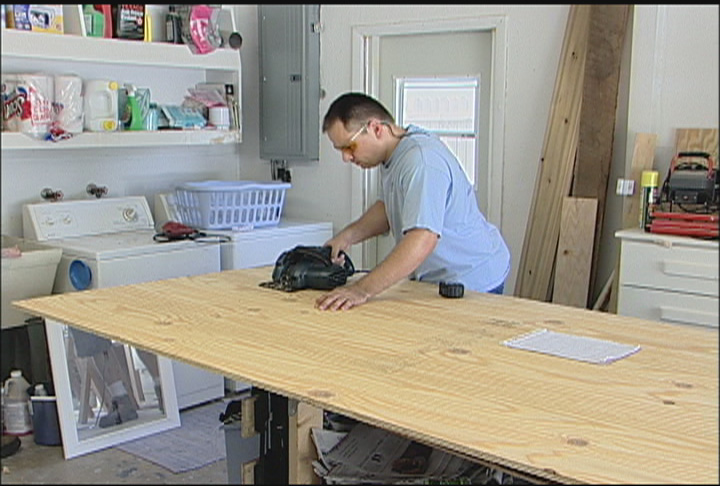 The idea struck me. Since I hadn’t shuttered my windows, it was time that I started to practice what I preached. I quickly scratched out a plan to cover my windows with plywood and show all the steps – from selecting the materials to cutting to fastening them to protect my windows.
 So, you want to make sure your table saw is accurately set, but not sure how to test it? Here’s a method that will give you a great way to check just how squarely you have set your rip fence to the blade.