All posts by Tom

I'm the guy who writes the blog...

Species Spotlight: White Oak

Oak is – by far – one of the most plentiful North American hardwoods on the market. According to the American Hardwoods Council, oaks comprise nearly 51% of all hardwoods harvested and brought to market.
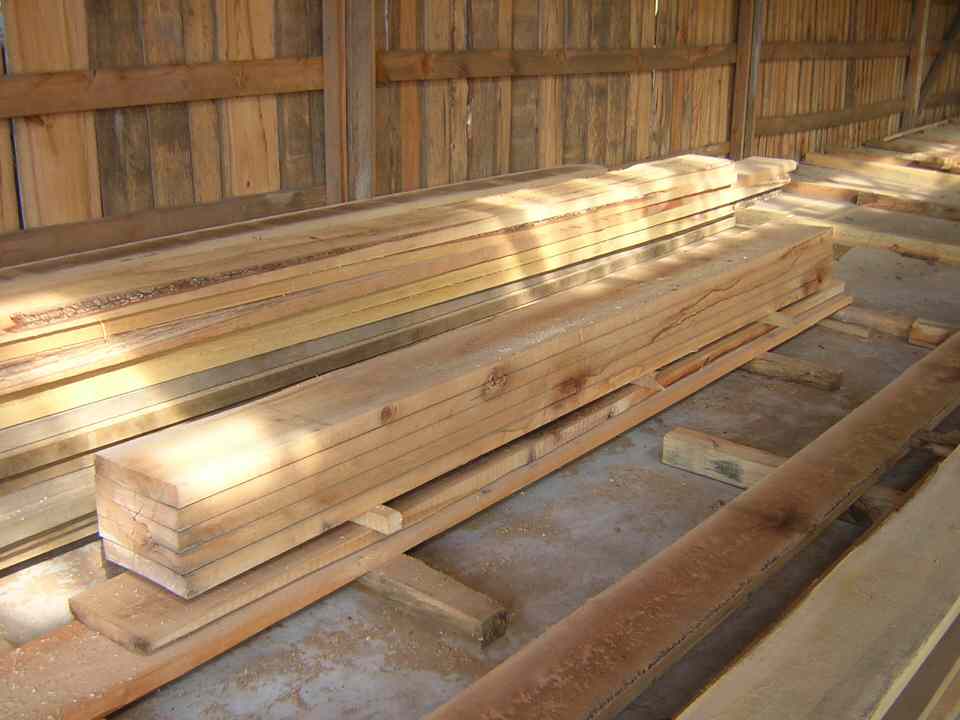

While this may seem very boring and redundant, there’s actually quite a bit of variety when it comes to these oaks.  In fact, there are more than 600 species of trees worldwide which come from the genus Quercus.  Some of the characteristics that may make each species stand out include bark thickness (for cork oaks), leaf shape, growth habits and whether or not the tree is evergreen or deciduous.  Yes, in the very deep south, trees such as live oaks never drop all of the leaves in their canopies.

Fortunately, for woodworkers, things are a little less confusing when it comes to shopping for lumber.  “While there are several commercial species, you can basically break the oaks down into two separate groups,” said Eric Proirier of Bell Forest Products. “It’s kind of like selecting a wine for dinner.  You have your reds and your whites.”

It’s funny that Eric mentioned wine, because one way to tell the difference between red oaks and white oaks has a lot to do with how liquids pass through them. “Wine barrels – and ships, for that matter – are always made of white oak because liquids can’t pass through the pores of the wood. Very important if you are trying to age wine – or sail the high seas!”


Red oaks are exceptionally plentiful.  In fact, 36% of all North American hardwoods brought to market are considered red oaks.  White oaks, on the other hand, still make up a hefty 15% of the North American hardwood market, but are some of the most sought after boards out there.  Why?

“The grain pattern on white oaks is typically finer than that of reds,”  said Eric.  “In many cases, this gives a more refined look to the piece, something woodworkers tend to look for while building projects.”

Another key difference between the two oaks comes to the ray flakes seen when the boards are quartersawn.  “In quartersawn white oaks, the ray flake pattern is more pronounced.  These rays are very pronounced in quartersawn wood, and are typically larger and more numerous in white oak.”  Ray pattern, actually part of the grain of the wood, was highly sought after during the Arts and Crafts movement, with many handsome pieces made that highlighted the effect.
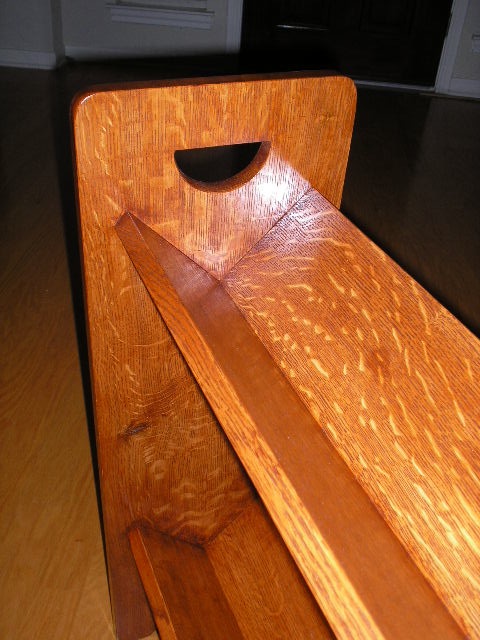

White oak is very hard and heavy and works very well.  The tannins in the oak, however, can affect any steel fasteners used to build the piece, turning a dark black and staining the wood.  “Brass screws used in pre-bored holes do better, or be sure to hide your fasteners under plugs to prevent some ugly looking stains.”

Another interesting characteristic about white oak is how it responds to ammonia fumes.  “This is the wood that the Arts and Crafts masters used in their fuming tents.  The wood looks great when finished like that, but remember that ammonia is pretty nasty stuff.  If you aren’t 100% sure how to get that fumed finish safely, you might want to pass. When possible, we always recommend you use safer finishes.”
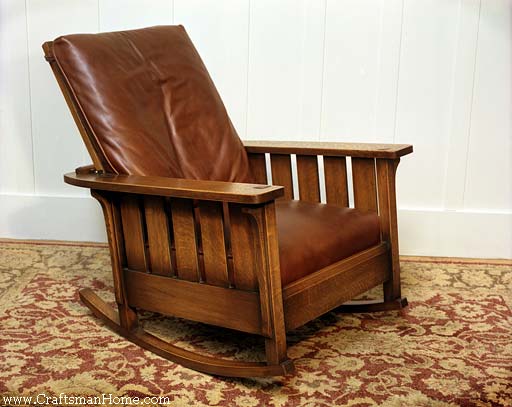

While white oaks are definitely beautiful, they aren’t necessarily  superior to their red cousins.  “White oaks don’t bend nearly as well as reds, and red oaks are plenty handsome on their own.  Whichever oak you choose, you are very likely to be happy.”

But, for that classic Arts and Crafts looks, it’s hard to beat white oak.

Quick Poll

Woodworkers love to build new projects.  Some designs are cutting edge, while others are authentic reproductions of historical pieces.  If we didn’t build stuff, would we be called woodworkers in the first place?

However, as people who have the woodworking know-how, there are some projects we are asked to turn our loving attention to.  For instance, there may be that old rocking chair whose joints loosened up after decades of use.  Or that dining room chair that an energetic diner may have broken after reacting to a particularly funny joke.  Or the side table that the dog knocked over, breaking a stretcher.  Veneer lifts.  Worn out drawer runners.

This week, I want to know if you have ever had to fix an antique piece of furniture.  Was it a simple repair you made with confidence, or was it more of a white-knuckle affair as you carefully replaced parts of the piece?

[poll id=”129″]

Link of the Week

The Woodshop Widget

Quick – how much would an 8/4  board that measures 6 inches wide by 80 inches long that costs $7 a board foot cost?  ($46.69 before tax)

How much shellac flake would you need to mix into 72 ounces of denatured alcohol to get a 2.5# cut?  (22.5 ounces)

How’d I get my supernatural woodworking powers?  Did that lightning bolt that hit me in the head have anything to do with it?

No, it’s not superpowers… but it’s a super-handy woodworking tool that Marc Spagnuolo and programmer Kenneth Woodruff cooked up to make shop calculations that much easier.  The Woodshop Widget is a free program you can use online or on your iPhone/iPad/iPod.  It allows you do calculate the board feet in a board and the price, shellac cuts, convert between fractions and decimals, determine the amount of expansion and contraction you will see in a board and even has links to top shop tips.

Marc and Kenneth are in the process of considering an Android-friendly version.

While it may not be able to answer all of your woodworking questions (Who invented the circular saw blade?), this little program can help make your shop time a whole lot more fun.

How it’s Made: Cricket Bats

You know, two things really confuse me: doing my taxes and watching a game of cricket.

When I was back on campus at the University of Maryland, I can remember stumbling across a field where a cricket club was playing a match.  I sat for a while and watched the action.  It was very interesting, but I was baffled by the rules.  One of the club members approached me and I asked him if he could explain the game to me.

“Sure,” he said, and started by telling me how cricket was the sport that eventually created baseball.  The description went on for about another twenty minutes.  I thanked him for his time and wandered off, even more confused than before.

One thing I am not the least bit confused about, though, is the care it requires to build a cricket bat.  This vital piece of equipment, I have learned, takes a tremendous amount of care and craftsmanship to ensure it has the right amount of flexibility.

Let’s take a look at the show How It’s Made to see just what traditional woodworking techniques go into making one.

Quick Poll

I hope you all had a great weekend.

When it comes to building woodworking projects, there are many ways you can go.  Complicated or simple. Large or small. Utilitarian or decorative.

One of the more ubiquitous features you may see on a project are drawers.  Dressers, desks, tables and other furniture can have drawers both big and small.  From delicate drawers found in roll top desks to beefy utility drawers in a kitchen cabinet, they come in a wide variety of sizes and materials.

This week, have you ever built drawers into any of your projects, and how do you feel about them?

[poll id=”128″]

Woodworking Spotlight: Michael Iovino

So, you are visiting Tom’s Workbench looking for this week’s quick poll…

But, you aren’t going to see one here today on Father’s Day. Sorry ’bout that… you can count on one for tomorrow.

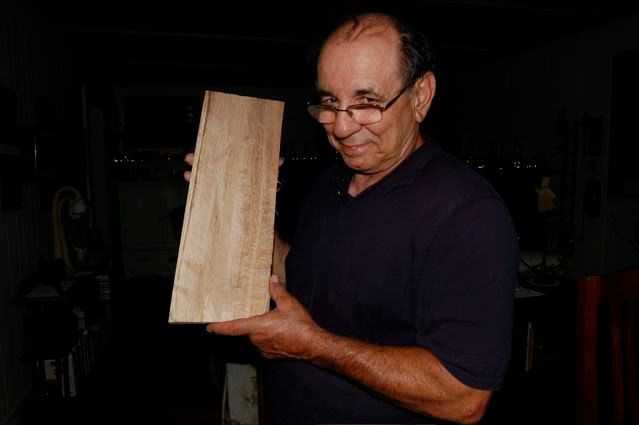
Instead, I want to focus on a very special woodworker who gave me the inspiration to get involved in woodworking in the first place – my dad.

He is the youngest son in a family of seven children and he grew up in an Italian American neighborhood in Fairview, New Jersey. Taught the value of hard work from a very young age, he worked to help support the family while in school.  And, as soon as he was old enough, he enlisted in the United States Marine Corps, serving during the presidency of John F. Kennedy and the Cuban Missile Crisis.

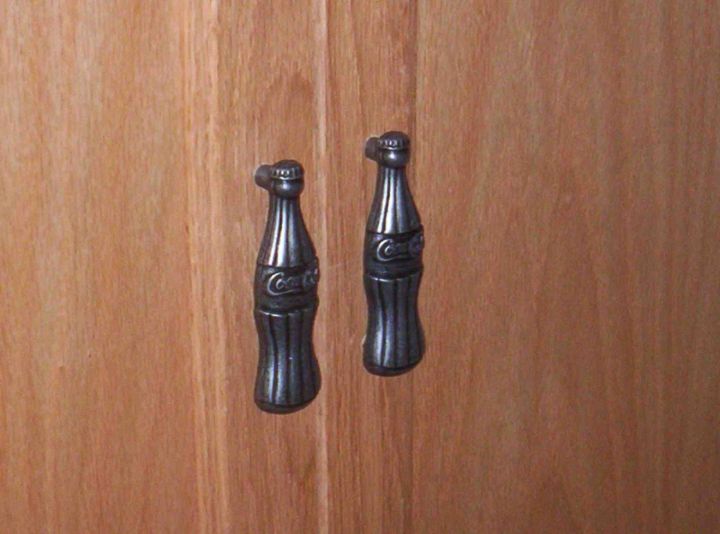
After his honorable discharge, he married my mom and started work delivering soda – first with Seven Up and later with Coca Cola. Talk about grueling work… dad would deliver hundreds of cases of soda in the rain, snow, heat and cold for more than 40 years.  I never liked helping him deliver soda… the times I did go out, it was back breaking work.  Hauling cases up and down stairs at small convenience stores and eateries.  But, my dad never stopped smiling or engaging folks in conversation.  Even on tough days. Just a genuinely nice guy.

Always industrious, he worked hard to make his home a nicer place to live.  After my parents bought an older home in Ridgefield Park, New Jersey, with the help of several relatives, he renovated the two family structure to get ready to start his family.  Demolition, studding, electric, plumbing, drywall… the guy knew how to do it, or learned quickly.  After the renovations, the house looked pretty darned good.

Years later, we moved further west into New Jersey to a town called Bloomingdale. It was a modestly-sized home that served our family well – when we were just little kids.   But, as my brothers and I got older – and bigger – we needed more room to spread out.  That’s when mom and dad came up with the idea of finishing our home’s basement.

I can still remember the planning phase… wondering why we didn’t just hire a professional to knock the job out and be done with it. That’s where dad’s wisdom and encouragement really shone.  As the materials started arriving at the house for the renovation, he called his sons together and we watched this new show on PBS.  It was called This Old House, and featured two bearded guys with New England accents finishing – of all things – a basement! We watched, while dad kept telling us, “We can do better than these two guys!”

That’s when we hit it.  Sure, the basement renovation took longer than six half-hour shows, but it was far more rewarding than anything else I had done to that point.  My dad likes to take the time to explain stuff to a very fine detail.  In fact, he’s the kind of a guy if you ask him what time it is, he will tell you all about the history of clocks and exactly how to build one.  During the basement build, he showed me how to accurately mark wood for cutting, how to lay out stud spacing, when to nail and when screws are better… all the way to how to properly trim out the paneling to make the final project look sweet.


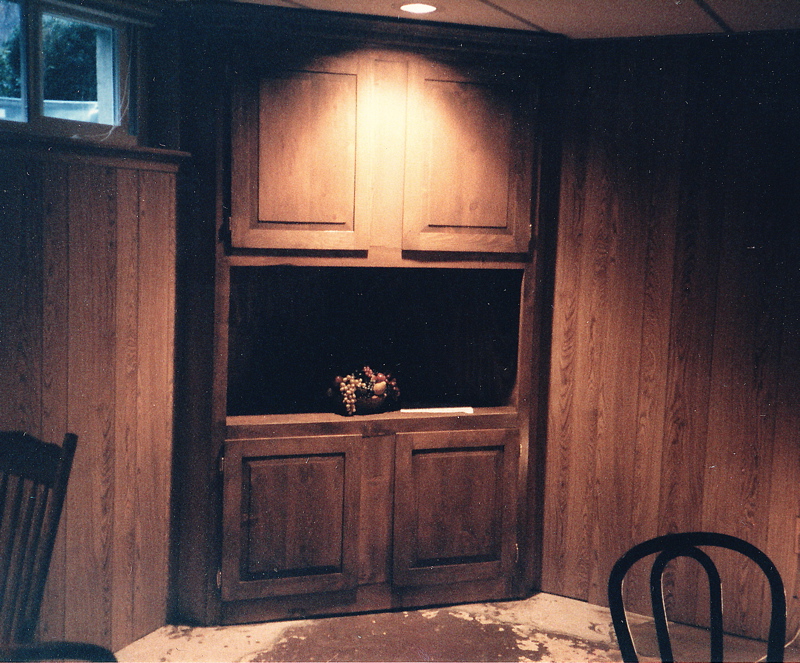
When faced with a challenging corner in the basement, he designed and built a corner entertainment center… much like the one I had built about eight years ago  in my house.  Just a clever idea to use a corner that would otherwise go to waste.

It’s funny how much what I learned during that basement renovation has helped me.  In college, I was asked to be the guy who built the room divider that allowed us to use the dining room in my apartment as a second bedroom. Other people have asked me to come in and help with other construction projects in their homes and yards.

My dad has since retired from delivering Coca Cola.  But, he’s not the kind of guy who likes to sit around. Today, he works as the maintenance guy at Glen Wild Lake, the gorgeous lake that his new house overlooks.  This can involve negotiating with fish hatcheries to get the lake stocked with bass and trout all the way to coordinating the lowering of the lake level to get extensive dock work done.

The one thing that hasn’t changed is his interest in teaching.  He takes the time to teach my sons and my nephews about everything… history, sports … and woodworking.

Thanks, dad.  I doubt I would have come this far in life without your teaching, inspiration and encouragement.

Happy Father’s Day to you and all of the other dads out there.

Link of the week

Meisel Hardware Specialties

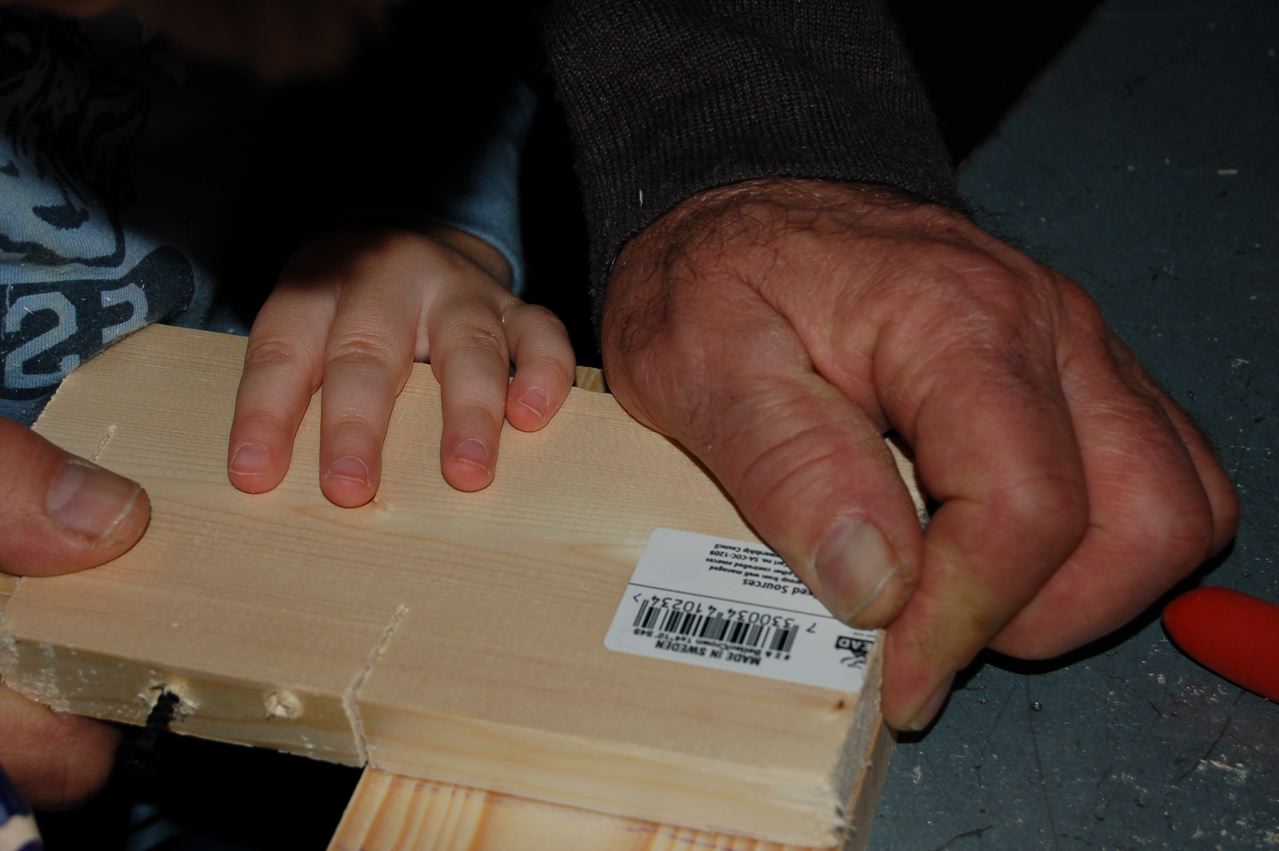
This coming Sunday in the United States is Father’s Day.  For woodworkers who have kids, it’s a great weekend to get into the shop and spend some quality time with the little ones building some family projects.

But, what to build?  And, what are some of the best tips to follow to make that shop time more enjoyable for everyone?

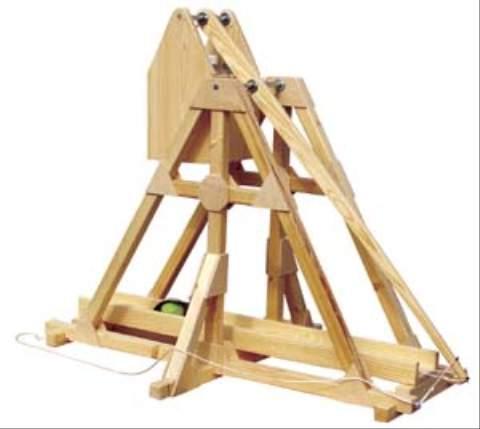
Published woodworking author Paul Meisel may have the answer.  His site offers a wide variety of project plans and the necessary hardware to make your shop session a success.  From the easiest to build birdhouse to something a little more complicated – like a tennis ball throwing trebuchet – give dads (and moms, if they are of the woodworking persuasion) plenty of choices to consider.

Browse the plans… you just might like that togetherness a day in the shop can bring on this special weekend.