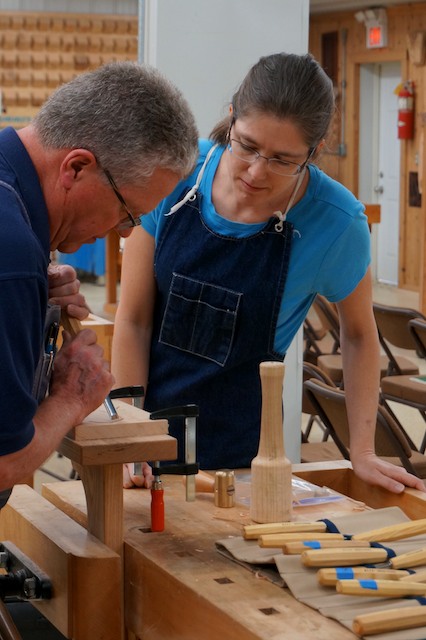
So, you want to learn woodcarving. Why not learn from the best?
Mary May is an incredibly talented woodcarver who uses traditional tools and techniques to create masterworks. Her site is loaded with videos, how-to guides, products and know-how to get you into carving or to make your work that much better.
If you had any desire to try your hand at traditional carving, Mary’s site is a great place to begin.
So, how well does wood work as an engineering product? What should builders and architects know about this natural product as they design their projects?
This handbook, produced by the United States Department of Agriculture, answers these questions and more as it gives the tale of the tape on the mechanical properties of wood, plywood and other wood based products.
There are lots of options when it comes to working with wood outside. Some species are naturally rot resistant, while other chemical treatments can help extend the life of the wood.
But, there is a process by which wood is treated with heat – much higher than experienced in a drying kiln – that changes the wood’s structure, making it exceptionally rot-resistant.
So, if you are looking to build an outdoor project, the folks at Thermo-Treated Wood have this information page on their product and where it can be purchased.
While we hear a lot about woodworking in Europe, North America, China and Japan, we don’t normally hear a lot about the woodworking tradition in the world’s second most populous country.
Surprisingly, there is a vibrant hobby woodworking scene in India. Today’s link is to a site that caters to the Indian hobby woodworking community, and provides an interesting insight into what is being built on the subcontinent.
The island state of Hawaii is famous for many things. Beautiful beaches. Amazing volcanoes. Radical surfing. Awesome food.
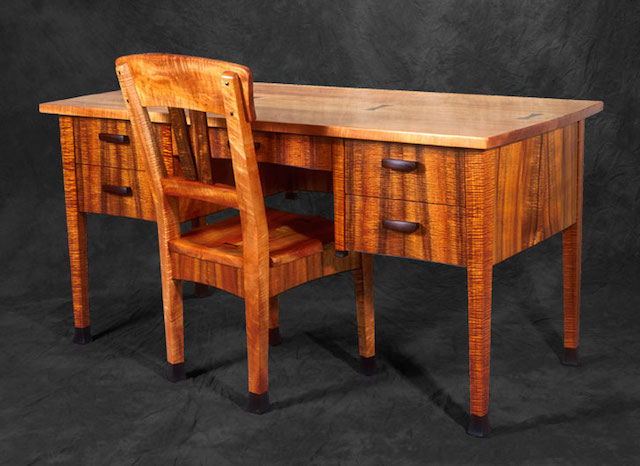
A gorgeous koa desk built by Mats Fogelvik
And, Koa wood. The tree that begets this gorgeous wood was harvested extensively for the past two centuries, and has been cleared to make room for ranch and farmland. Since the tree only grows in Hawaii, the reduction of half of it’s natural habitat put tremendous stress on the species and the hardwood harvesting.
Groups such as the Hawaii Forest Institute have worked extensively with private and public entities to plant hundreds of thousands of acres of land with young Koa trees, helping to restore the number of these valuable trees and to provide breathtaking wood for future furniture makers.
So, your summer plans take you to the seashore. That’s nice. But, while you have your toes in the sand, you don’t have to stop thinking about woodworking. Why not? Well, there’s always driftwood!
Today’s link is a great resource about all things driftwood – how to clean and prepare it for woodworking, how to work with it and how to finish it. There are some amazing craft project ideas and – if your plans don’t take you to the seashore, there are even some finishing tricks you can use to get that driftwood look.
I’m a pretty lucky guy. I live in a place that people save up for months to come to visit, and I can take advantage of all the cool stuff to do around town. Sure, there are the beaches, and the vibrant night life in St. Petersburg. There is even the world-renowned Dali museum which features some wild impressionistic artwork.
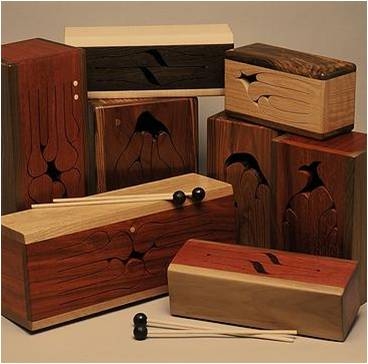
One of the greatest places, however, is the Florida Craftsmen Gallery. Part gallery, part shop, it is a statewide non-profit organization that seeks to empower the fine crafts of Florida, enrich the community and engage the next generation of up and coming craftsmen and women. The current exhibit on display is called Fine Tuned, which is an exhibition of instruments made by local craft workers.
If you find yourself in Florida – or planning a get away from the snow and slush coming this winter – the Craftsmen Gallery should be a must-see!