
I like to post on a few woodworking forums. They are great places to connect with woodworkers from across the world. You can ask questions, share your successes and get a few words of encouragement when things go wrong.
Oh, yes, things can go very wrong…
Beyond the terrifying tales of accidents and woeful recollections of projects gone bad, there are always a tremendous number of questions about tools.
Which are the best to buy? Can I use this tool to complete that task?
And, quite frequently, there are questions about machine set ups and calibration.
Let me start of by saying that questions like these are very valuable. Woodworkers with years of experience can weigh in with sage words of advice, pitfalls to avoid and shortcuts that can help ensure accuracy.
Unfortunately, what many of the original posters don’t realize is that they have the answers to many of their questions right at their fingertips – their owner manuals.
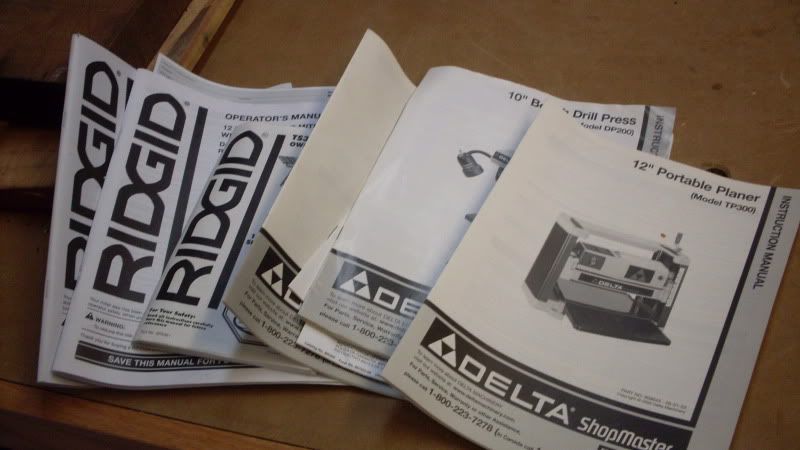
You remember what those are, right? The usually black and white booklets proudling featuring a photo of the tool you are working with. Believe it or not, those babies are a gold mine of information – if you know how to use them.
First of all, all manuals have valuable safety information printed in them. Yes, do take the time to read through it at least once. There may be some safety features on the tool you are using that aren’t intuitive and may require special care during set up.
Speaking of set up, the manuals also have step-by-step instructions on how to assemble the tool. Again, it seems to be a no-brainer, but the instructions also give you important tips on when and how much to tighten screws and bolts. Overtightening a table saw’s trunnion bolts can crack the cast iron casting… leaving you in the lurch.
Need help dialing in the accuracy? Owner’s manuals give step-by-step instructions on how to tune your tool. This way, you don’t have to rely on someone to give you the instructions on – say – tuning your Jet table saw if he or she owns a Grizzly.
Finally, once you get the tool set up, that’s a great time to sit down and review the manual one more time. Believe it or not, many manufacturers offer tips and tricks on how to make your tool more useful. The manual for my Ridgid table saw offers plans for cutting push sticks, feather boards and other useful shop jigs.
If you are the more organized type, it’s a great idea to staple the receipt for the tool and record the tool’s serial number in the manual, and tuck it away someplace safe yet accessible. This way, you can get to it for warranty work and as evidence for the insurance company should something happen to your shop.
And, yes, I do break out my tool manuals to review them from time to time. I’ve discovered that in the back of many manuals there is a troubleshooting section with frequently seen problems and ways to correct them.
This is great if you have a brand new tool, or you bought a used tool from someone who kept good records. But, what if your tool is older, or the previous owner chucked the manual?
You are in luck! Most manufacturers have their manuals online where you can download them. To find the manuals for older tools, check out the Old Woodworking Machines website. Many of the manuals from older tools have been scanned and uploaded to this site for your review and can provide valuable assistance in restoring and tuning a classic tool.
Will reading the owers manuals for your tools make you a better woodworker? Nah, only practice can do that. However, for safer and more accurate tools, it’s hard to beat the manuals as a starting place.

